VINE SANCTUARY NEWS

WINTER AT THE SANCTUARY

It's six AM and six degrees below freezing. Welcome to a winter morning at the sanctuary! There's a blanket over the truck engine, but you will still need to plug in a warmer before you try to start it, and then let it run for a while before you drive down the icy driveway to pick up hay to deliver to the back pastures.


While the tractor is warming up, it's time to de-ice and refill the water troughs. While the water is running, it's time to give the cows, sheep, goats, and alpacas in the front pasture—who have been moo-ing and baa-ing at you all this time—their morning allotment of the fortified grains that augment their always-available hay. Then it's time to take food and water around to all of the coops in which birds are awaiting their breakfasts. It's too cold to let them out yet, so they will be grumbly but glad for the grub. One of those coops is "Wayne's World," which is a distance away. For that, you'll need to load buckets of water onto the carrier attached to the back of the ATV. Remember to put on the lids so they don't slosh!


Meanwhile, down in the part of the sanctuary called "the valley," another staff member has been hauling jugs of water and buckets of feed along the icy pathways between the multiple colorful coops. Like you, they have been pulling a fresh set of surgical booties over their boots before entering any area occupied by birds, as a precaution against the ever-present risk of avian influenza.


All done with the water? Don't forget to detach the hose from the pump and blow it out carefully, so that no water remains to freeze into a clog! If it wasn't a hay day, you'd hop back onto the ATV to do the morning cow count in the back pasture, but you'll be bringing hay today so that will make the count easier. Sure enough, the cows come out of the barn and down from the hills as soon as they hear the tractor. Sure, they already had hay, but this is fresh hay! You do a quick count, making sure everybody looks well, before turning to their troughs. Fingers crossed that the solar power to the pump is working—otherwise you'll have to fetch the generator. Don't forget to blow out the hose when you're done!

We hope you enjoyed this glimpse behind the scenes at the sanctuary, which was inspired by somebody who was fascinated by all of the things we have to do—did we mention hauling water by tractor to the back pasture if both the solar panels and the generator fail?—just to get water to everybody every day. The load of that labor sometimes made more heavy by the grief we feel when elder community members die but is always lightened by our relationships with each other and with nonhuman community members.


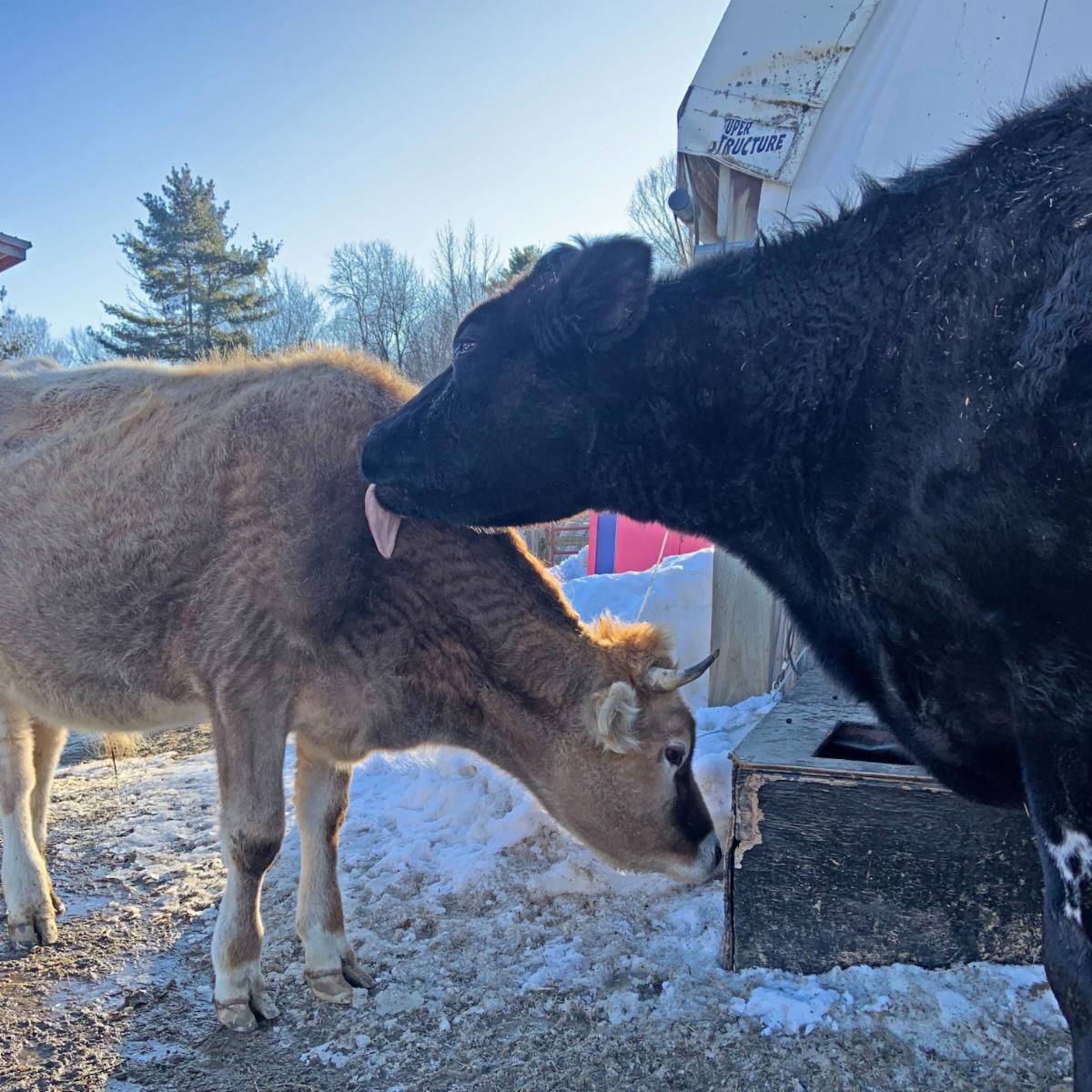
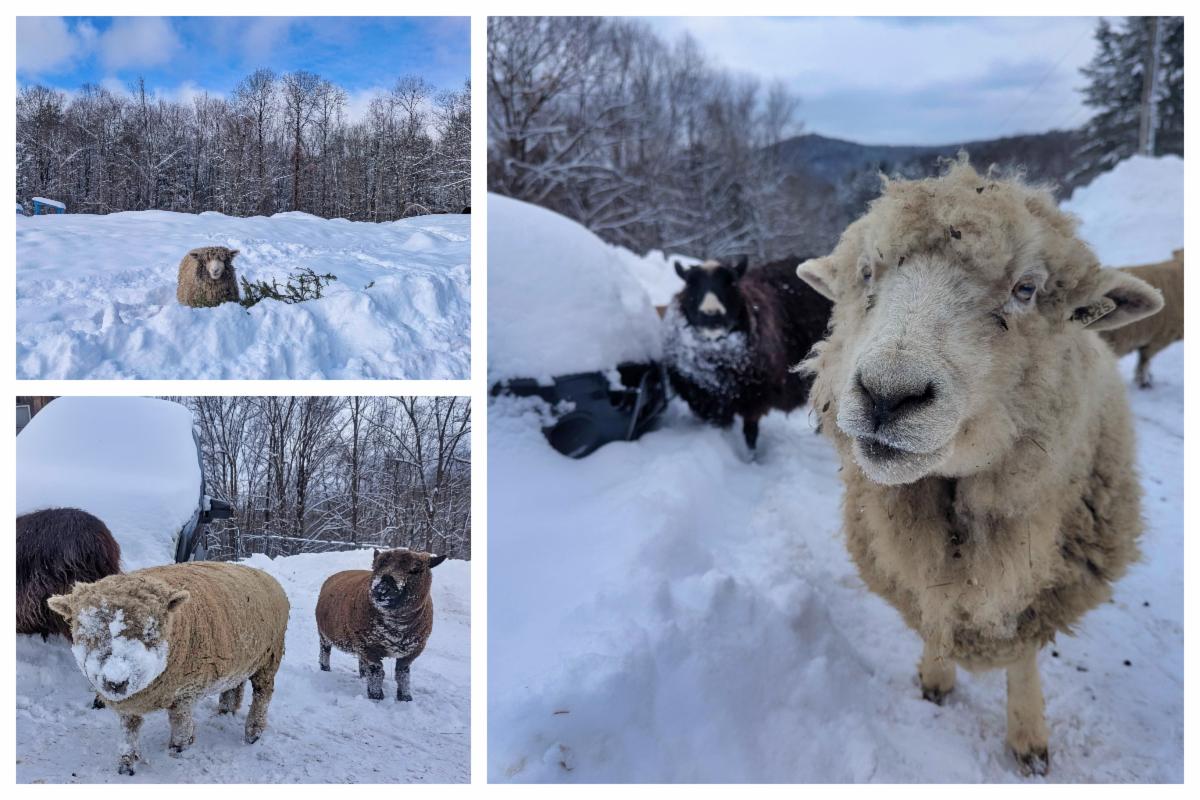
We especially enjoy witnessing their caring and loving relationships with each other. In the photo at the top of this newsletter, elder Bella is bathing young Duke. Above, sheep enjoyed playing in the snow as we shoveled paths. That's Rain with the remains of a former Christmas tree top left, Alice and Lucky with snow on their faces, and endearing Cordelia wondering if the photographer happens to have any snacks.


What makes it possible for them to play? Because they know they don't have to worry about where their next meal is coming from or whether anybody is going to hurt them. Donors make the sanctuary possible. Our staff is so grateful to everyone who pitches in to buy a sack of grains or bale of hay!

DONATE NOW

A VISIT TO A FACTORY FARM

Back in 2000, what led Miriam and pattrice to go beyond offering refuge to any chickens who they happened to meet and start a formal sanctuary? A visit to a factory farm played a big role. After rescuing first Viktor, then Violet and Chickweed, then The Wild Bunch, as well as stray birds found by the roadside, they found themselves in the tricky situation of having too many roosters in comparison to hens. This can be dangerous for hens, especially the big white birds from the poultry industry, who have such thin skin that they can be injured even in the course of fully voluntary relations.


Their informal refuge for birds was literally surrounded by factory farms. There was one up the road and several more down the road and around the corner. They talked it over with Karen Davis, who assured them that offering a few dollars to one of those farms for a few hens would not substantially aid the poultry industry. Here's how pattrice remembers what happened next:

I dithered for a few days, then gathered my courage, swallowed my bile, loaded a few cat carriers into the truck, and went to talk to the owner of the factory farm up the road. Reflecting that our road was named after his family, I wondered if his forbears owned my neighbors' ancestors. Twice I reached his driveway only to drive past, heart pounding. On the third try, I took a deep breath and jerked the steering wheel into a turn.


I drove down the dirt driveway and waited, staring at the chicken sheds ahead of me, until the farm owner stepped out onto his porch. I got out of my pickup, greeted the labrador retriever who ran up to meet me, greeted the farmer, identified myself as a new neighbor, and stated my dilemma. I chose my words carefully, not wanting to misrepresent myself but also not wanting to betray my feelings about the birds or the industry. "I have a small backyard flock of broilers and I've got too many roosters. They're gonna hurt those hens if I don't get some more females in there." The farmer nodded knowingly. "So, I need to find somebody to sell me just a few hens to even things out."


The farmer asked questions until he felt satisfied that I really was who I purported to be, and then said that he couldn't help because he was on the Tyson "Big Chicken" program and all he had were four-week-old male "roasters." Then he thought for a few moments. After what felt to me like a very long pause, he told me that another farmer had sent off his "shipment" of hens that day starting at one o'clock. By now, he reckoned, the birds who had escaped the chicken catchers would be running around free and the farmer probably would be glad to let me have them if I could catch them. He directed me to the farm and I was anxious to go, but we had to talk about the previous night's rain for a while before I burned rubber to see if I could save those chickens.


The farm to which I had been directed encompasses a few fields, a compound of industrial outbuildings holding tens of thousands of chickens each, and a charming old farmhouse. I drove up the long dirt driveway to see a family playing baseball under the trees. Again, I parked and waited. Eventually, a young man ambled over, dangling a baseball bat in one hand. Mild-mannered and genial, he identified himself as nephew to the owner of the farm and co-manager of its chicken operations. Again, I gave my spiel.

"So, you need hens? That's number five." The pleasant young man led me along a path between the buildings. It was hot and dusty. I could sense, but neither hear nor see, tens of thousands of birds on either side of me. It felt as if the barometer had risen suddenly, rapidly increasing the pressure inside my head. The sun beat down incessantly. The nice young man chatted heedlessly, explaining something about variances in poundage between the buildings. I fought back nausea.


We arrived at the building from which the birds had just been taken. The friendly young man said that the chicken catchers did leave some birds behind and that he was just getting ready to come in and kill them but would be very glad to let me take them instead. As we walked back to my truck so that I could fetch my carriers, the conversation took a twist. In a confiding tone, the young man told me that he felt sorry for the chickens and hated having to kill the ones left behind. He said that he'd often thought of just keeping them, but then he would get to know them and wouldn't feel comfortable eating them. I mentioned that some people keep chickens that they don't eat, and that got him thinking about eggs. I was surprised to hear myself answering his questions about the age at which hens lay eggs and other aspects of the chicken life cycle.


Functioning as little more than factory hands on their own land, poultry "growers" follow industry directives without learning anything about the birds who live—and often die—on their property. They erect buildings according to industry specifications, install required mechanical equipment, dole out food and water according to industry schedules, dispose of the hundreds of birds who end up dead every week, and then clean up after the catchers hired by the corporation come to haul the birds away. Going back to his baseball game, the neighborly young man told me to feel free to come and get the birds left behind anytime. I thanked him and braced myself for my foray into the shadows of the recently "depopulated" chicken house.


As I stepped into the dirt-floor building, my feet sank deeply into dried chicken excrement that had been ground to dust. The stench of dried urine did battle with the unmistakable scent of terror. Lingering just below those two odors was the smell of death, the source of which was clear as soon as I spotted the dead birds in various stages of decomposition lying in the filth. Dust hung in the air, exacerbating the dimness of a huge building lit only by the sunlight coming in from the open doors at either end. Eyes and nose running, I squinted to find the birds who had been left behind.


The birds I spotted were all either very small or very fast. They careened around the empty space that had once been packed with their peers. Choking and sweating, slipping on the decomposing bodies of the dead chickens and breathing in the dust kicked up by the fleeing birds, I chased after them, provoking further panic and stirring up more of the toxic dust. Because of the deep layer of dried excrement, it was like running in sand. Not knowing that I was there to rescue them, the young hens did everything they could to evade capture and tore at my arms with their beaks and nails when I did get ahold of them. The emptiness of the building made it difficult to corner them. Some ran into the ventilation ducts. Several times, I felt so daunted by the task that I wanted to sit down and cry. I was acutely aware that any bird I could not catch would be killed. This kept me from quitting but also made me increasingly frantic and clumsy.


After more than an hour, I had caught all but one quick little hen who had disappeared into a ventilation tunnel. Reluctantly concluding that she was lost to me, I noticed that one of the birds I had assumed was dead was still breathing. The back half of her body was mangled and partially buried in the litter. She was breathing very shallowly and was clearly near death. I thought she should be euthanized immediately. She seemed to be in a daze and I hesitated to move her, not wanting to awaken her into pain. The only vet willing to see chickens was almost an hour's drive away and might not even consent to see us immediately. Dragging this bird to the vet would probably cause her many more minutes of fear and pain than leaving her for the farmer to kill quickly when he came in to clean up behind me. For the first time in my life, I wished that I knew how to kill. Feeling both helpless and guilty, I mumbled something in between an apology and a prayer and left her behind, hoping that the young man who had expressed sympathy for the birds would dispatch her mercifully.


Miriam had come home while I was out. I left my ruined shoes at the threshold and stepped into the living room. She looked up inquisitively, not knowing where I had been.

"I'll never be the same person again." I couldn't say more. Gesturing mutely, I led her outside to the truck stacked with makeshift cages and cat carriers filled with hens. I stuttered out a few words of explanation as Miriam helped me release the new hens into the yard, but every syllable seemed inadequate and beside the point.

25th ANNIVERSARY SHOUT-OUTS

Later that week, the mother of the young man appeared in their driveway, asking Miriam and pattrice, "are you the ladies who rescue chickens?" They said yes. "You don't kill them?" They said that they did not. She jumped up and down with glee then told them that more chickens had been left behind in another barn and that, this time, her family couldn't bring themselves to kill them. Would they come and get those too? Yes, of course!


During that visit, pattrice saw more of the farm and heard the woman express sympathy for the birds and say "I don't think about it or I couldn't do it." Two days later, she came again, saying that she had hidden some more survivors in a shed, so that the "Perdue man" wouldn't see them, and fearfully asking pattrice to sneak onto the property to get them, which she did. Miriam and pattrice told her that they would take any survivors any time—all she had to do was tell them when to come. But she never came again. She was the first of several poultry industry workers, farmers, or relatives thereof who brought birds to the sanctuary while still participating in the poultry industry. Collectively, they helped us to learn about the mixed emotions of the farmers and workers, the fear that many had of the industry (some locals would literally whisper when voicing any criticism of the industry, for fear that someone would hear and then a relative would lose their job), the life circumstances that lead people to feel forced to do things of which they disapprove, and the moral injuries they suffer as a result. That strengthened our belief that the poultry industry harms everybody except the stockholders and executives who profit from the misery of others.


Miriam and pattrice learned so much from the birds who were rescued from that factory farm! Altogether, more than two dozen hens (and a few non-hens) made the place suddenly so much more lively. There was Amelia, who flung herself through the air to catch gnats. And Lefty, who was always the last to go in for the night, making us wait around for her to finish squeezing the most she could out of every day. And Turtle, who gladly served as a guide for a blind friend. All of them, collectively, inspired Miriam and pattrice to go ahead and make it formal, filing the paperwork to become a registered nonprofit only six months after finding Viktor by the roadside. Their spirit lives on at the sanctuary every day.

UPCOMING EVENTS

Animaladies: Gender, Animals, and Madness collects a diverse and engaging array of essays on its conjoined topics. Join members of the VINE Book Club and numerous contributors to discuss this fascinating book. Download your free PDF here. Register for the meeting here. Find the date and time in your own zone here.

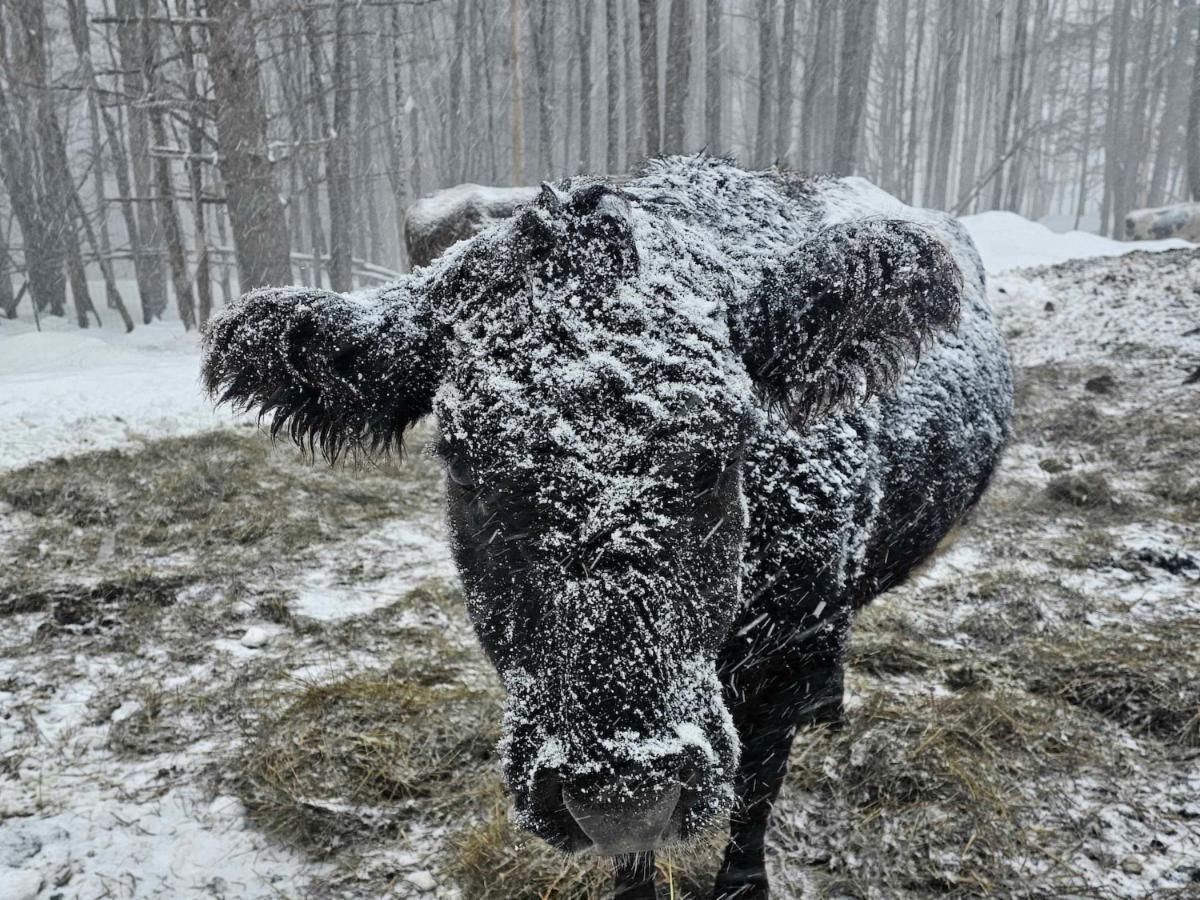
Jan loves the forest and never let a bit of snow stop her from taking a walk in the woods. Back in 2013, she jumped a beef farm fence while pregnant, giving birth in the freedom of the forest before finding friendly people who conveyed her to sanctuary. She and her son Justin have lived here ever since. As prices rise and foundation grants fall, Jan and her friends rely on friends of the sanctuary more than ever!

DONATE NOW
If you prefer to donate by mail, you can send a check to the address below:

VINE Sanctuary, 158 Massey Road, Springfield, VT 05156