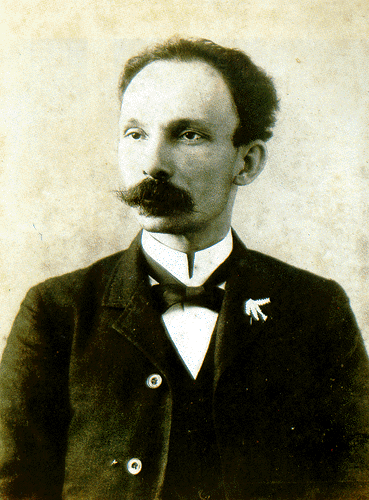
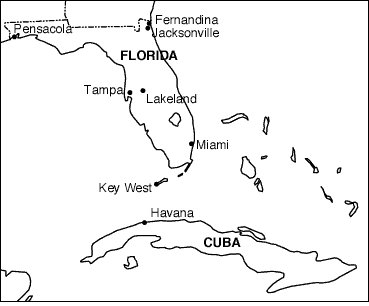
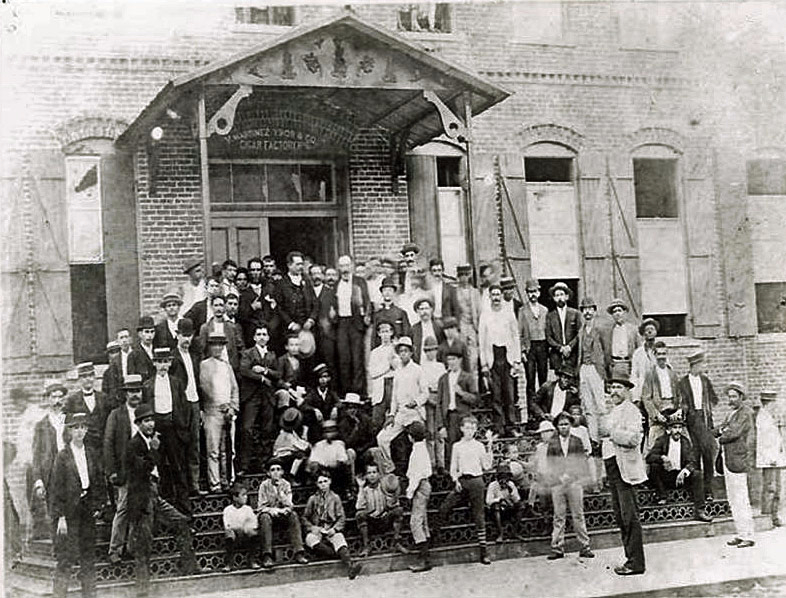
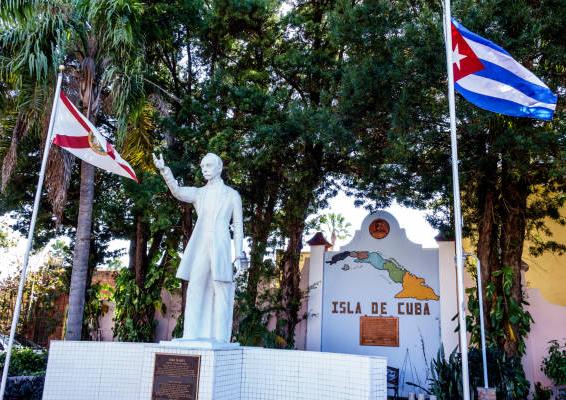
*Born in Havana, Cuba.
*A precocious writer, he published his first poems at age 15, including the patriotic Abdala.
*In 1869, at age 16, he was arrested by colonial authorities for writing letters in which he criticized
a friend for volunteering for the Spanish army. He was imprisoned and exiled to Spain.
*He earned a degree in Law from the University of Madrid and Philosophy and Letters from the University of Zaragoza. He published an expose of the Spanish political system which he experienced firsthand.
*Martí published poetry, plays, a novel, a children's magazine and a newspaper,
Patria, which became the rallying cry for the Cuban War of Independence
from Spain.
*As a journalist he visited Venezuela, Guatemala, Jamaica and New York City, which became his base for over a dozen years. His articles appeared across Latin America and he commented
extensively on the American labor movement. He defended Chicago's Haymarket Martyrs who were executed for participating in an 8-hour day demonstration on May 4, 1886.
*Martí's book of poetry, Versos Sencillos (Simple Verses) included the poem Guantanamera, which would later be set to a traditional Cuban folk melody and become the
unofficial anthem of Cuba.
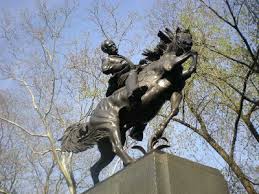
*On May 19, 1895 during a skirmish in Dos Ríos, Cuba Jose Martí undertook what amounted to a suicidal charge against amassed Spanish troops, which has been speculated upon by generations of historians.
*After he was shot dead his body was thrown onto the back of a mule and then buried by the Spaniards.
Later his fellow mambises (rebel fighters) exhumed his body and reburied him as he mentioned in a poem -- with his body facing the sun.