MV Wire Harnesses – Start with the Wire
In this newsletter, we begin at the most fundamental level of any military vehicle (MV) wiring system: the wire itself.
Military vehicle wire harnesses are built from single-conductor wires that meet the performance requirements of MIL-DTL-13486G (the general specification for special-purpose electrical cable) and MIL-DTL-13486/1D (the detail sheet covering low-voltage, heavy-duty, single-conductor, unshielded wire used in vehicles).
The most common wire sizes you’ll encounter are 16, 14, and 12 American Wire Gauge (AWG).
What’s Actually in Your Harness?
The wires in your MV harness are typically:
- Type I – Unshielded
- Class A – Single conductor
- Material – Stranded copper
Each individual wire is built to handle the electrical demands of vehicle systems while remaining flexible enough for routing through a harness.
Identifying the Wire
One of the advantages of military-spec wire is that it’s clearly marked. The outer sheath is typically black and includes:
- Manufacturer’s name or trademark
- CAGE (Commercial and Government Entity) code
- Date of manufacture
- Military Part Identifying Number (PIN)
- Wire size (AWG)
- Number of conductors
- The letters “OZ”
These markings are repeated at intervals of no more than two feet. On older harnesses, they may be faded or partially illegible, but they’re often still readable with a careful look.
Understanding the PIN
The PIN tells you exactly what wire you’re dealing with:
- M13486/1-3 → 16 AWG
- M13486/1-5 → 14 AWG
- M13486/1-7 → 12 AWG
This is especially useful when repairing an existing harness—if you can read the sheath, you can confidently match the original wire.
Why Matching Wire Gauge Matters
When repairing or modifying a harness, always replace a wire with the same gauge.
This isn’t just about consistency—it’s about safety and performance:
- Smaller gauge (higher AWG number) → less current capacity
- Larger gauge (lower AWG number) → more current capacity
Using the wrong size wire can lead to overheating, voltage drop, or even failure of the circuit.
Working with the Harness
A typical MV harness is a bundle of these single-conductor wires grouped together.
When making a repair, you don’t need to dismantle the entire harness. Instead:
- Carefully open the loom or wrapping only where needed
- Isolate the individual wire you’re repairing
- Replace or splice using the correct gauge and type
Also take a moment to inspect the insulation. Even if the gauge is correct, cracked, brittle, or oil-soaked insulation is a good reason to replace the wire.
What’s Next
Matching the wire is only part of the job.
The next critical step is selecting the correct connectors—such as Douglas or Packard types—that match the wire gauge and application. That’s where many mistakes happen, and we’ll cover that in the next newsletter.
Cheers!
Patric Vargas
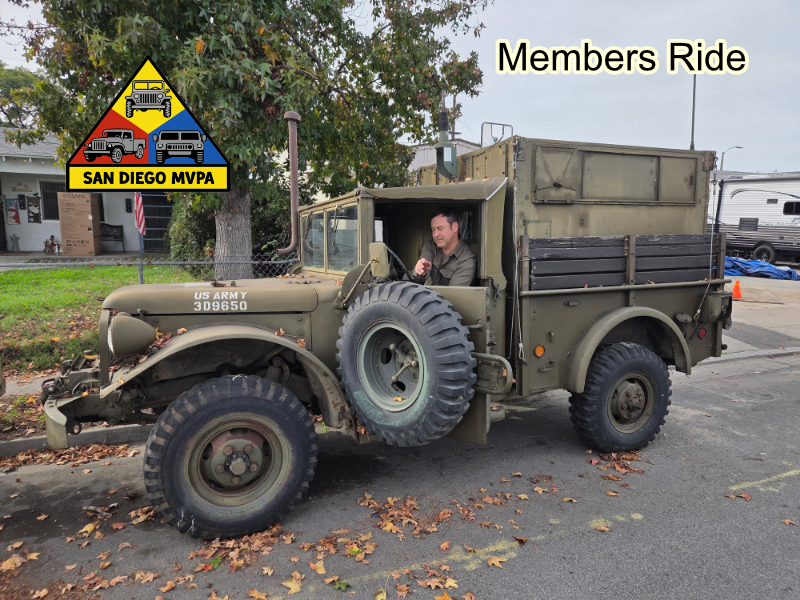
1952 Dodge M37
SN 80030594
Production Date: June 1952
|