Invite Bill Federer to speak wjfederer@gmail.com
|
|
American Minute with Bill Federer
"My COUNTRY 'tis of Thee, Sweet LAND of LIBERTY"
|
|
Baptist minister
Rev.
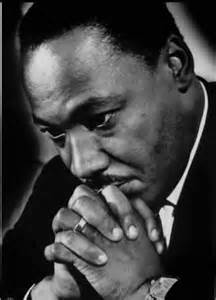
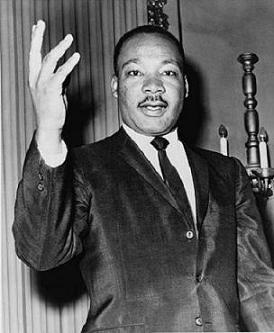
Martin Luther King, Jr.,
at the Civil Rights March on Washington, August 28, 1963"
|
|
"I have a dream ... where little black boys and black girls will be able to join hands with little white boys and white girls and walk together as sisters and brothers ...
This will be the day when
all of God's children
will be able to sing with new meaning,
'MY COUNTRY 'tis of thee,
Sweet land of liberty,
Of thee I sing.
Land where my fathers died,
Land of the Pilgrims' pride,
From every mountainside,
Let freedom ring.'"
|
|
The song
Martin Luther King, Jr.,
recited,
"MY COUNTRY 'tis of thee,"
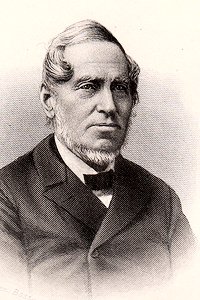
was written by
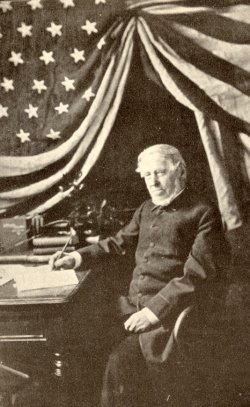
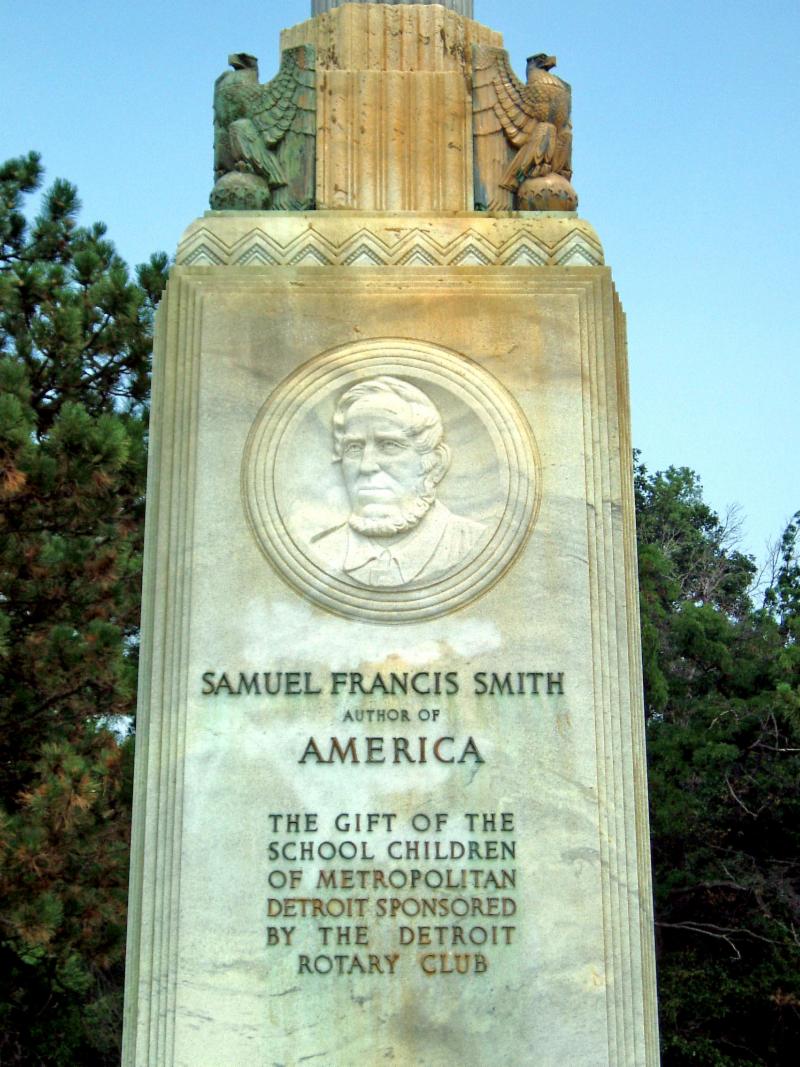
Samuel Francis Smith,
who died NOVEMBER 16, 1895.
Samuel Francis Smith
was a classmate at Harvard with poet
Oliver Wendell Holmes,
who wrote the famous poem
"Old Ironsides."
Smith
went to Andover Theological Seminary and became a
Baptist minister.
|
|
While a student in 1832,
Samuel Francis Smith
admired a tune while translating a German Hymnal.
The same tune was used for British, Canadian, Russian, Danish, Swedish and Swiss National anthems.
|
|
Smith
stated:
"I instantly felt the impulse to write a patriotic hymn of my own, adapted to the tune.
Picking up a scrap of waste paper which lay near me, I wrote at once."
|
|
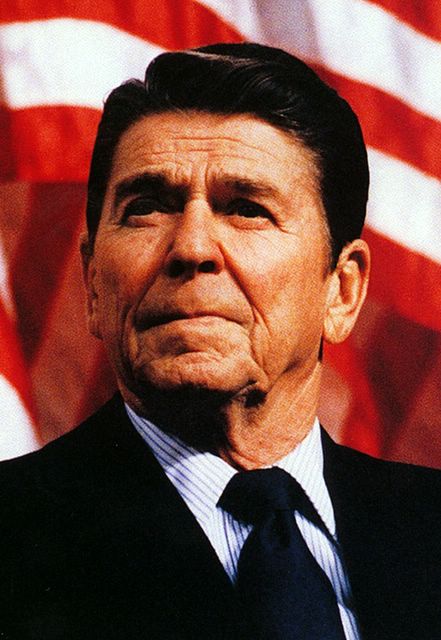
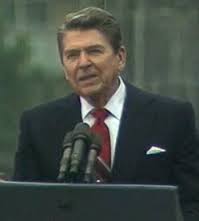
Proclaiming "Let Freedom Ring Day," July 3, 1986,
President Ronald Reagan
recalled the 4th stanza of
"MY COUNTRY 'tis of thee":
"As the golden glow of the Statue of Liberty's rekindled torch calls forth ... throughout our land, let every American take it as a summons to re-dedication, recalling those words we sang as children:
'Our father's God, to Thee,
Author of Liberty,
To Thee we sing,
Long may our land be bright
With Freedom's Holy Light.
Protect us by Thy might,
Great God, Our King.'"
|
|
The theme of
"MY COUNTRY"
has run through America's history, such as the statement by 21-year-old Yale graduate
Nathan Hale
who declared before being hanged by the British, September 22, 1776:
"I only regret that I have but one life to lose for MY COUNTRY."
|
|
In contemplating war with the King of Great Britain,
John Adams
declared:
"If it be the pleasure of
Heaven
that MY COUNTRY shall require the poor offering of my life, the victim shall be ready, at the appointed hour of sacrifice ...
But while I do live, let me have a COUNTRY, and that a free COUNTRY!"
|
|
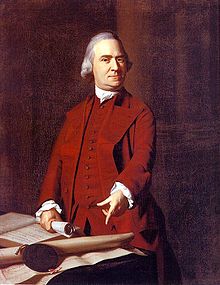
In 1775, when British General Gage attempted to intimidate
Samuel Adams,
he replied:
"I trust I have long since made my peace with the
King of Kings.
No personal consideration shall induce me to abandon the righteous cause of MY COUNTRY.
Tell Governor Gage it is the advise of
Samuel Adams
to him no longer to insult the feelings of an exasperated people."
|
|
During the Revolution,
General Nathaniel Greene
wrote to Samuel Ward of Rhode Island, January 4, 1776:
"Permit me, then, to recommend from the sincerity of my heart, ready at all times to bleed in
MY COUNTRY's cause,
a declaration of independence;
and call upon the world, and
the great God
who governs it, to witness the necessity, propriety and rectitude thereof ...
Let us, therefore, act like men inspired with a resolution that nothing but the frowns of
Heaven
shall conquer us."
|
|
Signer of the Constitution
Gouverneur Morris
wrote April 17, 1778:
"While MY COUNTRY calls for the exertion of that little share of abilities, which it has pleased
God
to bestow on me, I hold it my indispensable duty to give myself to her."
|
|
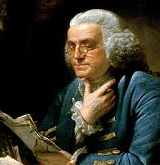
Benjamin Franklin
wrote from Philadelphia to David Hartley, December 4, 1789:
"God
grant that not only the love of
liberty
but a thorough knowledge of the
rights of man
may pervade all the nations of the earth, so that a philosopher may set his foot anywhere on its surface and say: This is MY COUNTRY."
|
|
Attributed to
Thomas Paine,
"The American Patriot's Prayer," written in 1776, reflected the sentiment of the colonies:
"But chief to hear MY COUNTRY's voice,
may all my thoughts incline,
'Tis reason's law, 'tis virtue's choice,
'Tis nature's call and thine."
|
|
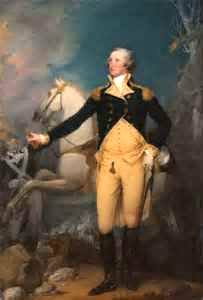
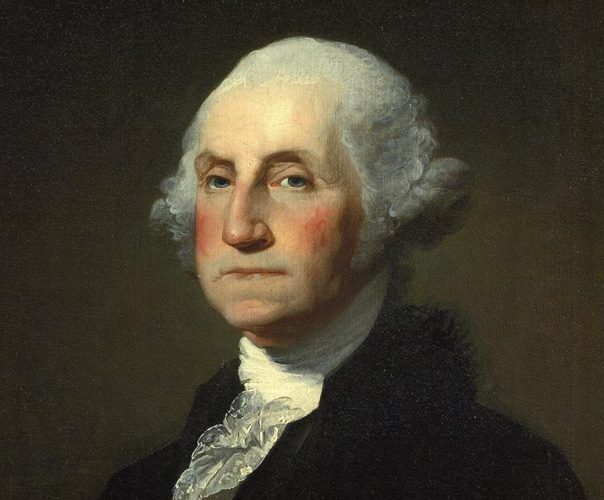
General George Washington
wrote October 18, 1777, upon hearing of the surrender of British General Burgoyne at Saratoga:
"I most devoutly congratulate MY COUNTRY, and every well-wisher to the cause, on this signal stroke of
Providence."
|
|
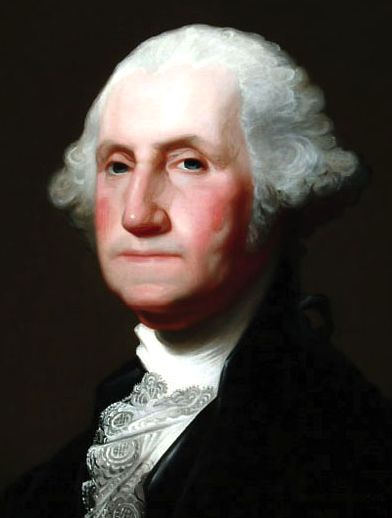
General Washington
wrote from Mount Vernon to Benjamin Lincoln, August 28, 1788:
"I trust in that
Providence,
which has saved us in six troubles yea seven, to rescue us again from any imminent, though unseen, dangers ...
Heaven
is my witness, that an inextinguishable desire (for) the felicity of MY COUNTRY may be promoted is my only motive in making these observations."
|
|
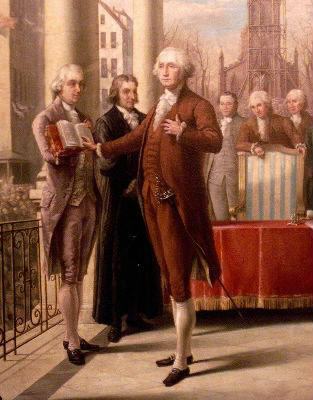
Following the ringing of church bells, explosion of artillery and deafening applause,
President George Washington
proceeded to Federal Hall, at Wall and Nassau Streets, to deliver his Inaugural Address to both Houses of Congress:
"The foundations of our national policy will be laid in the pure and immutable principles of
private morality,
and the preeminence of
free government
be exemplified by all the attributes which can win the affections of its citizens and command the respect of the world.
I dwell on this prospect with every satisfaction which an ardent love for MY COUNTRY can inspire, since there is no truth more thoroughly established than that there exists in the economy and course of nature,
an indissoluble union between virtue and happiness ...
The propitious smiles of
Heaven
can never be expected on a nation that disregards the
eternal rules of order and right
which
Heaven
itself has ordained."
|
|
In January of 1790,
President George Washington
wrote to the Hebrew Congregations of Philadelphia, Newport, Charlestown and Richmond:
The power and goodness of the
Almighty
were strongly manifested in the events of our late glorious revolution ... My agency ... has been guided by ... a sense of the duty which I owe MY COUNTRY."
|
|
In his Eighth Annual Address, December 7, 1796,
George Washington
stated:
"The situation in which I now stand, for the last time ... I cannot omit the occasion, to congratulate you and MY COUNTRY, on the success of the experiment; nor to repeat my fervent supplications to the
Supreme Ruler of the Universe,
and
Sovereign Arbiter of Nations,
that his
Providential
care may still be extended to the United States."
|
|
On May 20, 1792, from Mount Vernon,
Washington
wrote to James Madison:
"I take my leave of them as a public man; and in bidding them adieu (retaining no other concern than such as will arise from fervent wishes for the prosperity of MY COUNTRY)
I take the liberty at my departure from civil, as I formerly did at my military exit, to invoke a continuation of the
Blessings of Providence
upon it."
|
|
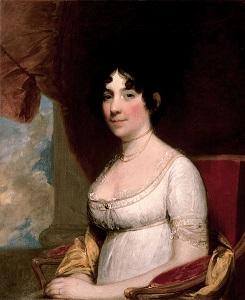
Upon the death of
James Madison,
his wife,
Dolley Madison,
sent his papers to Congress, stating August 20, 1836, stating:
"The best return I can make for the sympathy of MY COUNTRY is to fulfill the
sacred trust
his confidence reposed in me, that of placing before it and the world what his pen prepared for their use -- a legacy of the importance of which is deeply impressed on my mind."
|
|
Samuel Adams
stated:
"I thank
God
that I have lived to see MY COUNTRY independent and free. She may long enjoy her
independence
and
freedom
if she will. It depends upon her
virtue."
|
|
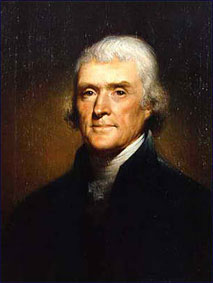
Thomas Jefferson
wrote in his Notes of the State of Virginia, Query XVIII, 1781:
"Can the
liberties
of a nation be thought secure when we have removed their only firm basis,
a conviction in the minds of the people that
these liberties are of the Gift of God?
That they are not to be violated but with His wrath?
Indeed, I tremble for MY COUNTRY when I reflect that
God is just;
that His justice cannot sleep forever."
|
|
President Ronald Reagan
stated June 16, 1983:
"We're a nation under
God,
a living and loving
God.
But
Thomas Jefferson
warned us, 'I tremble for MY COUNTRY when I reflect that
God is just.'
We cannot expect Him to protect us in crisis if we turn away from Him in our everyday living.
But you know, He told us what to do in II Chronicles ...
He said, 'If my people, which are called by my name, shall humble themselves and pray and seek my face and turn from their wicked ways, then will I hear from
Heaven
and will forgive their sin and will heal their land.'"
|
|
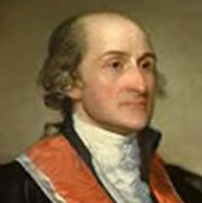
Chief Justice
John Jay
wrote in his Last Will and Testament:
"His protection has accompanied me through many eventful years, faithfully employed in the service of MY COUNTRY; and
His Providence
has not only conducted me to this tranquil situation, but also given me abundant reason to be contented and thankful.
Blessed be
His Holy Name.
While my children lament my departure, let them recollect that in doing them good, I was only the agent of their
Heavenly Father,
and that He never withdraws His care and consolations from
those who diligently seek Him."
|
|
John Quincy Adams
stated in his Inaugural Address, March 4, 1825:
"I shall look for whatever success may attend my public service; and knowing that 'Except the
Lord
keep the city, the watchman waketh in vain,'
with fervent supplications for His favor, to His overruling providence I commit with humble but fearless confidence my own fate and the future destinies of MY COUNTRY."
|
|
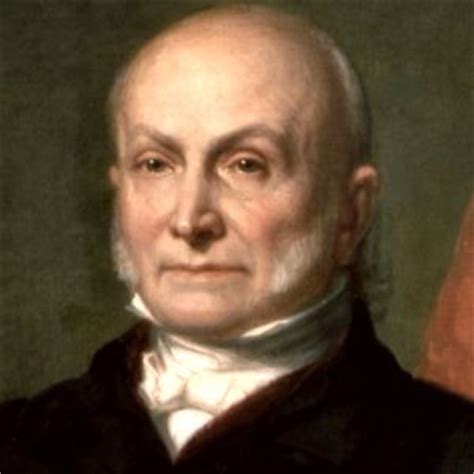
John Quincy Adams
wrote in his diary:
"I implore the
Spirit
from whom every good and perfect gift descends to enable me to render essential service to MY COUNTRY, and that I may never be governed in my public conduct by any consideration other than that of duty."
|
|
John Quincy Adams
composed the poem:
"MY COUNTRY's weal (well-being)-that be my polar star-
Justice, thou Rock of Ages, is thy law-
And when thy summons calls me to thy bar,
Be this my plea, thy gracious smile to draw-
That all my ways to justice were inclin'd-
And all my aims-the blessings of mankind."
|
|
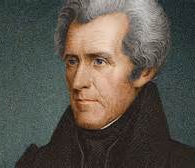
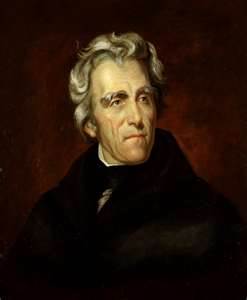
President Andrew Jackson
stated in a Protest message to the Senate, April 15, 1834:
"The only ambition I can feel is to acquit myself to Him to whom I must soon render an account of my stewardship ...
If the
Almighty Being
who has hitherto sustained and protected me will but vouchsafe to make my feeble powers instrumental to such a result,
I shall anticipate with pleasure the place to be assigned me in the history of MY COUNTRY,
and die contented with the belief that I have contributed in some small degree to increase the value and prolong the duration of
American liberty."
|
|
Andrew Jackson
stated in his Farewell Address, March 4, 1837:
"My own race is nearly run; advanced age and failing health warns me that before long I must pass beyond the reach of human events and cease to feel the vicissitudes of human affairs.
I thank
God
that my life has been spent in
a land of liberty
and that He has given me a heart to love MY COUNTRY with the affection of a son. And filled with gratitude for your constant and unwavering kindness, I bid you a last and affectionate farewell."
|
|
President Franklin Pierce
stated March 4, 1853:
"With all the cherished memories of the past gathering around me like so many eloquent voices of exhortation from
Heaven,
I can express no better hope for MY COUNTRY than that the kind
Providence
which smiled upon our fathers may enable their children to
preserve the blessings
they have inherited."
|
|
Kit Carson
stated:
"No, this is a service for MY COUNTRY, and it doesn't matter whether I do it as an officer or as a plainsman. The big thing is to do it."
|
|
Clara Barton
stated of the wounded Civil War soldiers:
"What could I do but go with them, or work for them and MY COUNTRY? The patriot blood of my father was warm in my veins."
|
|
President Herbert Clark Hoover
stated in his Inaugural Address, March 4, 1929:
"If we hold the faith of the men in our mighty past who created these ideals, we shall leave them heightened and strengthened for our children ...
I ask the help of
Almighty God
in this service to MY COUNTRY to which you have called me."
|
|
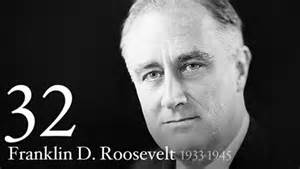
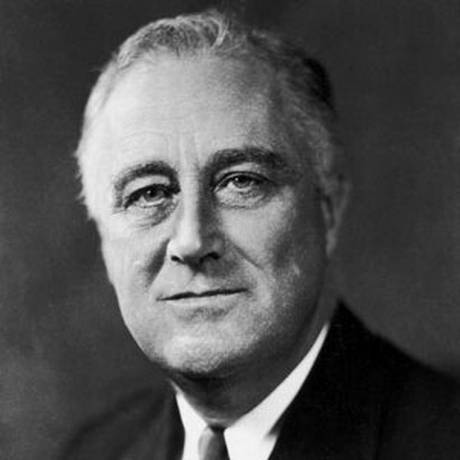
Franklin D. Roosevelt
addressed the White House Correspondents' Association, February 12, 1943:
"In every battalion, and in every ship's crew, you will find every kind of American citizen representing every occupation, every section, every origin, every religion, and every political viewpoint.
Ask them what they are fighting for, and every one of them will say, 'I am fighting for MY COUNTRY.'"
|
|
Franklin D. Roosevelt
stated in his Radio Campaign Address from Hyde Park, New York, November 4, 1940:
"When you and I step into the voting booth, we can proudly say:
'I am an American,
and this vote I am casting is the exercise of my highest privilege and my most solemn duty to MY COUNTRY.'
Dictators have forgotten - or perhaps they never knew - the basis upon which democratic Government is founded: that
the opinion of all the people,
freely formed and freely expressed, without fear or coercion,
is wiser than the opinion of any one man or any small group of men ...
Democracy
is the
birthright
of every citizen, the
white and the colored;
the Protestant, the Catholic, the Jew;
the sons and daughters of every country in the world, who make up the people of this land."
|
|
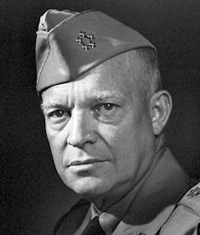
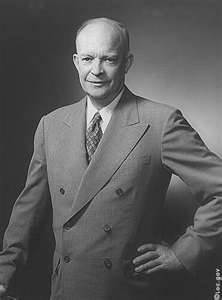
President Dwight Eisenhower
approved the Code of Conduct for Military, August 17, 1955:
"I will never forget that I am an American fighting man, responsible for my actions, and dedicated to the principles which made MY COUNTRY free. I will trust in my
God
and in the United States of America."
|
|
President Dwight Eisenhower
stated in his Farewell Address, January 17, 1961:
"This evening I come to you with a ... farewell, and to share a few final thoughts with you, MY COUNTRY ...
We face a
hostile ideology
- global in scope,
atheistic in character,
ruthless in purpose, and insidious in method ...
As we peer into society's future, we ... must avoid the impulse to live only for today, plundering for our own ease and convenience the precious resources of tomorrow.
We cannot mortgage the material assets of our grandchildren without risking the loss also of their
political and spiritual heritage."
|
|
Daniel Webster
stated at the Bunker Hill Monument, June 17, 1843:
"I mean to stand upon the Constitution. I need no other platform. I shall know but one country.
The ends I aim at shall be MY COUNTRY's, my
God's,
and Truth's.
I was born an American; I will live an American; I shall die an American."
|
|
American Minute is a registered trademark of William J. Federer. Permission is granted to forward, reprint, or duplicate, with acknowledgment.
|
|
Schedule Bill Federer for informative interviews & captivating PowerPoint presentations: 314-502-8924
wjfederer@gmail.com
|
|
|
|
|
|
|