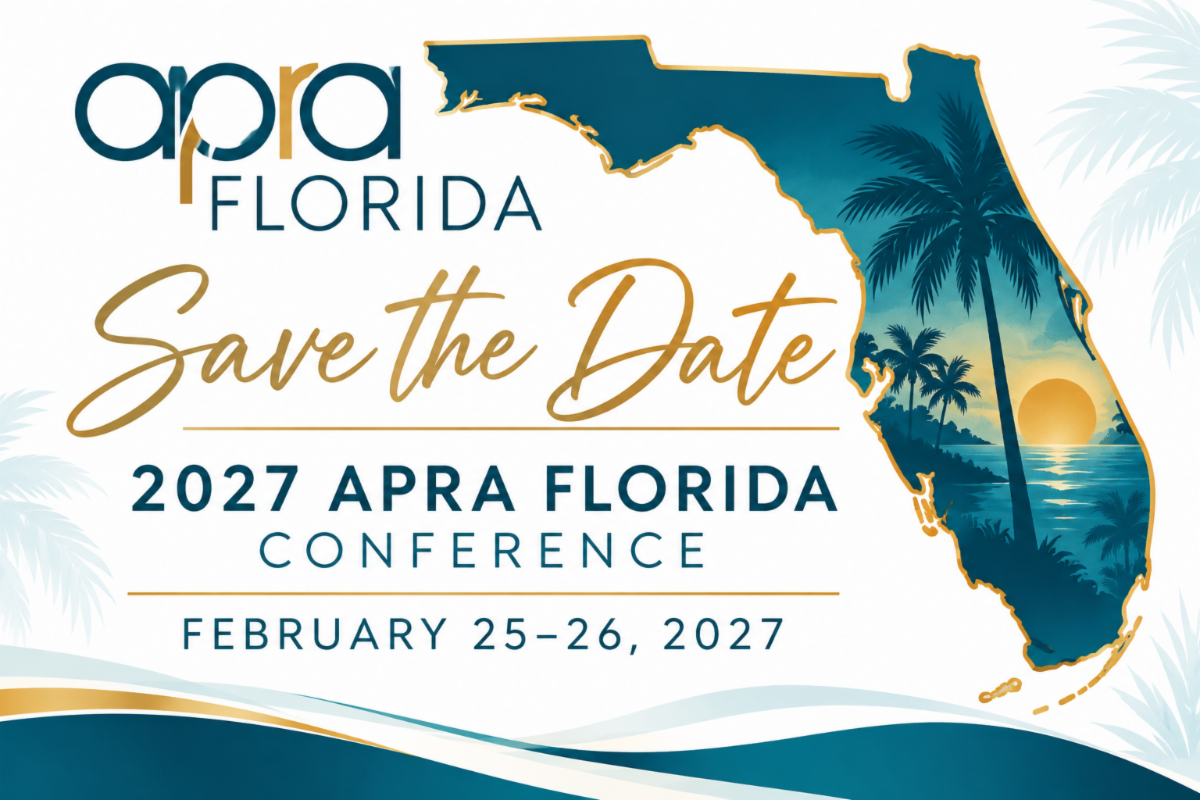
2027 IS ALMOST HERE!

Venue and registration details will be shared soon.

CHECK OUT WHAT'S COMING

APRA FL Coffee Chats

When: 1st Wednesday of the Month

@ 9:30AM (ET)

NEXT: Nov 4th

Where: Zoom


Monthly networking

Working a Sphere of Influence List with Your Team and Volunteers


When: Thu, Nov 19 @ 12:00-1:00PM (ET)

Where: APRA FL Zoom Webinar


Tap into the power of your network. Learn how to create a customized Sphere of Influence list and collaborate with your team to engage trustees and volunteers in advancing qualified leads. Walk away with a proven method to strengthen lead identification and move prospects forward.


About the Presenter: Chris Mildner, CFRE, supports prospect development and strategy for The Nature Conservancy in Alaska, Oregon, and Idaho, with experience spanning research, data governance, analytics, and AI. A frequent Apra presenter, she has also served as an editor and author for Apra Connections.


DID YOU KNOW?


Prospect Research Phenomena You Find

ONLY IN FLORIDA

The Halfback

[Next month your name could appear here.]


Every Florida researcher knows the snowbird. Fewer have met the halfback.


A halfback is a retiree who moved to Florida, lived here full time, and later moved again, usually to western North Carolina, Upstate South Carolina, east Tennessee, or north Georgia. That puts them closer to their children and grandchildren but still well south of the harsh winters they left behind. People give different reasons for the second move, including the heat, hurricanes, insurance costs, and wanting to be near family as they get older.


What does this mean for your research?


Start with the address. A donor who has been listed as a Florida resident in your database for fifteen years could have moved out of state two years ago and never told you. Many halfbacks hold on to a Florida condo for a season or two before selling, which makes the move easy to miss. A home sale in the county records, a homestead exemption that has been removed, an out-of-state voter registration, or an NCOA update will usually tell you.


Moving away also does not mean the donor has lost interest. Someone who gave to your organization for ten years still cares about it after crossing into North Carolina. Halfbacks are usually older and have long giving histories with the organizations they supported here, so they often make good planned giving prospects. The move itself gives a gift officer a reason to call.


Capacity can change too. Selling a Florida home often frees up a good amount of cash, and North Carolina, South Carolina, and Georgia all have a state income tax. If a screening runs while the donor is in the middle of moving, the results may not be reliable, so it makes sense to check the rating again later.


Researchers outside Florida should keep halfbacks in mind as well. A retiree who just moved to Asheville or Knoxville may have spent years giving to Florida organizations.


Finally, before replacing a Florida address in your CRM, think about saving it as a seasonal or previous address, or adding a field for former Florida residents. That way the donor’s history stays with the record.


Further reading


Got a Florida-specific prospect research topic of your own?

We would love to feature it here. Submit a piece of 300 words or less to webinars.aprafl@gmail.com, and it could run in a future issue with your name at the top.


APRA FL MEMBERSHIP BENEFITS


Stuck on a tricky prospect or research tool?


APRA Florida members never have to figure it out alone. For just $30 a year, you join a statewide network of colleagues ready to help, plus mentorship, job postings, members-only resources, and great events. Join or renew today and see why we are the coolest chapter in the nation!

Learning AI Alongside Peers:

The AI Roundtable Series in Review


Jake Dornbush

Assistant Director, Prospect Research

University of Central Florida


Prospect Research Institute's AI Roundtable Series has created a valuable space for prospect development professionals to discuss one of the most significant changes currently affecting the field. Rather than focusing on theoretical discussions or product demonstrations, the series brings together practitioners with varying levels of AI experience to exchange ideas, ask questions, and share real-world applications.


A recurring theme throughout the conversations has been the importance of balancing innovation with professional judgment. Participants have discussed both the opportunities AI presents for increasing efficiency and the continued need for researchers to verify information, provide context, and apply critical thinking to their work.


The small-group format has been especially beneficial, allowing for candid discussions about successes, challenges, hesitations, and lessons learned. Topics have ranged from getting started with AI tools to exploring practical applications in prospect research workflows, including profile development and information synthesis.


As AI continues to evolve, one of the greatest values of the series has been the opportunity to learn directly from peers who are navigating many of the same questions. The conversations have been thoughtful, practical, and refreshingly grounded in the realities of prospect research.


THANK YOU TO OUR ANNUAL CHAPTER SPONSORS!


Diamond

Platinum

Gold

Silver