On Systems of Power and Voting
View as Webpage • Visualizar como uma página • Visualizar como una página web da web • Als Webseite anzeigen
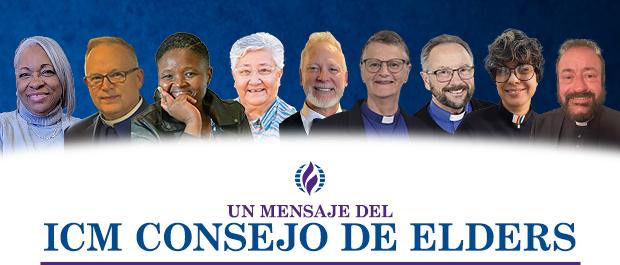
As the MCC Council of Elders, we speak with one voice.
Now we speak. Now we rise. Now we refuse silence. And we invite you to join us.
Because liberation is a circle, not a ladder. Because none of us are safe until all of us are. Because the God who made us did not make us, to watch harm happen from the sidelines.
There are way more of us than there are those in power. Open your eyes, open your hearts, open your mouths; we will survive, we will overcome, we will persevere, but we must do it together.
We need to continue resisting all injustices, we need to vote at every opportunity; let the ballot box speak for us. Be proactive, and diligent.
Let us resist the erosion of “our” rights and those of our siblings…Women, LGBTQIA+ People, Black and Brown communities, Immigrants, Differently Abled People, Religious Minorities, and Unsheltered Folks.
In this most recent case Louisiana v. Callais, the United States Supreme Court’s ruling of 29th April 2026 struck down Louisiana’s congressional map and sharply limited how Section 2 of the “Voting Rights Act” can be used going forward. It raises the bar for proving racial vote dilution and makes it harder for minority voters to challenge discriminatory maps.
There are many in MCC who were part of the Civil Rights movement for Black voting rights, or know the stories of their families and communities, as they joined the struggle. This change in law is a dangerous backwards step from the voting rights gained during that time.
Why this case matters
-
It redefines the legal standard for racial vote-dilution claims.
-
It limits when race can be considered in redistricting, even when trying to comply with the Voting Rights Act.
-
It has nationwide implications, potentially affecting maps in multiple states ahead of the 2026 mid-term elections.
While Jesus does not use modern terms like “systems of power,” his teachings clearly confront:
- Empire (Rome’s domination model)
- Religious hierarchy (scribes and Pharisees who “lord it over” others)
- Economic exploitation (temple marketplace, unjust debt systems)
- Social exclusion (purity codes used to marginalize)
Jesus’ teaching in Luke 22:25–26 is the most explicit statement:
Luke 22:25-26 (NIV)
Jesus said to them, “The kings of the Gentiles lord it over them; and those who exercise authority over them call themselves Benefactors. But you are not to be like that. Instead, the greatest among you should be like the youngest, and the one who rules like the one who serves.
Worldly systems rely on domination; God’s system relies on service.
- Systems built around racial hierarchy and patriarchy tend to protect those who sit at the top.
- Everyone else — Women, LGBTQIA+ People, Black and Brown communities, Immigrants, Differently Abled People, Religious Minorities, and Unsheltered Folks — end up exposed to the same machinery of exclusion, policing, and dehumanization.
- The danger is the structure that privileges some and punishes everyone else.
The truth is this:
In a society built on racial hierarchy (unequal power), patriarchy, and fear, anyone who is not centered by the system becomes vulnerable to its violence, vitriol, and hatred.
The analysis, the experience, the warning is not about individuals. It is about the machinery that was designed to protect a narrow slice of humanity and treat everyone else as expendable.
A system like that does not need personal hatred to function. It runs on old laws, unspoken rules, inherited myths, and the unspoken belief that some lives are worth more than others.
And under that kind of system, Women, LGBTQIA+ People, Black and Brown communities, Immigrants, Differently Abled People, Religious Minorities, and Unsheltered Folks — ALL of us end up exposed to the same storm.
The danger is not “them.” The danger is the structure that keeps reproducing harm unless WE interrupt it together.
Right wing politics is on the rise in so many parts of the world.
The Council of Elders calls on MCCers around the world to engage in upholding the right to vote for all, to work for justice, and to dismantle oppressive systems.
What USA voters need to do right now
To make your vote count after the Supreme Court’s recent ruling, voters must be more proactive than in previous election cycles. The ruling has weakened Section 2 of the Voting Rights Act, making it harder to challenge discriminatory maps and increasing the likelihood of rapid redistricting changes before upcoming elections.
1. Re-check your district, polling place, and registration immediately
Because the Court struck down Louisiana’s map and opened the door for similar changes nationwide, states may redraw districts quickly—even close to election deadlines. This could shift voters into new districts or precincts with little notice.
Action: Verify your voter registration, district, and polling location regularly between now and Election Day.
2. Vote early if your state allows it
Early voting reduces the risk of last-minute precinct changes or confusion caused by redrawn maps. Louisiana’s situation shows how map changes can collide with early voting windows.
3. Stay connected to trusted voting-rights organizations
Groups like the American Civil Liberties Union (ACLU) and Common Cause are tracking map changes and legal challenges in real time. They provide district lookup tools, legal hotlines, and updates on redistricting battles. The ACLU warns that the ruling “eviscerates Section 2” and will make discriminatory maps harder to challenge. Common Cause is urging Congress to pass new protections and is fighting state-level gerrymanders.
4. Understand what the ruling does—and does not—do
The Court ruled that Louisiana’s second majority-Black district was an unconstitutional racial gerrymander and sharply limited the use of race in redistricting. This makes it far harder for minority communities to challenge maps that dilute their voting power. But it does not eliminate all legal avenues—just makes them more difficult.
5. Prepare for misinformation and confusion
Rapid map changes create opportunities for misinformation about where and how to vote.
Action: Rely on official election offices—not social media—for updates.
6. Engage locally
Because federal protections have been weakened, local advocacy matters more. Attend city council, county commission, or redistricting hearings where new maps may be drawn. State legislatures in several states are already considering new maps that could reshape representation.
7. Support state-level Voting Rights Acts
Some states, like Colorado, have enacted their own protections to counteract federal rollbacks. Strengthening state law is now one of the most effective tools for protecting fair representation.
Bottom line
Your vote still counts—but you must stay vigilant. The Supreme Court’s ruling has made the landscape more volatile, and voters—especially voters of color—must take extra steps to ensure they are voting in the correct district, at the correct location, and with accurate information.
***
Gina Hinojosa, Gubernatorial Candidate for Texas, USA, says, “America benefits when responsible conservatives stand up for integrity, constitutional governance, and accountability within their own party. Reclaiming that tradition would strengthen the entire country. This isn’t about defeating fellow Americans---it’s about protecting the democratic system that allows all of us to disagree freely while remaining one United nation!”
|