Important note: If you experience issues with this newsletter's display,

please view the web version.

#RTC:Rural eNews

February 2025

A young woman in a red jacket smiles and waves towards a crowd. A group of people all in red, standing behind her, wave to the crowd as well.

New Publications!

We've had a busy start to the year and are keeping our momentum going, starting out 2025 with three new publications centered on our participatory research approach and secondary data analyses!


Check them out below!

A young Asian woman in a maroon suit jacket and black shirt speaks to a crowd.
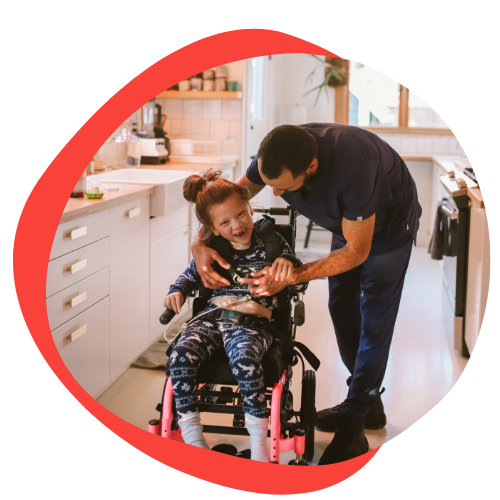
A father helps his daughter in her wheelchair. She is smiling and giggling.

Western Reserve Independent Living Center: Leaders in Disability Advocacy for Eastern Ohio

RTC:Rural researchers Lillie Greiman, Luke Santore, and Rayna Sage partnered with APRIL and the Western Reserve Independent Living Center (WRILC) on this community-based research project. In this paper, our researchers explore WRILC’s relationship-based community advocacy approach through the Rural Community Living Development project.

Check out the report!

Partnering for Research at Your Center for Independent Living: Tips from your peers


In this informative guide, RTC:Rural researchers Rayna Sage and Krys Standley present advice on collaborative and participatory research projects with Centers for Independent Living (CILs), based on our work and feedback from CIL partners.

Read the guide 
A man with down syndrome hugs a young woman.
An older black man sits in the front seat of a public bus explaining the different bus controls of a new more accessible bus.

America at a Glance: Rural Transit Funding Through the COVID-19 Pandemic


Federal transit funds to improve public transportation doubled during the COVID-19 pandemic, but many rural counties received no transit funds from 2018-2022. In this factsheet, RTC:Rural researchers Andrew Myers and Luke Santore explore the differences in transit funds received in urban and rural counties to illustrate transportation barriers for rural people with disabilities.

View the factsheet

Tribal Vocational Rehabilitation Self-Employment Toolkit

RTC:Rural is partnering with the American Indian Vocational Rehabilitation Training and Technical Assistance Center (AIVRTTAC) to share the Tribal Vocational Rehabilitation Self-Employment Toolkit (TVR SET). This work is a result of a long-term partnership between RTC:Rural and the Consortium of Administrators of Native American Rehabilitation (CANAR). CANAR saw a need for culturally appropriate self-employment resources for American Indian Vocational Rehabilitation Service (AIVRS) counselors and consumers and teamed up with us to develop them (see Building the Tribal Vocational Rehabilitation Self-Employment Toolkit).


Now, we are focusing on strategies to build self-employment capacity using TVR SET materials. This effort has been guided by a group of advisors representing seven regionally diverse AIVRS programs. Identified outreach strategies include regional two-day in-person trainings, a self-employment course for delivery through the Northwest Indian College, and mini-trainings in conjunction with bi-annual CANAR conferences.


Last July, we had our first in-person TVR SET training in Tulsa, OK. Participants reported much higher knowledge and confidence to support self-employment cases at their AIVRS programs. Six-month follow-up focus group discussions highlighted how TVR SET materials have been used.


Focus groups gave feedback about their desires for additional support, like having peer-to-peer follow-up meetings to discuss questions and refresh on the materials. We hope to implement peer Zoom calls after our next regional training in Albuquerque, NM this March.


To learn more about our upcoming TVR SET regional trainings or Northwest Indian College course for CEU credits, contact Catherine Ipsen, RTC:Rural or Rebecca Holland, AIVRTTAC. 


A Native American woman sits in a circle while talking and presenting to others in the room..

Training participant feedback:


“I have a gentleman that I'm helping right now, and I think the toolkit is amazing... About an hour before he gets to my office, I pull everything out, and I'm like, okay, this is this. And he is really enjoying them, and it's making him think good and long and hard about what is ahead of him in this endeavor. He's trying to open a moving business. So, he has really enjoyed it. He has really enjoyed the worksheets... And then he's also working in collaboration with our... Small Business Development Center. And the people over there are like, this is great.”


“Our Colorado DVR counselor, who usually works with the self-employment, goal-oriented people, individuals who we collaboratively serve. She gave a presentation on what she does at Colorado DVR to help somebody, but in the process, I had sent her the link to the tool kit… She said it was perfect… What she really appreciated was that it gave a very realistic view of one how challenging it is to start a business of your own, and how detail oriented it has to be.”


“I do have a client, and he originally came with a one-page business plan. We're like, no, so we get him the resource. And he went home, and he came back with, like, I think maybe 15-16, pages, wow. Yeah, it did take him some time to come back. But, I mean, he did. He went through everything - the worksheets - and committed.”

Health Community Living Logo

Upcoming Healthy Community Living Trainings

Living Well in the Community


Twice-a-Week Training Sessions


Dates: Tuesdays & Thursdays: March 4, 6, 11, 13, 18, 20, 25, 27


Time: 11:00 AM – 1:00 PM (MST)


Community Living Skills


Wednesday Training Sessions


Dates: March 5, 12, 19, 26


Time: 11:00 AM – 1:00 PM (MST)


For any questions or concerns please reach out to Amy Lariviere at amy.lariviere@mso.umt.edu or (406) 243-4256

Sign up here!

© 2025 RTC:Rural, All rights reserved

Instagram  Facebook

The Research and Training Center on Disability in Rural Communities (RTC:Rural) conducts research on disability as part of the Rural Institute for Inclusive Communities at the University of Montana.


RTC:Rural is funded by the National Institute on Disability, Independent Living and Rehabilitation Research (NIDILRR) grant number 90RTCP0008 to improve the ability of people with disabilities to engage in rural community living.