ACCRF Research Update - August 2026 | | |
Dear Friends,
As the summer draws to a close and I mark my first six months as ACCRF’s Executive Director, it seems a fitting time to reflect on the year so far and look ahead to the months to come.
We continue to see encouraging early results from several ACC clinical trials, and two drugs have recently received FDA designations suggesting their promise in ACC: Emi-Le, a B7-H4 antibody drug conjugate (ADC) received Breakthrough Therapy Designation, and REM-422 (a MYB degrader) received Fast Track Designation. As part of our efforts to raise awareness and advocate for people living with ACC, ACCRF met with the FDA alongside medical oncologists who specialize in ACC to share insights about the disease and the challenges faced by patients. Additionally, new clinical trials opened that include ACC patients, testing treatments such as LNCB74 and P-Sam (two different B7-H4 ADCs), PIN-5018 (a CK1a degrader), and CRD3874-SI (STING agonist).
For our education and engagement efforts, we were thrilled to host our first-ever Chicago Patient Meeting this May in addition to our yearly Needham meeting, creating more opportunities for ACC patients to connect in person. But we aren’t stopping there! This November we will be hosting our first Los Angeles Patient meeting, offering a chance for our West Coast community members to gather, share, and learn. This fall will also see our next Patient Webinar discussing how to interpret your lung CT scans, featuring Dr. Florian Fintelmann, the Medical Director of Thoracic Radiology at Massachusetts General Hospital. You can learn more about these events and register in the update features below.
These past six months have brought meaningful progress in our work and many opportunities to connect within the ACC community. I feel privileged to be a part of such a dedicated network, and I look forward to continuing this work together in the months ahead. On behalf of everyone at ACCRF, thank you for your partnership. We hope you enjoy these final days of summer as we move into a fall filled with promise.
Sincerely,
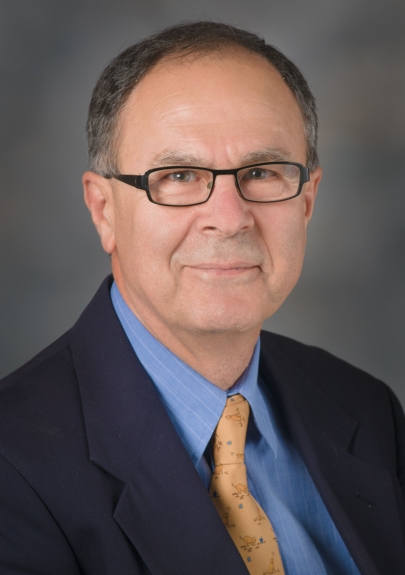
Dr. Nicole Spardy Burr, PhD
Executive Director
| |
Patient Champion: Amanda Kedaigle | |
When Amanda (Mandy) Kedaigle learned of her mother’s ACC diagnosis, she didn’t know anything about the rare cancer, but she knew she wanted to make a difference not only for her mom, but for the ACC community.
She began volunteering with ACCRF in 2017, while she was a graduate student at MIT. As she became more familiar with ACC and the foundation’s research efforts, she saw an opportunity to connect her personal advocacy with her academic work.
Amanda created a genomic database that continues to be a vital resource for many ACC researchers in understanding how the disease functions and identifying drug targets for better treatments. You can read more about Mandy's incredible work here.
| | Introducing Our New ACC FAQ Series | | |
As research in ACC continues to evolve, patients and families naturally have questions about what new findings mean for the disease and for those living with it. Our new FAQ series will address some of the questions we hear most often, drawing on current research and the expertise of ACC specialists.
| | |
In our first FAQ installment, we look at ACC-I and ACC-II, what these subtypes may tell us about the disease and what researchers are still working to understand.
Researchers have steadily identified characteristics, or biomarkers, of ACC tumors that help define ways that the disease is likely to behave. In a 2021 study, researchers used genomic and protein analyses of ACC tumors to identify two molecular subtypes, called ACC-I and ACC-II. These subtypes differ based on certain molecular features and correlated with disease aggressiveness. Generally, ACC-I is considered a more aggressive form with higher likelihood of recurrence while ACC-II is often referred to as "indolent" or slow-growing.
These subtypes are useful to researchers, physicians, and patients in better estimating prognosis, finding potential drug targets, and determining the most effective treatments. You can learn more about the nuances of ACC subtypes and what they can tell us about the disease in the full FAQ feature.
| | Save the Date: West Coast Patient Meeting 2026 | | |
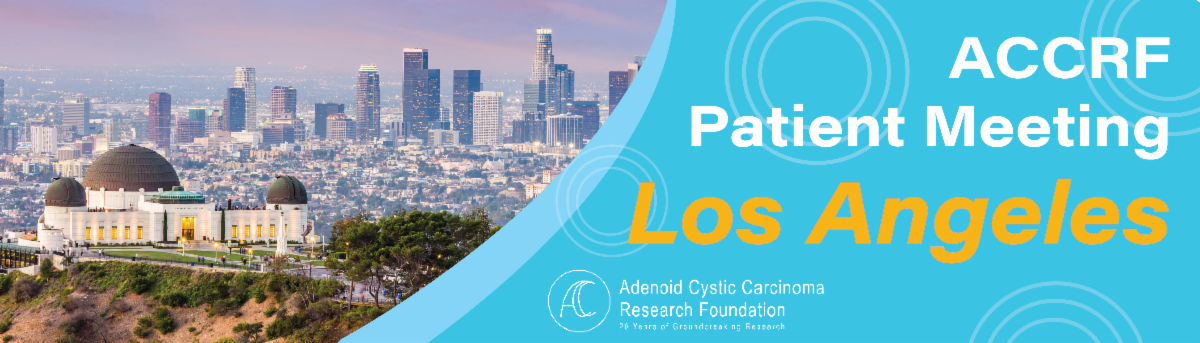
Join us Saturday, November 14 in Los Angeles, CA, USA for a day of community, connection, and education at the 2026 West Coast ACCRF Patient Meeting.
This in-person event provides a forum for ACC patients to meet, discuss their journeys, and hear about the latest in ACC research and treatment options.
A formal invitation with full event details is forthcoming.
Please contact us at info@accrf.org if you have questions about the event.
| Register Today for the Fall Patient Webinar | |
If you've ever wondered how to make sense of your lung CT scans, you're not alone. We often hear questions from patients and caregivers about what the findings mean.
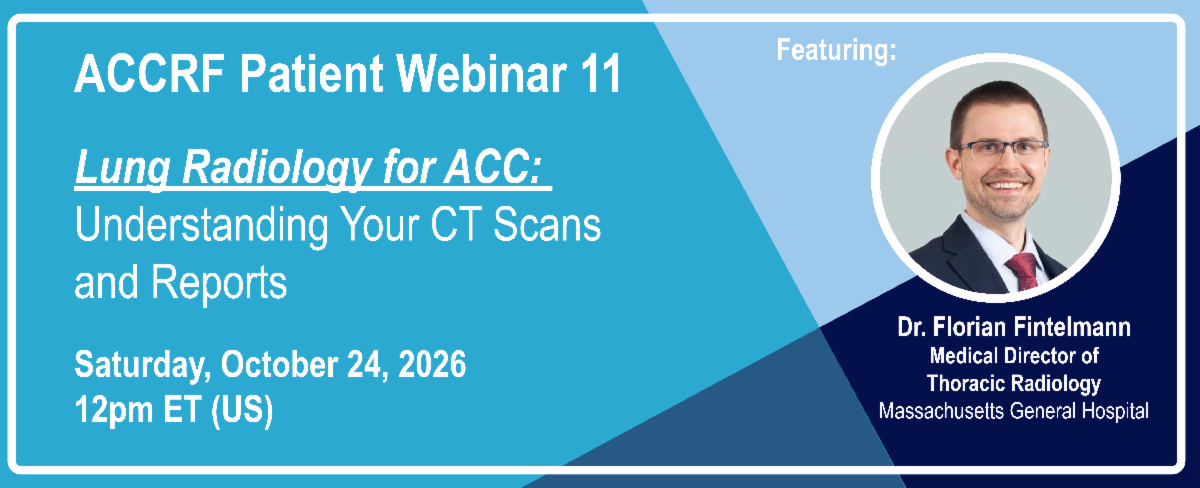
To help answer these questions, Dr. Florian Fintelmann, Medical Director of Thoracic Radiology at Massachusetts General Hospital will join our upcoming webinar to explain how scans are interpreted, what information is most important, and how the reports may guide the planning of your care.
Please join us Saturday October 24 from 12-1pm ET for our next Patient Webinar:
Lung Radiology for ACC: Understanding Your CT Scans and Reports.
You can register using the link below. During registration, you'll have the opportunity to submit questions for Dr. Fintelmann.
For those unable to attend, the webinar will be recorded and shared on our YouTube channel, along with all previous Patient Webinars.
| | We are proud to support many researchers in their ongoing work seeking new treatments and a cure for ACC. The ACCRF research network continues to facilitate cutting-edge research and motivate clinical trials that advance our understanding of the disease. Below are the latest updates in clinical trials, research publications from ACCRF grantees, and ACCRF-funded research grants. | | |
Clinical Trial Updates
ACCRF’s Open Studies webpage lists clinical trials that may be appropriate for ACC patients after consulting their physicians. Listed studies below reflect any changes made since the previous email update.
Studies that have recently opened to ACC Patients:
-
CRD3874-SI: phase 1 trial testing Curadev's STING agonist, CRD3874-SI, is open to recurrent/metastatic ACC patients at Memorial Sloan Kettering Cancer Center in New York, NY, USA.
-
Becotatug Vedotin (EGFR ADC) and SBRT: phase 2 trial testing an EGFR ADC (Becotatug Vedotin) followed by SBRT is open to recurrent/metastatic ACC patients at Shanghai 9th People’s Hospital in Shanghai, China.
Studies that have recently closed or paused:
-
Pemetrexed and Pembrolizumab: phase 2 trial testing Pemetrexed and Pembrolizumab for Recurrent and/or Metastatic Salivary Gland Cancer closed recruitment.
| | |
Published Articles
Below are the latest in research publications from ACCRF grantees. You can find these and many others on our Published Articles webpage.
| |
Research Grants Awarded by ACCRF
ACCRF is dedicated to the pursuit and support of the most promising ACC research in the field today. Since founding ACCRF, we have awarded more than $20 million in research grants to individuals working towards new treatments and a cure, rapidly expanding the field of ACC research in the process.
We are proud to have recently awarded the following grants:
| |
Samir Hanash - MD Anderson Cancer Center: Validation of an ACC-specific cell surface target for ADC therapy
| |
Tempus - Rare Cancer Research Collaboration in Adenoid Cystic Carcinoma (co-sponsored with Brave Like Gabe)
| For a full list of ACC research grants funded by ACCRF, visit our Funded Grants page. | | |
ACCRF is pleased to provide the ACC Physicians List, containing up-to-date information for over 850 physicians globally with experience treating ACC.
This fully searchable database allows patients to locate physicians by name, location, institution, or field of expertise to help inform their decisions in selecting doctors. Features include a link to each doctor’s institutional website (where available) and a link to the National Physicians Index (NPI) listing for each doctor based in the USA which provides current information on practice locations and status.
This list is constantly evolving, and we rely on patient input to ensure that our database is as comprehensive and current as possible.
Please email us at info@accrf.org if any of the following apply:
- You feel your doctor is knowledgeable about ACC and should be added to the list
- Your doctor on the list has retired
- Your doctor on the list has moved away from where s/he is listed
Your guidance will ease the path for future ACC patients. We are particularly interested in countries and regions with relatively few available physicians listed.
We encourage patients with advanced, metastatic, or complex cases of ACC to visit our Second Opinions Resource for more information on specialists.
| | ACCRF’s work is only possible through the generous support of community members like you. With increased uncertainty in the research funding landscape, our efforts to discover new, better treatments for ACC are more critical than ever. Please give today and help us continue to advance groundbreaking research that directly impacts the lives of patients. | | | | |