|
Daily Transportation News
May 7, 2026
| | | “Super Speeders” Crackdown Expected in Final New York Budget Agreement | |
|
New York State’s tentative $268 billion budget agreement is expected to include a modified version of the long-debated “Stop Super Speeders” proposal, signaling a potentially significant new direction in automated traffic enforcement and repeat offender regulation. While Gov. Kathy Hochul did not publicly release detailed legislative language during Thursday’s budget announcement, lawmakers involved in negotiations indicated that the proposal is likely to move forward as part of the final budget package expected to be voted on next week.
Under the framework discussed by legislators, New York City would be authorized to require certain repeat speeding offenders to install “intelligent speed assistance” (ISA) devices designed to prevent vehicles from exceeding posted speed limits, similar in concept to ignition interlock systems used in drunk driving cases. Negotiations have reportedly centered on applying the program to drivers who accumulate 16 or more speed-camera violations within a 12-month period — a narrower version of earlier legislation introduced by Sen. Andrew Gounardes and Assembly Member Emily Gallagher.
Assembly Speaker Carl Heastie reportedly told lawmakers this week that the policy was expected to be included in the final budget framework following negotiations with members of the New York City delegation. However, discussions reportedly continued over implementation details, due process protections, privacy concerns, and the appropriate violation threshold for triggering the device requirement. Supporters argue the proposal targets a relatively small number of chronic reckless drivers responsible for a disproportionate share of dangerous speeding behavior, while critics have raised concerns about administration, enforcement, and equity impacts.
The broader budget agreement also includes several auto insurance reform measures outlined by the Governor, including proposals aimed at combating organized insurance fraud, limiting the use of underwriting factors such as ZIP codes and employment type, capping excess insurance company profits, and modifying aspects of New York’s liability and no-fault insurance framework. Final legislative language for both the insurance and “super speeders” provisions has not yet been publicly released.
Source: Gothamist
Click Here to Read More
| | DC's New AV Bill Could Unlock Autonomous Urbanism – or Block It Entirely | |
|
Every week, Americans take over half a million rides in autonomous vehicles across a dozen major cities. DC isn't one of them – but a new bill from Councilmember Charles Allen could change that.
Allen, along with Councilmembers Brooke Pinto and Matt Frumin, introduced the Autonomous Vehicle Deployment Authorization Amendment Act of 2026 on May 1. I've spent a decade in AV policy and, for better or worse, this is the most comprehensive and complex AV deployment bill I've seen from any U.S. city or state. It creates a real pathway to commercial AV rides in the District, while seeking to tackle a range of concerns surrounding AVs including congestion, equity, transit, labor, and liability.
The introduced text is an encouraging start – but it will all come down to how the bill is shaped by the Council.
Done right, this bill could mark the beginning of the autonomous urbanism era.
Autonomous urbanism is a broader vision for a future where AVs unlock tremendous improvements in city life by complementing public transit and reducing car dependence, making neighborhood streets safer for everyone (especially pedestrians, cyclists, and children), enhancing mobility for under-served communities, and supporting the local economy.
As we discussed at The Innovation Majority’s April 8th event, “Why not DC? Unlocking AVs in the District,” AVs present a significant opportunity for the District to deliver on safer streets, address inequitable access, and diversify and revitalize the local economy.
Three policy elements give me hope that the bill could set the foundation for DC to become a national leader in autonomous urbanism:
- Safety assurance and oversight through a tiered permitting system for AV testing and deployment, with expanded oversight authority for the District Department of Transportation (DDOT) and other agencies to address issues.
-
Enhancing and complementing public transit with more funding generated by AV program fees, while also encouraging AV companies to offer discounted fares for AV rides connecting to public transit (Waymo previously piloted this in San Francisco and Los Angeles).
- Unlocking broad public benefits by requiring companies to fairly rebalance their vehicle fleets to avoid disparate availability or wait times, and sharing information that can help the city improve infrastructure for everyone.
Done poorly, this bill could block DC residents from seeing the benefits of AVs for many more years.
Source: The Innovation Majority
Click Here to Read More
| | |
Inside the MTA’s Bus Simulator Training Program
Veteran MTA bus operator Edison Obando knows the challenges of navigating New York City streets behind the wheel of a bus. So when he climbed into one of the MTA’s new driving simulators, he said the experience felt strikingly familiar. “It’s like driving a bus you feel like you are driving it, when you hit the brakes it stops, hit the gas it moves, pretty real,” said Obando, who has spent 20 years driving buses and currently operates a route in Flushing.
Click Here to Read More
Taxis, Methadone Patients, Millions of Tax Dollars at Center of Medi-Cal Fraud Investigation
At least two public agencies in Silicon Valley are investigating alleged fraud involving California’s Medi-Cal program. At issue are millions of tax dollars that have spent transporting patients to a specific drug treatment center in the Bay Area, and allegations some of the drivers responsible for the rides may have been involved in a scheme to inflate how much they were able to charge Medi-Cal for transportation costs.
Click Here to Read More
Surface Transportation Legislation in 2026: What We Know So Far
Every five years or so, Congress writes legislation that establishes policies and funding for highways, bridges, mass transit and other transportation priorities. With the 2021 Infrastructure Investment and Jobs Act expiring on Sept. 30, the 119th Congress began work earlier this year on the next surface transportation bill. Much has changed since 2021, including the party in power across the executive and legislative branches of government and the transportation technologies available, which now include autonomous vehicles, robotaxis, drones and electric vertical takeoff and landing aircraft.
Click Here to Read More
| |
Critics Fear for the Future of Paratransit in Montreal
Paratransit users are concerned about Quebec’s decision to change the way funding terms for their transportation service are calculated. Given the ridership increases in paratransit, a $12.5-million shortfall is expected in 2026 in the Montreal region. And that deficit could grow in the coming years, which users fear would translate into a significant deterioration in service. Following the budget tabled by Quebec last March, the Ministry of Transport decided to revise how subsidies paid to paratransit are calculated.
Click Here to Read More
Honda to Halt Plans for $15-Billion EV Plant in Ontario
Honda Motor Co. is halting plans to build a $15-billion electric vehicle plant in Canada due to lagging interest in the products, according to a report from the Asian business news outlet Nikkei. The report said the automaker is responding to waning EV demand in the United States by ending the project, and instead plans to “put hybrids at the centre of its North American strategy.” The plant, originally planned for construction near Alliston, Ont., was intended to build 240,000 EVs annually, beginning in 2028, but Honda paused construction on the facility in May 2025 for two years in the face of slower-than-expected EV demand. The project was billed as the largest foreign investment in Canadian history and its potential cancellation, which has not been officially confirmed by Honda, would mark a significant setback for Canada’s auto strategy.
Click Here to Read More
Future of Bird Canada in Windsor Expected to Be Decided Next Week
The future of Bird Canada in Windsor could be decided at the next city council meeting. Mayor Drew Dilkens says council is expected to discuss a report at its May 11 meeting. Dilkens did not say what city staff is recommending but did say the company has addressed a number of concerns the city had. As AM800 news reported last month, the city paused e-scooter and e-bike rentals from Bird Canada after an agreement between the two parties expired on April 21.
Click Here to Read More
| |
Robotaxi Revolution Hits Europe: Zagreb Becomes First City to Launch Futuristic Autonomous Taxi Service
Croatia has officially stepped into the future after becoming the first city in Europe to introduce a robotaxi service on public streets. The ambitious project, launched in partnership with Uber and Chinese autonomous driving company Pony.ai, has been quietly operating since April 8 with a fleet of 10 automated vehicles transporting selected passengers across the Croatian capital.
Click Here to Read More
Long-Delayed Edinburgh Taxi Test Centre Set to Open This Summer
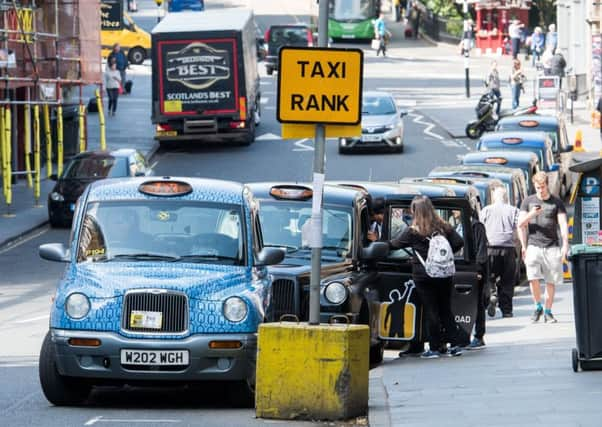
A long-delayed Edinburgh taxi testing centre that has gone more than £1 million over budget is finally set to open this summer. The new council-run taxi and private hire testing facility is expected to open in May or June, more than a year behind schedule and around £1.3 million over its original projected cost. The project was initially expected to cost around £1 million in 2023, but the total has since risen to £2.3 million.
Click Here to Read More
Why London’s Taxi Rules Are Different from the Rest of England, and Why That Should Never Change
London’s black cab trade operates under a legislative framework that bears some notable differences to the taxi and private hire licensing rules governing the rest of England. The capital’s regime, administered through Transport for London (TfL), is the product of centuries of accumulated law, professional standards, and vehicle regulation that has produced what operators, corporate travel buyers, and international transport observers widely regard as the benchmark for urban taxi services anywhere in the world.
Click Here to Read More
| |
Pakistan Govt Tightens Rules for Online Ride Drivers
People involved in criminal activities will no longer be allowed to operate online ride services as a new security system has been introduced for online taxi platforms in Lahore. Punjab Police has made police character certificates mandatory for individuals seeking to work as online taxi drivers. According to DIG Faisal Kamran, an agreement has been signed between Lahore Police and online taxi companies under which no ride hailing company will be allowed to register individuals with a criminal record on their applications.
Click Here to Read More
Bengaluru Taxi Drivers Can Be Soon Asked to Learn Kannada
The debate around language and livelihood in Karnataka has intensified again after the Kannada Development Authority (KDA) urged strict enforcement of Kannada proficiency rules for app-based cab drivers in the state. KDA Chairperson Purushottama Bilimale has asked the Transport Department to ensure that non-local cab drivers learn Kannada or face regulatory action.
Click Here to Read More
Goa Bans Taxi Parking in Panaji’s Public Lots to Ease Traffic Congestion
In a step aimed at reducing traffic congestion, the Goa government has prohibited taxis from parking in general parking areas across the capital city of Panaji. The order was issued by North Goa Collector Ankit Yadav following recommendations from the traffic police. Authorities noted that heavy vehicle inflow and limited off-street parking have led to widespread roadside parking, narrowing carriageways and worsening congestion.
Click Here to Read More
| | A Third of Scottish Uber Drivers ‘Ready to Quit’ As Fuel Costs Squeeze Earnings | |
|
A third of Uber drivers surveyed by GMB Scotland are ready to quit after rising fuel costs and lower fares hit weekly earnings, the union has warned.
GMB Scotland, which represents drivers using the ride-hailing app, said members are facing higher pump prices linked to the Iran war while fare levels have stayed the same or fallen. The union said some drivers are taking home up to £750 a week less than a year ago.
The union surveyed 80 Uber drivers and found one in three said they were struggling to continue working. Almost all respondents said rising fuel costs had damaged their income, with 37 percent saying the impact had been significant.
Fuel spending has also risen sharply, according to the union. A year ago, 48 percent of surveyed drivers spent more than £100 a week on fuel. That figure now stands at 83 percent, while 19 percent said they spend more than £200 a week.
The pressure is forcing longer working hours. GMB Scotland said 65 percent of drivers are working more than they did a year ago to cover extra costs, with one in five working more than 60 hours a week.
One driver told the union they were “down £150 per day” from their normal wage and were struggling to justify staying on the road because of cheaper journeys and higher fuel costs. Another said staying at home could sometimes be cheaper than working.
Source: Taxipoint
Click Here to Read More
| |
|
Message from IATR President Matthew W. Daus
At the International Association of Transportation Regulators (IATR), our regulators are at the forefront of addressing both the challenges and opportunities facing the mobility paradigm. Our IATR members, partner organizations, and regulated industries will continue on our shared quest to fulfill the mission of our non-profit educational organization - to bring about Multi-Modal Mobility Innovation for All! This mission can best be accomplished through information sharing, collaboration, identifying and promoting best practices, and educating our membership. These educational updates and electronic media clips are affectionately known as “IATR snips” and endeavor to cover all aspects of mobility around the globe - especially news and developments involving safety, technology innovation, multi-modal integration, automation, sustainability, electrification, accessibility, regulatory modernization, and equity.
If you would like more information about the IATR, you can visit our website at www.iatr.global. Current members can renew their memberships when you log in to your IATR portal on the top right-hand side of our website, or click here. If you forgot your membership password, please email our Membership Director, Eric Richardson, at erichardson@iatr.global.
| | | | | |
|
RENEW YOUR MEMBERSHIP FOR 2026:
Weekly news snippets
Access to the membership database
Videos and files from recent conferences
Discounted rates for future conferences, and more!
Renew your membership at http://www.iatr.global or email info@iatr.global for any questions!
| | | | |