|
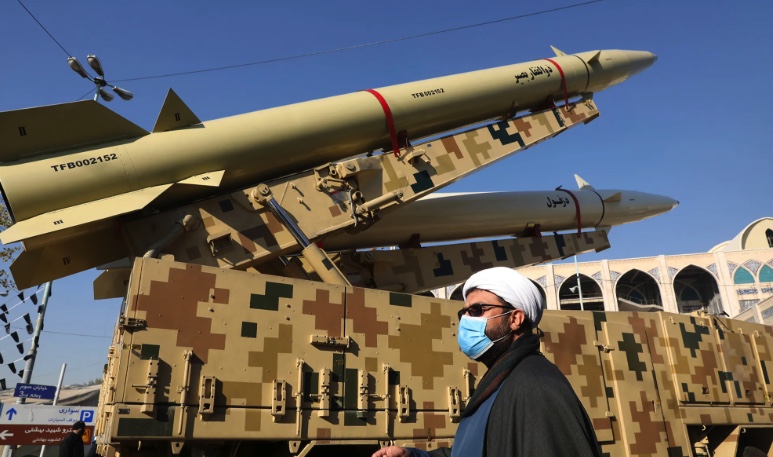
US Director National Intelligence says Pakistani and Iran are developing an array of “advanced missile delivery systems” that put US within the range. Is Pakistan next on list after Iran? In a briefing, Tulsi Gabbard, Director National Intelligence said that Russia, China, North Korea, Iran and Pakistan have been developing missile delivery systems that can put US in the range.
DEEP STATE ANALYSIS
First, Iran's new weapons at their disposal.
North Korea has sold ICBMs and Hydrogen bombs together to Iran. Scroll down from this next link for more details below this picture. This jeopardizes New York City, Washington, D. C. and Miami by a secondary power for the first time. It can knock out the US communication systems.
North Korea tested a hydrogen bomb underground yielding earthquake dimensions of 6.3 on the Richter Scale.
https://en.wikipedia.org/wiki/2017_North_Korean_nuclear_test
Here is evidence demonstrating Iran has the hydrogen bomb as their alleged earthquake hit 6.3 on the Richter Scale test which was actually a hydrogen bomb test. Magnitude 6.3 Earthquake Strikes Western Iran where at least 70 were injured in Sunday night's earthquake struck near Sarpol-e Zahab in Iran's Kermanshah province.
Iran earthquake kills at least one person | CNN
What this means is that Iran can nuclear strike New York City, Washington, D. C., and Miami knocking out the US communication systems used to operate the country.
KNOCKOUT OF US COMMUNICATION SYSTEMS
A nuclear attack on Washington D.C., New York City, and Miami would cause catastrophic local destruction and significantly disrupt U.S. communication systems, but it would not likely destroy them entirely. While these cities are critical hubs, the national infrastructure is designed with redundancy to "ride out" such events.
Local vs. National Impact
- Local Total Loss: Within the immediate blast zones of these cities, all physical communication infrastructure—including cell towers, fiber optic hubs, and local data centers—would be vaporized or rendered inoperable by heat and shockwaves.
- National Resilience: The broader U.S. network is built on principles of redundancy and diversity. If key nodes in NYC or D.C. are lost, traffic is designed to be rerouted through other surviving regions, though this would cause severe congestion and delays nationwide.
Electromagnetic Pulse (EMP) Effects
The type of detonation significantly changes the impact on communications:
- Ground Bursts: If the bombs explode on the ground, the resulting EMP is localized to the immediate area of destruction.
- High-Altitude Bursts: If a weapon is detonated high in the atmosphere (40+ miles up), it generates a massive EMP that can damage unshielded electronics, power grids, and telecommunications over thousands of miles, potentially crippling the national system.
Military vs. Civilian Systems
- Military Systems (NC3): Systems for Nuclear Command, Control, and Communications (NC3) are specifically hardened against EMPs and use various frequencies (like VLF and EHF) to ensure leaders can still communicate with nuclear forces even after a strike.
- Civilian Systems: Public networks (cell phones, internet, landlines) are highly vulnerable. Even without direct physical damage, the loss of the power grid—which would likely fail following such an attack—would cause civilian communications to cease within hours or days as backup batteries and generators run out.
Long-term Disruption
While modern networks might partially recover, the "system of systems" would be severely degraded. Historical studies and simulations suggest that while the Internet might technically function, the loss of critical financial and government hubs in these three cities would paralyze national commerce and emergency coordination for weeks or months.
The United States Suez Moment
|