T. A. McMahon
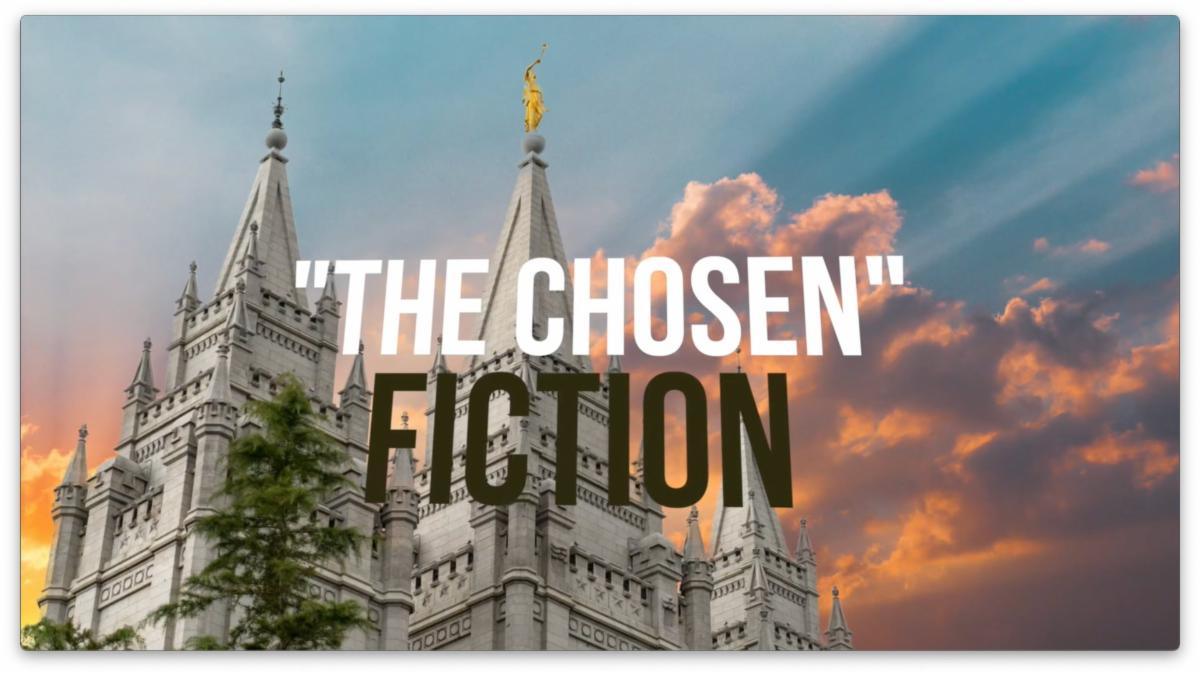
At a conference not too long ago, I was asked to give a review of The Chosen TV Series. I did so, but before I began my critique, I informed the audience that I hadn’t watched even one frame of the series, and my guess was that that revelation would make more than a few people upset with my criticisms. The immediate response by those enamored with the series about the life of Christ was to scorn everything I said, saying, “He’s like those who criticize books, even the Bible, without having read them!” I can relate to that. I’ve had many discussions with some who tell me what the Bible says without having read it themselves, so I can see why my initial review and its approach would put some people off.
Since my first critique I have viewed a couple of the programs, parts of which I’ll address. However, I want to explain why I believe watching the series is not necessary for rejecting it. In doing so, my explanations will appeal to Scripture and reason in light of Isaiah’s words, “Come now, and let us reason together, saith the LORD” (Isaiah 1:18).
Why isn’t it necessary to watch The Chosen in order to criticize it, and how would that be any different than critiquing a novel without having read it? First of all, a novel is defined generally as “a fictitious prose narrative of book length, typically representing character and action with some degree of realism.” In other words, it’s a made-up story. Yet it must be read in order to be evaluated.
Not so with The Chosen. It professes to be true to the Bible’s teachings, as well as a faithful representation of the Bible’s stories and characters. The Bible, however, declares itself to be inerrant and infallible in all that it teaches, as well as God’s authority in all that it commands. It’s God’s Word. If it condemns any attempt to visually represent the content and characters of the Bible (which it does) then one has no need to watch The Chosen because it claims to visually represent it—in direct disobedience to the Scriptures.
All biblical movies are visual translations and interpretations of the words and narrative presented in the Bible. If a Christian was aware that the Bible condemns visual translations and interpretations of the Scriptures, there would be no need to evaluate a movie or video series based upon the Bible before rejecting them. But does the Bible denounce any such attempts to translate/interpret it through a visual medium?
It does. And it does so in many indisputable ways. But before I point out the scriptures related to the Bible’s denunciation of such productions, I need to present some of the components that are involved in the production of making a movie that must be considered when determining whether or not “biblical movies” can be truly biblical. These are things I know and have experienced while studying filmmaking in graduate school and having worked for 20th Century Fox studios for a number of years. I then moved on to a career as a screenwriter in Hollywood before being saved and spending four decades in Christian ministry with Dave Hunt.
This is how the process works. A movie begins with a screenplay. It’s either an original story or a screen adaptation from someone else’s work (such as the Bible). The screenplay or movie script, in addition to presenting the storyline or plot, the characters, and the dialogue, consists of visual descriptions of what is taking place in the movie story. For example, if a scene calls for a vehicle, a description is needed for the art director or prop man to find the right kind of car for a particular scene or purpose. If the script calls for the car to be crashed, that needs to be described in detail if the crash is going to be unique and significant to the storyline. This is just one example of the creative input that is necessary for the filmmaking process.
Although the screenwriter is the initial composer of the movie script, changes to the script always take place during filming. Such changes are usually made by the movie’s director. Reasons for the changes from the original script are seemingly endless: actors’ egos, budget cuts, weather problems, location problems, the executive producer’s ego, the cameraman’s “inspirational idea” for filming a scene, union problems, stunt failures, the director’s ego, etc. The author of the motion picture, for the most part, is the screenwriter, even though contributions of interpretation also come from the director, the actors, and a host of others creatively involved in the filming process.
All of that and much more are involved in every attempt to translate the Bible itself into a theatrical motion picture for the silver screen and/or television. The question therefore, for every Bible-believing Christian, is this: Can the Bible be presented through the filmmaking process and stay true to what God’s Word says about His Word?
Well, what does it say? Proverbs 30:5-6: “Every word of God is pure: he is a shield unto them that put their trust in him. Add thou not unto his words, lest he reprove thee, and thou be found a liar” (italics added). God’s words are His words, written down by men, His prophets (2 Peter 1:20-21). “Forasmuch then as we are the offspring of God, we ought not to think that the Godhead is like unto gold, or silver, or stone, graven by art and man's device” (Acts 17:29, emphasis added).
“I testify unto every man that heareth the words of the prophecy of this book, If any man shall add unto these things, God shall add unto him the plagues that are written in this book: And if any man shall take away from the words of the book of this prophecy, God shall take away his part out of the book of life, and out of the holy city, and from the things which are written in this book” (Revelation 22:18-19).
The Bible is God’s revelation to all humanity, and His alone. “But I certify you, brethren, that the gospel which was preached of me is not after man. For I neither received it of man, neither was I taught it, but by the revelation of Jesus Christ” (Galatians 1:11-12).
What then of a “biblical” movie? As with other theatrical endeavors, such a production comes about primarily through the screenwriter’s interpretation of what has been written in Scripture. Add to that the movie-making necessities and changes, things such as a storyline and dialogue related to the plot that are obviously lacking in the Bible, they therefore must be supplemented by the screenwriter in order to create a theatrical production.
Character descriptions are limited, at best, and must be added in order for a casting director to select the actors. Along that line, how does one cast the sinless God/Man, Jesus Christ? The perfect attributes and righteous characteristics of the Son of God could never be displayed by an actor on the screen. When such an idea is incorporated into the script, the end result is a counterfeit Christ at best. In fact, such an attempt fits the very definition of blasphemy as one strives to apply human characteristics to Jesus that undermine His divine character.
I hope you’re getting the picture here (pun intended) that any effort to translate the Bible into a visual medium must result in a veritable distortion of God’s Word which is why such attempts are condemned.
For anyone who doesn’t understand what I mean by calling such efforts “distortion” resulting from man’s input, it begs this question: “What do you really believe about the Bible?”
Do you understand it to be God’s direct communication to mankind? Do you realize that the Bible is totally of Him and from Him? Do you get the fact that without His divine revelation about Himself and His created beings, finite and fallen humanity is left with only opinions, guesses, speculations, and the like about Jesus Christ and the gospel of salvation? Those so-called contributions by humans have led to the multitude of man-fashioned religions that purport to give insights regarding God.
Do you believe that God’s Word is “given by inspiration of God” (i.e., God-breathed—2 Timothy 3:15-17)? Do you believe the Apostle Paul’s Holy Spirit-inspired exhortation to the Thessalonians: “…when ye received the word of God which ye heard of us, ye received it not as the word of men, but as it is in truth, the word of God, which effectually worketh also in you that believe” (1 Thessalonians 2:13)? What do you think about Luke 4:4: “It is written, That man shall not live by bread alone, but by every word of God” (emphasis added)?
The Apostle Paul, under the inspiration of the Holy Spirit, did not mince words: “I marvel that ye are so soon removed from him that called you into the grace of Christ unto another gospel: Which is not another; but there be some that trouble you, and would pervert the gospel of Christ. But though we, or an angel from heaven, preach any other gospel unto you than that which we have preached unto you, let him be accursed. As we said before, so say I now again, If any man preach any other gospel unto you than that ye have received, let him be accursed” (Galatians 1:6-9, emphasis added).
Every believer in Jesus Christ must come to a true biblical belief in His Word. If what a person is taught about Jesus is not true to the Person revealed in the Scriptures, that character is “another Jesus,” a “false Christ,” no matter how endearing and engaging the actor may be (2 Corinthians 11:4, Matthew 24:24). The same is true regarding all the actors representing biblical characters.
Movies are perhaps the most seductive of all media the world over. I learned as a screenwriter that manipulating an audience’s emotions was the key to a box-office success: make them laugh, make them weep, frighten them, make them cheer, arouse their passions, their lusts. In other words, control their emotions. That power of persuasion through the film medium seduces believers who normally would recognize that they are being snared by a fictional screen character. The comment most often given by those who enjoy the TV series is “I really like a lot of the human qualities displayed by The Chosen’s Jesus. It’s so easy to relate to him.” Others have said similar things about their favorite “disciples.”
Remember, what is presented in the Bible is wholly of the Holy Spirit. It is exactly what God wants us to know and believe. That’s what sets believers apart from the so-called spiritual insights of humanity: “Sanctify them through thy truth: thy word is truth” (John 17:17). Anything that “adds” to that truth, no matter how emotionally and “spiritually” moving, is condemned as having corrupted God’s truth.
I’ve been told that my writing about and speaking out against “biblical” movies (Showtime for the Sheep; and "The Bible According to Hollywood”) have come at a time in which the movie industry is finally “supporting Christianity,” and therefore I am “speaking out against the cause of Christ.”
Although that may seem to be a reasonable objection to many, it’s actually a rationalization that dismisses what inevitably takes place in the movie-making process of translating the Bible visually. It also demonstrates an ignorance of the culture of Hollywood, which is no friend of biblical Christianity. Tinsel Town’s only motivation is box-office—in other words (in the King James version), “filthy lucre.” And as we know from Scripture, “The love of money is the root of all evil” (1 Timothy 6:10).
Even so, The Chosen series is condemned by the Bible first and foremost because it adds man’s ideas (his beliefs, concepts, viewpoints, conceptions, images, perceptions, his religions, and especially his feelings, etc.) to what God alone has communicated. It makes no difference how far afield the additions are—even the smallest contribution would not be of God, but of man.
For those who are still not seeing the problem with this, let’s consider a program that makes the highly publicized claim that it’s helping people get to know Jesus better and to recognize similarities with the “Jesus of different faiths.” What if the Jesus we are being introduced to is not the biblical Jesus, but rather a spirit that was produced in heaven? Suppose he was the spirit brother of Lucifer, and his earthly birth was not by a virgin but came about through sexual intercourse with Mary by his father god who resides on a planet near a star called Kolob? What if this “Jesus” worked toward becoming a god by taking Mary, her sister Martha, and Mary Magdalene as wives, and thereby producing children necessary for him to become a god? And the godhood that this Jesus achieved enabled him to become the god of this world, taking his place among the multitude of gods ruling over numerous other worlds?
Hopefully you’re thinking, “That’s not the Jesus I know from God’s Word!” However, it is the “Jesus” that the executive producer of The Chosen, Derral Eves, believes in, as do most of the other series’ producers such as Ricky Ray Butler and Jeffrey and Neil Harmon. Neil Harmon, as co-founder with his brother Jeffrey of VidAngel (now ironically titled Angel Studios—see Galatians 1:8), the Utah-based distributor of The Chosen, declared that he and his brother Jeffrey are “faithful members of the Church of Jesus Christ of Latter Day Saints. We love Jesus and we love our faith in Christ.”
If that were the Jesus that The Chosen series is introducing us to, would that be a concern? As some may have surmised, the Jesus described above is not the biblical Jesus but rather the Jesus of Mormonism, the Church of Jesus Christ of Latter-day Saints, and the faith to which many of the series producers belong. But is that the Jesus of The Chosen? Thus far in the series the fundamental doctrines of Mormonism have not been plainly presented. Could they be? Yes—but perhaps not yet.
Yes, because The Chosen’s audience has been conditioned to accept whatever the screenwriter, director, and other creative personnel contribute, with no apparent concern for biblical accuracy. The program that launched the series, for example, was the background story of Mary Magdalene that included the death of her father when she was young, her being raped by a Roman soldier, and the failure of Nicodemus as he attempted to exorcise demons from her. Those details came not from Scripture but from the imagination of those who contributed to the script. Yet for the greater number of viewers, few of whom have read the Bible, the images they watched were received as though they are actually in the Bible.
I’ve been told biblical movies are great motivators for people to check the Bible out. Really? What happens when they can’t find the movie scenes such as the gritty backstory of Mary Magdalene? Furthermore, most people would rather watch a highly dramatized Bible story with little concern that it’s fiction than read the actual words of Scripture. “Based on a true story” is good enough, even though the “based” part is a movie fabrication.
I have interviewed numerous believers who viewed so-called biblical movies, and although most of these Christians knew the Bible pretty well, I was dismayed to find that they actually believed that many of the unbiblical scenes in those productions were found in the Bible! Difficulty in distinguishing between what one may have read in the Bible and what one saw on screen in an alleged biblical movie is one of the damaging effects of presenting biblical content visually. That notwithstanding, why would a believer in God’s Word fill his or her head with things that are made to appear biblical by a film company—but are not?
My “perhaps not yet” comment has to do with Mormonism’s continual attempt to promote itself as basically Christian in its theology. For years the organization has strived to be accepted as just another Christian denomination. The only way that can happen is if the LDS Church initially conceals its fundamental beliefs and packs its promotional productions with all sorts of unbiblical scenes and characters. The more that such corruptions are accepted, the wider the door opens for any-and-all beliefs to be introduced, including the bizarre doctrines of the Church of Jesus Christ of Latter-day Saints. It also helps to have a professing evangelical writer/director (Dallas Jenkins) working on The Chosen. His promotional interview with a Mormon apologist is a classic example of obfuscatory ecumenism, meaning he does his best to muddy the waters between foundational biblical Christianity (which he claims to believe) and the cultic teachings of Joseph Smith and Brigham Young. His ecumenism is made clear in his own words: “I said that many LDS folks and I love the same Jesus. I still believe that. It’s gotten me in a lot of trouble but I still believe that.”
When Jesus was asked by His disciples about the days just prior to His return, He said, “Take heed that no man deceive you” (Matthew 24:4). That’s a penetrating description of the days in which we are living, a time in which “sound doctrine” has all but vanished throughout Christendom (2 Timothy 4:3). Sound doctrine is the full and absolute counsel of what God has communicated in His Word. Anything added to that by man in his attempt to visually portray God’s word is a counterfeit—a fictitious deception.
As I mentioned at the beginning of this article, there is no need to watch any episodes of The Chosen in order to decide whether or not they are supported by God’s Word. All a Bible-believing Christian has to hear is that the television series attempts to represent the stories and characters found in the Scriptures; that inevitably results in adding all kinds of content to the Bible, the action of which is clearly condemned.
For those who nevertheless are enamored with The Chosen yet claim they know and love the Scriptures, The Chosen television series begins with background information about Mary Magdalene nowhere found in the Bible, as noted, but is produced out of the imagination of all the creative movie people, from the screenwriters to the director, and on down the production line. What then of additions to the final episode of season two (although examples are found throughout the entire series)? We’re shown that the disciples are in charge of producing the speaking events of Jesus (e.g., crowd control, distributing flyers for his events, setting up a stage complete with curtains for his presentation of the Sermon on the Mount). Do the Scriptures tell us that the wardrobe of Jesus for his stage appearance was decided upon by four women? Did Jesus, along with his mother, pine for his stepfather Joseph before his preaching on the Mount…or anywhere else in Scripture? Was Matthew, as seen throughout the series, the continual script advisor regarding the content of the sermons and teachings of Jesus? Did Jesus anxiously have to rehearse his preaching before delivering his teachings to the crowd? All those things are found in The Chosen. They are not only missing from God’s Word, their inclusion amounts to blasphemy—that is, a blatant mischaracterization of God manifested in the flesh.
Those who are drawn to the Jesus of The Chosen have been seduced into believing in a character who is not the perfect God/Man presented in God’s Word, but rather a man-made counterfeit Christ whose ministry had to be enabled through the input of his disciples. That’s not the Jesus Christ of God’s inerrant, infallible, and all-sufficient God-breathed Word.
Those who claim to believe the Scriptures but are drawn to The Chosen need to heed the Bible’s far-reaching warning: “For there shall arise false Christs, and false prophets, and shall shew great signs and wonders; insomuch that, if it were possible, they shall deceive the very elect. Behold, I have told you before” (Matthew 24:24-25).
TBC