Dear Reader,


(Mis)alignment of my daughters’ activities limited my family's beloved summer travel to weekend adventures close to home—which proved delightful, and easier with book work.


However, in this summer's end + academic year's start newsletter, I’m inspired to share:


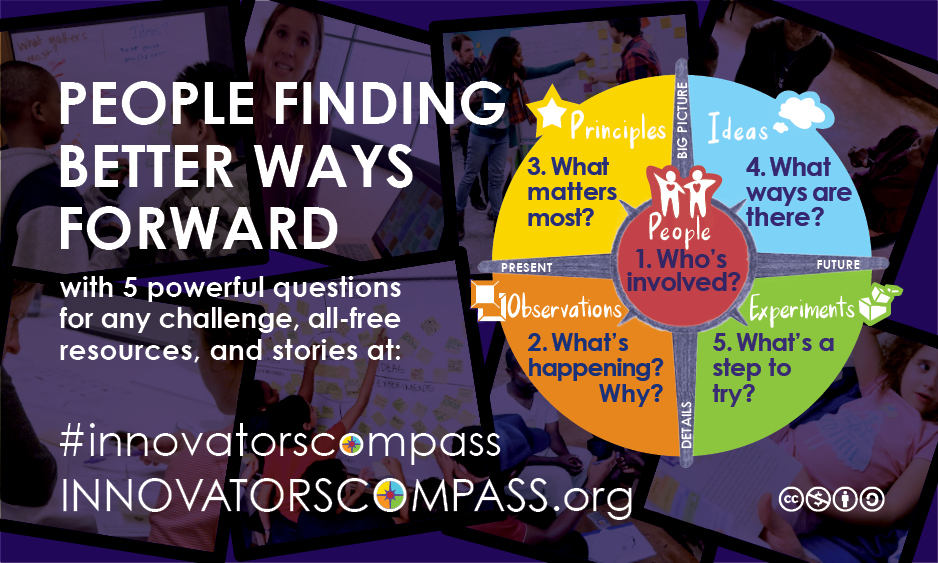
First, the Compass questions above shape how we "travel" through big-or-small challenges (my usual word) and decisions (my publisher's observation). Which (or neither) of these are you navigating at moments you most often seek to use or share tools like these? 


I’m grateful for permission to share replies to the questions in my spring letter:

What would you call situations when you ask Compass questions or similar ones?

What comes to mind when you hear "decision" + "compass"? 


Decision is the waypoint, not the destination.
Aram Armstrong, Intervention Design Thinking, Maui, HI


After all, the 5 questions that you asked are to help people to come to a decision whether big or small, simple or complex. 
Anna Leong, Leadership Coaching, Singapore


A compass guides me on a journey to get to a destination or to keep moving in a particular direction. I suppose that does involve decisions along the way—do I turn left, do I go right, do I keep going straight, do I turn around, do I pause for the night. 
Victor Udoewa, Civic Designer & Liberation Futurist, Washington, DC


In my work with clients as an LMFT, the IC helps organize what can feel chaotic, supporting stabilization, orientation, and awareness. We use it as a working document to guide our work rather than primarily as a decision-making tool.  

Dvora Kravitz, Licensed Marriage & Family Therapist, Jerusalem


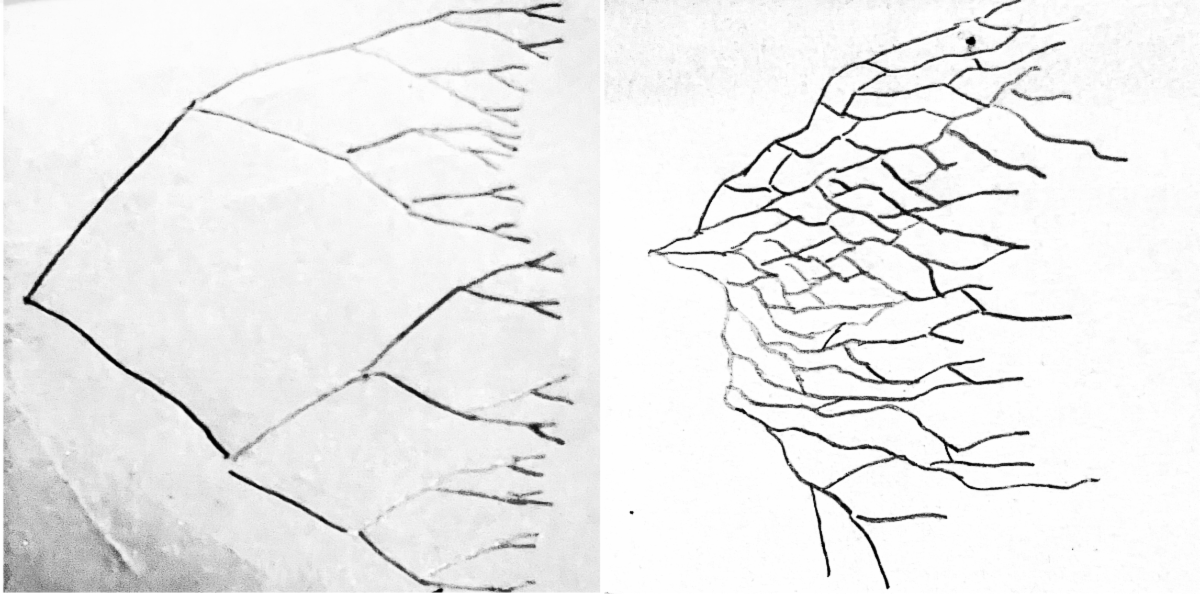
I think the word decision and the action of deciding feels permanent, and that’s scary (left picture below), but it doesn’t have to be either...This belief is contrary to the experimentation and iteration that the compass encourages...You make a lot of decisions all the time, and you can still access many of the same opportunities you would have if you made a different decision, plus different ones unique to this choice (right picture below).

Melissa Anthony, Design, Boston, MA

Please reach out if these questions, or this summer newsletter, spark thoughts for you—the observations and ideas of this community are what fuel me and this work!


And, as always, please find more free resources and stories at innovatorscompass.org


Wanderingly,

Ela, founder of innovatorscompass.org.


PLEASE VOTE BY SUNDAY 8/23!

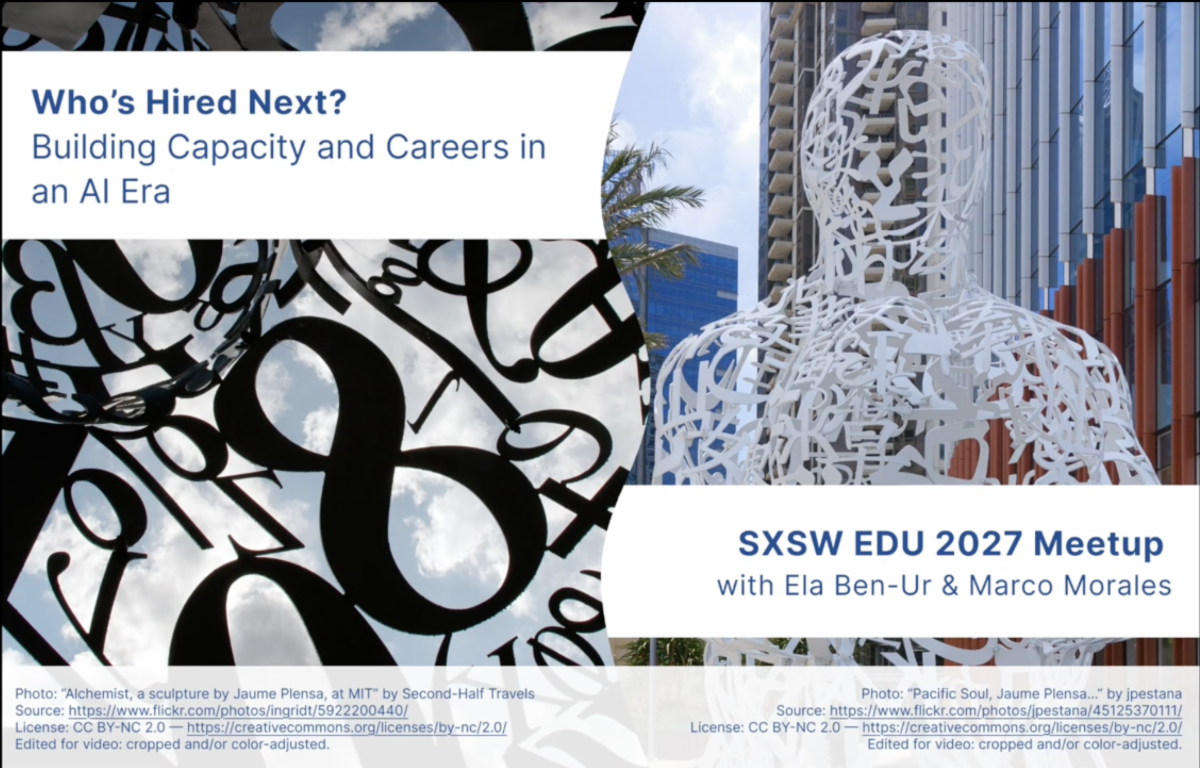
Please send us back to the SXSW EDU Conference in Austin!


I've written about SXSW EDU's impact on this work—thank you for voting in past years! 
This year, Marco Morales and I deeply appreciate your votes for our proposal around building young people's capacity and careers as entry-level work is being shaped by AI.

Everyone can vote, and it takes just 1 minute:

  1. Click this link for our proposal.
  2. Click "Login" at top right to enter your email. After you do, it may take you out to all the proposals—just click "back" twice to our proposal.
  3. Click the heart on top and leave a comment at the bottom.

Join me!

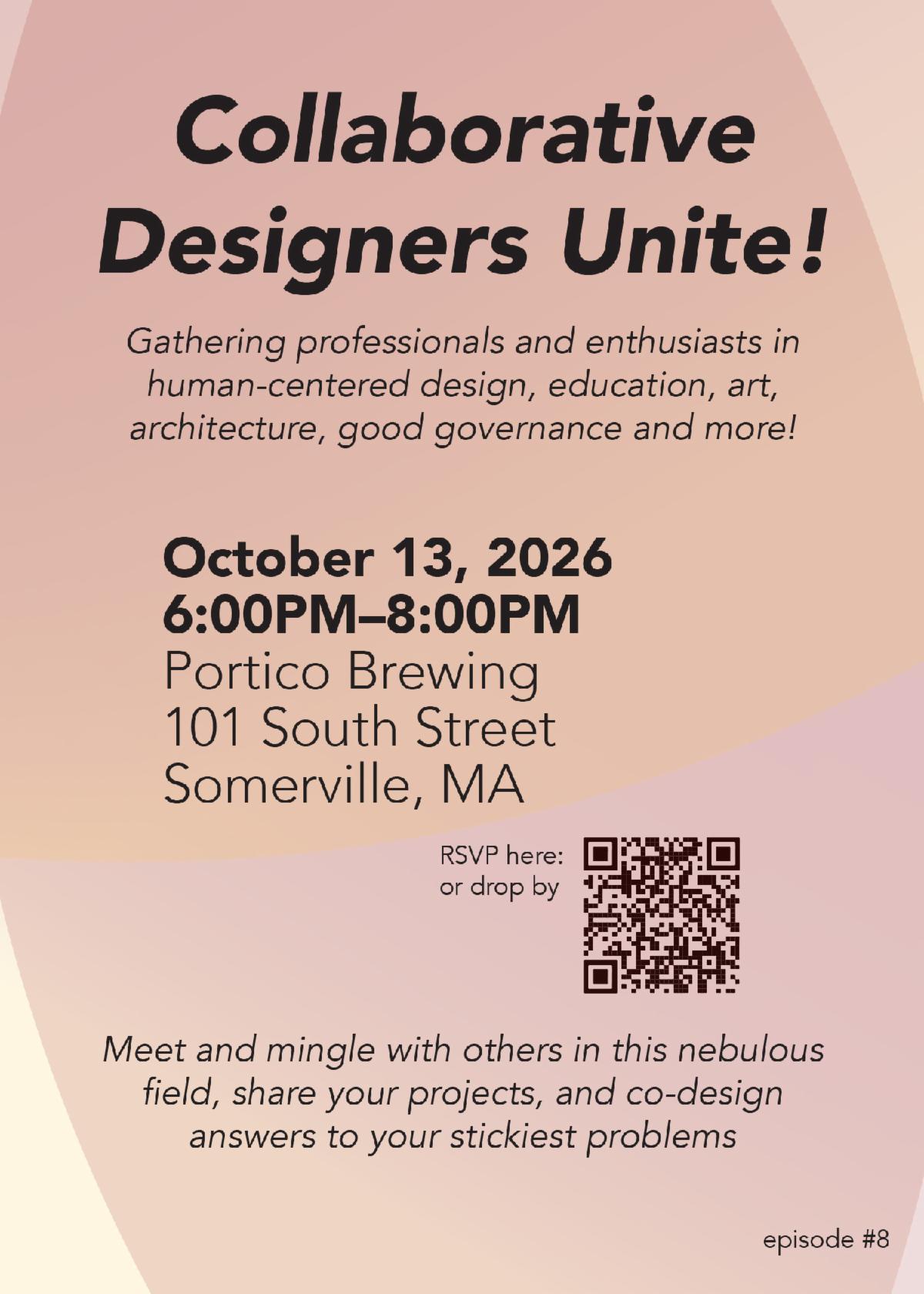
Join the next Collaborative Designers Unite gathering in Boston on 10/13/2026!

Sip a New Story

Stories to enjoy the last of summer "travel" and prep the academic year:


"Think Like a Traveler"

“Think like a traveler” is a mindset in the field of design thinking. For example, Tom and David Kelley share in Creative Confidence:


Ever travel to a foreign city? We've all heard that "Travel broadens the mind." But beneath this cliché lies a deep truth. Things stand out because they're different, so we notice every detail, from street signs to mailboxes to how you pay at a restaurant. We learn a lot when we travel not because we are any smarter on the road, but because we pay such close attention…Too often, we go through day-to-day life on cruise control, oblivious to huge swaths of our surroundings. 


This summer, our daughters’ activities (mis)aligned so that we had only a week available for travel (to the grandparents, of course!). So, for once, we haven't traveled anywhere new this summer. A little part of me relished the closer-to-home adventures and time for book writing.


But as I enjoyed a piece of White Rabbit candy from Shanghai, gifted to me by a summer research student, it took me on a little trip. The graphic design of the outer wrapper, the edible inner rice paper wrapper, and the milky candy each felt so distinct from what we find in the US.


This trip was partly a trip back—to my six months working at IDEO Shanghai. 

Guest Post: Compassing to Create New Courses at Kyiv School of Economics

How are you designing and experimenting with educational experiences this year?


The wonderful team from Kyiv School of Economics is partnering with Olin College, where I am an Academic Partner, to apply student-centered design as they build out a new undergraduate engineering program. It was an honor to work with Daniel Koff of Olin and Nastasia Klen of KSE to create a half-day Compass-based workshop for them.


Though it was late in their time at Olin (with many late nights), Georgiy Shevchenko, Vice Rector of Academic Affairs and Dean of the Computer Science Department, brought incredible energy to the day. And he brought Innovators’ Compass home with him to KSE, which he describes as having a “growth environment: ambitious goals, high standards, vibes of experimentation and disruption.”


I’m always grateful to hear where people have taken Innovators’ Compass and where it’s taken them.


Hi Ela,


Just wanted to thank you for Innovators' Compass! We've used it already to facilitate our discussion of the Theoretical Computer Science minor, and I'm using it in my course 'Once upon a Syllabus' for innovations and micro (small, low-risk, reversible) experiments in course design...


Delving into Decision-Making and More

When my publisher suggested explicitly aligning these tools with “decisions”—an essential but often implicit part of all the challenges I’ve navigated, led, and coached—I knew I couldn’t make that decision without exploring it!


I’m deeply grateful to three remarkable young women who reached out to contribute a bit of their time this summer. They formed a formidable team that not only helped ease my mind about fitting this research in, but stretched my mind with their approaches and insights.


A Fresh Look Across the Fields of Decision-Making and Problem-Solving


  • Ziqi (Kiki) Cheng used AI-assisted analysis to extend the range of my personal synthesis to-date, looking across dozens of decision-making and problem-solving tools and practices across disciplines
    
  • Melissa Anthony explored decision research, including major branches around predicting probabilities of risks and outcomes, and detailing ways where, in natural decision-making, “people disagree with the math.”
    
  • Nina Mindel suggested we compare the established fields of “decision making” and “problem-solving.” 
    
  • With their work above, I took windows away from writing to explore further—intrigued by practices across cultures and history. 

YOUR stories move this work forward—please share them by email or tweet!


UNSTICKers and Pocket Compasses

As always, pay cost (10¢ + shipping) or what you can.

Check out this 2-minute intro video (or a picture book/video for kids):
 
Facebook  Linkedin  Twitter  Youtube