 |
| |
|
HIGH VELOCITY PRESSURE/VACUUM VALVE PRIMER
|

The vapor goes in, the vapor goes out......
There is one piece of equipment on your barge that works both day and night and requires very little maintenance. Its purpose is simple yet important since it is designed to keep the barge from splitting open if internal vapor pressure or vacuum builds up inside the sealed tanks. Maintenance is minimal and the design is relatively simple.
Any good Tankerman will quickly tell you that this piece of equipment is the pressure/vacuum valve or P/V valve.
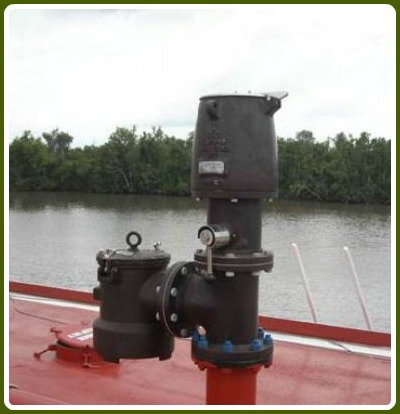
Most Higman barges are outfitted with a Bergan distributed, KLPH series High Velocity Pressure/Vacuum valve that is connected to all tanks via the vapor system piping.
Why do we need them?
 |
|
|
Bergan KLPH High Velocity Pressure/Vacuum Valve |
To start off, a typical double skin, red flag tank barge is designed structurally for a maximum internal pressure of 3 psi. That means the tank is built with adequate framing and shell plating that is sized thick enough to take the variations of pressure and vacuum that typically occur in a tank barge up to 3 psi.
The high velocity P/V valve is a combined pressure relieving and vacuum relieving device. It is designed to relieve the pressure and vacuum caused by thermal variations, as well as the pressure or vacuum created during barge loading and discharging. The valve is built to open on the pressure side at 1.5 psi and on the vacuum side at .5 psi, well below the design strength of the barge. It is size to be able to handle vapor volume at a full loading rate.
As you know, clean cargoes and crude oil will build up vapor pressure on a hot day. With the tanks sealed, that pressure could reach the design maximum of the structure. The high velocity P/V valve's job is to open and relieve that pressure below the tank's structural maximum.
It is also extremely important when close loading the barge. If for some reason the vapor system shuts down, the vapors and the air being displaced from the tank have to go somewhere or else the barge could over pressurize. The P/V valve is sized large enough to relieve a full volume of vapors and the displaced air at the designed loading rate with a factor of safety built in.
The same is true on the vacuum side. As the night cools down, the vapors in the closed tank will condense creating a vacuum. The vacuum side of the P/V valve will open and allow air to flow (through a flame screen) onto the tank to relieve the vacuum. Tank damage averted.
Parts of a High Velocity P/V valve
A high velocity P/V valve is built with two distinct parts, arranged to be connected by flange to into the vapor header or directly to the tank top.
High Velocity Pressure Valve
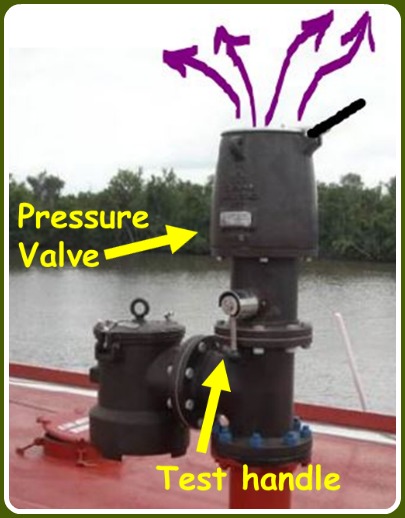
The pressure valve has a weighted valve disc that sits on top of the valve seat. When the tank pressure rises to the valve setting level, the valve disc weight is overcome and is pushed upwards. As the valve disc rises, the vapor is exposed to a larger disc diameter which helps the disc to open further. Once the pressure is relieved, the valve disc will drop back down on the seat with a distinct "clunk" sound.
There is a handle on the side of the valve to manually lift the disc for testing. In icy conditions, it is a good idea to use that handle to make sure the valve disc is free to rise.
Look closely at the body of he body of the pressure valve and you will notice it is shaped like a nozzle. This shape helps escaping vapors to direct skyward, away from those working on deck. This is where the "High Velocity" in the name comes in.
Vacuum Valve.
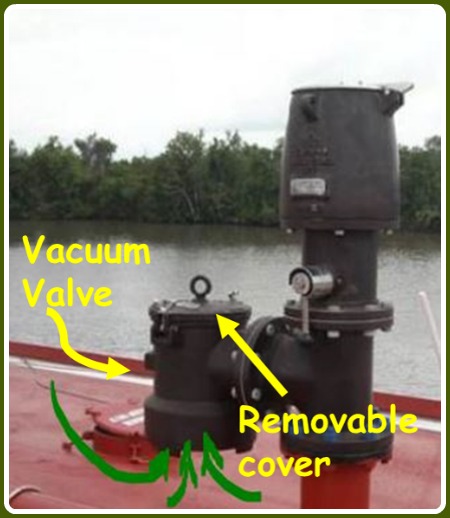
The vacuum valve is located on the side of the P/V assembly. As a vacuum develops inside the cargo tank and gets to the design level, the pressure differential will cause a valve disc to lift up. Outside air will flow into the tank until the differential is met. Air flowing into the valve passes through a flame screen for explosion safety.
There is a removable cover on top of the valve body which can be removed to allow unrestricted airflow during shipyard tank cleaning. On the bottom of the valve, in the center, there is a check lift bar that is used to ensure the valve is lifting properly.
In the works...
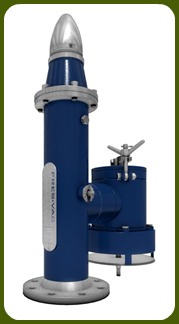
Higman crew will start to see a new type of high velocity P/V valve on our barges. The Press-Vac, PV-VOC series of high velocity P/V valves are today found on 5 higman barges.
Typically called a "bullet valve", these valves have a bullet shaped cone on the outlet of the pressure side of the valve. This bullet helps increase the speed of the escaping vapors to better disperse them away from the barge deck.
Beyond a different look, much of the concept and operation of this valve is similar to the current model on our barges.
|
|
|
2017 ADVANCED PILOTHOUSE TRAINING - SIMULATOR
|
2017 Advanced Pilothouse Training (Simulator)
Remember! It is a Higman requirement that you attend one session every 5 years! The next session is February 20-22, with sessions continuing until the last one for 2017 scheduled September 25-27.
During this training, Wheelmen have opportunity to participate in hands-on Advanced Pilothouse Management Training (Simulator) at Seaman's Church.
Each 2.5 day course involves practice for various routes and different waterway situations. You will be able to ask questions, give comments and receive constructive feedback from the staff at Seaman's Church and also from Higman coworkers and training personnel.
One evening after training all participants are invited to join us for dinner at a local restaurant for relaxation and conversation with fellow crew employees and Higman shore side personnel.
Dates are listed below and are always included in every issue of the Training Newsletter.
Be sure to click on the name to email Janis or Austin or call us to schedule this training time.
Spaces are limited so contact us early!
2017 Advanced Pilothouse Management at Seamen's Church
|
Second Session
|
Feb 20-22
|
|
Third Session
|
March 27-29
|
|
Fourth Session
|
July 17-19
|
|
Fifth Session
|
Aug 21-23
|
|
Sixth Session
|
Sept 25-27
|
|
|
| FEBRUARY 20-21 STEERSMAN BOOT CAMP |
First 2017 Steersman Boot Camp will be February 20-21
The first 2017 session for Steersman Boot Camp
will be held at the Orange Office Feb. 20-21.
As a Steersman, you are required to attend Boot Camp at least once during your training program.
This training session provides information and insight on various topics useful to future Wheelmen. Subjects covered include discussion of currents and weather, running rivers and canals, wheelhouse management, radar basics, Rose Point, problem solving, time and distance and conducting proper incident reports.
Call or email Janis or
Dennis
to register to attend this training event.
|
|
|
ROSE P0INT TIP OF THE WEEK - CHANGING TEXT SIZE
|
Changing Text Size
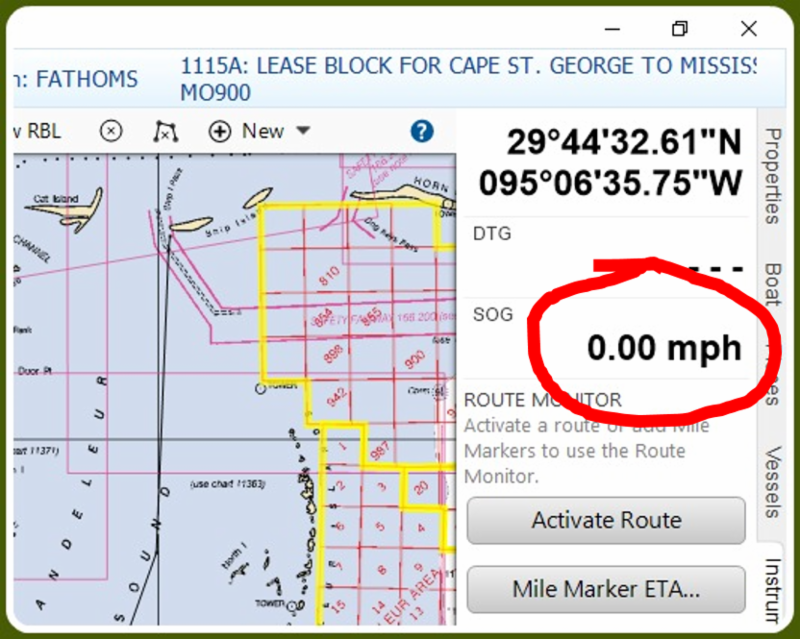
Sometimes we like the text we look at to be large, other times a bit smaller. It all depends on what we are looking at and how it appears to us on the screen. With Rose Point ECS, there are several areas where you can set the text to the size that works best for you. For starters, let's look at the instrument panel on the right side of the screen.
The
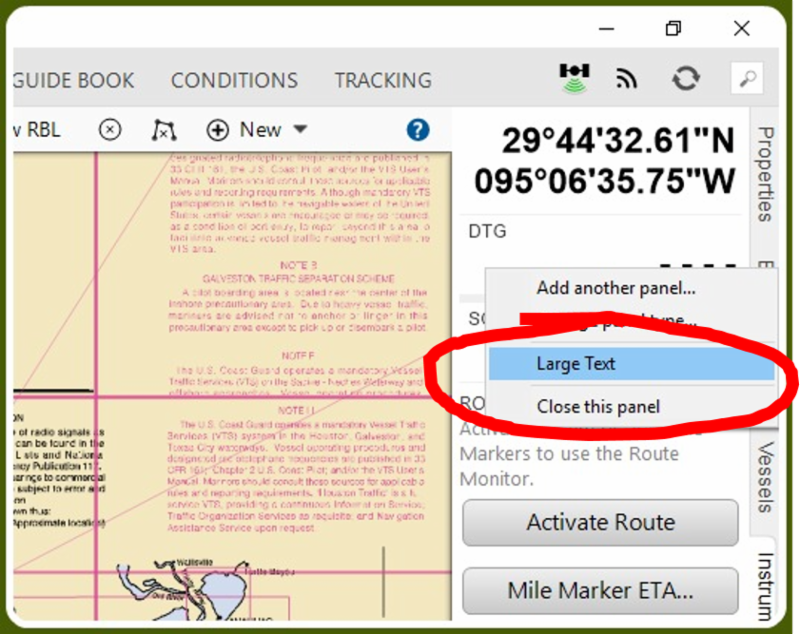
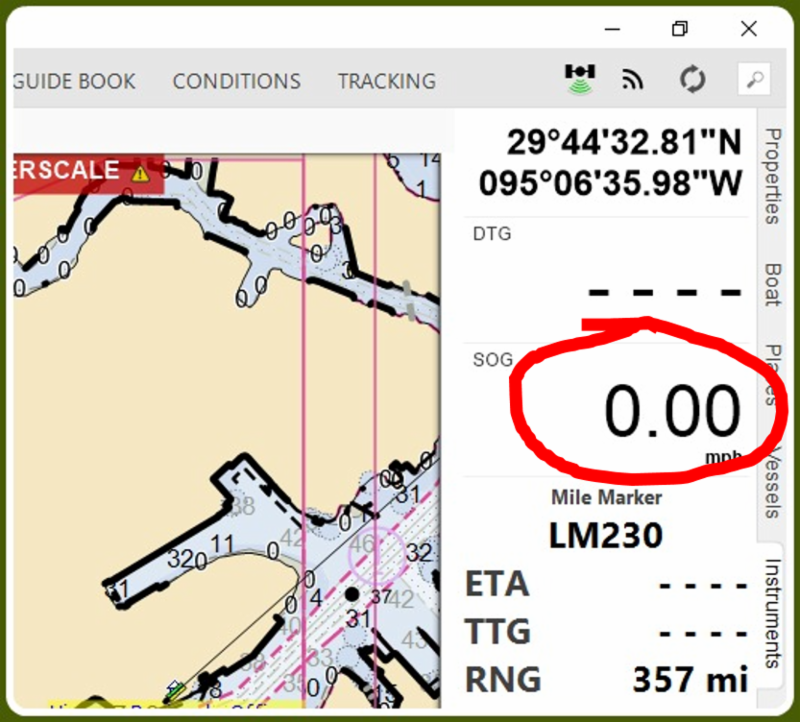
instrument panel on RP has an optional largeR text size for many of the instruments. For example, if you want to see SOG larger, here is how to do it:
- Right click in the box you want to change, in this case the SOG.
- After you right click, a drop down box will appear. Check "Large Text."
In the next issue we will look at
changing text size on both raster and vector charts.
|
|
| BEST PRACTICE - PLANNING AHEAD "A, B, C's" |
M/V Jesse B. Gunstream
uses their
"A, B, C's"
The crew of the M/V Jesse B. Gunstream thinks ahead, in order to plan ahead, as they go along their daily route.
They keep in mind "Plan A, Plan B, Plan C" scenarios in case things do not go as expected or as they normally have in the past.
They think through possibilities of encountering factors beyond their control.
By doing this, they try not to take unnecessary risks, but instead think through safer alternatives that could be used, if necessary, during their voyage.
Thank you for sending us this Best Practice to share with the fleet!
|
|
|
SAFETY SPOTLIGHT - ANNOUNCING 2017
SAFETY SLOGAN &
CONTEST WINNER!
|
|
|
|
|
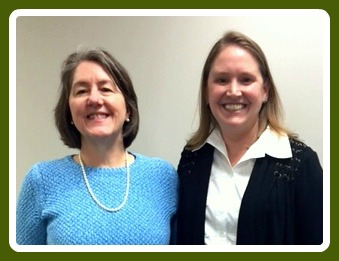
Gretchen Carraway (L) with Amy Kappes, Mgr. Compliance/Vetting
|
The Winning Safety Slogan for 2017 is
"SAFETY IS NO ACCIDENT"
This idea was submitted by Gretchen Carraway, Vice President/Controller in the Houston Office. As her entry received the most votes, s
he will be awarded a $150 Walmart gift card.
This slogan will be featured throughout the year in the Training Newsletter, on Higmanboats.com and will also be prominently displayed in our offices.
Let's put this slogan into daily practice to see results that can make it come true!
|
|
On January 20, 14 new deckhands joined our fleet. This would not have been possible without the assistance of our boat crew members.
Thanks to Steersman Kenneth Wright, M/V Ingleside, Tankermen Mike Rack and Duane Deen, M/V Texian, Tankerman Elzie Ward, M/V Pedernales for sharing their
knowledge and expertise on line handling, splicing, and barge operations.
|
|
|
SMS - VOL 1, POLICY AND PROCEDURES
|
Incident Reporting - F.1.10.1
A. PURPOSE:
The purpose of this procedure is to provide vessel personnel with guidance concerning written and photographic reporting of incidents. It is important that incidents are properly documented to fulfill regulatory, contractual and legal obligations. In addition, the data collected is used by the Company in developing programs to reduce similar incidents from occurring in the future and may be used by crew personnel for on board lessons-learned safety training. A Near Miss
and Incident are defined as follows:
Near Miss - An undesirable event or incident occurred, however, there were no observed or realized negative consequence(s) as a result.
Incident with Consequence - An event or incident with accompanying harm to people,environmental effect, damage to property, or reputation damage.
B. RESPONSIBILITY:
It is the responsibility of the Wheelman on Watch to complete the required reports for accidents, groundings, fires, sinkings, loss of steering, loss of propulsion and man overboards.
The person injured or ill is responsible for completing the Injury/Illness Report if he is able to. If the injured/ill person is incapable of completing the report, the Wheelman on Watch is responsible for the report. The Tankerman-PIC will complete the Spill Report for overfills, leaks and other similar incidents.
The Captain/Relief Captain is responsible for ensuring this policy is followed. He is required to countersign all Company reports and complete any reports that others were not available to complete.
C. APPLICABLE DOCUMENTS:
None
D. PROCEDURES:
1. Written Reports:
a. Company Reports. Every incident (and near-miss occurrence) must be documented by submission of an electronic Company report to the Safety Department:
i. Incident Report (or Near Miss Report). See Higman Boats Website.
For the most part, the completion of the Incident Report is self-explanatory. The
Incident Report shall be completed by the Wheelman on Watch and countersigned by the Captain/Relief Captain. All sections shall be completed with the exception of the Case Number block. Incident reports are required for:
o Collisions
o Allisions
o Groundings
o Fires
o Sinkings
o Flooding
o Loss of Steering
o Loss of Propulsion
o Man Overboard
o Evidence of damage from unknown source (water in voids)
o Damage from unknown source (notice upon picking up barge at fleet, etc.)
o Dropping equipment overboard or in tanks
o Damage to docks, banks, structures, Aids to Navigation
o Wake damage from other vessels
o Wake damage to other vessels or shore facilities
o Rescues of other vessels or personnel
It is important to include all pertinent information involved in the incident (i.e., time of day, wind, tide, current, location of nearby vessels). One of the most important items on the report is the diagram of the incident.
ii. Oil Spill Report. See Higman Boats Website.
This form must be completed by the Tankerman-PIC if the spill or release (into the water or on-deck) occurred while he was transferring cargo or refueling. Otherwise,the Wheelman on Watch is responsible for completing the report. The Captain will countersign this report. All sections are required to be completed with the exception of the Case Number block.
iii. Personal Injury/Illness Report. See Higman Boats Website.
This form shall be initiated by the injured/ill person, whenever possible. In the event the injured/ill person is incapable of completing the report, the Wheelman on Watch will complete it. The Captain will countersign this report. All sections shall be completed with the exception of the Case Number block. The form is selfexplanatory.
b. USCG Reports.
i. Report of Marine Accident, Injury or Death (CG-2692). See Higman Boats Website.
The CG-2692 form will be completed by the Wheelman who was on watch at the
time an incident classified as a "reportable marine casualty" occurs. The completed CG-2692 shall be faxed or E-mailed to the Safety Department within 12 hours. The only exception is if the U.S. Coast Guard personnel on-scene require this form to be completed in their presence. In this instance, the form will be completed and faxed or E-mailed to the Safety Department immediately.
ii. Barge Addendum (CG-2692A). See Higman Boats Website.
The CG-2692A is submitted to document damages suspected damages to barges
occurring during a reportable marine casualty. Generally, the Addendum Report is
required if a barge was damaged or had been aground. The completed CG-2692A,when required, shall be faxed or E-mailed to the Safety Department within12 hours
|
|
|
NAV ZONE - COLORADO RIVER CROSSING DREDGING
|
LOCK CLOSURE/DREDGING - Colorado River Locks, Texas
Freeport to Upper Matagorda Bay Pipeline Dredging
Though all boats should have already seen this notice, here it is again as a reminder....
Dredge "Perseverance" (Goodloe Marine) will commence dredging operations in the Gulf Intracoastal Waterway, Colorado River Crossing. Contractor's related floating plant (barges, tugboats, survey boat, and skiffs) including submerged and floating pipeline will be used in/around this work area. Dredging material will be placed in upland confined Placement Area No. 108, along the Gulf Intracoastal Waterway. This work will require closure of the Colorado River Locks during the designated periods of work.
TIME: Gate closure from
30 January 2017 thru 31 March 2017, 6:30 a.m. to 6:30 p.m. Sunday through Saturday, 7 days a week, including Federal Holidays.
Mariners should contact the Lock Master at (979) 863-7842 to confirm the closure time so as to minimize their delay.
Mariners are urged to transit at their slowest safe speed to minimize wake and proceed with caution after passing arrangements have been made. Dredging operations are continuous, 24 hrs, 7 days, unless otherwise noted. Dredging operations will continue through the month unless otherwise indicated.
Dredges monitor channel 13 and/or 16 on marine VHF radio, respective dredges should be contacted for
coordination of passing and movement near operations.
|
|
|
USCG RULES OF THE ROAD QUESTIONS
|
|
BOTH INTERNATIONAL & INLAND
In which situation do the Rules require both vessels to change course?
a. Two power-driven vessels meeting head-on
b. Two power-driven vessels crossing when it is apparent to the stand-on vessel that the give-way vessel is not taking appropriate action
c. Two sailing vessels crossing with the wind on the same side
d. All of the above
BOTH INTERNATIONAL & INLAND Vessel "A" is on course 000°T. Vessel "B" is on a course such that she is involved in a head-on situation and is bearing 355°T, 2 miles away from vessel "A". To ensure a safe passing, vessel "A" should __________.
a. maintain course
b. alter course to port
c. alter course to ensure a starboard to starboard passing
d. maneuver to ensure a port to port passing
BOTH INTERNATIONAL & INLAND
The Rules state that vessels may depart from the Rules when __________.
a. there are no other vessels around
b. operating in a narrow channel
c. the Master enters it in the ship's log
d. necessary to avoid immediate danger
BOTH INTERNATIONAL & INLAND
Which situation would be a "special circumstance" under the Rules?
a. Vessel at anchor
b. More than two vessels meeting
c. Speed in fog
d. Two vessels crossing
BOTH INTERNATIONAL & INLAND
You are approaching another vessel and are not sure whether danger of collision exists. You must assume __________.
a. there is risk of collision
b. you are the give way vessel
c. the other vessel is also in doubt
d. All of the above are correct.
|
The Mississippi River Commission
The Mississippi River Commission was established by an Act of Congress on June 28, 1879. Congress charged the MRC with the mission to develop plans to improve the condition of the Mississippi River, foster navigation, promote commerce, and prevent destructive floods-perhaps the most difficult and complex engineering problem ever undertaken by the federal government up to that time.
|
|
|
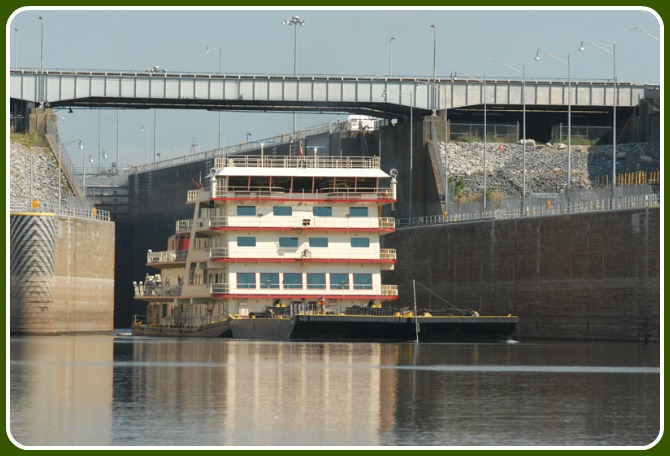
Photo of M/V Mississippi taken by Mark Rankin
|
The stated mission of the Commission was to develop and implement plans to correct, permanently locate, and deepen the channel of the Mississippi River, improve safety and ease of navigation, prevent destructive floods. And promote and facilitate commerce, trade, and the postal service.
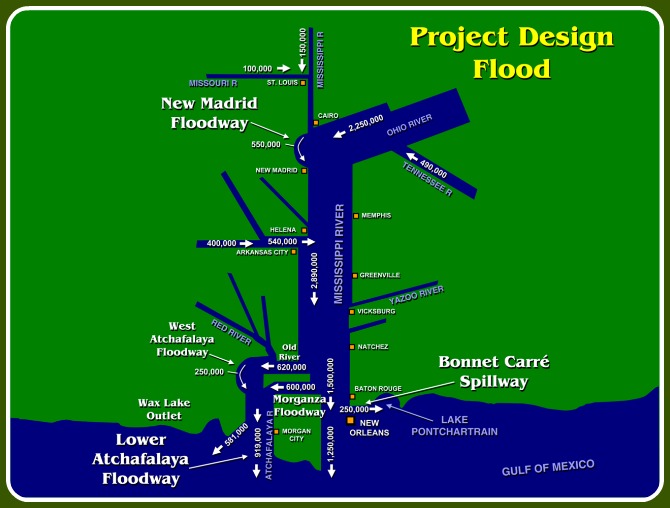
The Great Mississippi flood of 1927 changed the mission of the (MRC). Thus was born the Mississippi River and Tributaries Project. The (MR&T) project provides for control of floods of the Mississippi River from Head of Passes to vicinity of Cape Girardeau, Missouri, control of floods of the tributaries and outlets of the Mississippi River as they are affected by its backwaters, and improvement for navigation of the Mississippi River from Baton Rouge, Louisiana, to Cairo, Illinois. This includes improvements to certain harbors and improvement for navigation of Old and Atchafalaya Rivers from the Mississippi River to Morgan City, Louisiana. The map below depicts the Cubic Feet of Water Per Second and how it would be diverted in flood prone areas.
Click
Here for more information.
|
|
|
|
|
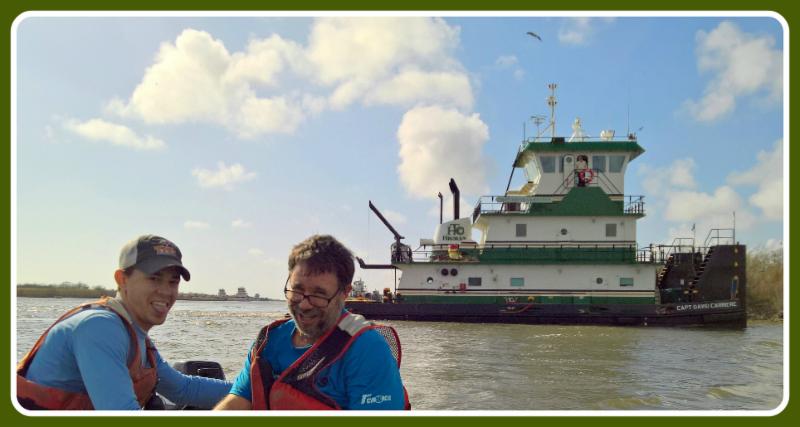
Captain David Carriere (R) with Tankerman Kelvin Wilson
smile
nearby the namesake vessel, M/V Capt. David Carriere
|
|
|
|
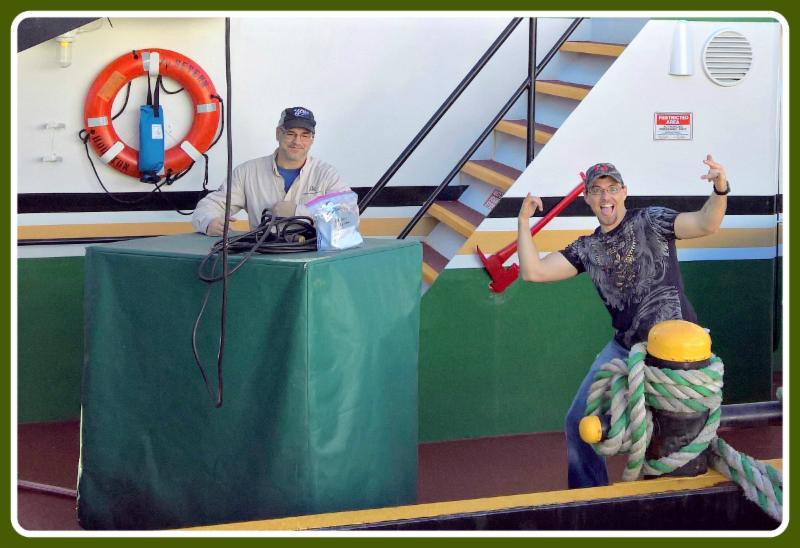
Relief Captain Cameron McGilvray calmly endures
amusing antics of Pilot Ryan Lormand on MV Severn
|
|
|
|
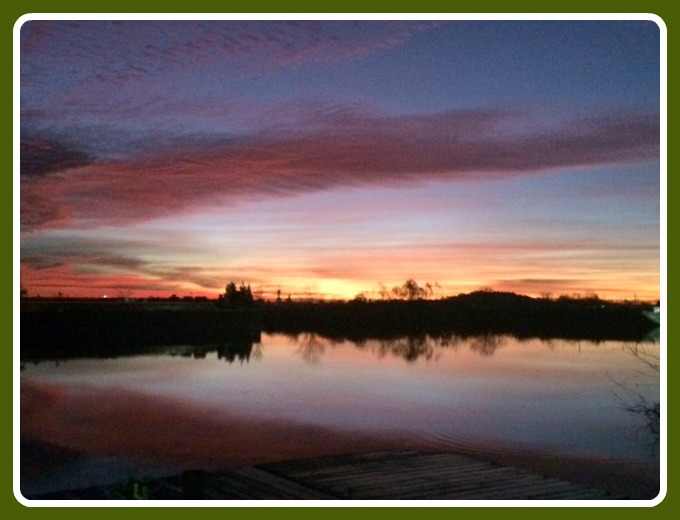
Magnificent first sunrise of 2017 at the Orange Office
taken by Buyer/Warehouseman Sam Watt
|
|
|
|
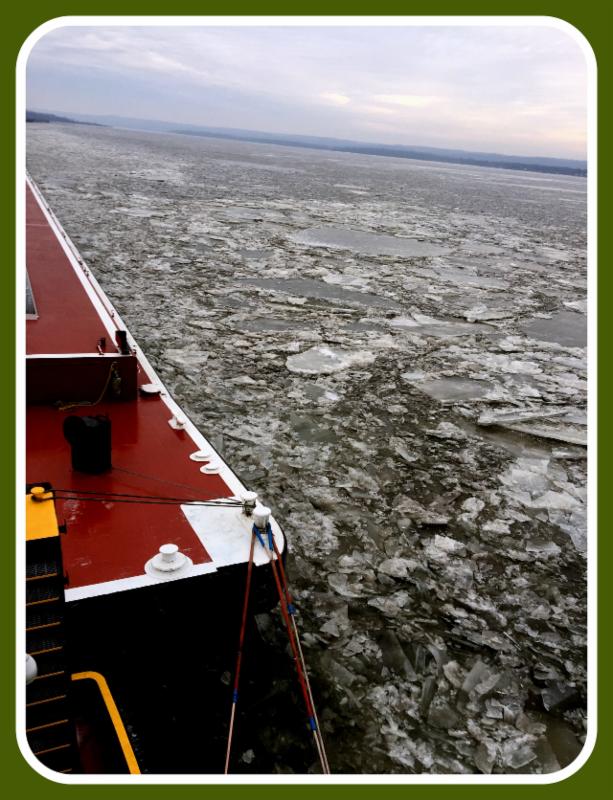
M/V Sandpiper breaking through ice on Lake Peoria.
Photo courtesy of Relief Captain Gary Smith.
|
|
|
First Session
|
|
CANCELLED
|
|
Second Session
|
|
Feb. 23 (Covington, LA)
|
Third Session
|
|
Mar 16 (Channelview) |
Fourth Session
|
|
Apr 18 (Channelview)
|
Fifth Session
|
|
May 9 (
Cypress Bend - Many, LA)
|
| Sixth Session |
|
June 15 (Covington, LA)
|
| Seventh Session |
|
July 6 (Channelview)
|
| Eighth Session |
|
Aug 8 (Channelview)
|
| Ninth Session |
|
Sept 7 (Covington, LA)
|
| Tenth Session |
|
Oct 17 (Channelview)
|
| Eleventh Session |
|
Nov 17 (Channelview)
|
|
|
|
|
2017 HIGMAN
|
LEADERSHIP
|
|
First Session
|
TBD |
|
Second Session
|
TBD |
|
Third Session
|
TBD |
|
| February 20-21 |
|
Orange, TX |
|
|
|
|
|
|
|
|
|
|
|
|
|
|
|
First Session
|
|
Complete |
|
Second Session
|
|
February 20-22 |
|
Third Session
|
|
March 27-29 |
| Fourth Session |
|
July 17-19 |
| Fifth Session |
|
August 21-23 |
| Sixth Session |
|
September 25-27 |
|
|
|
|
|
|
To schedule training please email Janis or Austin.
|
|
|
Make sure crewmembers have access to the Training Newsletter
- Print a copy of each issue for the crew.
- You may join our mailing list by clicking below:
|
|
Higman CBT Certificates earned year to date:
990
|
|
Answer to this week's
Rules of the Road: A,D,D,B,A
|
|
|
Sincerely,
GORDIE KEENAN
JANIS ANDERSON
DENNIS ZINK
AUSTIN ZODY
© 2017 HIGMAN MARINE SERVICES, Inc.
|
|
|
|
|
|
|
|