|
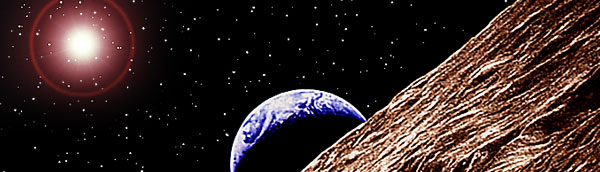
There was a time when strangers from afar - over the seas or down from the stars - brought humankind the science and technology we were lacking. These Geeky Gods were revered and remembered because the things they taught humans to do were marvelous, valuable, and sometimes also fun.
The Greek Titan Prometheus brought fire down from heaven, allowing humans to stay up after sunset, explore caves, and develop barbecue.
Other gifts from Geeky Gods were more technically advanced. The Egyptian Thoth was an astronomer who regulated the heavens, created calendars, and invented hieroglyphs.
The Phoenician god Aeon discovered which fruits were edible - it probably helped to be a god so your culinary mistakes were not fatal.
Mesopotamian god Oannes brought writing and sciences to the cultures around the Persian Gulf. He's often portrayed as half-man half-fish, leading to ancient-astronaut speculation that he might have been a submariner or worn some kind of astronaut or haz-mat suit as he interacted with us earthly creatures.
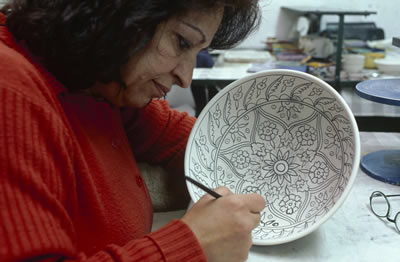
Mezo-America's Quetzalcoatl gifted humans with metallurgy, arts and crafts. Greek Hephaestus was also a metallurgist and crafted armor for the other gods.
Aesculapius taught medicine to the Greeks, New Zealand god Mata-ora invented tattoos, and Rabefihaza of Madagascar brought hunting and fishing. Nencatacoa was god of weavers to the Chibchas of present-day Columbia as Arachne was goddess of the thread arts to the Greeks, and Spider Woman filled that role for Native Americans.
In Masonic lore, architect and builder Hiram Abiff crafted Solomon's Temple and is still revered in Masonic rites the world over.
Wine-gifter Dionysius is still honored in toasts to the spirits of the gods.
And then there were the somewhat more frivolous gifts like...cosmetics. But hey, if you were an Egyptian princess such things were vitally important. Plus, the khol eyeliner had insect-repelling properties, a real plus in that climate.
Myths are the preservation tools for sciences and technologies 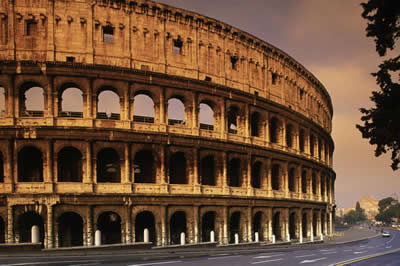 doomed to physically disappear as civilizations crumble, cultures are dispersed, and entire cities are buried in the drifting sands or the suffocating jungles. The stories live on and if pursued can often yield amazing discoveries and uncover incredible accomplishments of humans from long ago. doomed to physically disappear as civilizations crumble, cultures are dispersed, and entire cities are buried in the drifting sands or the suffocating jungles. The stories live on and if pursued can often yield amazing discoveries and uncover incredible accomplishments of humans from long ago.
UPS AND DOWNS OF REAL-WORLD SCIENCE
STEM is a big buzz-word in American education and work-force development. The lack of Science-Technology-Engineering-Math skills among students and young adults concerns many industries that cannot find enough competent home-grown workers.
Sure, they can import better-educated, better-trained, more ambitious people from foreign climes. Yet many educators, policy-makers, businesses, and government agencies fervently support an increase in the STEM skills taught in American schools and the need to increase young people's desires and abilities to enter the very rewarding STEM fields.
It's not always an easy thing to do. Interest in and respect for science and logic seems to wax and wane over time in various cultures. The world is dotted with the ruins of great civilizations surrounded by their much-less advanced descendants. War, decadence, and environmental challenges (natural or man-made) can influence a culture's attitude to science and technology.
 | | MYTHWORKS colleagues and filmmakers Bob Reed & Monty McMillan standing on the Arctic Ocean during production of a film about the oil business on the North Slope of Alaska. Back when there was Arctic Ocean ice to stand on. |
The Dark Ages of Europe were a bleak period when classical science and learning were lost in the barbarian invasions and people were too worn out from just surviving to speculate or experiment on much at all.
Islamic scientists developed impressive theories and applications, including ophthalmology and architecture. It's often said the Islamic world preserved classical Western civilization while Europe floundered in the predominantly religious and superstitious Middle Ages.
The Mayans were charting the course of Venus with amazing exactitude from their sophisticated observatories but their civilization collapsed into survival mode even before Europeans came to colonize.
In the 17th century the Age of Reason, the Enlightenment, and the Scientific Revolution saw the rise again of Geekdom into popularity.
There are a number of reasons for the decline in the educational standards and performance of Americans, and that's a really long discussion that has to include policy, funding, political and religious agendas, and decadence - as many point out with relish, likening us to the declining Roman Empire and all that blood-and-circuses.

The tide is now turning back towards an appreciation for intellect, scientific curiousity and process, and the application of imagination to technology.
Thanks in part to the inevitable shifts in any culture's swing from one extreme to the other, being smart is no longer something you have to hide. In fact, it's become quite cool. Think of the popular figures from the JPL Mars Landing in July 2012, Mohawk guy and Elvis guy. Check out the AXE Apollo Space Academy and the really fun commercials - "Nothing beats an Astronaut". The National Science Foundation has some great educational and awareness programs.
Many TV series are centered around scientific investigation and experimentation [Fringe, Eureka], mathematics [Numbers, Big Bang Theory], medicine [Bones, House], and engineering [Discovery and History channel "How?" shows]. The ever popular and proliferating CIS programs and most sci-fi series are filled with STEM people and principles seen in a positive light. Academy Awards are also given for technological accomplishment.
This increased popularity is also due in part to organizations like the Entertainment Industries Council, bringing together scientists and Hollywood media-makers to ensure accuracy in portrayals and to encourage the appeal of and support for STEM.

For a community-based engagement system that includes a very healthy emphasis on STEM, check out the workforce development programs of Birth2Work.
Let's be sure the STEM people all around the world stay up on those cultural pedestals and receive all the support they need to bring better, safer products and processes to improve our lives and the world around us in balanced equitable ways for all humanity.
And just think - the way myth-making works, in the distant future some of our time's innovators may be deified. Einstein's almost there already!
MYTH NOTES
- What other deities can you think of who've been Geeks?
- What Geeks can you see becoming deities in the distant future?
- What is the greatest invention?
- What invention have you come up with that someone else actually did?
- What invention do you want to see happen?
- How would you encourage young people to enter those fields?
*****
RECOMMENDED
Kim Stanley Robinson's impressive sci-fi trilogy Red Mars, Green Mars, Blue Mars His scientists are complex fascinating people you won't soon forget, and his descriptions of many different kinds of science and technologies entertain while also expand your mind.
Griffith Observatory for mind-boggling astronomy, astrophysics, and earth science.
The Vulcan Mindmeld? Dune's Kwisatch Haderach? The 100th Monkey? Group consciousness? A deity both transcendent and immanent? Here's how it can work, scientifically.
Queen Elizabeth Prize
*****
[Pamela Jaye participates in think-tanks for EIC and Birth2Work.]
|