August 21, 2026

Two Rivers City Hall

1717 E. Park Street

Two Rivers, WI 54241

920-793-5523

Visit the Website

logo.png
Facebook  YouTube  Instagram

Have a question about City services, projects, or what’s happening in Two Rivers? 


Ask us! We’re here to help, reach out anytime and stay connected.  

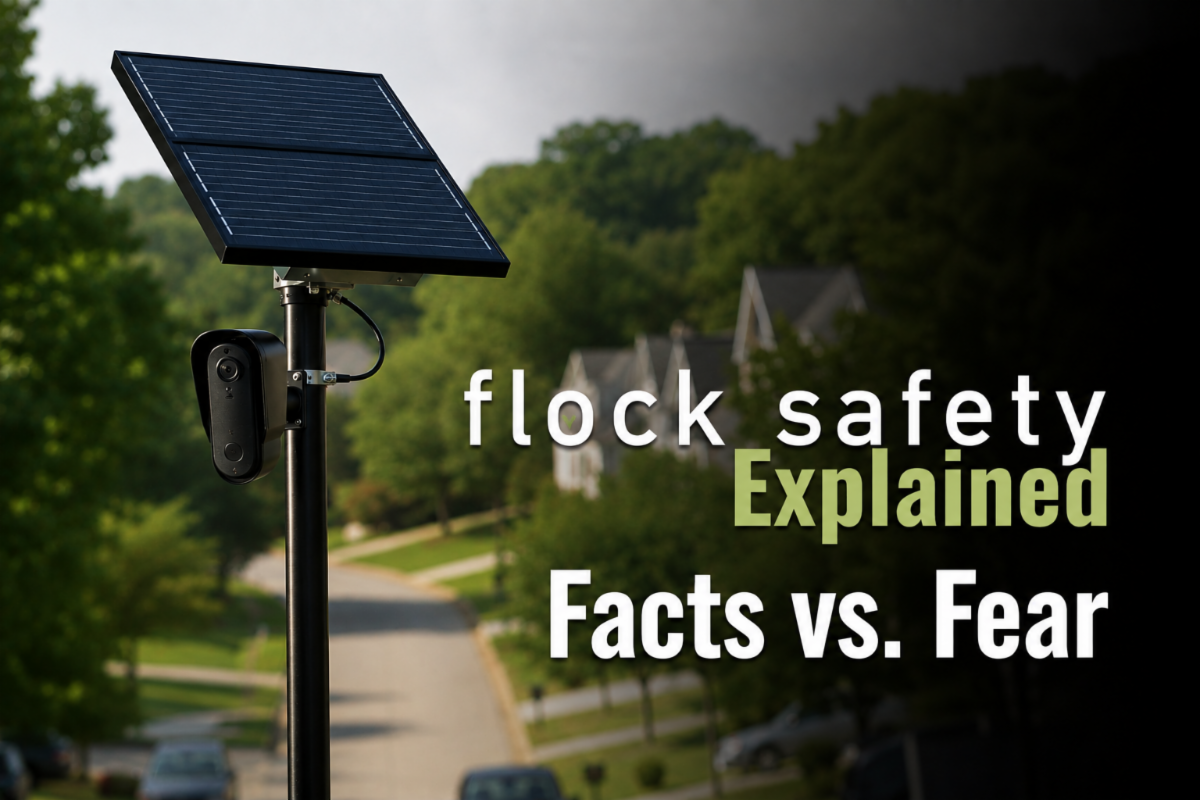
FLOCK CAMERAS IN TWO RIVERS: WHAT THEY ACTUALLY DO

Real Cases, Real Results:

Understanding Flock in Two Rivers


There has been some recent discussion about Flock public-safety cameras and privacy.


Questions about technology used by government are fair, and residents should expect transparency and responsible policies.


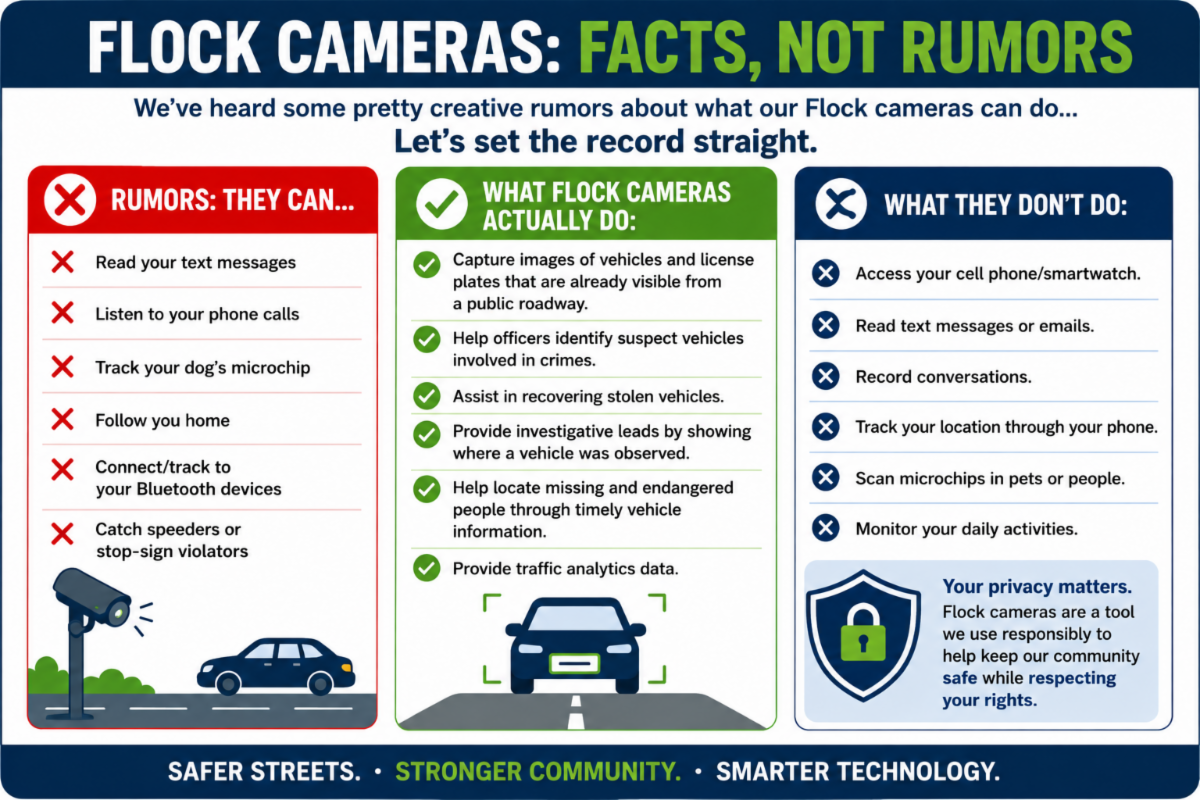
They should also have the facts and not social media misinformation.


So rather than talk about hypothetical scenarios, let's look at how Two Rivers Police have actually used this technology.


First: What is Flock?


Flock cameras are automated license plate reader cameras. They capture information visible from public areas, including license plates and vehicle characteristics.


They are not someone sitting behind a screen watching everyone's movements 24/7.


A good way to think about the technology is that it helps police answer questions like: “Did the vehicle we're looking for pass this location?”


And in just the past year, that capability has produced some very real results in Two Rivers.


REAL CASES. REAL RESULTS. FROM HERE.


  • Arson: Flock led to information to help identify a suspect in an arson investigation.


  • $9,000 Theft: Police identified a suspect vehicle, followed investigative leads to Milwaukee, made an arrest and recovered a significant amount of stolen property.


  • Hit-and-Run: Police used a vehicle description and Flock to locate a suspect vehicle within minutes.


  • Stolen Vehicle: An alert identified a stolen vehicle leaving Two Rivers on Highway 310. Manitowoc County Sheriff's deputies were notified and ultimately stopped it on I-43.


  • Another Stolen Vehicle: An alert told Two Rivers officers that a stolen vehicle had entered the City. Officers quickly located it and returned it to its owner.


  • Endangered Child: Flock was used to alert investigators to a suspect returning to Two Rivers.


  • Child-Abuse Investigation: Vehicle travel information helped investigators establish the location of a suspect for child abuse.


  • Overdose Investigation: Flock helped determine where a vehicle associated with a person investigators needed to interview had last been observed, allowing another police department to continue the search.


  • Juvenile Runaway: Two Rivers Police assisted Manitowoc County in determining that a vehicle associated with a runaway juvenile had most recently been detected in the Sheboygan area.

AND SOMETIMES FLOCK HELPS PROVE SOMEONE DIDN'T DO SOMETHING.


That's an important part of this conversation.


In one homicide investigation, a vehicle was believed to possibly be connected to the crime. Flock information helped investigators conclusively determine it wasn't involved, eliminating an innocent party from suspicion.


In another case, someone reported a vehicle stolen. A Flock search quickly established that it had actually been legally repossessed, saving police time and preventing an unnecessary detention.


Technology that can help identify a suspect can also help clear an innocent person.


BUT WHAT ABOUT MY PRIVACY?


That's a legitimate question. Two important federal court decisions in 2026 help illustrate where the constitutional debate stands.


Schmidt v. City of Norfolk


A federal district court considered a Fourth Amendment challenge to a network of license-plate-reader cameras. The court concluded that Norfolk's limited network and 21-day retention period did not provide the kind of comprehensive tracking necessary to create an intimate picture of someone's movements.


In other words, photographing vehicles and license plates traveling on public roads does not automatically become unconstitutional surveillance simply because those observations can be searched electronically.


Chatrie v. United States


The U.S. Supreme Court addressed something substantially different: cellphone geofencing. Police investigating a bank robbery asked Google to identify cellphones that had been near the bank. The Supreme Court held that obtaining an individual's historical cellphone-location information in that manner constitutes a Fourth Amendment search.


Here's the easiest way to understand the difference:


Geofence asks: “Which cellphones were inside this area?”


Flock asks: “Did this particular vehicle pass one of these cameras?”


They are not the same technology.


WHAT DOES TWO RIVERS ACTUALLY HAVE?


Two Rivers currently operates 10 Flock cameras.


The network was implemented incrementally, beginning along the City's three major highways and later expanding to key locations around Neshotah Beach. And look at what the system has actually been used for:


Stolen cars. Hit-and-runs. Theft. Arson. Endangered children. A juvenile runaway. Drug investigations. An overdose investigation. Child abuse. Homicide investigations.


  • It has helped recover property.
  • It has helped locate suspects.
  • It has helped neighboring law-enforcement agencies.
  • It has helped officers determine where to look.
  • And it has helped clear innocent people from suspicion.


Residents should absolutely expect transparency, appropriate safeguards and responsible use whenever their local government employs technology. But the conversation should also be based on what the technology actually is, how it is actually being used, and what it has actually accomplished.


In Two Rivers, Flock isn't about someone sitting behind a screen watching ordinary people live their lives. It's another tool available to police when a car is stolen, a child is endangered, someone flees a crash, property is stolen, or investigators need a lead in a serious crime.


And we don't have to speculate about whether that's useful.


It's already working right here in Two Rivers.

Understanding the WPPI Energy Contract Extension

Understanding the Proposal and What It Means for Two Rivers’ Electric Future


The City has created a new online resource to help residents better understand the proposed WPPI Energy contract extension.


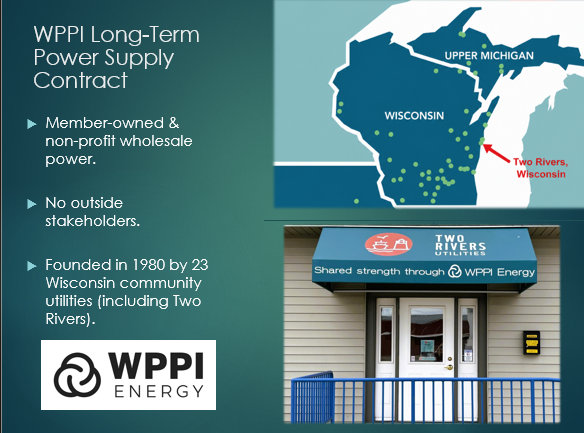
  • Two Rivers has been a member of WPPI for more than 45 years. 
    
  • WPPI is a not-for-profit wholesale power provider owned and governed by 51 locally owned municipal electric utilities.
    
  • These 51 communities in Wisconsin, Iowa, and Michigan share resources and work together to secure reliable power and plan for future energy needs.


The City's current agreement runs through 2055. The proposed 18-year extension would continue that relationship through 2073, providing WPPI the long-term certainty needed to plan and finance future generation and transmission investments. It does not mean committing Two Rivers to today's sources of electricity through 2073.


The new FAQ explains the proposal, why the extension is being considered, WPPI's current investments, electric rates, and what the decision means for Two Rivers.

Putting Economic Development Dollars to Work: How Two Rivers' Revolving Loan Fund Works

From 1980s Grants to Today:

How Two Rivers’ Revolving Loan Fund Keeps Working for the Community


You may occasionally see the City's Economic Development Revolving Loan Fund (RLF) referenced in a City budget, development agreement or economic development project. There has been much chatter on local social media pages about the RLF so it is worth explaining where this money came from, as the fund has a unique history and it is not funded through the City's property tax levy.


A $1.25 Million Investment That Started in the 1980s


Two Rivers' Economic Development Revolving Loan Fund, known in the City budget as Fund 290, dates back to the 1980s.


The fund was originally capitalized through two Community Development Block Grants (CDBG’s). This was federal CDBG funding that was awarded originally to the State of Wisconsin and then to the City of Two Rivers. Those grants funded loans of $750,000 to Paragon Electric and $500,000 to Eggers Industries.


That's $1.25 million in outside funding that came to Two Rivers roughly 40 years ago to support local economic development.


But here's what makes a revolving loan fund different: the money doesn't disappear when it is used.


As businesses repay their loans (with interest) the money returns to the fund and can be loaned or invested again. For more than 25 years, City Hall has recycled these resources to assist local businesses with startup and expansion projects.


An Important Change in 2019


In 2019, the Wisconsin Department of Administration undertook an initiative to close locally administered CDBG revolving loan programs.


Because Two Rivers had received its original CDBG grant funding back in the 1980’s, the City was allowed to retain its fund locally. The State approved the "defederalization" of Fund 290 in February 2019.


That was significant for Two Rivers!


Instead of returning these resources, Two Rivers retained them as a locally controlled economic development asset, giving the City greater flexibility to put the money to work for the community.


Recycling the Money Again and Again


The history of the former Paragon Electric property provides a good example of how this works.


A substantial amount of RLF money became tied up following the default of a loan made in 2014 and the City's subsequent foreclosure and ownership of the former Paragon property. Rather than simply writing off that investment, the City ultimately sold the property in May 2022, returning approximately $1.2 million to the Revolving Loan Fund.


Those dollars could then go back to work.


Since then, RLF financing has helped support projects including a new 12,000-square-foot industrial facility at Woodland Industrial Park, The Hook Lanes and Games, the approximately $2 million Violet Inn project, and redevelopment of the former Luigi's Restaurant property into Pop- Start Pizza.


The City's active RLF loans continue making payments back into the fund. Based on the current 2026 loan portfolio, approximately $48,784 in scheduled loan payments will return to the fund this year alone.


And those dollars can eventually be put to work again.


Why Does City Hall Do This?


Economic development often requires financing that doesn't fit neatly into conventional lending.


A promising business may have a solid project but face a financing gap. An older property may require significant redevelopment before it can become productive again. A growing manufacturer may need assistance getting an expansion across the finish line.


The RLF gives Two Rivers another tool to help make those projects happen.


Importantly, the City's goal isn't to replace banks or private investment. The RLF is intended to help leverage private investment. A relatively small City investment can sometimes help unlock a much larger private project, thus creating jobs, redeveloping property and adding value to the City's tax base.


Loan-making and collection decisions are overseen by the City's Business and Industrial Development Committee (BIDC).


Is This Property Tax Money?


This is an important distinction.


Fund 290 is not funded through the City's annual property tax levy.


Its original capitalization came from the $1.25 million in CDBG funding received in the 1980s. Over the decades, loan principal, interest, property proceeds and other revenues have been recycled through the fund.


These are still public dollars, and they should absolutely be managed carefully and transparently. Residents have every right to ask whether a particular investment is worthwhile.


But using Fund 290 does not mean the City is adding that amount to residents' property tax bills.


In fact, when appropriate economic-development activities can be supported through Fund 290, it can reduce pressure on the City's property-tax-supported General Fund.


The Bottom Line


The Revolving Loan Fund is a good example of taking an outside investment made in Two Rivers decades ago and continuing to make it work for the community today.


An original $1.25 million investment from the 1980s has been recycled for roughly four decades, helping businesses start, businesses expand, properties redevelop and new investment occur in Two Rivers.


The measure of success isn't simply how much money sits in the account.


The goal is to put those dollars to productive use, protect the City's investment, bring money back into the fund whenever possible, and then put it to work again.


That's why it's called a Revolving Loan Fund and why it remains an important economic-development tool for Two Rivers.

Brat Fry & Art Splash at Lester Public Library

Celebrating Summer, Creativity and Community Connections

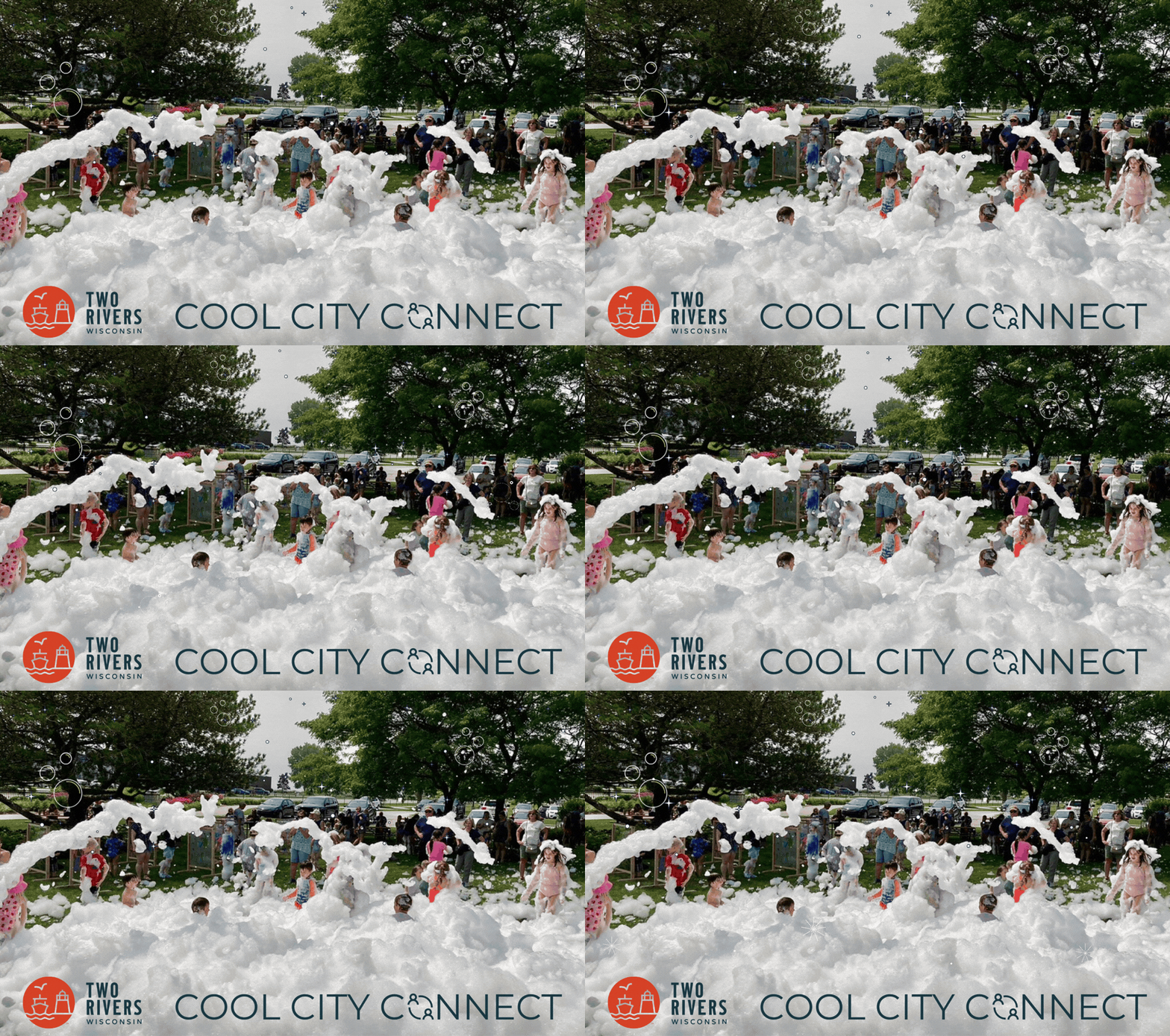
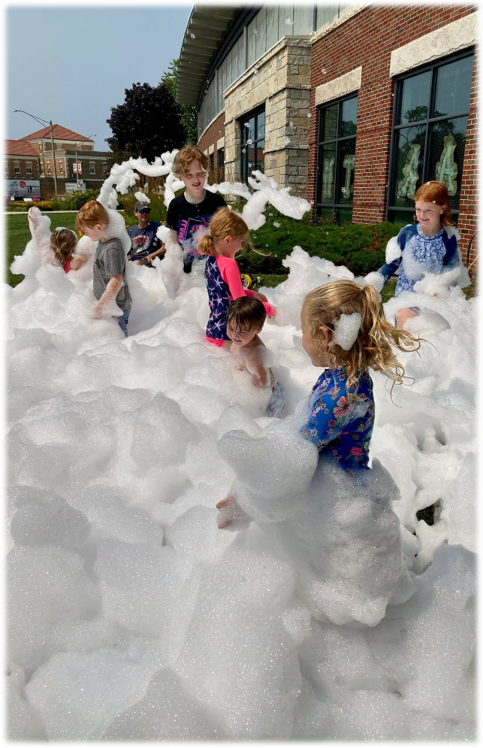
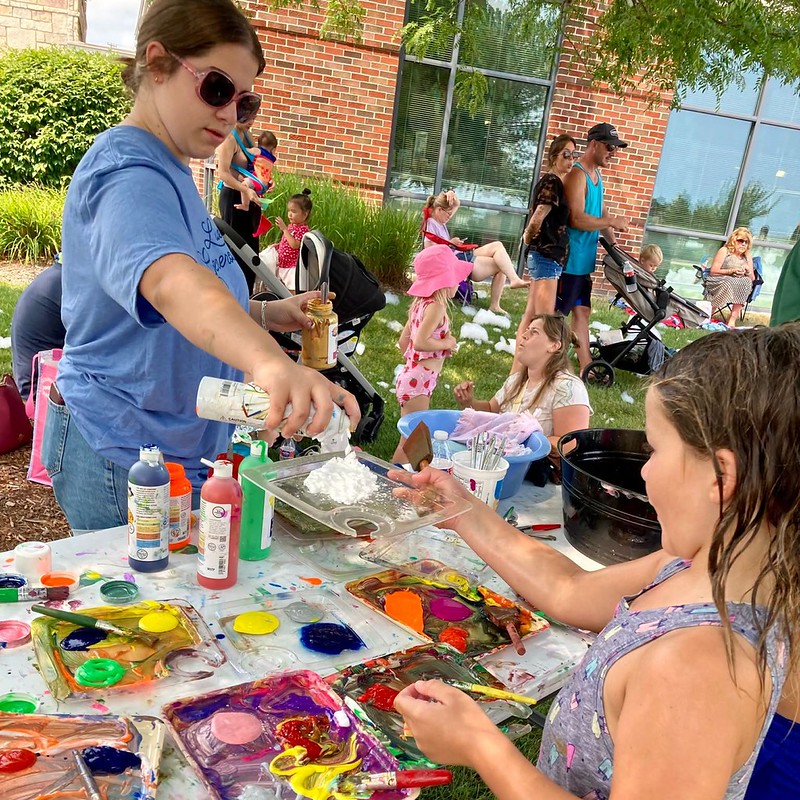
A few days ago our library celebrated summer with its Brat Fry & Art Splash gathering. Beautiful weather, great food and plenty of colorful, messy fun brought tons of children and community members to the Lester ibrary lawn for an afternoon of creativity and connection.


The event was about more than celebrating summer. Proceeds from the brat fry benefit the "Healthiest Manitowoc County Investing Early Coalition", a collaborative effort focused on supporting young children and their families. Lester Public Library is proud to serve as a leading partner in this important community initiative.


Funds raised will help support the upcoming Community Baby Shower on October 2 at the Community House, along with programs and resources including Reach Out and Read, Welcome Baby, Early Screening and Parent Cafés.


Events like Art Splash are a great reminder that our library is much more than a place for books. It is a place where families connect, children learn and play, and community partnerships help give our youngest residents a strong start.

Did You Know?

INVASIVE SPECIES ALERT: Japanese Knotweed


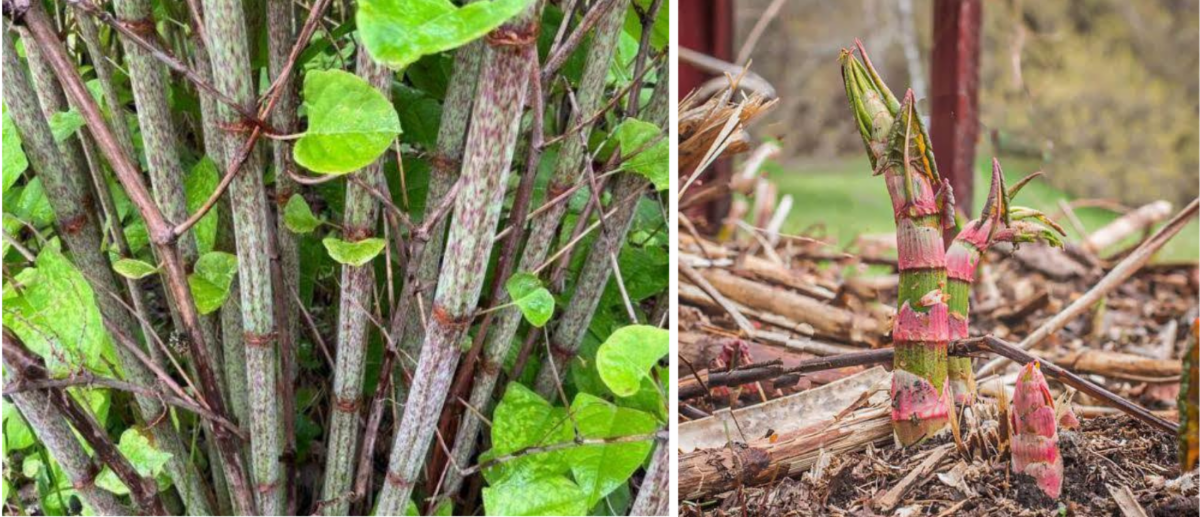
Japanese knotweed is a highly invasive plant that can grow 6–9 feet tall and can be extremely difficult to control once established.


It spreads rapidly through underground rhizomes, forming dense thickets that crowd out native plants and wildlife habitat. Its roots are even strong enough to damage pavement and other infrastructure, while its dry stems can create a fire hazard.


Japanese knotweed can also spread when pieces of its rhizomes are accidentally moved in fill dirt or on construction equipment and tires.


How to recognize it:

  • Large, 4–6 inch heart-shaped leaves
  • Hollow, bamboo-like stems
  • Plume-like clusters of white flowers in August and September


Simply digging it up is usually not effective and can actually spread the plant if root fragments are moved. Frequent mowing or cutting over several years can weaken it, but herbicide treatment is often necessary for effective control.


See a patch locally? PLEASE REPORT IT by contacting Patricia Scuglik, Invasive Species Coordinator with the Lakeshore Natural Resource Partnership, at patricia@lnrp.org.


{This message is brought to you by residents from the Two Rivers Environmental Advisory Board}. 

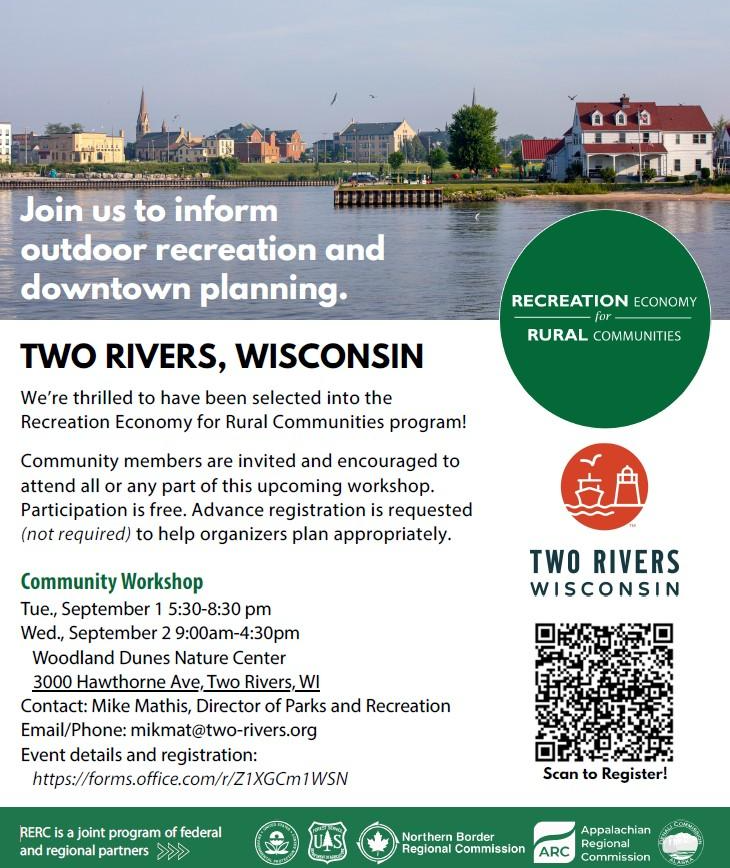
-Recreation Economy for Rural Communities-Community Workshop

Help Shape the Future of Outdoor Recreation and Community Development


We are excited to invite you to participate in an important community planning initiative that will help shape the future of Two Rivers.


The City of Two Rivers was selected as one of only 15 communities nationwide to participate in the U.S. Environmental Protection Agency's Recreation Economy for Rural Communities (RERC) program. This nationally recognized planning assistance program helps rural communities identify strategies to strengthen their outdoor recreation economy, revitalize downtowns and neighborhoods, improve quality of life, and create new opportunities for economic development.


Rather than providing grant funding, the program brings together a team of national experts, federal agency partners, and community stakeholders to develop a locally driven action plan that can guide future investments and position communities for future funding opportunities.


Two Rivers has incredible assets, including Lake Michigan, our rivers, trails, parks, beaches, harbor, historic downtown, and growing outdoor recreation opportunities. This planning process is an opportunity to identify how these assets can better support residents, attract visitors, strengthen local businesses, improve community connections, and enhance our quality of life for years to come.


Your ideas, experience, and perspective are important. Whether your interests are economic development, tourism, conservation, recreation, public health, business, education, neighborhood development, or simply making Two Rivers an even better place to live, work, and visit, we hope you will join the conversation.


Participation is free. You are welcome to attend one or both sessions, although attending both is encouraged to get the most from the planning process. Advance registration is appreciated, but not required, to help us plan for meals and workshop materials.


We hope you'll join us as we work together to develop a shared vision and practical action plan that will help guide the future of outdoor recreation, economic vitality, and community development in Two Rivers.

Upcoming Events

For more events and things to do in Two Rivers, click the link below.

Public Meetings Next Week

Agendas are available for public meetings at least 24 hours prior to meeting times. Click Here