|
The digital divide points to a stark divide in high-speed internet, digital infrastructure, and computer literacy among poorer, predominately communities of color and often more affluent and predominately white neighborhoods. The term "digital redlining" refers to maps drawn in the 1930s to determine neighborhoods that were safe for investment by financial institutions. Homes that were in the red were determined "hazardous" and also were predominately Black or immigrant community that didn't qualify for federal home loans. Zoning officials used these maps to identify redlined areas that were less desirable for new planned freeways or factories, often destroying low-income communities of color. "Redlined areas" are exposed to higher rates of harm such as air and water pollution, traffic, and health impacts in predominately low-income communities of color.
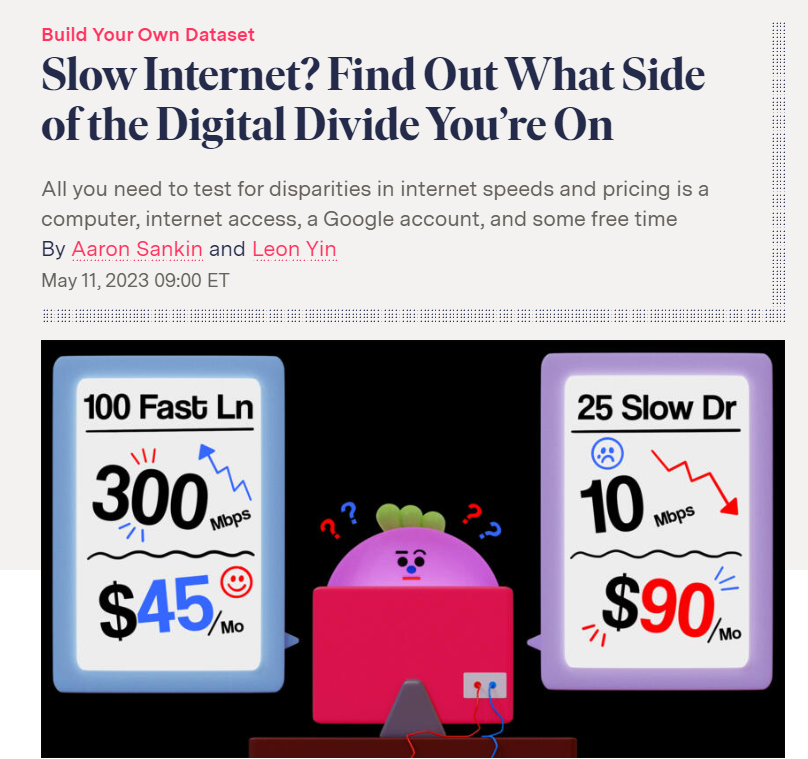
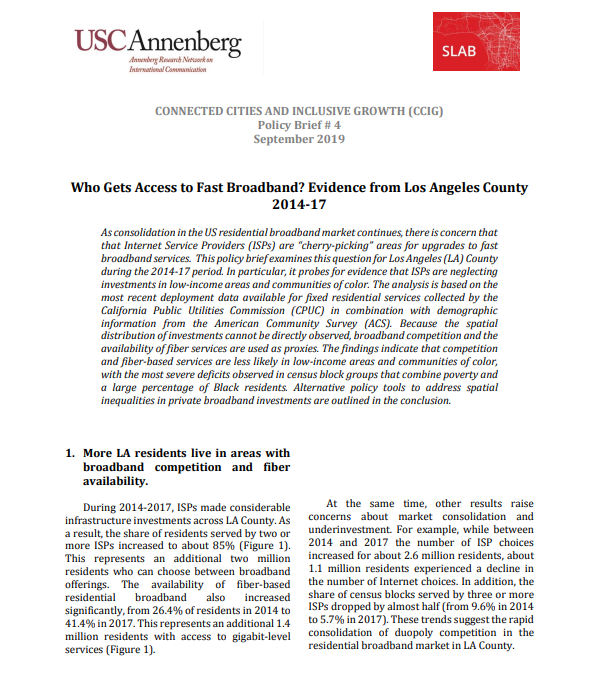
A Pew survey found that 90% of Americans said that the internet was an essential need in their lives during the pandemic, yet reliable high-speed internet is not guaranteed. Internet Service Providers or ISPs decide where upgraded infrastructure is necessary. Households with new infrastructure have downloads speeds of 200 or more megabits per second (Mbps) which is considered fast and in "slow service" areas where ISPs have neglected upgrades to infrastructure, the download speed is often less than 25 mbps. Building off a 2020 Princeton study, researchers at The Markup, a non-profit investigative newsroom found that ISPs offered the worst deals to people who needed more affordable internet prices. They used census block group data, historical redlining maps, income and demographics to compare the proportion of slow speed in each major city. Among the ISPs investigated, they discovered those ISPs offered different internet speeds for the same base price. Infrastructure plays a significant role in how people in the city connect and who doesn't get the chance to. However, those who have substandard service shouldn't be paying premium price. Ensuring everyone has access to reliable high-speed internet requires significant infrastructure upgrades, interim alternative technology solutions, and accessible low-income programs to pay for internet service.
It's critical to grasp the impact of the digital divide and digital redlining to better understand how technology can play a negative and positive role in the city. A smart city strives for equity in internet access and affordability where every resident can connect and enjoy the opportunities a smart city offers.
In Long Beach, our Digital Inclusion Initiative vision strives to ensure that every individual in Long Beach, regardless of background, neighborhood or identity has high quality, accessible, technology resources and services to be civically engaged and socially and economically empowered.
|