|
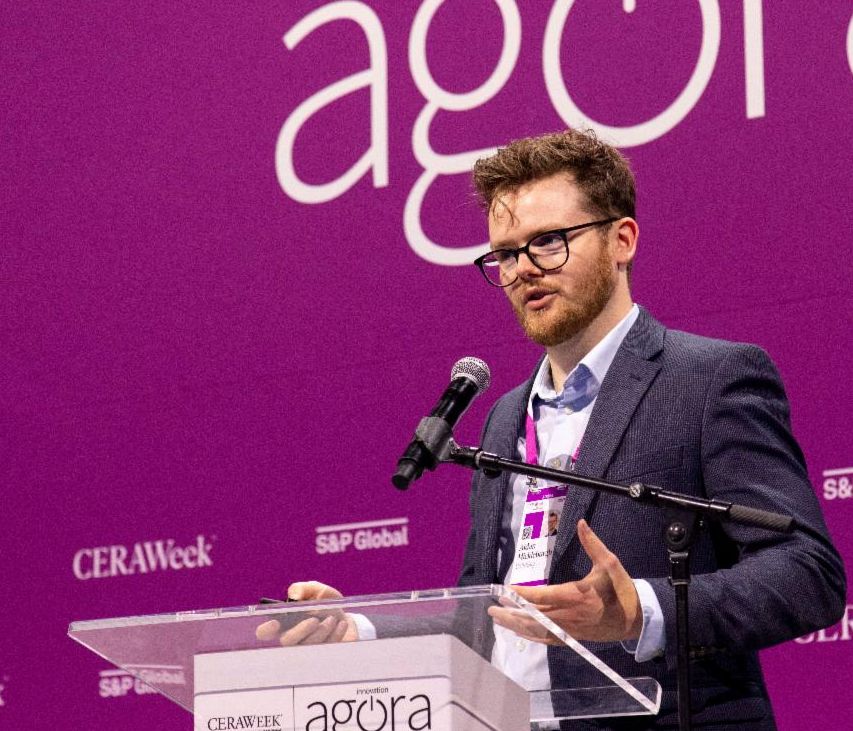
You competed in the Open Air Collective Carbon Removal Challenge as a one-person team. You did very well even though you were up against larger multi person teams. How did that experience come about?
I felt out of place seeing teams with up to ten people representing major universities, while I was solo. I had only just started my program at U-M a couple of months before the competition deadline.
The idea itself actually began as a scribble on a Chili’s napkin in December after an animated conversation with a friend. It centered on a core problem: the ocean naturally absorbs CO₂ because it’s more alkaline than the atmosphere, but as oceans acidify, this process slows.
Most startups in the sector focus on restoring ocean alkalinity — basically “resetting” the ocean’s chemistry to keep carbon flowing in. But I wondered, are we thinking about the surface of the ocean all wrong? If it acts like a catalyst, the surface area is pretty inefficient.
My initial vision was to increase aeration at the surface — imagine “frothing” the water to boost gas exchange. But as I dove deeper into research, I realized the process might be more efficient if we targeted different ocean conditions, releasing CO₂ below the surface where key factors like temperature and alkalinity are optimal.
What drove you to pursue this novel approach to ocean-based carbon removal?
During my winter break in Puerto Rico — where, frankly, I can’t spend much time outside — I obsessed over this idea, crunching the numbers and reviewing literature about ocean chemistry. The more I looked, the more convinced I became: nobody had proposed something exactly like this, yet the science suggested it should work. When the OpenAir Carbon Removal Challenge crossed my desk, I saw it as a sign to formalize the idea.
I only knew one professor in Michigan at the time, Dr. Joshua Jack, who kindly allowed me to work in his lab, even though this wasn’t his main area. I ended up submitting my concept with some robust economic modeling, best-site selections based on ocean currents, and a clear plan for how to make it feasible — even if I didn’t have lab results yet.
I was as surprised as anyone when I made it through, but I think my proposal’s uniqueness and research-informed approach made it stand out. Sometimes being an outsider is an advantage.
|