|
Quotes of the Day:
"What more valuable than Gold? Diamonds. Than Diamonds? Virtue."
– Benjamin Franklin
"I am tired and sick of war. Its glory is all moonshine. It is only those who have neither fired a shot nor heard the shrieks and groans of the wounded who cry aloud for blood, for vengeance, for desolation. War is hell."
– William Tecumseh Sherman
"The spirit of resistance to government is so valuable on certain occasions that I wish it to be always kept alive."
– Thomas Jefferson
1. A new world order drawn by Kim Jong Un, Putin and Xi Jinping
2.With smiling selfies and K-pop jam session, Japan and China woo South Korea
3. Unification Ministry seeks control of research institute, staff wary
4. U.S.-ROK-Japan Trilateral Next-Gen Study Group
5. Unification, foreign ministries launch regular consultative channel on N. Korea policy
6. USFK commander highlights 'centrality' of S. Korea in security of Indo-Pacific
7. What to make of reports that Russia tried to ship a nuke reactor to North Korea
8. Lee stresses mutually beneficial relations with Japan
9. Seoul seeks to streamline import rules for North Korea food products
10. 'Civilian' faces probes over drone incursion alleged by North
11. Revised law allows disciplinary action against JCS chairman, Army chief
12. N. Korea to stage large-scale youth events ahead of party congress
13. S. Korean, U.S. Marines stage regular joint winter drills
14. What a hit ROK film gets right — and wrong — about Christianity in North Korea
1. A new world order drawn by Kim Jong Un, Putin and Xi Jinping
Comment: From a Witness for Freedom in north Korea on our Korea Regional Review. Ms Jihyun Park is an escapee and a good friend.
Voices Jan. 16, 2026 / 10:10 AM
A new world order drawn by Kim Jong Un, Putin and Xi Jinping
By Jihyun Park
https://www.upi.com/Voices/2026/01/16/perspective-new-world-order-kim-jong-un/6091768574374/
North Korean leader Kim Jong Un (C) visits a major munitions factory to review production of weapons and combat equipment at an undisclosed location in North Korea on December 28. Photo by KNCA/EPA
Jan. 16 (UPI) -- The author requests that north Korea be styled with a lowercase "n" in this story.
The two letters exchanged between Kim Jong Un and Vladimir Putin at the start of 2026 are not New Year's greetings.
They are not diplomatic pleasantries.
They are, in effect, a formal declaration of a war alliance and a decisive document revealing where the current world order is heading.
Related
On Dec. 27, Kim Jong Un sent a New Year's message to Putin. Yet the language of the letter goes far beyond congratulatory remarks. Instead, it is filled with blunt and unmistakable expressions:
"The most genuine alliance, forged by sharing blood in the same trench, through life and death."
"An unchanging and eternal choice."
"Unconditional support."
Such language is rarely, if ever, used in correspondence between heads of state. This is not the vocabulary of peacetime diplomacy. It is the language of a wartime alliance, one that presumes a shared war and a shared fate.
Putin's reply is even more explicit.
"I will unconditionally respect and unconditionally support all of your policies and decisions."
This is not a promise to evaluate north Korea's actions after the fact.
It reads as prior authorization and political indemnity, a declaration that Russia will stand by north Korea regardless of the choices it makes.
Reading this exchange inevitably recalls Stalin's approval of the North Korean invasion in June 1950.
These two letters are not personal correspondence. They are closer to a wartime agreement between allies.
North Korea-Russia relations have entered a wartime phase
This declaration did not emerge overnight.
Over the past two years, north Korea and Russia have systematically constructed the architecture of a war alliance.
• The elevation of ties through repeated summits
• The deployment of north Korean troops to the Russia-Ukraine war
• The creation of Unit 528, tasked with mine-clearing and engineering operations
•-The institutionalization of ceremonies honoring fallen soldiers
Initially, Pyongyang denied sending troops to Ukraine. Since last year, however, it has actively publicized their involvement.
Commemorations for fallen soldiers serve not only to strengthen internal cohesion but also to signal that North Korea now regards this war as its own.
In an assessment released late last year, the UK Ministry of Defense noted that north Korean forces are playing leadership roles on certain fronts of the Russia-Ukraine war.
This indicates that north Korean troops are no longer auxiliary forces or expendable manpower but have been fully integrated into Russia's war-fighting structure.
Beyond the military: Alliance engineered across generations, culture
north Korea's alignment with Russia extends far beyond the battlefield.
It now encompasses generational, cultural, educational and historical dimensions.
• The construction of museums commemorating north Korean soldiers killed in the Russia-Ukraine war
• The strategic designation of Russian as a foreign language taught to students
• The transfer of Ukrainian children abducted by Russia to Songdowon, where they are subjected to pro-Russian, anti-Western ideological indoctrination
This is not a temporary tactical alignment. It is a structural choice designed to be internalized by future generations.
The pattern is not new. Just as Kim Il Sung sent war orphans from the Korean War to Poland for ideological re-education, Putin has sent Ukrainian children northward, this time to north Korea, to reshape their identities and loyalties.
Kim Jong Un's transformation: from reclusive leader to wartime commander
Until 2025, Kim Jong Un was widely viewed as a relatively reclusive leader.
Each new year, international media speculated about his health, the possibility of regime collapse, or sudden leadership change.
That image has now collapsed.
Since the beginning of 2026, Kim has appeared with striking frequency:
• Attending New Year's performances
• Visiting munitions factories
• Conducting public inspections of missile test sites
• Expanding his visible diplomatic and military engagements
Kim Jong Un is no longer governing from behind the curtain.
He is presenting himself as the public face of a regime preparing for a long war.
This transformation coincides precisely with the maturation of the North Korea-Russia alliance.
north Korea is no longer merely enduring sanctions; it has become a functional partner within a wartime international order.
The north Korea-Russia-China axis and reordering of the world
To understand this alliance, one must view it through the lens of the north Korea-Russia-China triangle.
Kim Jong Un is aligning not only with Russia, but also closely with China. His participation in China's commemoration of the 80th anniversary of victory in World War II was highly symbolic.
It publicly showcased north Korea, Russia and China as a shared historical and ideological community united by a common anti-Western narrative.
• Russia seeks manpower and strategic depth to sustain a prolonged war.
• north Korea is transforming from a sanctioned state into an active war partner.
• China provides strategic rear support and diplomatic insulation, reinforcing the trilateral axis.
Together, this structure forms a secondary front in Northeast Asia, exerting pressure on the United States, South Korea and Japan.
The era of "war versus peace" is over
The world is no longer divided between war and peace.
It is now entering an era defined by alliance blocs versus alliance blocs, a global order reorganized on the assumption of sustained conflict.
The letters exchanged between Kim Jong Un and Vladimir Putin clearly mark this transition.
They are not gestures of goodwill.
They are strategy. Not rhetoric, but a blueprint for a restructured world order.
north Korea, Russia, and China are not preparing for a postwar world.
They are already operating within a world shaped by war itself.
This is not merely communication.
It is a declaration.
A signal.
And a warning.
Jihyun Park, a British Korean Conservative politician, is a North Korean escapee who fled twice from the country -- in 1998, which resulted in a forced repatriation, and in 2008, which was successful.
2. With smiling selfies and K-pop jam session, Japan and China woo South Korea
Summary:
Japan and China are running parallel charm offensives toward South Korea’s President Lee Jae Myung, using personal warmth, symbolism, and pop culture to pull Seoul closer while their own rivalry sharpens. Xi wraps Lee in talk of shared victimhood under Japanese imperialism and “multipolarity,” hoping to weaken the U.S.–Japan–South Korea security triangle and keep Seoul neutral in U.S.–China competition, including over Taiwan. Takaichi courts Lee with protocol-breaking hospitality and K-pop drum jams to lock in a future-oriented partnership against China’s economic coercion and Trump’s tariffs and alliance doubts. Lee is trying to maximize maneuver space, but real tests will come when Taiwan, history, or sanctions force hard choices.
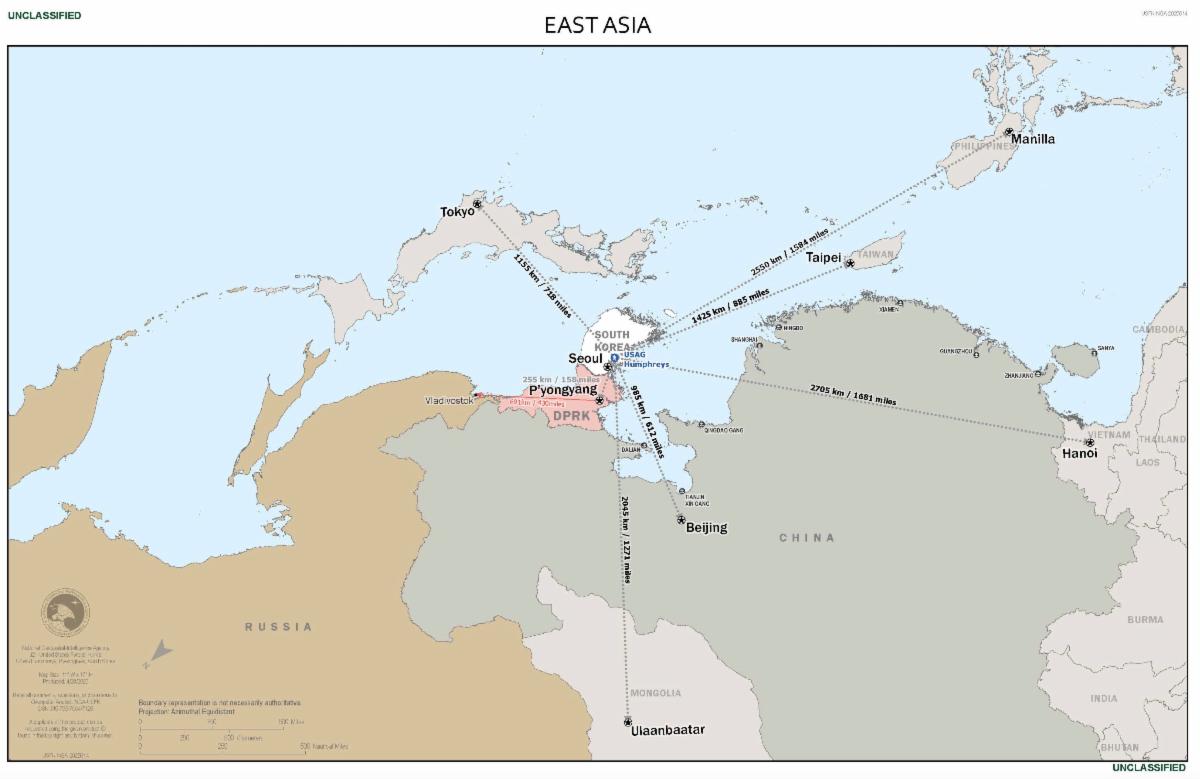
Comment: There is real strategic competition in Northeast Asia. Perhaps we need a Northeast Asia Combatant Command. It appears Seoul is the center of action if not the center of gravity. Just take a look at General Brunson's "East Up Map."
Photos at the link. President Lee is no John Bonham, Keith Moon, Ringo Starr, or Buddy RIch. But he acquitted himself very well. And PM Takaichi is a rock star.
With smiling selfies and K-pop jam session, Japan and China woo South Korea
Washington Post · Michelle Ye Hee Lee
As relations between China and Japan deteriorate, and the Trump administration remains unpredictable, South Korea’s president must strike a delicate balance.
January 15, 2026 at 5:00 a.m. ESTYesterday at 5:00 a.m. EST
https://www.washingtonpost.com/world/2026/01/15/china-japan-south-korea-relations/?pwapi_token=
SEOUL — South Korean President Lee Jae Myung is finding himself the center of attention in the region: Japanese Prime Minister Sanae Takaichi this week invited him to join an impromptu drum jam session to K-pop songs. Last week, it was Chinese leader Xi Jinping who was — uncharacteristically — all smiles as Lee took selfies of them on the Chinese cellphone Xi gave him last year.
Japan and China are waging full-court charm offensives to woo South Korea, as relations between Tokyo and Beijing deteriorate and each capital looks to support from its small but strategically important neighbor.
Lee’s back-to-back summits underscore the diplomatic tightrope he walks, trying to avoid taking sides as he balances South Korea’s security interests with the United States and fellow American ally Japan while smoothing out tensions with China, Seoul’s biggest trading partner.
“He’s managing an incredibly perilous diplomatic situation,” said Daniel Sneider, an East Asia policy expert at Stanford University. “He’s got to improve relations with both countries at the same time he’s also making sure he doesn’t do anything to tick off” the United States.
The relationship between Japan and China has soured in recent months, since Takaichi suggested Japan could intervene militarily if Beijing invades Taiwan, a self-governing island that the Chinese Communist Party claims as its territory.
China retaliated with military saber-rattling and economic coercion, including restricting critical mineral exports to Japan and advising Chinese citizens against visiting Japan for tourism. Takaichi, a pro-Taiwan military hawk, has refused to take back her remarks, but she and other Japanese officials have been trying to keep the conflict from escalating.
Takaichi, who rose to power after an internal party vote, has enjoyed a boost in popularity after standing up to China and is expected to soon call an early election to win a broader mandate.
Beijing now sees Seoul as a potential partner to take collective action against Japan, experts say, as China reminds South Korea they were both victims of the Japanese Empire’s aggression. Japan invaded and occupied parts of China in a brutal military campaign from the 1930s until the end of World War II, and it colonized Korea from 1910 to 1945.
“Both countries, with broad common interests, should stand firmly on the right side of history and make correct strategic choices,” read the official Chinese readout of Xi’s meeting with Lee. “… Today, it is all the more important for the two sides to join hands to defend the victorious outcomes of World War II, and safeguard peace and stability of Northeast Asia.”
Meanwhile, Japan wants a stronger relationship with South Korea, based in part on countering China’s economic dominance and shoring up a neighboring country’s support while China retaliates against Tokyo for Takaichi’s remarks. Japan and South Korea are also looking to band together as they face a volatile U.S. administration that has questioned the value of alliances and hit both with tariffs on key industries.
For its part, South Korea is trying to stay out of the fight.
“From the perspective of peace and stability in Northeast Asia, such confrontation and conflict between China and Japan are not desirable, so I hope that these issues will be resolved smoothly through dialogue between the two countries,” Lee said ahead of his Japan visit.
But that didn’t stop Xi and Takaichi from trying to make Lee feel like a special friend.
On the agenda: Noodles and North Korea
Lee visited China last week for a summit with Xi, becoming the first South Korean president to make such a trip since 2019. He brought a delegation of more than 200 South Korean business leaders, highlighting China’s importance as Seoul’s largest trading partner. Lee took office vowing to restore relations with China, which deteriorated under his predecessor.
Lee was greeted by an honor guard, a performance by a military band and a 21-gun salute in Tiananmen Square. Xi and his wife hosted a welcome banquet for Lee and his wife, and the two leaders shared friendly observations about a black bean noodle dish enjoyed in both countries.
Xi’s efforts to keep Seoul close comes against the backdrop of geopolitical uncertainty, including U.S. President Donald Trump’s unpredictable leadership and talk of a world splintering into spheres of influence, especially after the U.S. military actions in Venezuela, according to Sneider, of Stanford.
China wants to diminish the U.S. security alliance system in East Asia and drive a wedge between the U.S., South Korea and Japan, impeding them from forming a trilateral bloc to contain Beijing’s influence, experts say.
“That’s part of China’s long-term aspirations to be the hegemonic power in East Asia,” Sneider said.
This was evidenced by Xi’s remarks ahead of his meeting with Lee, referencing Trump’s “America First” policy: “South Korea and China should jointly oppose protectionism and practice true multilateralism to contribute to promoting a peaceful and orderly global multipolarity and inclusive economic globalization.”
For China, it’s important to create a more friendly atmosphere toward South Korea, especially given the rise in anti-China sentiment among the South Korean public, said Ryu Yongwook, an expert on East Asia relations at the Lee Kuan Yew School of Public Policy at the National University of Singapore.
“China wants to make sure that South Korea can maintain a more neutral stance when it comes to the U.S.-China rivalry, and therefore, it covets South Korea,” Ryu said.
South Korea also wants to smooth out relations with Beijing in hopes that China will help persuade North Korea to engage in diplomatic talks with the South and give up its nuclear weapons. But Xi did not make any commitments during the meeting, Lee told reporters, adding that Xi told Lee that “patience is needed” in dealing with Pyongyang.
Walking to the same beat
Then this week, Lee traveled to Nara, Takaichi’s hometown, for a two-day visit. The Japanese leader switched things up by personally greeting Lee and his wife outside their hotel, ripping up the plans for hotel staff to do so.
“If you welcome us by breaking protocol like this, we hardly know where to put ourselves,” Lee told Takaichi.
That wasn’t the only surprise Takaichi had in store.
The prime minister, who was once a drummer in a heavy metal band, presented Lee with the opportunity to play drums with her — in matching sweatsuits with their names emblazoned across the front, no less. Takaichi and Lee jammed to a song by the K-pop boy band BTS and to “Golden,” the Grammy Award-nominated song from the animated movie “KPop Demon Hunters.”
It was a nod to a throwaway comment Lee made during their first meeting at an economic conference in South Korea late last year, where Lee said playing drums was his childhood dream. The next day, the two leaders toured Horyuji Temple, a UNESCO World Heritage site known for preserving remnants of Japan’s cultural exchanges with Korea in the 7th century.
The friendly rapport between the two leaders is unusual, given Takaichi’s nationalist views and Lee’s long track record of criticizing Japan over lingering animosities stemming from the Japanese occupation. But the two shoved those historical tensions aside for a show of camaraderie instead.
That approach underscores how strategically important Japan views South Korea while dealing with the U.S. and China, said Yasuyo Sakata, an international relations professor at the Kanda University of International Studies in Japan, who specializes in Japan-South Korea relations.
In its relationship with South Korea, Japan is looking for stability and keeping the relationship focused on the future, rather than dredging up historical tensions, Sakata said.
“Why? Because Japan wants to keep South Korea as a partner in the Indo-Pacific, in the world, vis-à-vis China, and … to weather the big Trump wave,” Sakata said.
South Korea also has an interest in drawing close to Japan due to similar concerns about Chinese economic dominance and the Trump administration’s unpredictability. South Korea could even try to mediate between Japan and China, said Ryu, given that Chinese controls on rare earth exports to Japan could have knock-on effects for South Korea’s economy.
“The real test has yet to come” for South Korea’s Lee, he said, because “when the hard interests clash … that’s when his foreign policy will be tested.”
For example, Lee has avoided taking a position on Chinese military action against Taiwan, which could risk angering Beijing. And the rapprochement between Japan and South Korea is vulnerable to thorny historical issues, such as whether Japanese companies will compensate the families of Koreans who were forced to work for them during the occupation.
During the summit this week, the two leaders avoided directly mentioning those unresolved problems.
“When these historical issues arise, they will come to haunt the bilateral relationship between South Korea and Japan,” Ryu said.
correctionA previous version of this article incorrectly said that “Golden” from “KPop Demon Hunters” had won a Grammy. The awards show is Feb. 1.
Washington Post · Michelle Ye Hee Lee
3. Unification Ministry seeks control of research institute, staff wary
Summary:
South Korea’s Ministry of Unification has proposed legislation to bring the Korea Institute for National Unification directly under its control, shifting it from the more arms-length research council system. The ministry argues that unification and security research is inseparable from policy and must be tightly linked to government decision making. Researchers warn that this could narrow academic freedom, tilt analysis toward justifying current policy, and weaken long-term thinking about future unification and integration. Acting institute leaders also worry about a rushed internal review and short-term policy pressure overtaking strategic research.
Comment: Troubling. I participated in a workshop with KINU this past fall and I was very pleasantly surprised tha they were hard at work on unification planning projects to include a developing deep understanding of all aspects of the north to help policy makers and strategists. This organization doesn't need to be politicized and I fear Minister Chung is the most politicized Minister of Unification we have seen.
A question for the Minster: How will subordinating KINU to the ministry reshape the intellectual “red lines” around criticizing ROK government north Korea and unification policy? How are you going to ensure that objective, critical analysis to support ROK national security and unification is conducted?
World News Jan. 15, 2026 / 7:40 PM / Updated Jan. 15, 2026 at 7:40 PM
Unification Ministry seeks control of research institute, staff wary
By Asia Today and translated by UPI
https://www.upi.com/Top_News/World-News/2026/01/15/ministry-of-unification-announced-draft-legislation-to-bring-korea-institute-for-national-unification-under/3341768523323/
Unification Minister Chung Dong-young removes his glasses during a forum on peaceful two-state relations and Northeast Asian coexistence at the National Assembly in Seoul on Jan. 12. File Photo by Asia Today
Jan. 15 (Asia Today) -- South Korea's Ministry of Unification on Thursday announced draft legislation to bring the Korea Institute for National Unification under the ministry's jurisdiction, a proposal that some researchers said could weaken the institute's independence.
The ministry posted a draft "Unification Research Institute" bill that would shift oversight of the government-funded institute from the Office for Government Policy Coordination's research council framework to the Ministry of Unification.
In the bill, the ministry said research on unification and security has direct implications for inter-Korean relations and national security and differs from other state-funded research bodies currently managed under the council system. It said the transfer would create a closer link between policy and research and strengthen the institute's capacity to support the government in shaping North Korea and unification policy.
The ministry said it will accept opinions on the draft online and offline through Feb. 23. A ministry official said the legislative notice period will allow interagency consultations to proceed while feedback is collected and said talks are underway with the Office for Government Policy Coordination.
Related
Inside the institute, some staff voiced concern the move could narrow the scope of research.
"If the institute is placed under the Ministry of Unification, there is concern research could end up serving to justify government policy," one researcher said, requesting anonymity. The researcher added that critical work or positions at odds with the government could be constrained.
A ministry official said consultations with the Prime Minister's Office and the institute are required during the notice period and said the ministry is aware of differing views and plans to communicate with researchers.
Unification Minister Chung Dong-young previously said he would seek the transfer by enacting an institute-specific law and revising legislation governing state-funded research organizations. Chung has argued the ministry lacks an in-house think tank, noting that other ministries maintain affiliated research bodies.
The issue also surfaced at a briefing to Prime Minister Kim Min-seok on Jan. 9 at the Economic, Social and Human Sciences Research Institute. Hyun Seung-soo, an acting head at the institute, said the organization has focused on mid- to long-term research and warned that shifting oversight to the ministry could push work toward short-term policy support, reducing research on future unification and integration.
Hyun also said the internal period for gathering views is short and that an acting leadership structure makes it difficult to consolidate a common position. He added that some staff also expect working conditions could improve if the transfer proceeds.
-- Reported by Asia Today; translated by UPI
4. U.S.-ROK-Japan Trilateral Next-Gen Study Group
Comment: Appears to be an excellent new initiative that I was unaware of. I will be on the lookout for the forthcoming website of the organization.
U.S.-ROK-Japan Trilateral Next-Gen Study Group
https://www.linkedin.com/company/trilateral-next-gen-study-group/posts/
The U.S.-ROK-Japan Trilateral Next-Gen Study Group is honored to announce the appointment of four distinguished Korean experts as Senior Advisors, as the Study Group prepares to expand its activities during the 2026-2027 period.
Lieutenant General Chun In-Bum (ROK, Ret.) served 38 years in the South Korean Army and retired in 2016, concluding his career as Commanding General of the ROK Special Forces. He is currently President of the Society for Army Alliance Korea, a Senior Fellow with the Association of the United States Army - AUSA, a Distinguished Military Fellow with the Institute for Security and Development Policy (ISDP), and an Adjunct Researcher with Waseda University.
Dr. Heung Kyu Kim is President of The Plaza Project, Founder and Director of the U.S.-China Policy Institute, and Professor at Ajou University. He has served in senior advisory roles across Korea's foreign policy institutions, including the Ministry of National Defense, the Presidential Policy Planning Commission, and the Ministry of Foreign Affairs.
Ms. Rachel Minyoung Lee is a Senior Fellow with the Korea Program and 38 North at The Stimson Center, and Co-Chair of the North Korea Economic Forum at The George Washington University Institute for Korean Studies. She previously served for nearly two decades as a North Korea analyst with the U.S. government.
Dr. Shin-wha Lee is Professor of Political Science and International Relations and Director of the Institute for Interdisciplinary Unification Studies at Korea University. She has held senior advisory and academic roles with global institutions, including service as Special Advisor to UN Secretary-General Kofi Annan and as ROK Ambassador for International Cooperation on North Korean Human Rights (2022-24). To see her scholarly work information, visit https://lnkd.in/gWURnwQD
As the Study Group advances its mission to connect emerging leaders across countries, sectors, and generations, we are deeply grateful for the guidance and perspective these Senior Advisors bring to strengthening the U.S.-ROK-Japan trilateral cooperation. The Study Group looks forward to engaging closely with them in the period ahead.
Full biographies of all Senior Advisors will be available on the Study Group's forthcoming website.
5. Unification, foreign ministries launch regular consultative channel on N. Korea policy
Summary:
South Korea’s unification and foreign ministries have created a new vice-minister–level consultative channel to coordinate north Korea policy after turf friction over who leads U.S.-related consultations. Vice Ministers Kim Nam-jung and Jeong Yeon-doo agreed to meet frequently to share intelligence, align policy views, and manage inter-ministerial roles on peninsula issues.
Comment: This is a good step I think (hope).
The question is: How to best organize the ROK government for national security, intelligence, and foreign affairs, and unification? Let MND, MOFA, and NIS do their jobs. Mke the MOU the make effort for unification planning with directive authority over the interagency for unification planning (and only planning). Keep MOU from overlapping with the other agencies in national security, intelligence, and foreign affairs.
Unification, foreign ministries launch regular consultative channel on N. Korea policy | Yonhap News Agency
en.yna.co.kr · Park Boram · January 16, 2026
https://en.yna.co.kr/view/AEN20260116006800315
SEOUL, Jan. 16 (Yonhap) -- The unification and foreign ministries launched their vice ministerial-level consultative channel to coordinate policies on North Korea on Friday, officials said.
Vice Unification Minister Kim Nam-jung and Jeong Yeon-doo, vice minister for diplomatic strategy and intelligence at the foreign ministry, held a luncheon meeting earlier in the day in the inaugural session of regular consultations, according to the unification ministry.
The consultative channel was launched after a subtle mismatch emerged between the ministries over which should lead consultations with the United States on North Korea policy.
Unification Minister Chung Dong-young said his ministry would handle consultations with the U.S. on policies related to the Korean Peninsula and inter-Korean relations when the foreign ministry launched a regular consultative body with the U.S. Embassy in Seoul on North Korea policy last month.
"(The officials) agreed to meet frequently in the future to share information on North Korea's latest moves, as well as views on North Korea policy," the unification ministry said in a press release.
Vice Unification Minister Kim Nam-jung speaks during a briefing in Seoul, in this file photo from Dec. 30, 2025. (Yonhap)
pbr@yna.co.kr
(END)
en.yna.co.kr · Park Boram · January 16, 2026
6. USFK commander highlights 'centrality' of S. Korea in security of Indo-Pacific
Summary:
Gen. Xavier Brunson argues South Korea is now recognized as central terrain in U.S. security strategy for the Asia-Indo-Pacific, hosting the only U.S. forces on the Asian continent inside the First Island Chain. He rejects seeing USFK as peninsula bound, stressing its potential to project power and pose wider dilemmas to regional adversaries. Brunson highlights the “strategic triangle” of South Korea, Japan, and the Philippines, combining Korea’s depth, Japan’s technology and maritime reach, and Philippine access to southern sea lanes. His Honolulu talks with Japanese and Philippine counterparts underline growing trilateral and regional defense integration.
Questions: Blunt but positive and important statement from CINCUNC/CFC/USFK (I still fall back on the old titles - Now we just need to remove CFC and Add CINCNEACOM.)
How could Washington and Seoul translate Brunson’s “strategic triangle” concept into concrete combined plans and command relationships without triggering Chinese or north Korean overreactions.
What institutional changes would be required in USFK, CFC, and broader U.S. force posture to move from a Korea-focused defense model to a peninsula-based power projection hub for the wider Asia-Indo-Pacific.
Answer: NEACOM.
Strategic Concept: Establishing a Combined Northeast Asia Combatant Command (NEACOM) in Seoul
https://nationalsecurityjournal.org/strategic-concept-establishing-a-combined-northeast-asia-combatant-command-neacom-in-seoul/
When Korea's next war will not stay in Korea
Here's why the Republic of Korea--U.S. alliance needs a Northeast Asia combatant command.
https://www.upi.com/Voices/2025/11/21/perspective-new-military-command-proposed/7291763740526/
USFK commander highlights 'centrality' of S. Korea in security of Indo-Pacific | Yonhap News Agency
en.yna.co.kr · Lee Minji · January 16, 2026
https://en.yna.co.kr/view/AEN20260116002900315
By Lee Minji
SEOUL, Jan. 16 (Yonhap) -- U.S. Forces Korea (USFK) Commander Gen. Xavier Brunson has recognized the "centrality" of South Korea in the U.S. security strategy in the Indo-Pacific, noting how it hosts "the only United States forces assigned to the Asian continent inside the First Island Chain."
Brunson made the remarks during a closed-door discussion themed "Korea as Strategic Key Terrain During Competition, Crisis, and Conflict" held as part of the Honolulu Defense Forum, hosted by Pacific Forum, which took place in the namesake U.S. city from Monday through Tuesday, according to excerpts of the commander's remarks shared by the USFK on Friday.
"I think that there's a recognition now of the centrality of Korea and of the peninsula," he said, when asked about views that assess the military commands in South Korea as being isolated from other regional security issues.
"When we moor ourselves to the peninsula, when that mythology is allowed to continue to exist, what we do is we present less dilemmas to the adversaries of the region," he said. "We show ourselves to be less able and less capable to project power from the peninsula."
U.S. Forces Korea (USFK) Commander Gen. Xavier Brunson speaks during the Honolulu Defense Forum, hosted by Pacific Forum, held in the namesake U.S. city from Jan. 12-13, 2026, in this photo provided by the USFK on Jan. 16. (PHOTO NOT FOR SALE) (Yonhap)
The USFK commander's remarks came as Washington has urged Seoul and other regional allies to contribute to safeguarding the First Island Chain, which stretches from Japan through Taiwan to the Philippines and is seen as a key perimeter for America's preeminence against China in the region.
Against such a backdrop, Brunson highlighted "the potential that exists from that position, by virtue of the strength of the ally who we serve alongside every day" and noted the potential of the combined defense posture as "incredible," according to the USFK.
On the sidelines of the forum, the USFK commander held bilateral talks with Japanese Defense Minister Shinjiro Koizumi and Gen. Romeo Brawner, chief of staff of the Armed Forces of the Philippines, to discuss regional security issues.
Brunson has underscored the potential of a "strategic triangle" among South Korea, Japan and the Philippines for regional security cooperation in the so-called east-up map, which puts the east at the top rather than standard north-up mapping.
He has noted how the three countries are each equipped with unique capabilities -- Korea's central depth, Japan's technological advantage and maritime reach, and the Philippines' access to key southern sea lanes.
mlee@yna.co.kr
(END)
en.yna.co.kr · Lee Minji · January 16, 2026
7. What to make of reports that Russia tried to ship a nuke reactor to North Korea
Summary:
Spanish daily La Verdad claimed the Russian cargo ship Ursa Major, which sank off Spain in Dec. 2024, was secretly hauling VM-4SG nuclear reactor parts from Russia to north Korea for a nuclear submarine and was sunk by a “supercavitating torpedo.” Open-source analysis shows the visible cargo matches port cranes and reactor hatch covers for Russia’s Rossiya-class icebreaker and aligns with the declared destination of Vladivostok, not Rason. Experts also doubt the reactor claim, note north Korea’s own reactor know-how, and dismiss the supercavitating torpedo story, leaving the nuclear-shipment narrative unproven rumor rather than established fact.
Comment: Hmmm...They did after all send the first experimental nuclear reactor to the north in about 1962 I believe.
For our intelligence professionals: If Moscow and Pyongyang ever did attempt such a covert naval nuclear transfer, what observable indicators would analysts need to see to distinguish it from exaggerated or politically motivated reporting?
And then of course what action would we make to policy makers?
What to make of reports that Russia tried to ship a nuke reactor to North Korea
Spanish daily says Ursa Major was transporting illicit cargo when it sank in Dec. 2024, but the evidence doesn’t add up
Anton Sokolin January 16, 2026
https://www.nknews.org/2026/01/what-to-make-of-reports-that-russia-tried-to-ship-a-nuke-reactor-to-north-korea/
Ursa Major | Image: Oboronlogistika
The sinking of a cargo ship linked to the Russian military off Spain’s southeastern coast made a literal splash in Dec. 2024, but Spanish media triggered even bigger waves when it recently claimed that the vessel was carrying nuclear reactor parts bound for North Korea.
The Spanish daily La Verdad, citing unnamed investigators, reported last month that the Ursa Major was carrying coolant and steam piping components for two Russian VM-4SG nuclear reactors, as well as their covers, when it sank on Dec. 23, 2024.
The outlet suggested that the ship was sailing not for Vladivostok as declared but for the DPRK port of Rason, aiming to deliver parts for the North’s nuclear submarine under development.
It also claimed that the ship was sunk by a torpedo, apparently due to its cargo and potentially with Russian claims of terrorism.
But while questions remain about the cause of the sinking, NK News analysis suggests that the evidence presented in the report is insufficient to support claims of a nuclear shipment to North Korea.
LAYING OUT THE FACTS
The Ursa Major (IMO 9538892) was owned by SC-South LLC, a subsidiary of Oboronlogistika, the sole transport provider for Russia’s defense ministry.
While the ship was once a frequent visitor to Syria, Oboronlogistika stated in April 2024 that it had reassigned the vessel to Baltic Sea operations, including service between St. Petersburg and Kaliningrad.
But the Russian firm later announced on Dec. 3 that the ship would soon carry heavy cargo to the Russian Far East, stating that the voyage was tied to state infrastructure projects in the Arctic.
The vessel departed St. Petersburg’s Ust Luga port on Dec. 11 and was expected to reach Vladivostok on Jan. 22, MarineTraffic data shows.
The Ursa Major passing by Portugal on Dec. 19, 2024 | Image: Portugal’s Air Force
1
2
3
4
In a statement on Dec. 20, the company said its largest vessel had departed St. Petersburg carrying large “project cargo” to Vladivostok. This included Liebherr port cranes weighing 380 tons each, reportedly needed to expand a terminal in Vladivostok, as well as 45-ton hatch covers for new icebreakers.
Oboronlogistika published several time-lapse videos of the Ursa Major loading the cranes and other cargo.
Marine Traffic data shows that the Ursa Major sailed through the Strait of Gibraltar and entered the Mediterranean, en route to the Suez Canal. Despite the vessel’s stated itinerary, there was early speculation that it was moving Russian troops and military equipment out of Syria after the fall of the Bashar al-Assad government.
Ship-tracking data showed that the Ursa Major started losing speed on Dec. 22 and eventually became adrift.
The Ursa Major sank the following day, with Russia’s foreign ministry announcing that the vessel experienced an explosion in the engine room. Fourteen crew members were rescued by Spanish authorities and delivered to Cartagena, two more were declared dead.
Days later, Oboronlogistik released an official statement claiming that the Ursa Major sank due to a “terrorist attack” by an unknown actor. It explained that the ship experienced three explosions in its rear before tilting on its starboard side and sinking.
Russian authorities launched a probe into the incident, with Russian officials later blaming “unfriendly” countries for sinking the vessel.
A Spanish investigation reported by La Verdad almost exactly a year later allegedly found that the Ursa Major was struck by a nonconventional “supercavitating torpedo,” a conclusion based on analysis of hull damage.
The Spanish outlet also reported that the Russian ship was carrying VM-4SG nuclear reactor housings, suggesting they were bound not for Vladivostok but for the nearby city of Rason on North Korea’s northeast coast. It cited aerial imagery to support the claim.
DUBIOUS NUCLEAR CLAIMS
The allegation that the Ursa Major was destined for North Korea centers on the assumption that it was transporting nuclear reactor parts, but experts say the evidence does not hold up to scrutiny.
Citing photos of the Ursa Major released by Portugal’s defense ministry, open-source analyst Oliver Alexander wrote after the sinking that the cargo consisted of two Liebherr 420 mobile cranes for Vladivostok’s port and two 45-ton hatches for Russia’s Project 10510 nuclear powered icebreaker — aligning with Oboronlogistika’s initial statements about the purpose of the voyage.
Project 10510 refers to the Leader-class of nuclear-powered icebreakers designed for year-round Arctic operations, including the flagship Rossiya, which is scheduled for completion in 2030.
Comparison of the Ursa Major’s square-shaped cargo covered in a blue tarp and the Rossiya nuclear-powered icebreaker’s reactor hatches as observed by analyst @OAlexanderDK | Images: Portugal’s Air Force, Iceberg design bureau, edited
1
2
3
Commenting on what La Verdad later described as “mysterious undeclared cargo” or “blue bundles” at the Ursa Major’s stern, the sleuth wrote that the square objects covered by blue tarps closely matched hatch covers designed for the Project 10510 icebreaker’s nuclear reactor compartment. He noted that hatches of similar size appear in publicly available mockups of the Rossiya, located in front of the smokestack.
Alexander concluded that the loss of the cranes and hatches would significantly disrupt cargo handling at Vladivostok’s port and delay icebreaker construction. He did not report any open-source evidence to suggest that the cargo was headed to another port or country, nor that it included the VM-4SG reactor housing.
Joost Oliemans, an expert on the North Korean military, also expressed skepticism about La Verdad’s detailed claims regarding the VM-4SG reactors.
While Russian military-affiliated media have released footage showing part of the reactor’s classified design, Oliemans emphasized that the blue tarps visible in photos of the Ursa Major’s rear “don’t particularly look like those reactors.”
“I’m treating it as unconfirmed rumour for the moment,” the expert told NK News. “It’s odd because the La Verdad report goes into such detail, but then the details themselves don’t exactly make much sense.”
The Spanish police and the author of La Verdad’s story didn’t respond to NK News’ inquiries about the incident. Madrid’s foreign ministry declined to comment and directed questions to the country’s defense ministry, which was not immediately available for comment.
OTHER PROBLEMS
Additional issues with La Verdad’s reporting raise further questions about the accuracy of its North Korea claims.
For one, if the reactor parts were destined for a submarine, a more plausible destination than Rason would be the city of Sinpho further down the east coast, home to the DPRK’s submarine yard and port facilities.
But Oliemans noted that the design of the North Korean nuclear submarine being built in Sinpho dates back to 2009, with major elements consolidated around 2020, well “before the current phase of Moscow Pyongyang rapprochement.”
“Nuclear submarines are typically built around the reactor. It’s not a component that is easily swapped in at the last minute,” he said. “I suspect producing a suitable reactor is well within the North’s capabilities, considering they’ve been working with reactors and even small light-water reactors of suitable design for many years now.”
He also voiced skepticism about the claim that the ship was struck by a “supercavitating torpedo.”
“It really doesn’t make a lick of sense,” he said. “Only Russia and Iran are known to operate such torpedoes. There is no reason whatsoever to use one against a civilian target, and there is no way any investigator could look at a hole and confidently conclude it must have been a supercavitating torpedo.”
Vessels involved in the rescue and salvaging operation of the Ursa Major as per MarineTraffic data between Dec. 22, 2024 and Jan. 15, 2025 | Image: MarineTraffic, annotated by NK News
1
2
3
4
5
The La Verdad report does not get everything wrong, with its account of the operation to rescue Ursa Major’s crew largely aligning with ship-tracking data and other publicly available facts.
But ultimately, the explosive claim that the Ursa Major was transporting equipment for a North Korean nuclear submarine does not appear to be backed up by available evidence for now.
Edited by Bryan Betts
8. Lee stresses mutually beneficial relations with Japan
Summary:
President Lee Jae Myung told former Japanese Prime Minister Taro Aso that South Korea and Japan are “neighbors using a front yard together” and must build mutually beneficial, future-oriented ties. After Lee’s upbeat summit with Prime Minister Takaichi in Nara, the Aso meeting signals a deliberate push to rapidly upgrade Seoul-Tokyo cooperation.
Comment: Sustain the positive momentum.
Lee stresses mutually beneficial relations with Japan | Yonhap News Agency
en.yna.co.kr · Park Sang-soo · January 16, 2026
https://en.yna.co.kr/view/AEN20260116011200320
SEOUL, Jan. 16 (Yonhap) -- President Lee Jae Myung said Friday that Seoul and Tokyo have to seek mutually beneficial relations by improving bilateral ties.
In a meeting with former Japanese Prime Minister Taro Aso, Lee said South Korea and Japan are neighbors using a front yard together.
"It is desirable to find out as many areas as possible where the two countries cooperate, so as to create a mutually beneficial relationship" Lee said.
Lee's meeting with the former Japanese prime minister came as he took a trip to Japan earlier this week for talks with Japanese Prime Minister Sanae Takaichi on ways to broaden and deepen bilateral cooperation amid tensions between Beijing and Tokyo.
The president met Takaichi in her hometown of Nara, marking his second visit to Japan and his fifth summit with a Japanese prime minister since taking office in June last year.
It was their second summit following their first meeting in South Korea's Gyeongju in late October.
During Tuesday's talks, the two leaders agreed to advance "future-oriented cooperation" through reciprocal leader-level visits, dubbed "shuttle diplomacy."
Lee said his meeting with Aso right after the summit talks is making Korean people think that Seoul-Tokyo relations may be abruptly leveled up.
Aso said the second summit between the leaders of Japan and South Korea in less than three months is very meaningful.
"The international situation surrounding Japan and South Korea is changing, and close cooperation is mutually beneficial to both Japan and South Korea," Aso said.
President Lee Jae Myung (R) meets with former Japanese Prime Minister Taro Aso at the presidential office of Cheong Wa Dae, Seoul, on Jan. 16, 2026. (Yonhap)
sam@yna.co.kr
(END)
en.yna.co.kr · Park Sang-soo · January 16, 2026
9. Seoul seeks to streamline import rules for North Korea food products
Summary:
Seoul is revising enforcement rules under the Inter-Korean Exchange and Cooperation Act to smooth future imports of food products from north Korea while tightening safety controls. Importers will have to submit manufacturer-related documents early to the unification ministry, preventing customs problems like the 2025 North Korean liquor shipment blocked at Incheon. The unification and food safety ministries will create special inspection procedures allowing alternative documentation when standard factory licenses are unavailable, with credibility jointly reviewed. North Korean foods will face detailed inspections on first import and re-import, and a government working group will verify origin, amid lingering sanctions and fairness concerns.
Comment: Hmmm'.. Do Koreans really want to buy food from the north when the people in the north have such food insecurity and all the profits go to the mafia-like crime family cult of the Kim family regime?
Seoul seeks to streamline import rules for North Korea food products
Change aims to prepare for possible renewal of inter-Korean trade after reported customs issue with liquor shipment
Joon Ha Park January 16, 2026
https://www.nknews.org/2026/01/seoul-seeks-to-streamline-import-rules-for-north-korea-food-products/
Liquor at a North Korean factory and ROK Unification Minister Chung Dong-young at a meeting of the Korean Peninsula Peace Strategy Advisory Group on Jan. 15, 2026 | Image: KCTV, ROK Ministry of Unification, edited by NK News
South Korea is moving to streamline import procedures for food products from North Korea, a step that lays regulatory groundwork for renewed inter-Korean trade despite ongoing tensions and sanctions.
Seoul’s unification ministry said in a press release on Friday that it issued a legislative notice to revise enforcement of the Inter-Korean Exchange and Cooperation Act, describing the move as part of efforts to build a “practical institutional foundation” for restarting “small-scale inter-Korean trade.”
Under the proposed revisions, importers seeking approval to move North Korean food products would be required to submit documents equivalent to proof of overseas manufacturer registration at the import approval stage with the unification ministry, rather than later during customs clearance.
The change will simplify procedures and prevent cases in which cleared shipments are later rejected due to missing documentation during import declaration, this ministry said, adding that it plans to implement the revised decree and related regulations in February.
“By requiring documents earlier in the process, we expect to enhance predictability for trading companies and reduce time and costs,” the release said.
The ministry framed the revisions as an attempt to ensure public safety while allowing businesses to prepare for the possibility of renewed trade.
The proposed changes come after a rare, government-approved attempt to import North Korean liquor exposed regulatory gaps tied to commercial engagement with Pyongyang last year.
According to reports, the unification ministry approved the import of about 3,500 bottles of North Korean alcoholic beverages made from soybean paste and bog bilberry in 2025, the first government-cleared commercial shipment of DPRK goods in years.
But when the liquor arrived at South Korea’s Incheon port in October, the Ministry of Food and Drug Safety later blocked market entry, citing the importer’s failure to provide documents verifying the North Korean factory’s business license, a requirement for all foreign food imports.
The importer reportedly argued that North Korean factories do not operate under standard licensing systems due to state control, urging authorities to treat DPRK products as a special case.
With the proposed regulatory revisions announced Friday, the unification ministry said it is working with the Ministry of Food and Drug Safety to establish a new regulation setting out inspection procedures specifically for North Korean food imports.
The framework would allow alternative documentation when official certificates issued by North Korean authorities cannot be obtained, with their credibility to be reviewed jointly by the two agencies.
Food safety rules are also expected to tighten. Unlike standard imported food products, which typically undergo detailed inspections only at first entry, North Korean food products would be subject to detailed inspections both at initial import and upon re-import.
The ministry said the measure is intended to “address public concerns over food safety.”
Seoul also plans to revise guidelines on verifying the origin of inter-Korean trade goods, establishing a government-level working group involving agencies such as the Korea Customs Service to assess whether products originated from North Korea.
Experts previously told NK Pro that importing North Korean products is not explicitly banned under U.N. sanctions, though they cautioned against implementing special regulatory measures for inter-Korean trade.
“Providing ‘special treatment’ to North Korea in areas such as food safety and hygiene standards could cause consumer issues and raise questions of fairness with other trading partners,” said Maiko Takeuchi, a former member of the U.N. sanctions panel.
Edited by David Choi
10. 'Civilian' faces probes over drone incursion alleged by North
Summary:
A joint ROK military-police team is investigating a civilian over drones that north Korea claims violated its airspace in September and on Jan. 4. Seoul denies military involvement. A graduate student has publicly claimed responsibility, saying he used homemade drones to measure pollution near Pyongsan’s uranium facility and plans to face questioning.
Comment: A "radicalized" graduate student perhaps? Any connection to the RGB, UFD from north Korea or the UFWD from China? Pollution measuring? Will that "cover" stand up?
(LEAD) 'Civilian' faces probes over drone incursion alleged by North | Yonhap News Agency
en.yna.co.kr · Kang Jae-eun · January 16, 2026
https://en.yna.co.kr/view/AEN20260116011351320
(ATTN: ADDS updates from para 7)
SEOUL, Jan. 16 (Yonhap) -- A joint military-police team said Friday that it is investigating a "civilian" over a recent drone incursion alleged by North Korea.
North Korea claimed early this month that South Korea infringed on its sovereignty with drone incursions in September last year and on Jan. 4, with the powerful sister of leader Kim Jong-un demanding Seoul admit and apologize for the incident.
South Korea's military has denied such claims, saying the drones in question were not models operated by the military.
The police did not reveal the suspect's identity and other details of the investigation.
"We have summoned one civilian suspect in connection with the case and are undergoing an investigation," the National Police Agency said in a notice to reporters.
President Lee Jae Myung has ordered a "thorough" investigation into the matter, warning that such acts would constitute a "grave crime" threatening peace on the Korean Peninsula, if confirmed.
Following the police notice, local broadcaster Channel A aired an interview with a 30-something-year-old man, who purported to have sent the drone to the North.
The man, who introduced himself as a graduate student, claimed the civilian suspect summoned by the joint investigation team was his acquaintance who built the drone, and decided to appear before media on his own will.
The interviewee presented what he claimed was aerial footage shot from the drone, as well as other evidence he said proved the drone was his.
"I sent the drones to measure the heavy metal pollution and radiation levels at a uranium production facility located in Pyongsan County, North Korea," he said.
The man added that he sent drones three times since September and plans to voluntarily appear for police questioning.
This photo, carried by North Korea's official Korean Central News Agency on Jan. 10, 2026, shows what North Korea claimed was a drone sent by South Korea on Sept. 27, 2025. The North's military said it struck the drone with its electronic means to force it to fall in Jangphung County in the North's border city of Kaesong. (For Use Only in the Republic of Korea. No Redistribution) (Yonhap)
fairydust@yna.co.kr
(END)
en.yna.co.kr · Kang Jae-eun · January 16, 2026
11. Revised law allows disciplinary action against JCS chairman, Army chief
Summary:
A revised Military Personnel Management Act now allows disciplinary proceedings against South Korea’s JCS chairman and Army chief. Previously, they were effectively immune because no higher-ranking officers existed to sit on a disciplinary committee. The defense minister can now convene a panel of three or more generals, closing a loophole highlighted by Gen. Park An-su’s undisciplined discharge.
Comment: So will this new authority change civil-military dynamics and deter future "extra-constitutional actions" such as the 2024 martial law bid?
Revised law allows disciplinary action against JCS chairman, Army chief | Yonhap News Agency
en.yna.co.kr · Kim Hyun-soo · January 16, 2026
https://en.yna.co.kr/view/AEN20260116008700315
SEOUL, Jan. 16 (Yonhap) -- The chairman of the Joint Chiefs of Staff (JCS) and the Army chief of staff could be slapped with disciplinary action as a revised law allows a disciplinary committee to be formed with officers with lower rank than them, the defense ministry said Friday.
The National Assembly passed the revision to the Military Personnel Management Act on Thursday, according to the ministry.
The revised act will allow the defense minister to establish a disciplinary committee with more than three generals when there is a need to punish the JCS chairman and the Army chief of staff.
A military disciplinary committee is meant to comprise more than three military officers who hold higher rank than those subject to punishment. In case of the same rank, military officers who were commissioned or promoted faster than them could sit on the committee.
Currently, the JCS chairman and the Army chief cannot be punished as they outrank other four-star generals, including the chiefs of the Navy and Air Force.
The revision came as former Army Chief of Staff Gen. Park An-su, who served as the main commander operating former President Yoon Suk Yeol's botched martial law bid in late 2024, was discharged from the military without disciplinary measures.
In this file photo, former Army Chief of Staff Gen. Park An-su (C), who served as the main commander for former President Yoon Suk Yeol's botched martial law bid, responds to lawmakers' inquiry during a parliamentary audit meeting on Feb. 21, 2025. (Yonhap)
sookim@yna.co.kr
(END)
en.yna.co.kr · Kim Hyun-soo · January 16, 2026
12. N. Korea to stage large-scale youth events ahead of party congress
Summary:
north Korea will stage mass events marking the 80th anniversary of the Socialist Patriotic Youth League, mobilizing some 5 million members to reinforce loyalty before an early 2026 party congress. Youth and soldiers gather in Pyongyang for ceremonies as Rodong Sinmun stresses ideological succession and “blood of faith” across generations.
Comment: And how do the youth feel about this? I wonder how long they are out in the cold practicing for these events. Does this enhance loyalty to the regime?
N. Korea to stage large-scale youth events ahead of party congress | Yonhap News Agency
en.yna.co.kr · Park Boram · January 16, 2026
https://en.yna.co.kr/view/AEN20260116001400315?section=nk/nk
SEOUL, Jan. 16 (Yonhap) -- North Korea will stage large-scale events marking the 80th anniversary of the founding of its largest youth organization, state media reported Friday, in what is seen as an effort to drum up youth loyalty ahead of a key party congress.
Exemplary youth and army service members from across the country arrived in Pyongyang the previous day to participate in various events marking the 80th founding anniversary of the Socialist Patriotic Youth League, the Korean Central News Agency (KCNA) reported.
All students and young people aged between 14-30, except those with party membership, are required to join the organization of the four key labor groups affiliated with the ruling party. The youth league is designed to instill party ideology and loyalty. Its membership is estimated at some 5 million.
The participants are expected to take part in government-organized events marking the Jan. 17 founding anniversary of the league. The party department director for labor groups, Kim Jong-sun, and officials of the league welcomed them at Pyongyang Station, the KCNA said.
The celebration comes ahead of the Workers' Party of Korea's congress, likely to be convened in early 2026, in what is seen as an effort to bolster youth loyalty to the party.
The Rodong Sinmun, North Korea's most widely read newspaper published by the party, ran an article Friday, saying the success of the country's socialist path depends on the "ideological determination of new generations."
"Ideological lineage and the succession of the blood of faith" are more important than anything else in passing the revolutionary path on to younger generations, the newspaper said.
North Korean people take part in the opening ceremony of a photo exhibition in Pyongyang on Jan. 12, 2026, to mark the 80th anniversary on Jan. 17 of the Socialist Patriotic Youth League's foundation, in this photo released by the North's official Korean Central News Agency the next day. (For Use Only in the Republic of Korea. No Redistribution) (Yonhap)
pbr@yna.co.kr
(END)
en.yna.co.kr · Park Boram · January 16, 2026
13. S. Korean, U.S. Marines stage regular joint winter drills
Comment: Have to love those pushups in the snow.
S. Korean, U.S. Marines stage regular joint winter drills | Yonhap News Agency
en.yna.co.kr · Kim Hyun-soo · January 16, 2026
https://en.yna.co.kr/view/AEN20260116006100315
SEOUL, Jan. 16 (Yonhap) -- The Marines of South Korea and the United States have been staging combined wintertime drills aimed at enhancing their operational capabilities, the South's Marine Corps said Friday.
The drills kicked off Jan. 2 at a training center in Pyeongchang, some 180 kilometers east of Seoul, involving some 360 personnel from a South Korean Marine Corps reconnaissance unit and around 300 U.S. Marines.
It will run through Feb. 26 in parts of the Gangwon and North Gyeongsang provinces, as well as Ganghwa County.
The Marine Corps said the drills include winter specialty training and small-unit tactical exercises aimed at bolstering the reconnaissance unit's capabilities to detect and strike key enemy facilities in advance.
During infiltration training, the troops also deployed drones to improve the survivability of personnel by utilizing data gathered from the unmanned systems.
A Marine Corps reconnaissance unit takes part in wintertime drills at a training center in Pyeongchang, some 180 kilometers east of Seoul, on Jan. 15, 2026, in this photo provided by the military branch. (PHOTO NOT FOR SALE) (Yonhap)
sookim@yna.co.kr
(END)
en.yna.co.kr · Kim Hyun-soo · January 16, 2026
14. What a hit ROK film gets right — and wrong — about Christianity in North Korea
Summary:
“Choir of God” is a hit South Korean film about a fake Christian choir in north Korea created to fool a foreign NGO, whose members then develop genuine faith and attempt escape. It is loosely based on the regime’s staged religious shows, like at Chilgol Church, and highlights severe persecution of underground Christians. Escapees and experts say the movie distorts reality: regime security would never hire the child of an executed believer, officials know South Korean songs, and accents and details are off. Yet many escapees and churches still see it as useful for raising awareness of religious repression.
Comment: Caution here. Accurate portrayal is important for credibility but these are movie productions. So how much artistic license is acceptable if a film’s core purpose is to expose real persecution and inspire empathy? We have to be concerned that popular but inaccurate portrayals of north Korea’s underground Christians will inadvertently weaken the credibility of escapees and human rights advocates over time.
What a hit ROK film gets right — and wrong — about Christianity in North Korea
Defectors say ‘Choir of God’ misrepresents life in the DPRK but draws attention to the reality of religious persecution
Jooheon Kim January 15, 2026
https://www.nknews.org/2026/01/what-a-hit-rok-film-gets-right-and-wrong-about-christianity-in-north-korea/
A scene from the new film “Choir of God” | Image: Studio Target
A new South Korean film about a secret Christian community in North Korea has drawn praise for shedding light on religious persecution, but also criticism for misrepresenting life in the DPRK.
“Choir of God” was released in South Korea on New Year’s Eve and ranked third at the box office this week, attracting audiences with its dramatic portrayal of North Korean Christians.
In the film, officials from the DPRK’s state security ministry assemble a fake Christian choir to secure $200 million from a Hungary-based nongovernmental organization, seeking to create the illusion of a thriving religious community.
But counter to state plans, the North Korean choir members gradually develop genuine Christian faith through their participation.
Everything begins to unravel when security officials realize that choir members had been preparing to defect. Security officers charged with surveilling the choir are ordered to execute the singers after the performance for the NGO, but instead they risk their own lives to help them escape to China.
The film declares at the start that it is “based on a true story,” taking the tale from a “fake revival” held at the Chilgol Church in Pyongyang in 1994. Director Kim Hyung-hyup said in an interview that the DPRK invited American evangelist Billy Graham to the fake event in an attempt to receive aid.
While details about this episode are scarce, Chilgol Church is a real place of worship in North Korea that provides parallels to the deception campaign depicted on screen, with critics alleging that the authorities use the state-approved church to support the fiction of religious freedom.
A scene from the new film “Choir of God” | Image: Screenshot from Studio Target’s YouTube
Jang Se-yul, a North Korean defector and activist, said the church serves foreign diplomats but that North Koreans are compelled to attend just to maintain the appearance of an active Christian congregation.
“My aunt used to go to the church to promote the idea to foreigners that we now have freedom of religion,” he said to NK News. “In reality, she was just a fake congregant who sat there and left.”
Jang explained that the church also served as a conduit for attracting foreign funding.
Another real-world example of North Korea’s efforts to appear to support religious freedom came when it sent an elderly Catholic who had been living in the DPRK since before the Korean War to meet the Pope in the 1990s, high-profile defector Tae Yong-ho recalled in his book.
Counter to official claims, the DPRK has routinely ranked as one of the world’s worst persecutors of religion, with the U.S. State Department describing the regime’s denial of religious freedom as “absolute.”
According to the 2025 white paper by the Database Center for North Korean Human Rights (NKDB), 99.6% of defectors residing in ROK said free religious activity is impossible in the DPRK.
When asked what punishments would follow if DPRK authorities discovered religious activities, 47.5% of respondents said the offenders would be sent to political prison camps.
NKDB senior research fellow Lim Soon-hee has previously said that while the DPRK constitution guarantees freedom of religion, in reality, religious practice is strictly forbidden because the law prohibits using religion to disrupt the social order.
However, some Christian groups maintain that there are underground believers inside North Korea.
A scene from the new film “Choir of God” | Image: Screenshot from Studio Target’s YouTube
FACT FROM FICTION
Despite the inspiration for “Choir of God,” experts told NK News that the film frequently presents a misleading picture of life in North Korea.
In one scene, a North Korean security officer recalls how he watched his mother’s execution for attending an underground church, after he naively revealed her faith to a teacher.
But former DPRK diplomat Kim Chol-song told NK News that a boy whose mother committed such a crime would never be allowed to work for the government.
“This is a fictional and unrealistic element by the author. It would be absolutely impossible in North Korea and could never happen,” he said.
“In reality, he would be sent to an orphanage immediately if his parents were punished for such reasons.”
Defector Jang Guk-cheol echoed this point, emphasizing that North Koreans whose parents faced punishment for religious activity would never be allowed to join the ruling Workers’ Party.
“Even the descendants of those who collaborated with the Japanese authorities during the colonial era are barred from party membership,” he told NK News.
Another issue with the film comes in a scene where a choir member, apparently exposed to outside media in the past, mistakenly sings the South Korean song “Love Always Runs Away” without noticing that a security official is nearby.
When the choir member lies and claims the song praises the DPRK’s supreme leader, the official accepts the explanation without suspicion and becomes captivated by the song.
A scene from the new film “Choir of God” | Image: Screenshot from Studio Target’s YouTube
Jang Se-yul suggested that portraying security officials as unfamiliar with South Korean music is unrealistic since their job involves monitoring anti-state activities. He noted that security agents would secretly share prohibited recordings and books when his wife was part of a propaganda troupe.
The former diplomat Kim Chol-song agreed.
“The state security ministry is not stupid,” he said. “This is simply another element the writer added to make the film more interesting.”
Another criticism of the film stemmed from the actors’ performances, which defectors said did not reflect the way North Koreans actually speak or carry themselves.
Kim noted one scene where a security officer, played by a K-pop star, sings like a South Korean singer.
“Their accents sounded South Korean,” he said, noting similarly poor accents in the 2024 film “Escape” and 2008’s “Crossing.”
“It would be good for them to study films actually produced in North Korea to better prepare for such roles.”
A big-picture issue with the story relates to the apparent anachronism of attempting to deceive a foreign NGO for money.
Back in the 1990s, when the DPRK was experiencing a devastating famine, Pyongyang actively pursued outside assistance, including from South Korea.
But this reliance on foreign NGOs and even Christian assistance has declined over the years and came to an almost complete stop due to the pandemic.
It’s unclear exactly when “Choir of God” takes place, but the diegetic appearance of the 2021 version of “Love Always Runs Away” (originally released in 2010) and use of ROK military uniforms officially unveiled in 2011 suggests a more contemporary setting.
A scene from the new film “Choir of God” | Image: Screenshot from Studio Target’s YouTube
FINDING SOMETHING REAL
The narrative liberties taken in “Choir of God” do not appear to have dented its appeal. The film surpassed a cumulative audience of 300,000 on Wednesday, turning into a word-of-mouth success despite being shown on a limited number of screens.
Local media have reported on church trips to see the movie, with Jang Se-yul assessing that Christian groups view the message of the film positively. Approximately 31% of South Koreans identify as Christian as of 2025, including many defectors.
Despite the problems with the film, Jang suggested that many in the South still see it as a meaningful story about North Korean Christians.
“There is a focus on religious persecution, so many defectors think it is effective in raising awareness,” he said.
Edited by Bryan Betts
De Oppresso Liber,
David Maxwell
Vice President, Center for Asia Pacific Strategy
https://apstrategy.org/
Executive Director, Korea Regional Review
https://www.upi.com/Korea-Regional-Review/
Editor-at-large, Small Wars Journal
https://smallwarsjournal.com/
Twitter: @davidmaxwell161
Phone: 202-573-8647
email: david.maxwell161@gmail.com
|