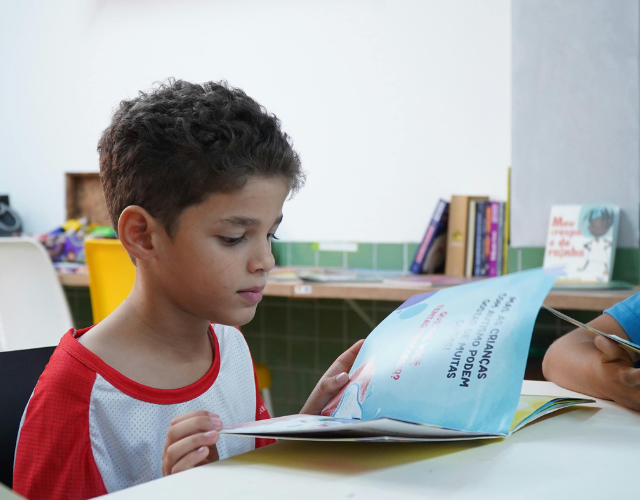
10 Ways to Support Literacy Development This Summer | | Summer routines often look different from the school year. Everyday activities at home, on vacation, at the library, or out in the community can provide opportunities for children to read, write, listen, and learn. Here are a few simple ideas families can try while school is out. | |
-
Create a daily reading routine.
Whether it's before breakfast, during quiet time, or before bed, even a few minutes of reading each day can help children build fluency, vocabulary, and confidence as readers.
-
Let children choose books they enjoy.
Children are more likely to spend time reading when they can choose books that match their interests, helping them build reading skills and confidence.
-
Visit your local library.
Libraries provide access to books, story times, and reading programs that help children discover new interests and stay engaged with reading.
-
Cook together using recipes.
Reading ingredient lists, following directions, and discussing new words can help children build vocabulary and comprehension skills.
-
Encourage writing with a purpose.
Writing journals, postcards, lists, or comics helps children practice organizing ideas and expressing themselves through writing.
-
Enjoy audiobooks together.
Listening to stories can help children build vocabulary, background knowledge, and listening comprehension skills.
-
Explore your community.
Visits to museums, parks, zoos, and historical sites can introduce new vocabulary and spark conversations that build language and knowledge.
-
Play word and storytelling games.
These activities encourage children to use new words, strengthen language skills, and practice creative thinking.
-
Help plan a family outing.
Reading maps, schedules, menus, and activity information helps children see how literacy skills are used in everyday life.
-
Interview a family member.
Asking questions, listening to stories, and writing or drawing about what they learned helps children build speaking, listening, and writing skills.
| | Effective reading instruction incorporates phonemic awareness, phonics, fluency, vocabulary, and reading comprehension. These components of reading are all linked in the 5 big ideas of beginning reading. | | Yes, you can coach your child to become a strong reader and writer! Parents and caregivers play an important role in helping children build literacy skills. Here are 8 steps parents can take to boost literacy skills at home. | | NCIL is committed to providing literacy resources accessible to all families, including through our collection of Spanish-language literacy resources. Access them here. | |
The research reported here is funded by a grant to the National Center on Improving Literacy from the Office of Elementary and Secondary Education, in partnership with the Office of Special Education Programs (Award #: H283D210004). The opinions or policies expressed are those of the authors and do not represent views of OESE, OSEP, or the U.S. Department of Education. You should not assume endorsement by the Federal government. Copyright © 2026 National Center on Improving Literacy. | | | | |