More than just books
11 offers at Danish libraries that will surprise you
| | |
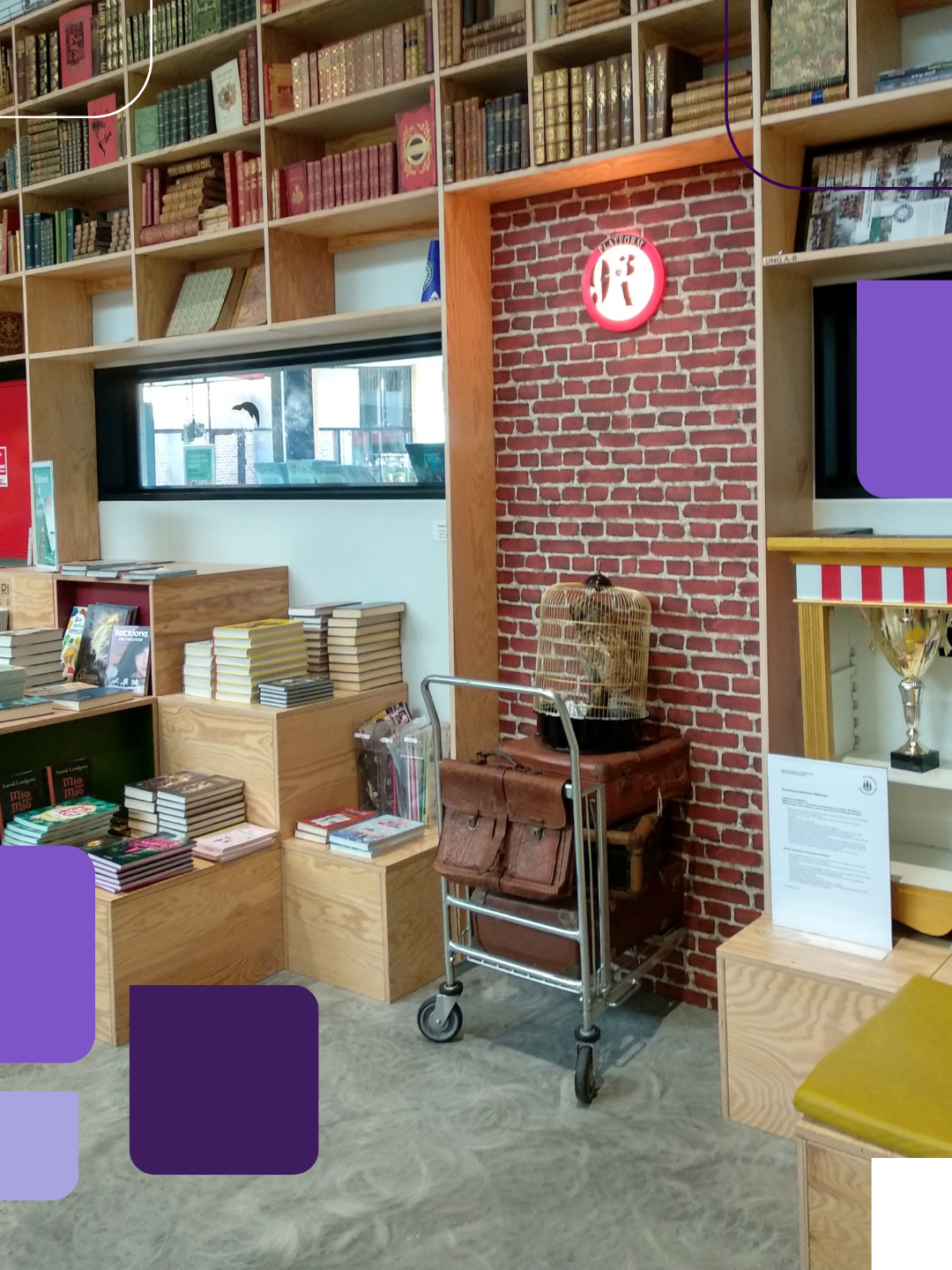
The cold has started to bite our noses, and many of us are looking for things to do indoors. One of the options is to check out what libraries have to offer, and trust me, they are not cramped rooms with endless shelves where you’re told to stay quiet. Instead, you can expect a bright, open space where your children can play, where you can record a podcast, or even print a 3D model.
In Denmark, libraries are designed to enrich your cultural and social life, not just hand you a stack of books. In this newsletter, I’ll walk you through everything library: how the system works, how to sign up, and the unexpected “gold mines” you might find in your local branch.
P.S. Many links are in Danish, as English version does not exist. Remember to use browser translation.
| |
How the library system works
-
Free membership: Libraries in Denmark are free. You don’t pay to sign up or to use most services (I’ll point out the few exceptions as we go).
- When you need membership:
- You don’t need one if you only want to enter during staffed hours. You can read books, use study spaces, and explore facilities without borrowing anything.
- You do need one if you want to borrow books, use the library outside staffed hours, or use most of the services.
-
How to sign up: Use your MitID or CPR number. You can register at any library in Denmark, via the library’s website. However, the services available are limited if it’s outside your home municipality. For example, if you sign up in another city, you can borrow books and use the space (e.g., if you're registered in Copenhagen and want to use Rødovre library), but you won’t get access to that library’s digital resources. Those are tied to your home municipality.
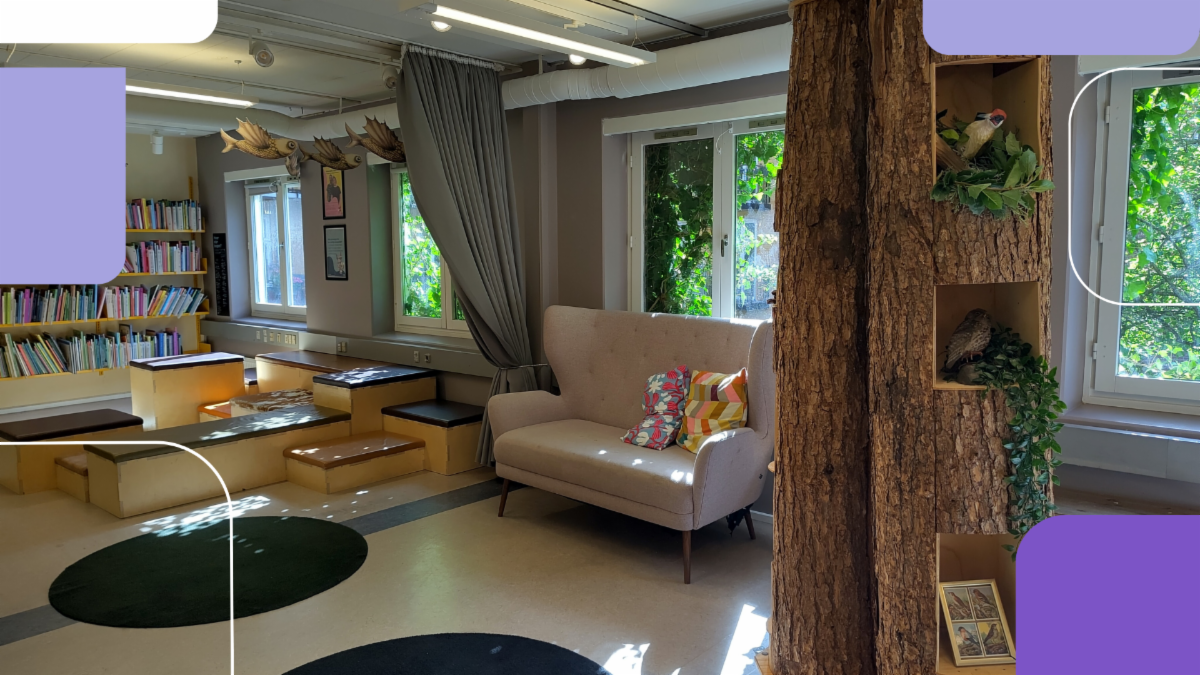
| 📸 Reading corner, Albertslund library | |
1. Up-to-date books
Before we totally forget the books, it’s worth to cover some good-to-knows regarding them. Libraries in Denmark keep their shelves fresh & relevant to the readers. You’ll often find bestsellers, new fiction, or even books on trending hobbies like knitting or gardening.
Books from across Denmark for free
Still can’t find the book you want at your local library? bibliotek.dk has you covered! It lets you order materials from any library in the country and have them delivered to your local branch for free. If the book doesn’t exist at all, you can request for the library to buy it – so you and others can borrow it.
Suggest book purchases
You request the book via your own library. The navigation to the page slightly varies in each library, but it mainly hides under “Kontakt os” page. Here, you’ll find a contact form, where in the topic dropdown you have to choose “Foreslå køb af bog” (Suggest a book purchase). Here are direct links to Copenhagen, Aarhus, Aalborg, and Esbjerg. In case such page does not exist (I couldn’t locate Odense’s), you should use the given contact email.
Loan period, extension and fines
Usually, you can borrow books for 30 days, though some are available for 14 days (they usually have an orange sticker that says so). You can usually log in to your profile and extend the loan, but if the book is already reserved by someone else, this option is not possible. Beware that you are charged 20DKK for returning the book too late, and it counts from day 1! Delaying the return will result in the fine being increased – depending on the municipality, it can get quite significant.
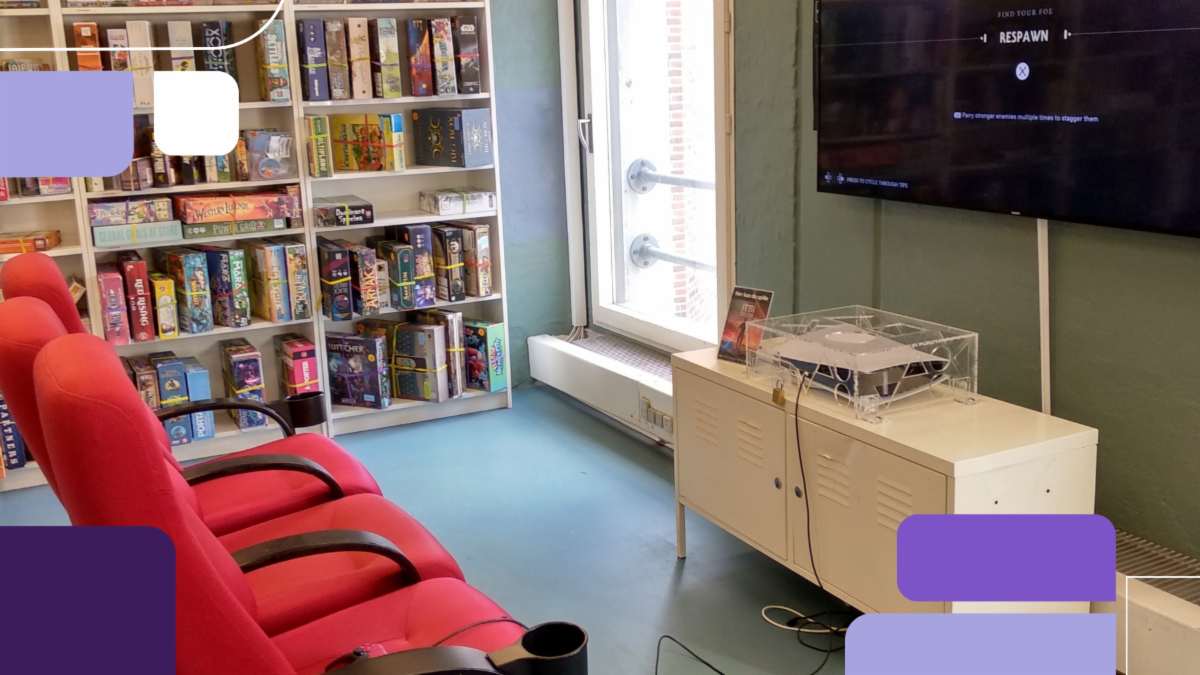
| | 2. Loan more than just books | | 📸 GameZone, Aalborg Central Library | | Libraries lend out way more than books. Depending on where you go, you might stumble across board games, puzzles, and even a stack of DVDs and CDs. Some branches lend console games too – PlayStation, Nintendo, Xbox – and if you’re in Aalborg Central Library you can find a whole GameZone where you can play. | | |
Music lovers aren’t left out either. Alongside CDs, some libraries lend vinyl. At Gladsaxe Central Library, they’ve set up a cozy living-room corner where you can listen on the spot. No record player at home? No problem.
You can also find some singular, and very unique offerings. For example, this summer in Albertslund library “gear bags” were on loan – backpacks for children stuffed with magnifying glasses, nature bingo, fishing nets, even fire-starting kits. What an accessible way to become a nature explorer for a day!
| |
3. Events
Most of the libraries are buzzing with events. Most are in Danish, but it’s still worth checking the calendar. The events section is called many different things – mainly you will find them under "Det sker" (This is happening), "Kalender" (Calendar), "Aktiviteter" (Activities), or "Arrangementer" (Events).
For parents, some libraries host baby and toddler playdates that double as a social lifeline for newly baked mums and dads. Kids aren’t left out either: story hours, craft corners, and all sorts of seasonal activities pop up regularly in most libraries.
Adults get their share too. You might stumble into an author talk, a cozy evening concert, or a hands-on workshop where you learn to pickle vegetables or test out a 3D printer. Some events cost a small fee, but plenty are free.
Some libraries even have a stage you can book for your own performance. Imagine inviting your friends to see you at the local library.
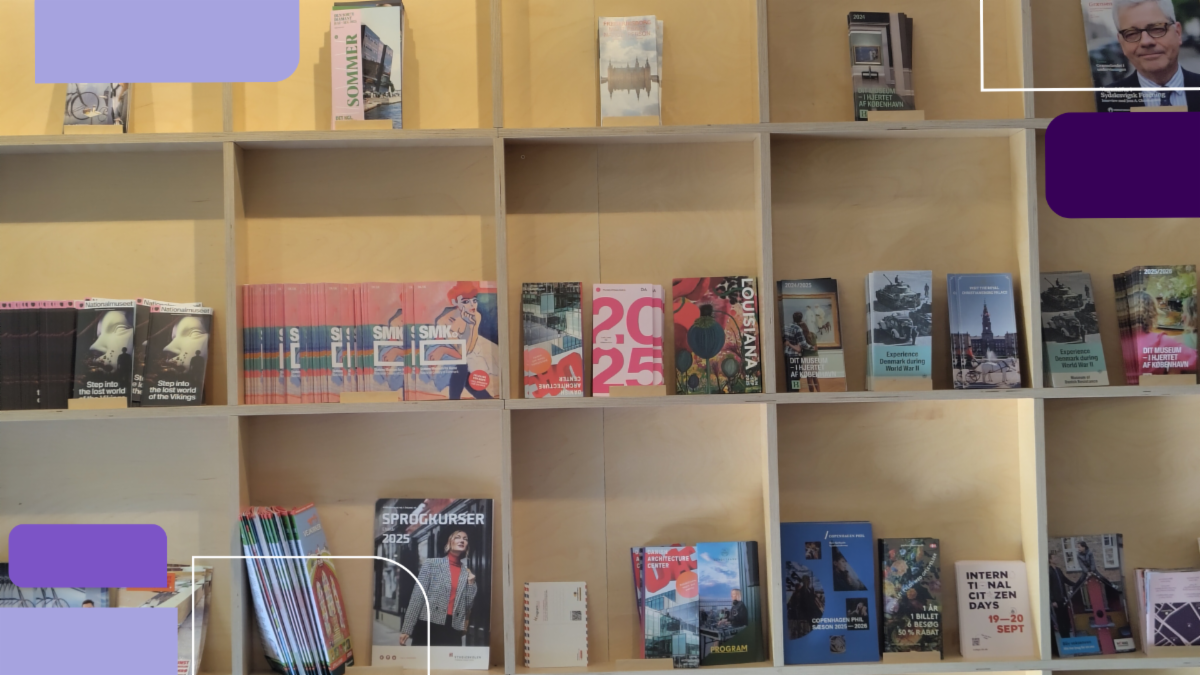
Even if the program doesn’t grab you, don’t skip the noticeboards. They’re usually plastered with flyers for nearby concerts, museum nights, or local happenings you’d otherwise miss.
| |
4. Communities and clubs
Library is a gathering place for communities. Communities are central in the Danish library. You’ll find the classics like book clubs, sometimes focused on a specific genre or audience, but also things that have little to do with books at all. It can be writing circles, knitting and crochet clubs, even walking groups. Make sure to check for language cafés – it’s a yet another way to practice Danish. Or maybe even trade your Spanish skills for some Danish practice.
You can find most library clubs under the same section as events. Alternatively, the noticeboards with events usually promote the library clubs too.
| | What if I don’t speak Danish? It depends on the activity. I wouldn’t throw myself into a Danish book club as a total beginner, but I’d happily join a knitting circle or a maker lab. In practice, someone usually switches to English if you need it. It can also be a good idea to reach out to the contact person (there is usually an email or a phone number in the description of an event) to make sure it's possible for you to participate. | | |
Found your own club
If you can’t find the community you’re looking for, you can found it yourself. Many library clubs aren’t run by staff but by regular people. Founding a club doesn't cost anything, and you don't need any special permissions. Chances are, if you miss it, plenty of others do too – what about an English-speaking board games club? Contact your local library to get guidance on how to get going.
| |
5. Podcast recording, playing drums and more
Recording studio
One of the things that keeps surprising me about Danish libraries is how far they’ve moved away from the stereotype of dusty shelves. At Hvidovre Central Library, I once walked past a room that had a full-on podcast recording and editing room – completely free to use. You just book it, show up, and it’s yours. Similar setups exist in Ballerup, Gribskov, Silkeborg (it even has a greenscreen and lighting), Viborg & Aabenraa.
Playing instruments
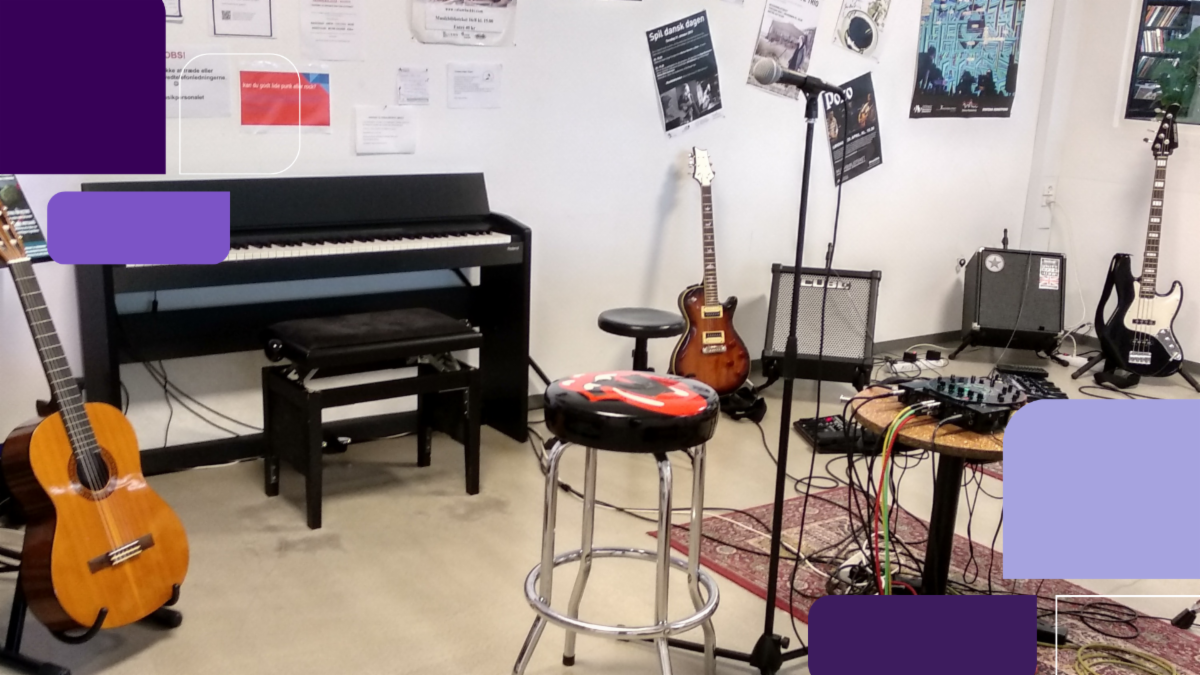
And then there are the music rooms. Odense Central Library has a whole sound studio tucked inside the building. You can record a podcast, make music, or just play around with the instruments: guitars, keyboards, drums. Gladsaxe Central library has a smaller but still impressive corner with a digital piano, electric guitars, bass, and a drum set. At Hvidovre, there’s also a digital piano you can use if you ask staff, and if you’re after the grand piano experience, you’ll find one at Roskilde Central Library.
Tools
It doesn’t stop here. Many libraries have a “Makerspace” – a creative lab filled with equipment you’d love to have at home but probably don’t. Think embroidery machines, sewing machines, 3D printers, laser cutters, vinyl cutters, heat presses, acrylic benders, engraving tools. Basically, if you’re even a little bit curious about making something physical, there’s probably a machine that can help you do it.
How it works depends on the library. Some let you just drop in, others have specific opening hours or require you to join a workshop first. The machines themselves are usually free to use, but you pay for the materials. Details are on each library’s website.
Here are just some of the libraries with makerspaces, however, feel free to Google “[your library] makerspace” to see if there’s one I missed 😉
Capital Region & Zealand
Copenhagen, Høje Taastrup, Ballerup, Gribskov, Vordingborg
Central Denmark
Aarhus, Herning, Viborg, Skive
South Denmark
Odense
North Denmark
Aalborg
| 📸 Music studio, Odense Central Library | |
6. Children’s areas
No matter which library you visit, one thing you can almost always count on is a great children’s area. And these aren’t just a corner with a few plastic chairs and some crayons. Danish libraries go all out: tiny playhouses, pretend shops, castles, tunnels to crawl through, and more.
Honestly, I’m jealous of the kids who get to explore these spaces. On a rainy Saturday, the children’s section is basically a playground with a roof. And the best part is that every library does it differently. No two areas look the same, so it’s worth exploring a few just to see what they’ve dreamed up.
| | 📸 Harry Potter theme, Nørrebro library | | 📸 Children's corner, Blaagaard library | |
7. Cozy working spaces
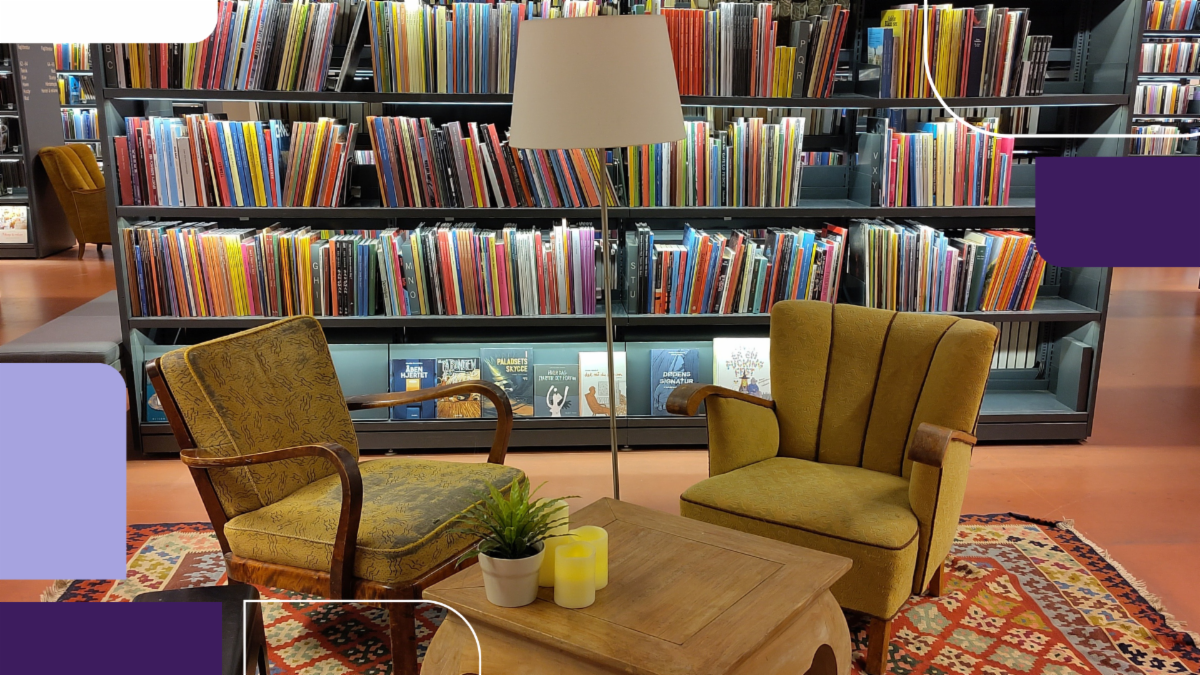
One thing that keeps surprising me is how cozy many libraries are for reading or working. You’ll often spot an armchair tucked into a corner or a sofa where you can sit down with a book and forget time.
The study spaces can be just as inviting. I have a soft spot for the long wooden table on the second floor of Gladsaxe Central Library, and for the little glass rooms in Rødovre Library where you’re surrounded by board games while you work. Not every space is stylish, of course. Many libraries have those very Danish tables and chairs that are a little worn and not exactly modern. But honestly, I find that charming – it’s a quiet piece of Danish culture.
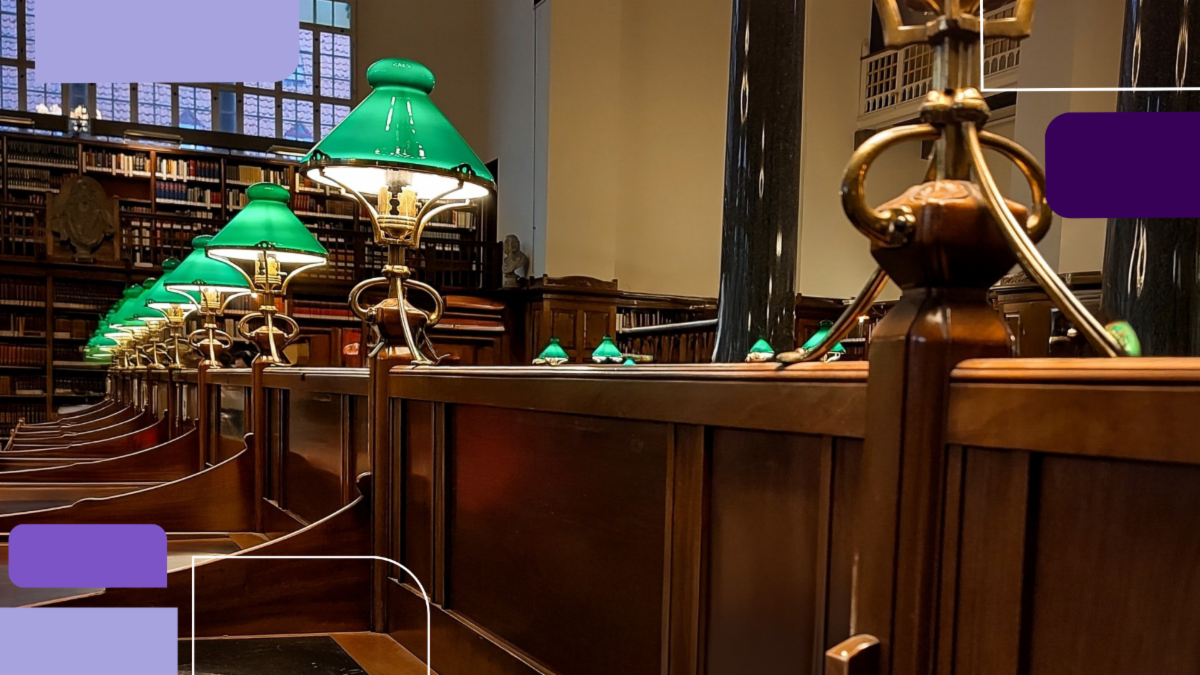
If you’re after Harry Potter/dark academia vibes, check out Copenhagen City Hall Library or the old reading hall at the Royal Library.
|
8. Work and meeting rooms
If you need a bit more privacy than an open study table, some libraries have small group rooms you can book. You’ll find them at places like Nørrebro Library, Lyngby Central Library, and Gladsaxe Central Library. They’re perfect for exam prep, project meetings, or just a quiet corner when you don’t want to be disturbed. Booking rules vary – some libraries let you do it online, in others, you just drop in. It’s worth checking your local library’s website before you go, or ask the staff about it.
Some branches go bigger. Esbjerg Library, for example, has meeting rooms you can reserve, complete with a little kitchen so you can make tea or coffee. You can find such set ups in Copenhagen, Aalborg, and many others. Look for information by Googling "[your library] booking af lokaler". Whether the booking is free or paid depends on who and for what purposes books it – you can find out the information on the website, or by contacting the staff.
| 📸 The Old Reading Hall, The Royal Library | |
9. Services
Libraries often double as service hubs, you may find:
-
Borgerservice: Some libraries host municipal service points, where you can get help with official paperwork, MitID, or registering your move.
-
Lektiecafé: Homework cafés where students can get extra help with school subjects. Although it depends on a library, some can offer help with your Danish homework too.
-
Library delivery at home: If you are elderly, ill, or otherwise unable to get to the library, you can request home delivery of books and materials. The service is called "Biblioteket kommer" (The library is coming).
-
Free legal advice: Selected libraries have drop-in sessions with lawyers who can guide you on practical matters, called "Retshjælp" (legal assitance).
There are more services available, however, they vary in each library, so my best advice is to browse your library's website.
|
10. Digital offers
Your library membership doesn’t end at the door. Each municipality gives its residents access to a set of “digitale tilbud” — online tools and resources you can log into with your library account. The catch is that you only get access to the offers from the municipality where you’re registered.
The most common ones are:
-
eReolen: Denmark’s national e-book and audiobook platform.
-
Filmstriben: Free streaming of films and documentaries.
Depending on your library, you might also unlock things like ordbogen.com (read about its superpowers when learning Danish), driving license theory practice, or even language learning platforms. On top of that, there are endless classical music and article archives — some general, others very specialized, like history collections or women’s studies journals.
It’s absolutely worth browsing the “Digitale tilbud” or “Digitalt” section on your library’s website. You might find out you already have free access to something you were paying for elsewhere.
|
11. Clothes & things swapping stations
Sustainability has found its way into many libraries. Alongside bookshelves, you may spot dedicated spaces for swapping:
-
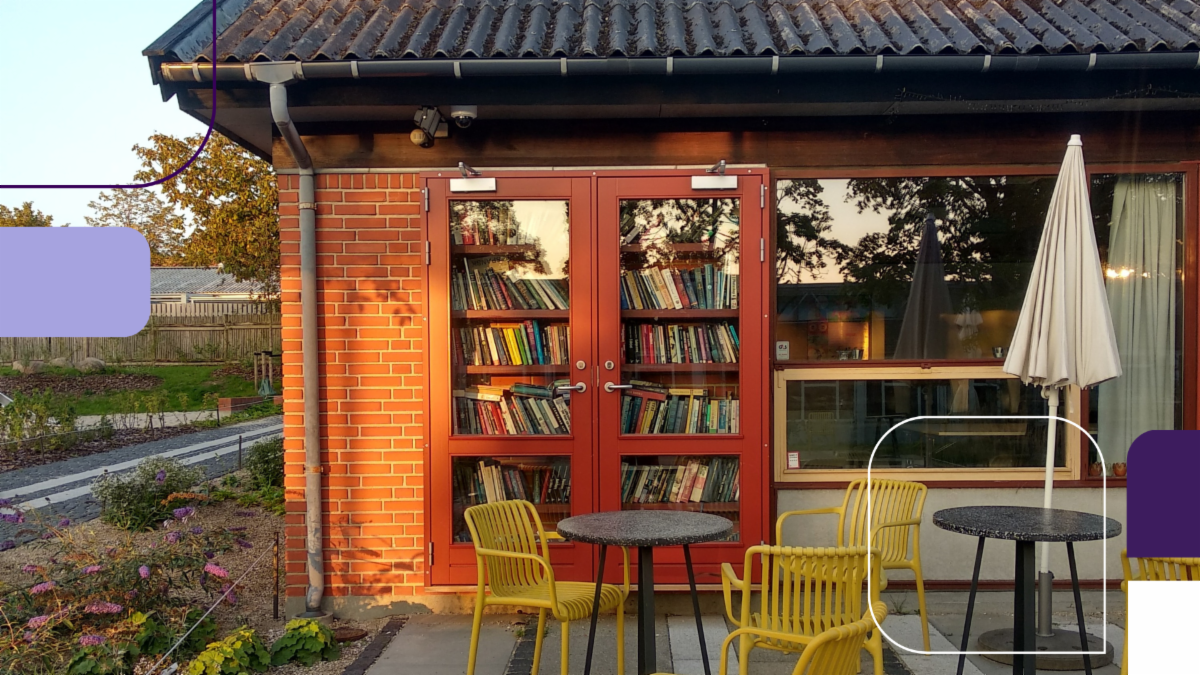
Book swaps: For example, at Mørkhøj, Rentemestervej, and Valby libraries.
-
Clothes and thing swaps: Rentemestervej Library has a permanent rack where you can leave or pick up clothes and other items – from kitchenware to small household items, games, or toys.
These stations are based on trust: take what you need, leave what you can. It’s a simple way to extend the life of everyday items and discover hidden treasures.
| 📸 Book swap closet, Mørkhøj library | | |
See you between the shelves,
Justina from Expat in Denmark
P.S. Do you have a fun story, a cool tip or questions about life in Denmark? We'd love to hear from you! Drop us a line at jusr@di.dk.
| | | | |