|
Friends: Pumpkins, ghosts and goblins are everywhere, and a hard freeze in Vermont in early October has ended any hopes of final bouquets from the cutting garden or tomatoes on the vine. But crisp mornings and bright sun-filled afternoons make the shorter days tolerable, as we head towards Thanksgiving. Peace has not yet broken out in Ukraine; it's dangerous to cruise off the coast of Venezuela; ICE continues to illegally arrest and detain U.S. citizens, the National Guard is patrolling Memphis, Chicago, and Portland; and the US Government continues to be shutdown. What is one to do? Resist, protest, donate, write postcards, contact your elected representatives, and when all of that feels futile, Read!
Here are the books that I read in October:
-
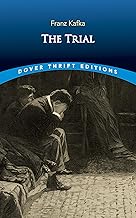
The Trial, Franz Kafka (1925)
-
The Professor's House, Willa Cather (1925)
- Damascus Station, David McCloskey
-
So Big, Edna Ferber (1925)
- Writers Revealed:Treasures of the British Library and the National Portrait Gallery, C. MacLeod and A. Ault
-
A Century of Poetry from the New Yorker 1925-2025, ed. Kevin Young
-
The Common Reader, Virginia Woolf (1925)
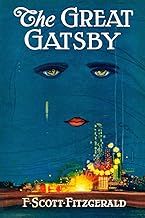
- The Great Gatsby, F. Scott Fitzgerald (1925)
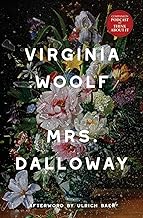
- Mrs. Dalloway, Virginia Woolf (1925)
- What's O'Clock, Amy Lowell (1925)
The idea of reading books published 100 years ago was the brilliant thought of one of my college roommates (Richard F.) His idea was, in reality, a conceptual art project, and since I love conceptual art, I googled "books published in 1925" and hit the jackpot.
Not only was 1925 the year "The New Yorker" was established, but it also witnessed the publication of two extraordinary Modernist novels. "Mrs. Dalloway" and "The Great Gatsby", arguably Virginia Woolf's and F. Scott Fitzgerald's greatest works. Their publication followed James Joyce's "Ulysses" by three years, and the novel has never been quite the same.
That year also saw the posthumous publication of Kafka's "The Trial", and the term Kafkaesque entered the vernacular referring to the irrational, impersonal, all-powerful, and arbitrary fascist and communist authoritarian regimes that would arise in 1930's Europe. And while Modernism and its stream of consciousness were unsettling the literary scene, the big, traditional novel was still alive and well in Edna Ferber's 1925 Pulitzer Prize winning "So Big" and Willa Cather's "The Professor's House."
Poetry in 1925 was also experiencing the tension between modernism (think Eliot's "The Wasteland") and the classical rhyming forms as exemplified by Amy Lowell's final volume of verse "What's O'Clock" for which she received the Pulitzer the following year. And providing her own special take on these literary collisions, Virginia Woolf published her extraordinary volume of literary criticism, "The Common Reader" just weeks before "Mrs. Dalloway" appeared. 1925 was, indeed, a great literary year.
Coming just eight years after the horrors of WWI and a scant four years before the Crash and the onset of the Great Depression, these books all share a sense of alienation, a desperate search for meaning beyond money and accumulating possessions and a bitter awareness of the inequalities in Western society. The contrast between the 'haves' and the 'have nots' is a central motif in all of these books---the hard-scrabbled life of Silena who becomes a Dutch farm wife vs. the luxury of her childhood friend, Nellie who marries money in "So Big"; the tension around life styles between the Professor's two daughters, one of whom is married to a struggling newspaper reporter and the other who married wealth in "The Professor's House"; the life of Jay Gatsby in West Egg compared to his roots in Minnesota as Jimmy Gatz; Clarissa Dalloway's all-consuming focus on her party while the WWI veteran Septimus Warren Smith struggles with PTSD and scrapes for his daily bread. Money is front and center as Nick Carroway in "Gatsby" and Dirk DeJong in "So Big" both wander into 'bond trading' after the war, and it is also the driver for the Professor's son-in-law in Cather's book, but it fails to produce happiness in any of these stories.
While several of these books were new to me, this month's books also reminded me of the pleasure of re-reading. I had read both Gatsby and Dalloway several times before, but this reading brought new details, connections, and a greater appreciation for the literary value of both books. Re-reading has its own literature from Anne Fadiman's "Rereadings" to Patricia Meyer Spacks' "On Rereading". Fadiman is one of our best essayists, the former editor of "The American Scholar" and the winner of a National Book Critics Circle Award in 1997 for her book, "The Spirit Catches You and You Fall Down." In "Rereadings", she collects 17 eponymous columns written by writers who revisited works they loved as young readers. The richness and variety of their responses speaks to the value of returning to loved books.
So, now on to the books from 1925 that I read in October.
"The Great Gatsby" is the tragic tale of Jimmy Gatz, born poor in the Midwest who dies Jay Gatsby, rich but broken on Long Island. Driven by an obsessive love for Daisy whom he had courted in Louisville five years earlier before being shipped off to WWI, Gatsby buys a mansion in West Egg where he can gaze across the water at the green light on Daisy's pier in East Egg. Narrated by Nick Carroway we witness the agonizing failure of Gatsby to fulfill his obsession as Daisy and Tom Buchanan crush lives in their money-driven wake. “They were careless people, Tom and Daisy—they smashed up things and creatures and then retreated back into their money or their vast carelessness or whatever it was that kept them together, and let other people clean up the mess they had made.” Fitzgerald's brilliant prose makes this book a powerful tale of the Jazz Age and its ultimate crash. The final line in the book is one which echoes for our time: “So we beat on, boats against the current, borne back ceaselessly into the past.”
While "Gatsby" is a panoramic view of two decades in the early 20th C., Virginia Woolf confines herself to a single day in London in 1923 in "Mrs. Dalloway" which begins with another memorable line: "Mrs. Dalloway said she would buy the flowers herself." During the course of that day, we meet a large and sharply rendered cast of characters: Richard Dalloway, her husband, Septimus Warren Smith and his Italian wife, Eliza, Hugh Whitbread, Sir Richard Bradshaw, and others, all living perfectly predictable British lives, and all properly skewered by Woolf's pen. The stream of consciousness that Woolf introduced to the novel is in fine form as descriptions, thoughts, and asides fill page after page with barely a paragraph break let alone the delineation of a chapter. Michael Cunningham who adapted "Dalloway" for the movie 'The Hours' described Woolf's accomplishment best in a December, 2020 essay in 'The New York Times Sunday Book Review': "Virginia Woolf's "Mrs. Dalloway" is a revolutionary novel of profound scope and depth...It's a masterpiece created out of the humblest narrative materials....as Woolf asserted that we are all embarked on epic journeys of our own, even though to the untrained eye, some of us, many of us, might look as if we're only there to tidy up or to do our best to amuse our bosses." Having read this book three times, I look forward to reading it at least once more down the road.
The contrast between "Gatsby" and "Dalloway" on the one hand and "The Trial" on the other could not be more vivid. While Fitzgerald and Woolf wield the English language like a fine scalpel, Kafka, a Jewish-born Czech writing in German, pummels the reader with a seemingly endless repetition of irrational events. Like Gregor Samsa who awakens as an insect in "Metamorphosis", Joseph K. awakens to find two men in his rooms who are there to arrest him. From that point on, K is caught up in a nightmare of courts, advisors, judges, and strange people who all conspire to confuse and deflect him from sorting out his arrest. The state is all-powerful, unresponsive, and driven by unclear political goals. This was not an easy read, but it's a reminder of why our electoral system, hanging today in the balance, is so necessary to prevent the state from destroying the individual.
Willa Cather (1873-1947) is a fascinating woman who left her Nebraska roots and spent her life writing in New York City, winning a Pulitzer Prize in 1922 for "One of Ours" and writing 12 novels, eight short story collections, and two books of poetry. I had previously read and admired Cather's "Death Comes to the Archbishop" and "My Antonia", but "The Professor's House" is a rather slow moving novel that I didn't enjoy as much. The professor is a world expert on Spanish history teaching at a small college on the shores of Lake Michigan. His world is disrupted by a move to a new house, and as he struggles to adapt to his new surroundings, we meet his daughters, wife, and colleagues and learn of their own struggles. Well written but a bit boring.
In contrast, Edna Ferber's "So Big" is a big, bustling, bountiful book which won the Pulitzer Prize for Fiction in 1925. It was her fourth novel, and she went on to write eight more plus a dozen short story collections and several plays. She is perhaps best known for the theater and movie adaptations of her novels, “Giant”, “Showboat” and “Cimarron”. I knew her primarily as the author of “Giant” made into a movie in 1956 starring Elizabeth Taylor, Rock Hudson, and James Dean. It was nominated for 10 Academy Awards and won the Oscar for Best Director. This novel tells the story of Selina Peake, orphaned in her teens, who takes a job as a schoolteacher in a Dutch farming community south of Chicago. Her plan to spend one year there before seeing the world vanishes as she marries a farmer and has a son, the eponymous So Big, a nickname for Dirk DeJong. The book is a traditional, spatious novel covering decades and numerous characters all brought together in a happy ending. The 'best book' of 1925 according to the Pulitzer committee probably wouldn't win today, but it was a good read.
On the other hand, Virginia Woolf's book of literary criticism, "The Common Reader" has aged well. Coming at the time of change in writing fiction, she skewers H.G.Wells, Arnold Bennett, and John Goldsworthy who were Britain's 'great' writers of the time while she praises Thomas Hardy, the Bronte sisters, George Eliot, Jane Austen, and most of all the Russian masters, Chekhov, Dostoevski, and Tolstoy who she refers to as ‘the greatest of all novelists'. She has special praise for the novels of James Joyce and Joseph Conrad, the essays of Walter Pater and Max Beerbohm among her contemporaries, and for Montaigne, Lamb, Hazlitt, and Joseph Addison among her forebears. Woolf makes the case for modernism’s rejection of the old, stilted, limited formats and pleads for an essay that should ‘simply give pleasure’ and a fiction that should deal with the soul, the spirit, the essence of its characters. If you enjoy literary criticism, read these 100 year old essays with pleasure.
Poetry was also undergoing a modernist transition in 1925 aided in part by a new magazine's commitment to weekly poetry, as reflected in Kevin Young's compilation, "A Century of Poetry from The New Yorker: 1925-2025." The poetry editor of the magazine since 2017, Young has selected over 900 poems beginning in 1925 with that year's brilliant satire of Dorothy Parker, the romantic rhymes of Elinor Wylie, and the beautiful nature observations of John Moncure March. The book is a treat to randomly dip into, but the first and last poems bear special attention. Adam Zagajewski's "Try to Praise the Mutilated World" was written just before 9/11, and Ada Limon's "The End of Poetry" was written as we descended into COVID. Both fulfill Young's criterion of “Good poems make the everyday extraordinary and turn the extraordinary into a daily occurrence” and with his view that “poetry is not only present but prescient…Great poems remain both timely and timeless.”
Amy Lowell's book of poems "What's O'Clock" was published in 1925, the year of her death and the year before she received the Pulitzer Prize in Poetry. Lowell was a major literary presence in the early 20th C. Coming from a distinguished New England family (“Here’s to the town of Boston, The land of the bean and the cod, Where the Lowells speak only to Cabots, And the Cabots speak only to God.”), she grew up on a ten acre estate in Brookline and spent much of her youth reading in her father's 7000 volume library. She was a tireless advocate for poetry supporting Ezra Pound and others in a movement she called Imagism. In reading "What's O'Clock", I had the pleasure of holding a 100 year old volume which had a bookplate on the inside cover that read Concord Free Public Library,Concord, Mass. with the elegantly handwritten date 'Sept 1925' and the numbers 811.5L914W. It was also fascinating to read in her frontispiece that the phrase "what's o'clock" came from Shakespeare's "King Richard III". So much to learn, so little time.
Before leaving 1925, I'll mention two other books published that year that contributed to its richness and which I had wanted to read but didn't get to. Alain LeRoy Locke graduated from Harvard and was the first Black Rhodes Scholar in 1907. He went on to be considered the Dean of the Harlem Renaissance, and his book "The New Negro" published in 1925 collected essays and music which supported his race-building theory that it was society and culture rather than heredity that determined ability. I found a copy of the book at Harvard's Lamont Library but couldn't make my way through the dense writing. The second book from 1925 that went unread was Y.B. Yeats "Early Poems and Stories". I was able to find that book at Harvard's rare book library, Houghton, where my faculty card gained me access to an original 100 year old copy. Since it couldn't be checked out, I spent an hour with it in the reading room feeling ancient and privileged, but unable to read it all the way through.
Fast forward 100 years to today and two contemporary books. David McCloskey's "Damascus Station" is a terrific spy novel set in Syria as the civil war ramps up and Assad is increasingly threatened. Samuel Joseph is a CIA operative who becomes involved in avenging the death of a fellow agent at the hands of the Syrian Army and preventing mass chemical warfare. The book ramps up the tension to the point that I couldn't read it before bed. If today's news isn't enough to make you tense and anxious, you should definitely read this.
The other recently published book, "Writers Revealed: Treasures from the British Library and the National Portrait Gallery" is a treat for anyone who loves history, literature, art, and their intersections. Curators at these two venerable institutions in London selected 72 authors from Chaucer to Zadie Smith and combined brief biographies of each with a manuscript, letter, or other material from the British Library collection and a likeness from the Portrait Gallery. A painting of Dickens as a young man, the best portrait we have of Shakespeare, and a photograph of Harold Pinter are among the treasures here. Hours of pleasure await you if you read this book, and I'm eager to return to London in March to view many of these works up close and personal.
The Poetry Tree on the Charles, a project that I started almost 20 years ago, has finally returned with the re-creation of the web site, www.PoetryTreeontheCharles.com. Five of this month's poets were featured in Kevin Young's anthology noted above. Dorothy Parker was a witty member of the Algonquin Table who wrote satiric poetry and collaborated with George B. Kaufman on some memorable Broadway shows. Elinor Wylie was the author of 10 books of poetry and four novels achieving fame and notoriety in the 1920's and '30's before her early death at 43. Amy Lowell (see above) was a champion of poetry through her own work and her support of other poets. "The Garden in Moonlight" is a lovely example of her work. John Moncure March is a fascinating figure who was 'The New Yorker's first poetry editor in 1925 who also founded Talk of the Town. He wrote two book-length poems about the jazz age and this short one about time, aging, and autumn. Finally, here are the first and last poems in Kevin Young's 100 years of The New Yorker anthology---'Try to Praise the Mutilated World' by Adam Zagajewski and Ada Limon's 'The End of Poetry'. They address two tragic events of our time, 9/11 and the COVID pandemic, respectively.
- Resume`, Dorothy Parker
- Wild Peaches, Elinor Wylie
- The Garden in Moonlight, Amy Lowell
- City Autumn, John Moncure March
- Try to Praise the Mutilated World, Adam Zagajewski
- The End of Poetry, Ada Limon
I'll conclude with thoughts by two of the writers cited by Virginia Woolf, Montaigne and Chekhov. Montaigne, writing in 16th C. France, wrote "If I had my life to live over again, I would do just as I have done. I don't complain about the past nor am I afraid of the future." Chekhov writing in 19th C. Russia wrote "Life has gone by as if I never lived." Good ideas to think about as one goes about our daily routine.
|