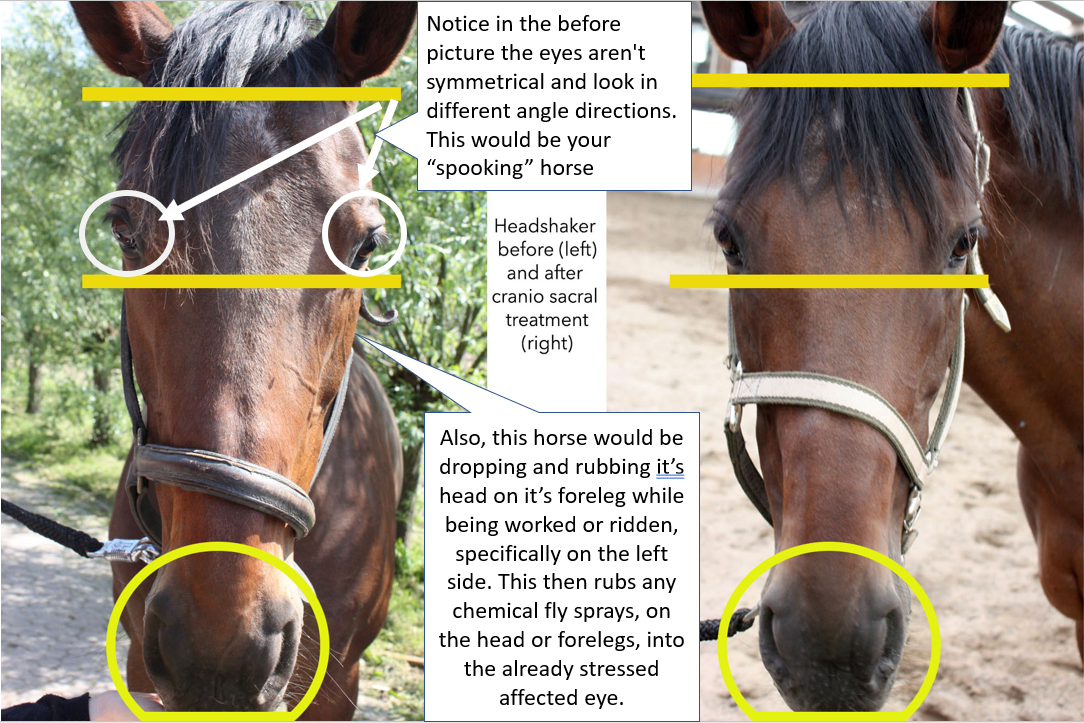
Go kiss your horse on the nose right now, . Look up at his eyes: Are they level, or are they pointing in different directions?


If they're not level, you're looking at shifted cranial bones. This is your "spooky" horse, your headshaker, the one dropping and rubbing his head on his foreleg while you're riding.


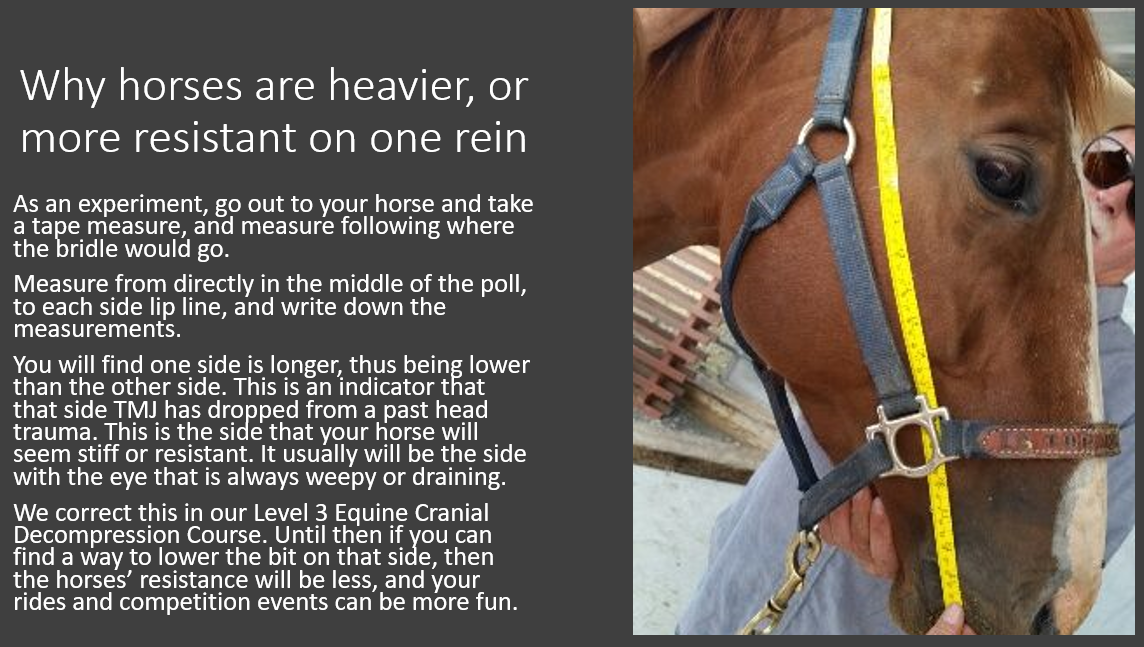
Next, grab a tape measure and measure from the center of your horse's poll down to each side of the lip line, following where a bridle would sit.


One side will be longer, meaning it sits lower. That's the side where the TMJ has dropped from past head trauma. It's also the side your horse braces on, feels stiff on, and likely has a weepy or draining eye.


When that whole side of the skull has shifted and dropped, the bit doesn't fit right anymore, and the horse can't comfortably flex that direction, so they brace, resist, and fight, not because they're being difficult, but because they're uncomfortable.

Cranial work allows the bones of the skull to shift back into better alignment, restoring nerve flow, circulation, and symmetry. When that happens, resistance on one rein often softens, headshaking settles, and spooking becomes a thing of the past.


If you want to start exploring cranial sacral work on your own horse, my Equine Cranial Sacral Energywork video is the perfect place to begin. It walks you through the foundational techniques you can start applying right away, no prior experience needed.


Now on sale! Get 50% of when you purchase Equine Cranial Sacral Energy Work by Sunday, March 15th @ 11:59pm PT →


☎️ Got questions about your horse's health, or if this will work for your horse? Book a free 15-minute call.


📲 Have you tried our app yet? Get expert horse health advice in your pocket.


With ❤️ Hugs and 🥕Carrots

April Love

Founder, Holistic Horseworks

april@holistichorseworks.com

808-868-1828

Facebook  X  Instagram  Linkedin  Youtube