Autumn Greetings from NAOCC!
|
|
News and updates from another productive season of native orchid conservation.
|
|
It is hard to say good-bye but he is not going far…
by Dennis Whigham
|
After 40 years of dedicated work at the Smithsonian,
Jay O’Neill
retired this summer from his position as the head technician in the Plant Ecology lab. Fortunately, he continues as a volunteer to support the NAOCC web sites and outreach efforts with
orchid-gami
.
Jay came to the Smithsonian as an intern, when the Smithsonian Environmental Research Center (SERC) was the Chesapeake Bay Center for Environmental Studies. I (Dennis) had joined the staff in January of 1977 and Jay was one of the first folks to walk into the trailer (no lab in those days). We began a collaboration that took many twists and turns before NAOCC emerged. By the time of Jay’s retirement, the Plant Ecology laboratory had published more than 250 scientific articles, moved into three different lab facilities, and provided a welcoming home for visiting collaborators.
Our diverse research has resulted in numerous alliances with scientists in the US, Japan, the Netherlands, and beyond. We studied many types of wetland ecosystems, with several forest-related projects, including more than a decade of research in the tropical dry forests of the Yucatan Peninsula. Jay’s integral support assured the productivity of long-term working relationships with the long parade of people who have passed through our laboratory. Jay helped to mentor interns, graduate students, post-docs, and Senior Scientists, and provided valuable support to the greater SERC community through his dedication and hard work.
Over the entire period of Jay’s tenure at SERC we nurtured an interest in the ecology of woodland herbs, including orchids. Our orchid research resulted in many collaborations and the development of an international reputation. In the early 1990s,
Hanne Rasmussen
joined the lab as a Senior Post-doc from Denmark, and used her time at SERC to finish the book
Terrestrial Orchids: From Seed to Mycotrophic Plant
, which remains the global standard. Already recognized for her research on orchid mycorrhiza, Hanne introduced us to that world, and we have not looked back. It was Hanne who empowered Jay with many of the skills that eventually led to his becoming an expert on the isolation and culturing of orchid mycorrhizal fungi.
Once it became evident that there was an urgent need for a native orchid conservation effort (few people were doing much about it), we launched the
North American Orchid Conservation Center (NAOCC)
. Jay has been a partner in NAOCC since the beginning; his contributions to the development of NAOCC, and its web sites, especially
Go Orchids
, have been enormous. Jay is the world’s expert on the internal workings of
Go Orchids
, and he has developed an impressive network of passionate native orchid photographers who continue to provide valuable images in support of NAOCC’s work. Jay developed the
Gallery
section of the
NAOCC web site
, which offers artists and contributors opportunities and recognition for their important contributions. When I returned from China with the idea of developing the
orchid-gami
models, Jay discovered yet another passion, and worked closely with
Maarten Janssens
to design the models. Jay’s efforts to help me secure funding to print and distribute the models has been invaluable.
As one approaches retirement, the common advice is to have something to do, and fortunately, for NAOCC, Jay has found his niche. Many mornings, he can still be found at SERC - but rather than dealing with dry subjects like lab safety, he is now a NAOCC volunteer extraordinaire. As we move forward with our vision for orchid conservation, we will continue to have much to be thankful for. For now, however, THANKS Jay and best wishes for a happy retirement!
|
|
|
|
Palau Orchid Conservation Initiative
The
Pacific Orchid Conservation Initiative
was
launched by NAOCC and the U.S. Forest Service’s Institute of Pacific Island Forestry and includes researchers from Illinois College and the University of Hawaii. This project aims to improve our understanding of orchid communities and their biology, and to explore the diversity of mycorrhizal fungi associated with these orchids.
Benjamin J. Crain
(SERC) and
Larry Zettler
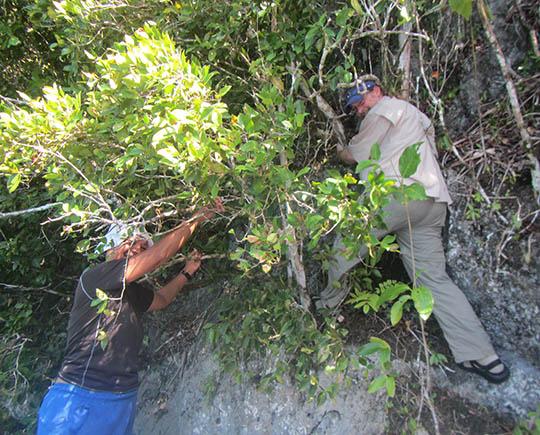
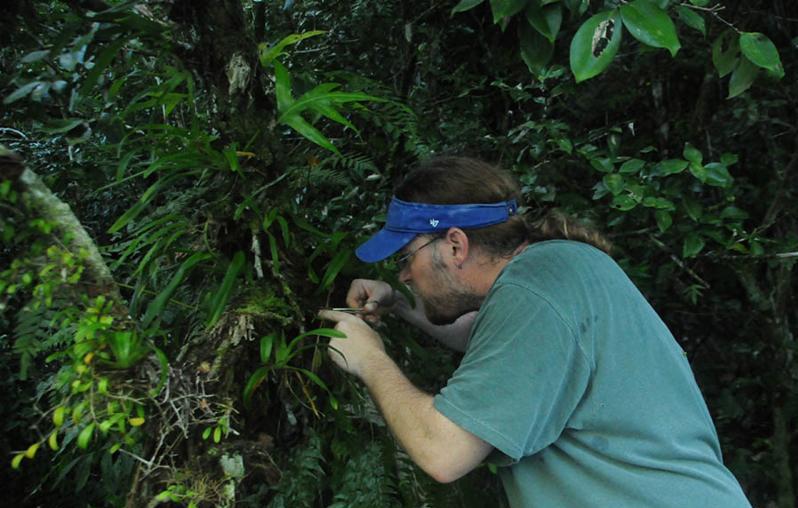
(Illinois College), recently returned from the Republic of Palau where they completed mapping and sampling orchids in the
ForestGeo
plot in
Ngardok Nature Reserve
and across other locations in Palau
.
Palau is NAOCC’s first international effort; we hope to expand this program to other island nations in that part of the Pacific.
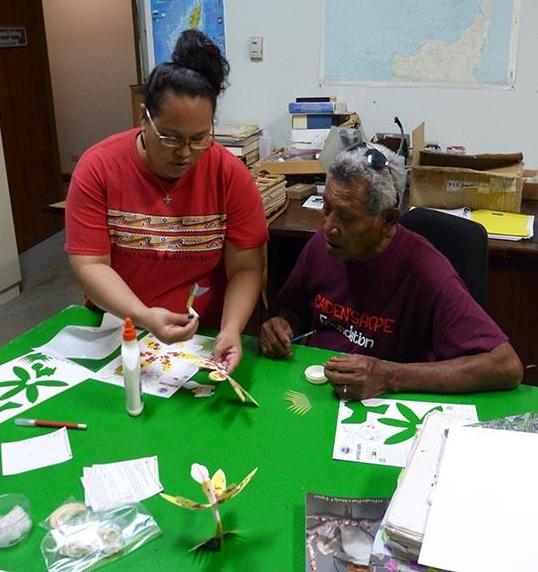
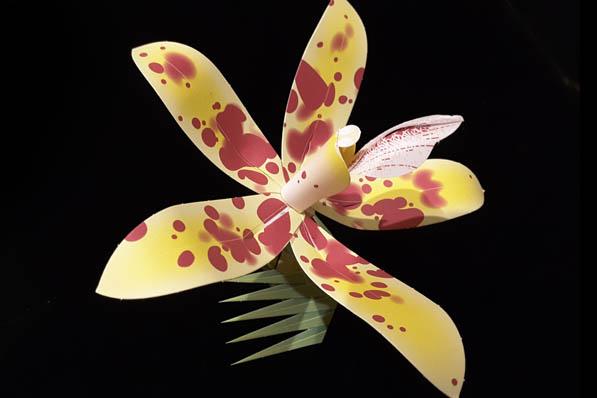
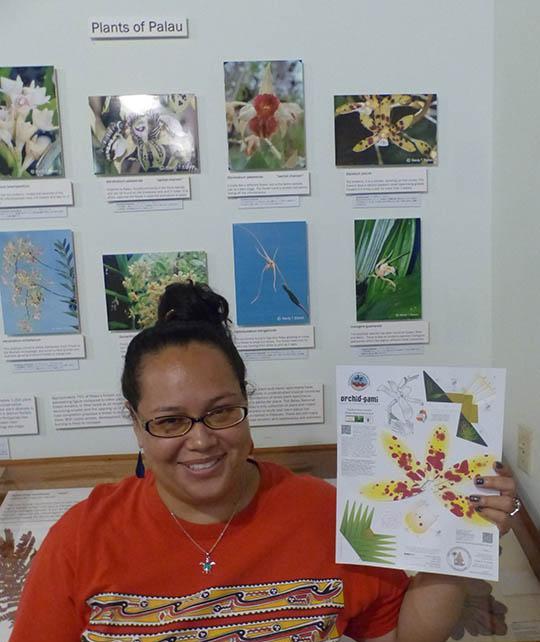
While in Palau, Benjamin distributed copies of the new
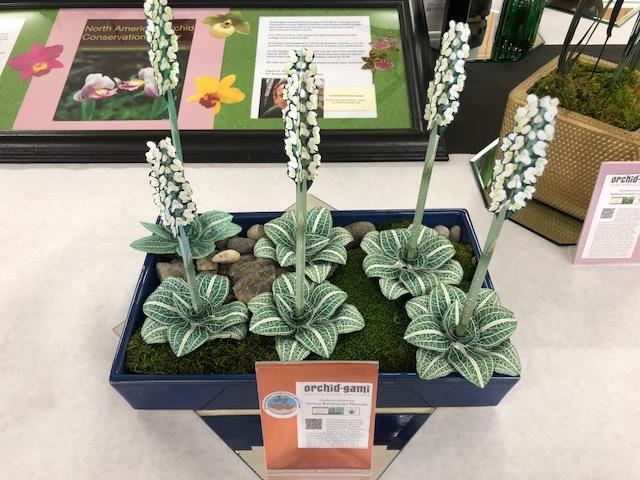
orchid-gami
model of the Palau Hyacinth Orchid
(Dipodium freycinetioides,
an endemic orchid of Palau), to museums, protected area visitor centers, and other conservation and ecotourism organizations. The model was a great hit and provided a valuable link between the people of Palau and our efforts to conserve their native orchids. Thanks to
Charlie and Trudy Hess
for providing funds for the design and printing of the model, and to
Maarten Janssens
for designing this newest
orchid-gami
model.
Anyone interested in donating to support the Palau orchid project may
contact NAOCC
.
|
|
|
.
NAOCC Updates and Around the Regions
|
2018 has been another busy year of orchid conservation-related collection, research, and outreach activities around the US and Canada.
NAOCC
has welcomed new collaborators, made progress towards collection goals, and finalized key regional seed-banking agreements (see below).
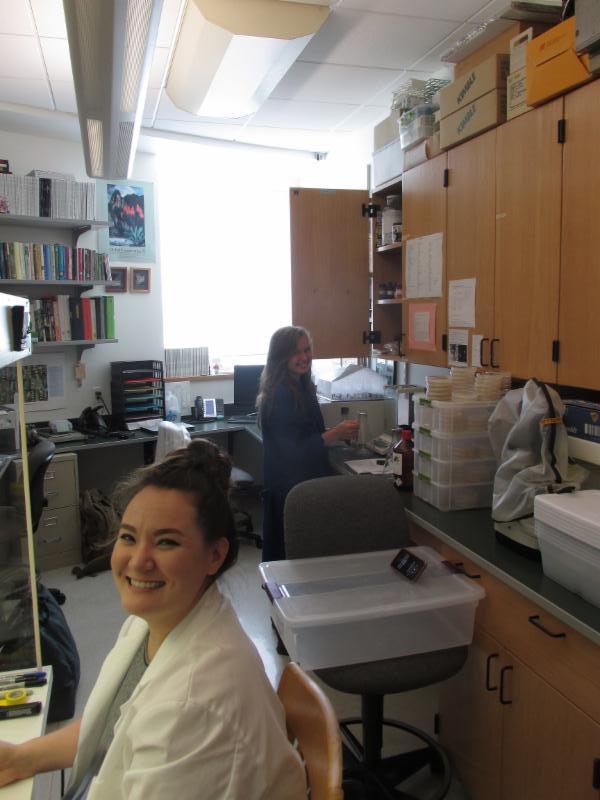
Following Jay O'Neill's retirement, NAOCC arranged with Dr. Larry Zettler's lab at Illinois College to process orchid root collections for the identification and extraction of orchid mycorrhizal fungi. Several students from the
Illinois College Orchid Recovery Program
dedicated many hours this summer and fall to processing NAOCC collections from around the U.S. (
Photo at right:
Hana Thixton
and
Rachel Helmich
working hard in Dr. Larry Zettler's lab.)
In May,
Dennis Whigham
attended the 6
th
International Orchid Workshop in Bialystok, Poland, for which he was on the Scientific Advisory Committee. He gave two presentations at the meeting – one on the long-term orchid population studies at SERC, and a NAOCC presentation. As a result of discussions at the meeting, a group of collaborating scientists from the U.S., Germany, Belgium and The Czech Republic have submitted a funding proposal to the Czech Academy of Sciences. If successful, this grant would fund a NAOCC-related five year project to compare the relationship between trees, orchid mycorrhiza and orchids (terrestrial and epiphytic) in three temperate and three tropical countries, including Palau.
Arizona / New Mexico
:
This summer, NAOCC and
the Desert Botanical Garden
finalized an MOU for regional seed banking. The Garden’s seed bank of desert species stores frozen seeds and pollen of rare plants, and they “safeguard” 58 rare plant species in the
CPC National Collection
, including the endangered,
Spiranthes delitescens
(Canelo Hills Ladies' Tresses), which grows in disappearing habitats in the marshy "cienegas" of Southeast Arizona. In July, DBG's Herbarium Curator and Research Botanist,
Andrew Salywon
attended the Native Orchid Conference hosted by NAOCC at SERC (
see more on that conference, below
).
Also this year, NAOCC has been in the process of finalizing a collaboration agreement with the
Borderlands Restoration Network
, which is both an independent non-profit organization, and a collaborative of multiple organizations working "
to build a regional restoration-based economy in which diverse, fulfilling livelihoods support the restoration of thriving natural ecosystems and build prosperous, vibrant, healthy communities in the US – Mexico borderlands
".
Canada
:
In early June,
Melissa McCormick
(SERC / NAOCC) was a featured speaker at the Bruce Peninsula Orchid Festival, where she shared insights from her multi-faceted research into the effects of environment conditions and the abundance of mycorrhizal fungi as drivers of orchid flowering and distribution, as well as how specific bacteria that live within the fungi may affect their formation and growth.
In August, NAOCC's
Julianne McGuinness
consulted with Ontario-based filmmaker,
Dr. Franziska von Rosen
of
Pinegrove Productions
, leading up to the development of a short educational video intended to inform land owners about actions they can take to help protect native orchid species at risk and preserve biodiversity on their properties.
Florida / Georgia
:
In addition to collaborating on the
"Orchids in the Classroom"
project (see article, below) funded by a "Youth Access" grant from the Smithsonian, this summer NAOCC and the
Fairchild Tropical Botanic Garden
finalized a regional seed and fungal banking MOU. FTBG “safeguards” 63 rare plant species in the
CPC National Collection
, including two native orchid species:
Basiphyllaea corallicola and
Vanilla mexicana.
Led by
Dr. Jason Downing
, and with the hard work of many local school students,
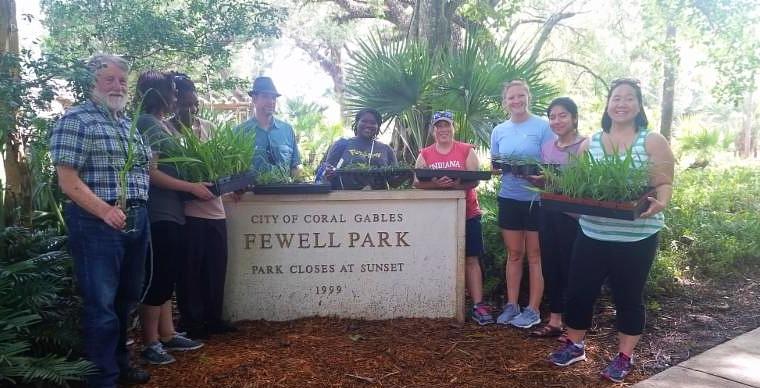
Fairchild
has been producing large numbers of native orchid seedlings from their
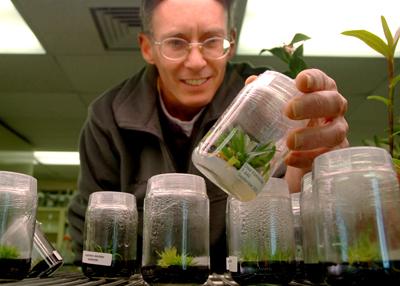
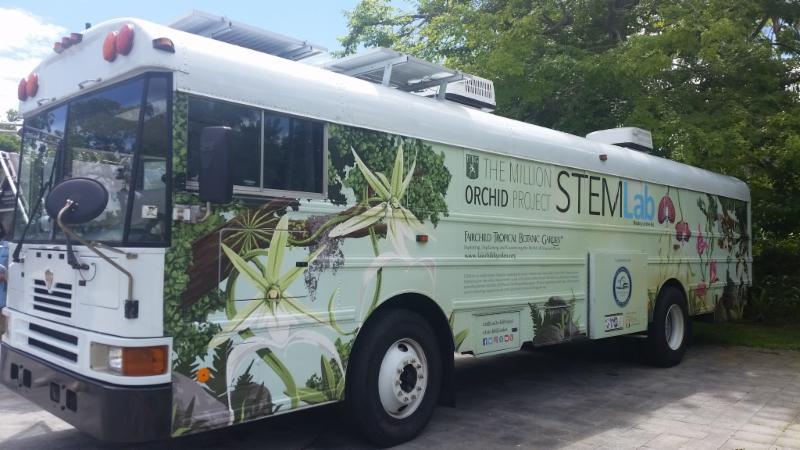
new Micropropagation Laboratory for re-establishment within South Florida’s public landscapes - outside schools, on street trees, and in city parks. The goal of this
Million Orchid Project (MOP)
is to reintroduce Florida's rare and endangered orchids throughout South Florida, and to have the first generation of reestablished orchids blooming within five years.
Thanks to
Adrienne Bozic
of
Mt. Cuba Center
for her enthusiastic development of the "Orchid Scouts" program and
her valuable contributions towards NAOCC's root, leaf, and seed collection goals this season.
NAOCC welcomes the
Cornell Botanic Gardens
as a new collaborator, and looks forward to establishing a NAOCC-New York alliance as part of the Mid-Atlantic regional group.
Midwest
: This summer, NAOCC and the
Chicago Botanic Garden
finalized an MOU for regional seed banking.
CBG “safeguards” eleven rare plant species in the
CPC National Collection
, including a native orchid,
Platanthera leucophaea,
which is classified as Federally-threatened.
In September, a group of NAOCC Mid-West collaborators met at
The Ridges Sanctuary
in Door County, Wisconsin, following The Ridges' public Orchid Symposium, which included presentations by
Dennis
,
Larry Zettler
,
David Remucal
,
Lisa Grubisha
, and
Matt Peter
and
Tony
Kiszonas
. Thanks to Melissa Curran and
Stantec
for sponsoring lunch for hungry orchid conservationists. We also thank
Ridges
volunteers, Julie Knox and Jane Whitney for their contributions towards NAOCC's collection goals this season!
To date, MLA’s orchid conservation researchers, led by
David Remucal
, have collected nearly enough seed to bank and propagate at least one population each of about 40 of Minnesota’s 48 species of orchids, with the goal to get to have 48 in propagation trials within the next few years. For 32 (two-thirds) of the species, they have “banks” started or finished for more than one population each. As they develop 2 or 3 seed stores for a species, one focus will be to ensure broad geographic range coverage to complement existing seed stores for each species.
David and his MLA colleagues are also working to design and implement a database to handle tracking their propagation and evaluation work. Eventually, they will link that database to another database of their field/collection data, with an ultimate aim to be able to share the finished product with fellow NAOCC collaborators.
The MLA has a paid internship opportunity for undergraduates funded by the
Minnesota Environmental and Natural Resources Trust Fund
. There is one position available to work during the summer of 2019 on all aspects of the orchid program: surveying populations, collecting seed, storage work, propagation and greenhouse and garden work. The work is incredibly varied from lab to tough field conditions. Interested students may
contact MLA for more information.
New England
: This Spring, NAOCC and the
New England Wild Flower Society
finalized an agreement for regional orchid seed banking. The Society “safeguards” 46 rare plant species in the
CPC National Collection
, including two native orchid species:
Isotria medeoloides
and
Neottia auriculata
. Volunteers from
The Society
have made many valuable contributions towards NAOCC's root, leaf, and seed collection goals this season.
Texas
: NAOCC's newest regional alliance took shape in Texas this year, starting with a meeting in May at the
Botanical Research Institute of Texas (BRIT)
in conjunction with the
Center for Plant Conservation's
Annual Meeting, and followed by a second meeting in conjunction with the
Texas Plant Conservation Conference
. As planning for collaborative Texas orchid conservation efforts begin, NAOCC looks forward to working with colleagues at the
BRIT
,
Fort Worth Botanical Garden
,
Fort Worth Orchid Society
,
Mercer Botanic Gardens
,
Lady Bird Johnson Wildflower Center
,
Peckerwood Garden
,
Texas Master Naturalists
,
Dr. Jyotsna Sharma's Plant Ecology and Conservation Lab at Texas Tech University
, and
Texas A&M University
, as well as individual conservationists,
Joe Liggio
and
Trudy and Charlie Hess
.
(If you have native orchid conservation-related news you would like us to share in a future newsletter, please let us know - email
Julianne McGuinness
)
|
|
|
NAOCC Welcomes Two Visiting Researchers
The SERC Plant Ecology and Molecular Ecology Labs welcome two recent arrivals supporting our ecology and conservation work.
Hye Woo Shin
is a Ph.D. candidate at the
Ewha Womans University
in Seoul South Korea. She will spend a year working on a variety of orchid-related projects - from molecular ecology to population monitoring.
Thomas Chapin
is a senior at the University of Maryland, Baltimore County. During his internship at SERC he will work on a variety of NAOCC projects, including conducting germination experiments of
Platanthera
species.
--------------
Also noteworthy: Congratulations to
Simone Evans,
a recent SERC high school intern, (now a freshman at the University of Maryland)! Simone won the regional science fair and placed 2
nd
in the Intel International Science & Engineering Fair for her project, “
The Web of Mycorrhizal Fungi: Identifying Associations Between Orchids, Ceratobasidium Fungi, and Trees”
.
|
|
Molecular Ecology Lab Update
by Melissa McCormick
Mycorrhizal fungi are a fundamental component of nearly all terrestrial ecosystems, creating the critical link between above- and below-ground systems by establishing an intimate association with the roots of >90% of land plants. This relationship provides plant partners with improved nutrient acquisition from the soil, stress tolerance, and pathogen protection.
Most mycorrhizal associations also allow the fungal partners to obtain the photosynthetically-fixed carbon sources they need to survive and reproduce. Mycorrhizal fungi impact the function and biodiversity of entire ecosystems, connect unrelated individual plant species, and function as a sink for atmospheric carbon dioxide. Because of the many benefits they provide to plants, mycorrhizal fungi are now widely used in organic agriculture, plant nurseries, and restoration of mine tailings to improve the growth of economically important species.
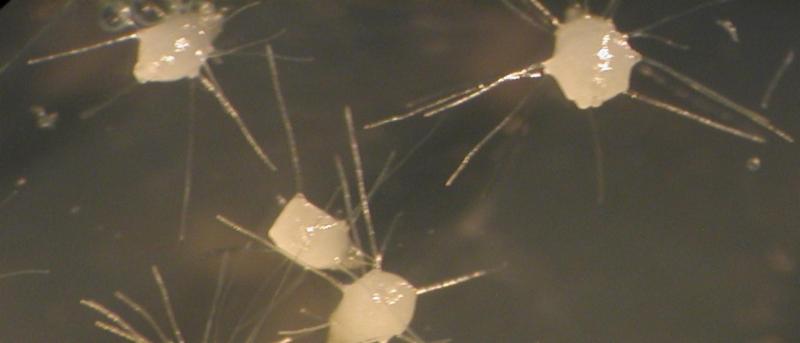
We are currently sequencing the genomes of two orchid mycorrhizal fungi, as well as sequencing the transcriptomes of those fungi when they are forming a functional mycorrhizal association and when they are growing by themselves. Most mycorrhizal fungi cannot be cultured without their plant hosts, but most orchid mycorrhizal fungi
can
- making it much easier to work with orchid mycorrhizal fungi than with other types, and enabling us to determine which genes are involved in functional orchid mycorrhizal associations. We will compare those genes to the ones identified as part of the “mycorrhizal toolkit” to determine what is similar and different about orchid mycorrhizas.
|
|
2018 Native Orchid Conference Hosted by NAOCC
|
In July, NAOCC hosted the
2018 Native Orchid Conference
, welcoming over 70 participants for four days of inspiring talks and engaging field trips to view native orchids in their glory at sites on Maryland's Eastern Shore and Piedmont. Presentations were diverse, and included a report by four high school students describing their involvement in the
"Orchids in the Classroom"
program (see also article, below).
The NOC field trips required a lot of planning and effort. We would like to thank
Gary van Velsir
and
Jim Brighton
(
Maryland Biodiversity Project
) for taking the lead in identifying sites, field trip leaders
Doug Allen
and
Wayne Longbottom,
and
Deborah Landau
(
The Nature Conservancy
) for arranging access to sites on the Eastern Shore. NAOCC also thanks
Tom Hoppin
(Chair of the SERC docent program), and van drivers,
Joe Miklas
,
Chuck Gallegos, Bruce Ogden, Cyrena Simons
) for making the logistics far easier and more comfortable.
Thanks also to
Goodyera pubescens
,
Platanthera peramoena
,
P
.
clavellata
,
P
.
ciliaris
,
P.
cristata
,
P
.
blephariglottis
, and
P
.
canbyii
for putting on a good show!
|
|
|
 |
The collaborative
“Orchids in the Classroom”
project received a very positive external review for the Spring 2018 semester. Now the enthusiastic teachers and students have begun the project in their classrooms for the autumn semester, and a renewal proposal to continue the project beyond 2019 has been awarded.
|
|
|
|
In July, five teachers, along with
Alison Cawood
(Citizen Science Coordinator at SERC and PI of the project),
Cosette Larash
(Public Engagement Program Assistant) and
Dennis
traveled to the
Fairchild Tropical Botanic Garden
in Miami to get a first-hand view of their
Million Orchid Project
and discuss the first semester outcomes.
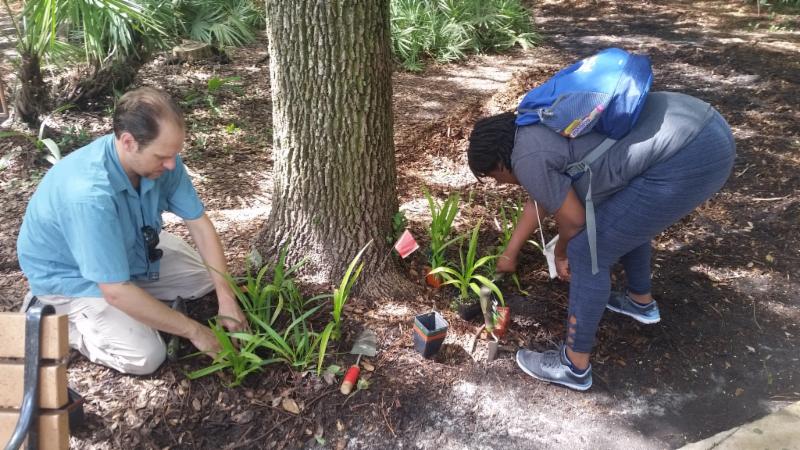
The teachers brought orchids grown in classrooms in Maryland and DC, and planted them in a park. In collaboration with our colleagues at the
Fairchild Tropical Botanic Garden
, they are collecting data on the orchids they had transplanted in July.
|
|
|
|
The talented Carol Zakahi put together an exquisite display of
orchid-gami
for the recent
36
th
Annual Kona Daifukuji Orchid Show in Hawaii - see below for more details and a sampling of her fantastic images featured in our new website gallery
"Conservation of Orchids Through Creativity"
.
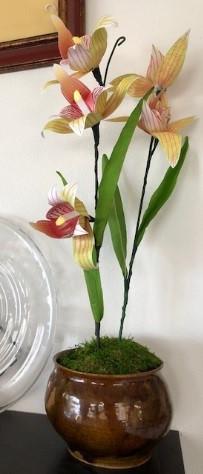
In addition to the Palau Hyacinth Orchid, four new orchid-gami models are now available as punch-outs: Chapman's Fringed Orchid (
Platanthera chapmanii) sponsored by the
Fort Worth Orchid Society,
the
R
am's Head Lady's Slipper (
Cypripedium arietinum) sponsored by
The Ridges Sanctuary
,
the
Large Whorled Pogonia (
Isotria verticillata) sponsored by the
Orchid Society of the Ozarks
,
and
the
Striped Coral Root
(Corallorhiza striata)
sponsored by the
Mid-America Orchid Congress.
All 25 orchid designs are available as pdf files that can be downloaded from the
orchid-gami
web page.
C
ontact NAOCC
to see which of these designs are available as punch-out paper models.
Coming soon: the Moccasin Flower (
Cypripedium acaule)
With the gift-giving season fast approaching... we now have
orchid-gami
stocking-stuffers available! You may purchase packets of 5 punch-outs for $10 - with a bonus of the new Palau Hyacinth Orchid! (Individual sheets of each model may be purchased for $2 each.)
Contact NAOCC
to learn more about
orchid-gami
, sponsorship opportunities, and how to obtain the punch-outs.
|
|
|
Our newest gallery explores the
orchid-gami
exhibit at Hawai’i's 36
th
Annual Kona Daifukuji Orchid Show.
Carol Zakahi’
s skill and artistry create an inspiring message on orchid conservation, combining
orchid-gami
with the Japanese tradition of flower arrangement,
ikebana
("giving life to flowers").
If Carol's virtual tour makes you curious to try
orchid-gami
, visit the NAOCC website and select the
orchid-gami
tab on the menu bar. Download your favorite orchid and use your imagination to create your own
orchid-gami
display!
The Ouachita Mountains straddle western Arkansas and southeastern Oklahoma and form part of the U.S. Interior Highlands - one of the few mountainous regions between the Appalachians and Rockies. These mountains were named by Native Americans for the large (chito) buffalo (ouac) they hunted in this area. We'll explore these ridges and broad valleys with biologist
David Arbour
, discovering orchids across the region.
See and Read More..
.
The Lady's Slippers (
Cypripedium
), with their unique flowers, are North America's most recognizable and charismatic orchids. Their flowers are distinguished by a lip modified into an inflated, slipper-shaped pouch that promotes cross-pollination by trapping insects. This pouch does not contain any reward for the pollinator, but relies on color and fragrance to trick an insect into entering in search of food.
In this gallery, orchid hunter
Ron Coleman
gives us a snapshot of his survey on the North American Lady’s Slippers, (published this spring in
Orchids
,
the journal of the American Orchid Society
).
His article on the "
Cypripedium
of the United States and Canada" combines his field experiences with these orchids, and data gathered from many hours poring over herbarium specimens.
See and Read More...
A special thanks to NAOCC's gallery contributors! If you are an orchid photographer and have an idea for a new gallery,
let us know
!
|
|
|
Global Survey of Orchids
Earlier this year,
Botanic Gardens Conservation International
(BGCI)
in partnership with NAOCC’s collaborators at the
United States Botanic Garden
, published a
global
ex situ
survey of orchids
.
Ex situ
collections in botanic gardens are a vital conservation measure offering protection to species away from their native habitat and threats to
in situ
populations.
Ex situ
collections can also form the basis of reintroduction and restoration programs, helping to improve the conservation status of orchid species in the wild. The
report
highlights the 272 orchid genera that are not known in
ex situ
collections, a vital conservation measure that could prevent extinction. This means that 35% of orchid taxa have no back-up protection if threatened
in situ
populations are lost. Expanding orchid
ex situ
collections insures a greater diversity of species and sufficient genetic diversity to prevent species extinction and allow their use in recovery and restoration programs, especially in biodiverse regions.
|
|
|
|
We want to stay in touch – action needed
|
|
We appreciate your interest in NAOCC - we want to stay in touch and hope that you do too!
Internet privacy compliance requirements have recently changed. If you live in the EU, the new General Data Protection Regulation (GDPR) guidelines require that we obtain consent from you that is freely given, specific, informed, and unambiguous. We will soon send a separate email to give you an opportunity to clearly "opt in" to receive NAOCC communications. In the meantime, please
feel free to email us
at any time to let us know your communication preferences.
We treat your information with respect. We only store your contact information to communicate with you, and do not share it with outside entities for any other purposes. You can withdraw your permission to receive our emails at any time by using the unsubscribe link found at the bottom of every email you receive from us.
|
|
While some of NAOCC's orchid conservation work is funded in part by grants from various agencies, we rely greatly on private, individual donations - which can make a big impact on the success of our projects. If you wish to donate to NAOCC's orchid conservation efforts, you may do so by
contacting us directly
, or clicking on the button, below.
|
|
Copyright © 2018 NAOCC / Smithsonian Environmental Research Center, All rights reserved.
You are receiving this email because you are a NAOCC Collaborator, Donor, or Friend. Please let us know if you have ideas for future newsletters, or if you prefer to unsubscribe from these emails.
|
|
|
|
|
|
|