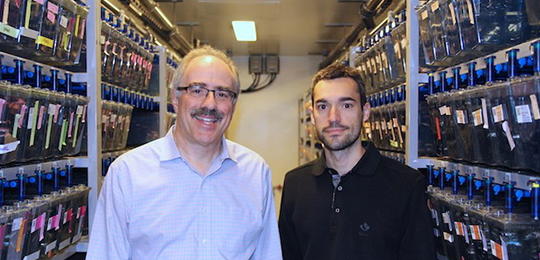
What they did: The researchers started by analyzing genetic data from patient tumors. When they found mutations in the gene SPRED1, they created zebrafish models to figure out exactly how those mutations resulted in mucosal melanoma.
What they found: When SPRED1 was inactivated, melanoma cells grew faster. The researchers also studied the relationship between SPRED1 and genes that have been previously associated with mucosal melanomas, including KIT. They found that when SPRED1 was lost, mucosal melanoma tumors became resistant to a drug that inhibits KIT.
Why it matters: Patients with cancer respond differently to different drugs, so predicting drug response can help identify the best treatment approach. In the future, patients could have their specific mutations modeled in zebrafish to guide decisions about their treatment.