IDEAS, NEWS AND RESOURCES
|
August 2019
The Taos Institute's mission is to bring together scholars and practitioners concerned with the social processes essential for the construction of reason, knowledge, and human value, and their application in relational, collaborative and appreciative practices around the world.
|
|
The Many Ways to Get Involved!
|
|
Brief Encounter with The Taos Institute
|
|
August 2019
"
I can share my feelings, describe my physical responses, and invite others to do the same with me without judgment.
"
|
|
Remaining Human: “What Can We Do?” vs. “Who Will We Be?”
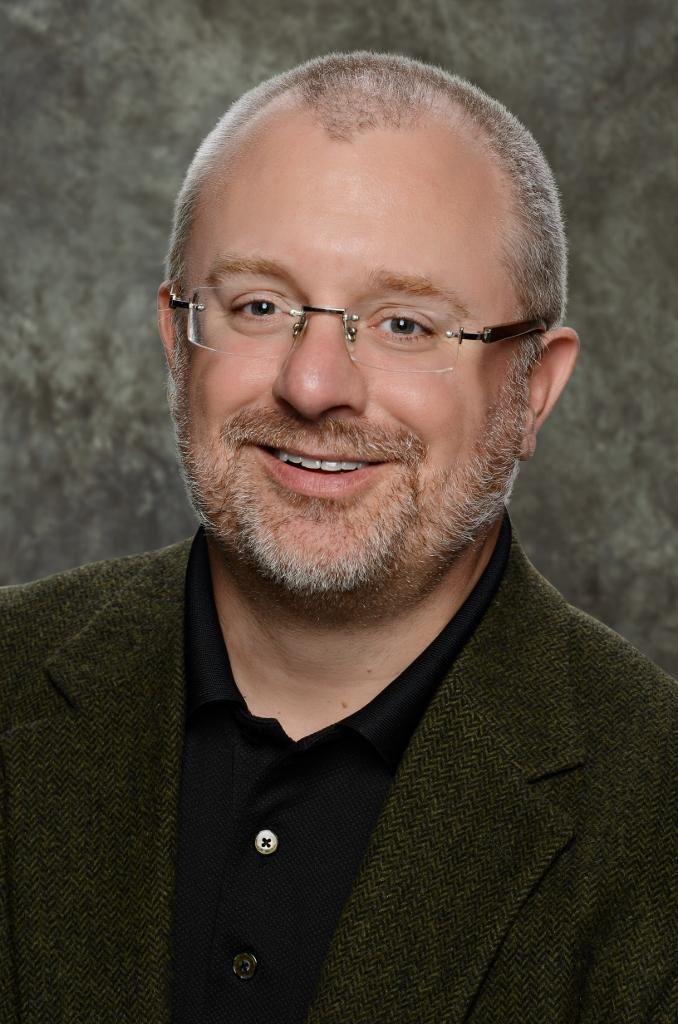
By Duane Bidwell
As I write, a federal judge in the United States has ruled that the government cannot jail asylum seekers indefinitely, but must determine within seven days if a person faces a credible risk of persecution or torture in their own country and, if asked, release that person to wait in freedom for a final asylum decision. I celebrate the ruling.
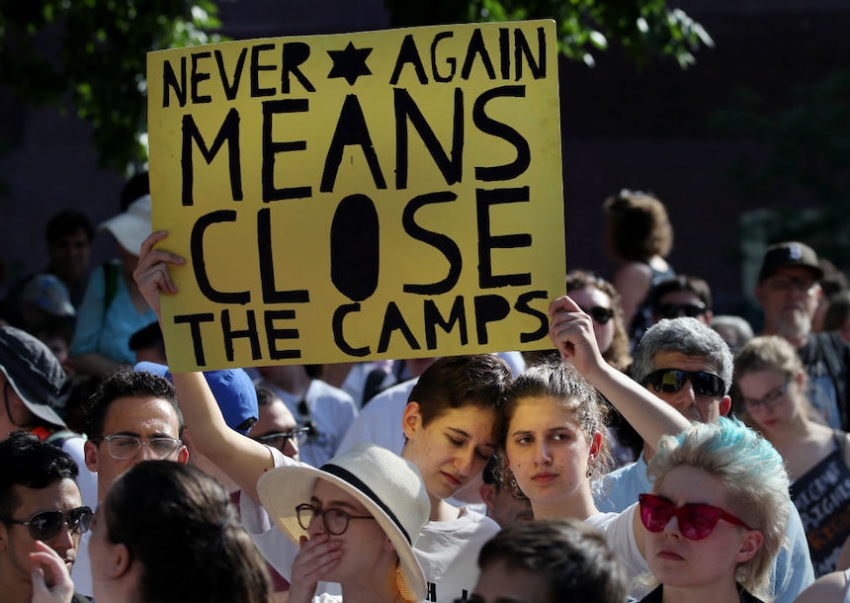
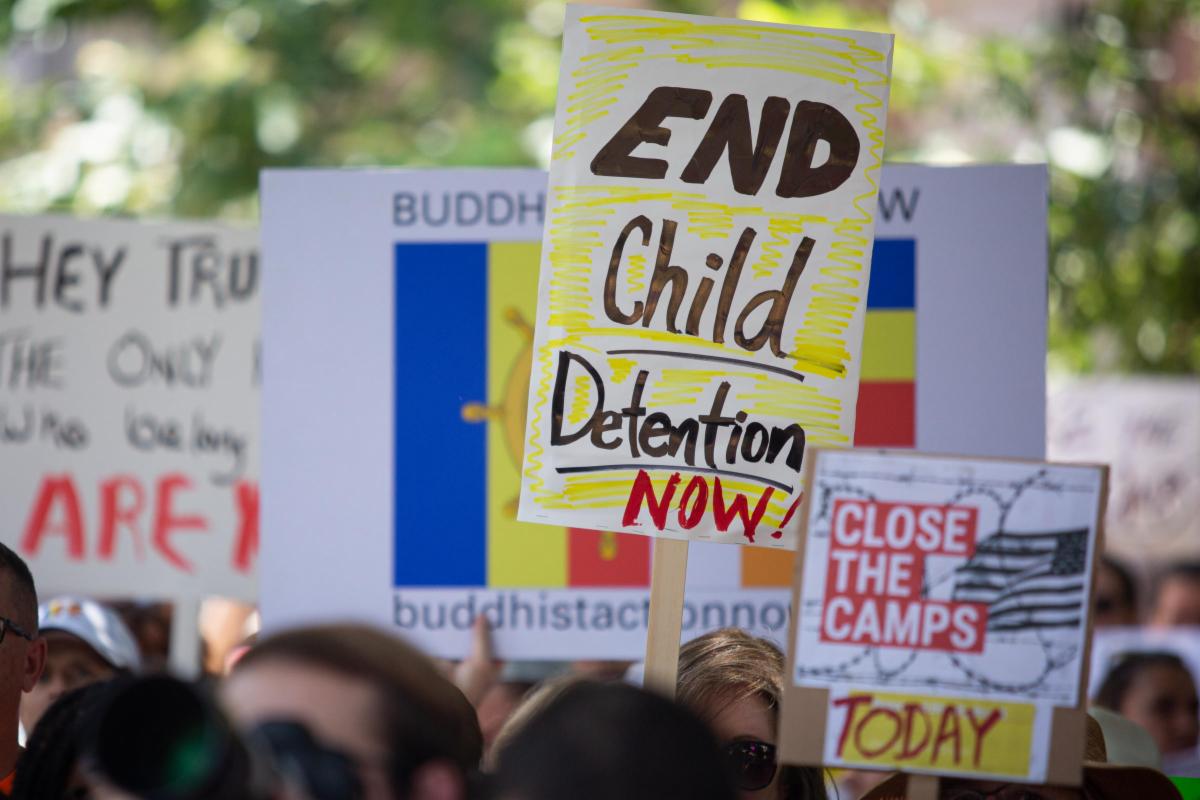
Yet there are still more than 2,500 unaccompanied children being held in camps on the US/Mexican border; reports of physical and sexual abuse in the camps are rising; and more than 24 immigrants from around the world, including five children, have died in US custody this year. A US teenager was held illegally for three weeks by immigration officials. Others detained by the system have died by suicide after release.
Feelings of despair seem reasonable in the face of this situation. Outrage rises easily. Yet constructive responses are more difficult to muster. What can we do, really, to address this intentional, systemic cruelty? I suggest that asking, “What we can
do?” isn’t the first question to ask.
From a relational, constructionist perspective, a more vital starting place might be: Who do we want to be, together, in the face of this situation? In daily life, what relational practices make a difference toward enacting that position? And what difference might those practices make in our relationships?
These questions grow from the work of Spanish philosopher
Miguel de Unamuno, who framed them as a
proyecto vital or life project. They invite us to frame the US/Mexico border crisis primarily as a human, moral question rather than a political and legal conundrum. Such questions help me avoid being swallowed by rage and despair. They also keep me from using logic and theory to distance myself from the pain I feel when I see and hear reports from the border and the home countries of asylum seekers.
For me, feeling the pain provides a way out of despair. Numbing my emotions—distancing myself from the pain—only leads me to dehumanize the people who enact and support these atrocities. I tell a flat, one-dimensional story about them, their motives, and their humanity.
When I’m numb, I don’t have to acknowledge or name my complicated and nuanced responses to such situations. I tell a flat, one-dimensional story about myself, remaining silent about more profound, less easily digested dimensions of my experience.
Such silence, I suspect, allows others to construct public dialogue and action on my behalf, without honoring my values and preferences. It hides the real consequences of the suffering we experience because of the pain of others.
Who benefits, I wonder, when we quiet our rage, ethics, morality, and visions for the future? And what suffering gains power and momentum?
For me, telling others how I feel when I see and hear about the border camps serves as the most concrete and immediate way to clarify and enact who I want to be in this situation. I can share my feelings, describe my physical responses, and invite others to do the same with me without judgment.
When we make space to witness and honor embodied, emotional responses—our own and among others—we become vulnerable together. And in shared vulnerability, new possibilities emerge.
|
|
Remembering Jane Magruder Watkins
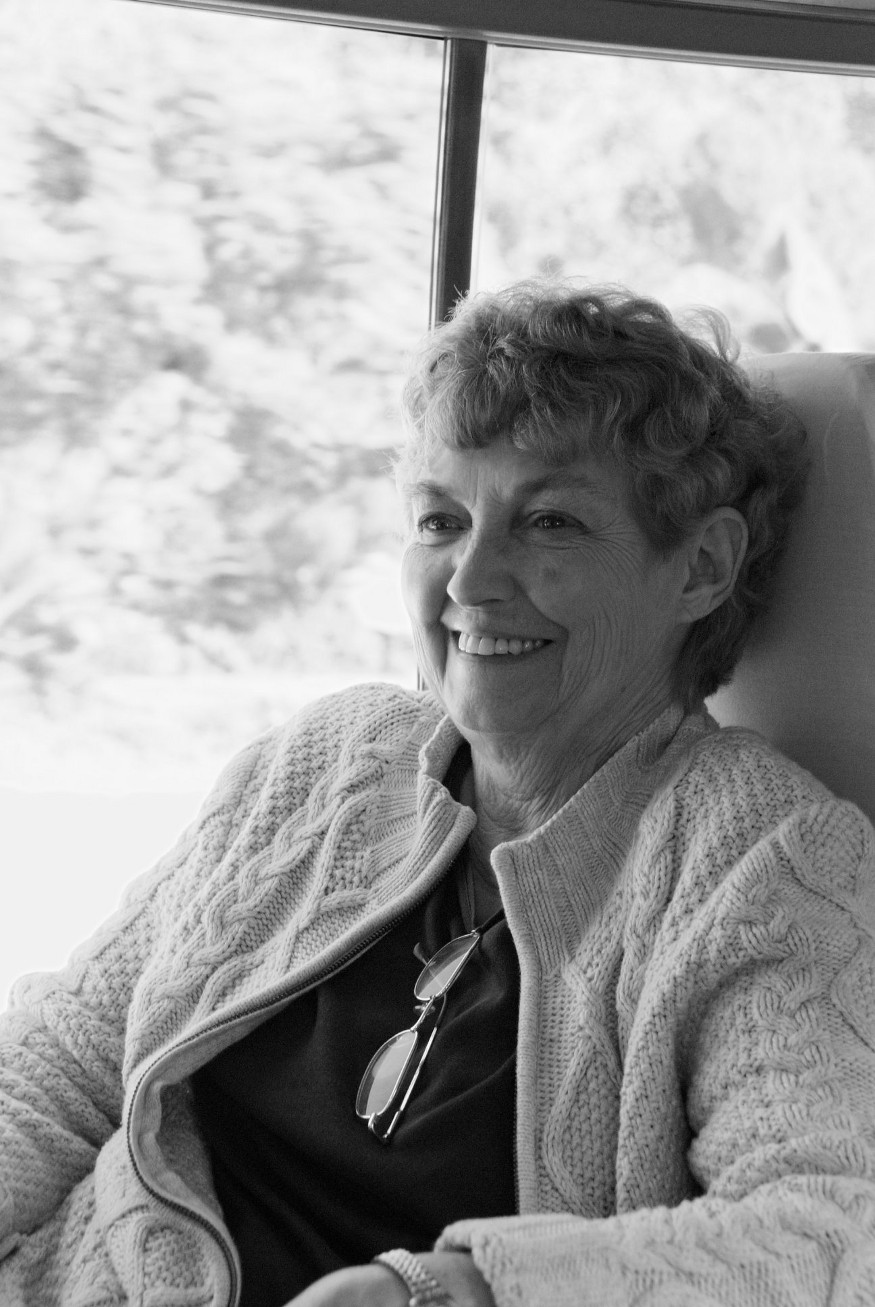
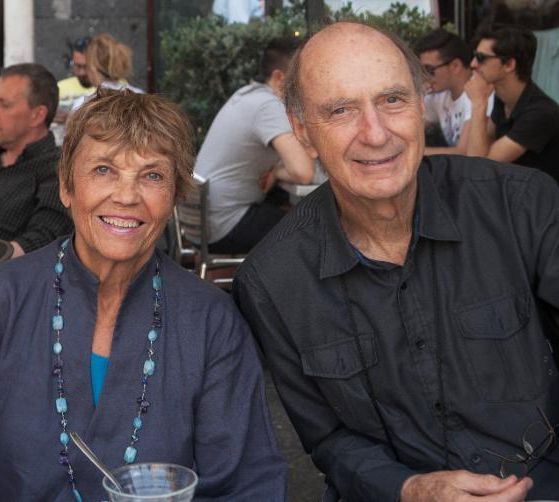
Many of you may have known or met Jane Magruder Watkins over the past 20+ years. It is with a heavy heart that we share with you the sad news that Jane passed away peacefully on August 12th. You may also know her husband Ralph Kelly, both he and Jane had been very involved and great supporters of the Taos Institute over these many years. We send Ralph, and Jane's whole family, our condolences, support and gratitude.
Jane was an integral part of the Taos Institute for many years as an associate, collaborator and then as a board member. Her leadership, spirit, voice, vision, sense of hope, ability to see the best, and her support will be immensely missed.
Jane was a dear friend, colleague, mentor, teacher, consultant, co-creator and so much more to many of us throughout the past 25 years. We honor Jane by sharing words from many people who are remembering her and her way of being in the world that impacted millions of people around the globe.
At this
link
we share the voices of those who knew Jane. We hope you will take a few minutes to read these and reflect on the sentiments shared. At the bottom of this page, we invite you to also share a story, a memory or a thought about Jane Magruder Watkins. Click on the
"comment"
button.
________________________________
“The only way to have a good life is to help people… Empower the people you’re leading to step up and into who they are.”
— Jane Magruder Watkins
-----------------------------------------------------
Jane will be missed in this world and her voice and impact will linger on in all the lives that she touched during her time on this Earth.
With warm sincerity,
The Taos Institute Board of Directors
Ken Gergen, Sheila McNamee, Mary Gergen, Harlene Anderson, Duane Bidwell, Celiane Camargo Borges, Monica Sesma, Sally St. George and Dan Wulff
|
|
Professional Development Opportunities
|
|
Upcoming Events
Workshops
October 31 - November 2
with Sheila McNamee and Harlene Anderson
in Durham, New Hampshire
Nov. 4 - Dec. 9
Live calls on Mondays at 10:00 AM US Eastern time.
Friends of the Taos Institute Events
Oct. 4 - 6, 2019
Burlington, VT
Oct. 26 - 28, 2019
New York City
|
|
October 31 - November 2
with Sheila McNamee and Harlene Anderson
in Durham, New Hampshire
Join Sheila and Harlene in beautiful New England for an intimate workshop. Bringing their breadth of experiences together, the workshop will introduce social construction and relational practices for those new to it and will help those familiar with it deepen their understandings and practices. Additionally, focus will be on the practical application of constructionist ideas in organizations, therapy, education, and community development. We will focus on relational constructionist understandings of language and meaning making, polyvocality, transformative dialogue, and appreciative and future oriented perspectives. Participants will learn how social reality is constructed in language and the implications of this for our understandings, knowledge, and everyday practice. Participants with a background in social construction will have an opportunity to explore issues of special relevance to their projects and practices.
|
Nov. 4 - Dec. 9 (Online course)
Live group calls on Mondays at 10:00 AM US Eastern time.
Relational theory now provides cutting edge ideas relevant to practices across the professions. The major theoretical shift is from the traditional focus on individuals to the relational processes that are co-produced. This 6-week online course introduces common premises and orienting ideas central to relational theory. The course consists of six modules with online conference meetings, readings, videos and online dialogues.
|
Do you want to expand your professional potential, explore a vision, follow your curiosity, bring about an innovation for a more promising future? Would you like a mentor, coach and conversation partners who will support, inspire, and challenge you to reach your goals? Would you like to work from the comfort of your own office, home or work environment and be part of a global community of learners?
At the Taos Institute, we support and mentor creative practitioners to form the future through relationship, collaboration, and ethical action. The International Diploma in Social Construction and Professional Practices exposes you to expertise from multiple disciplines, all focused on collaborative and relational approaches to generating meaning, values, and practices of significance. Your advisor, mentor or coach works with you to design a learning plan that addresses your goals, with feedback and learning tailored to your situation and project. You will receive support and inspiration from a broad network of conversation partners.
- There are no grades.
- You create your own deadlines.
- You design your own learning goals.
- You work virtually with scholars and practitioners around the world.
- You join a cohort of learners that support each other.
- You participate in a learning relationship with an advisor, mentor, coach.
|
|
New Book
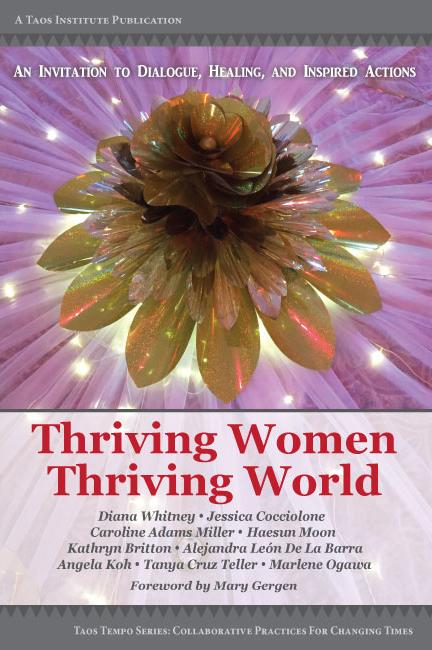
Thriving Women, Thriving World:
An Invitation to Dialogue, Healing and Inspired Actions
This book is a celebration of women. It is an invitation to journey from #MeToo to thriving women via Appreciative Inquiry, dialogue, and story telling. It addresses topics, through an appreciative lens, that may be difficult to talk about, yet must be talked about to heal social wounds and create conditions for women to thrive worldwide. If you are wondering what to do in response to the global cry of #MeToo, this book is for you.
Authors: Diana Whitney, Caroline Adams Miller, Tanya Cruz Teller, Marlene Ogawa, Jessica Cocciolone, Haesun Moon, Kathryn Britton, Angela Koh & Alejandra Leon de la Barra
|
|
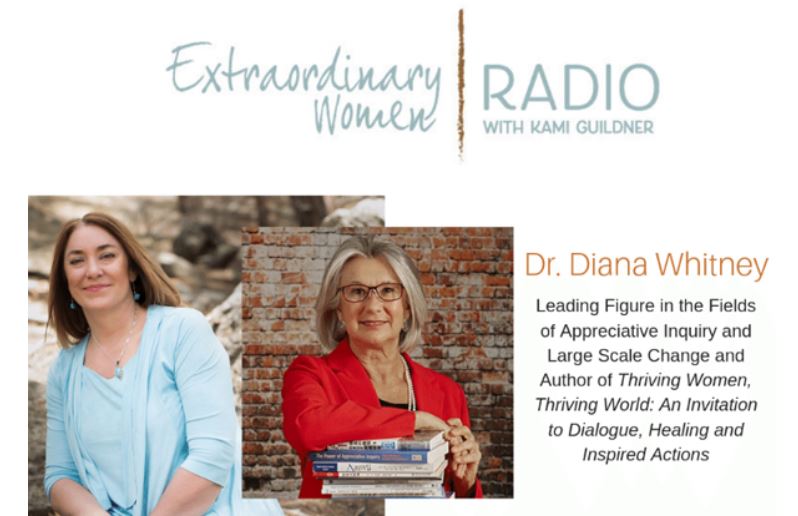
Listen to the podcast with Diana Whitney on the new book:
Thriving Women, Thriving World
|
|
More Ways to Get Involved
|
|
Join in with the Relational Research Network's new project:
The RRN Support Learning Community
|
August 19, 2019 (Monday)
11:00 – 12:00 PM New York time (check your own local time)
Facilitadores: Rocio Chaveste and Monica Sesma
Investigador: María Camila Ospina
Esta conversación será en español
Niños y familias en el contexto de violencia o conflicto armado
The Relational Research Network is hosting conversations beginning in July, with researchers who want to to critically think about how inquiry and research processes connect and inspire us when we look at them through the lens of a relational practice. The questions we will explore:
- How can a research project have a relational focus or become a relational practice?
- How can we do relational research and have meaningful conversations about our work?
- Hear about a research project and be in conversation with others in the learning community, engaging through questions, challenges, or issues related to your research project.
- Having the opportunity to be in conversation with other researchers to network, co-learn and create opportunities for collaboration.
See the full schedule for these conversations - The RRN Support Learning Community - by visiting
our website.
You will need to register in order to participate or "sit in" and listen to these learning conversations.
|
|
Appreciative Inquiry Community Jam!
Practices Amplified, Connections Elevated (PACE)
Fri, Oct. 4 - Sun, Oct. 6, 2019
Everyone is invited to join in the AI Community Jam! You won't want to miss it!
Join in a multi-generational gathering of students, practitioners, and the curious celebrating Appreciative Inquiry, strengths-based and positive approaches to change, work and life.
Join us for conversations, reflections, and a variety of activities and discover endless opportunities to accelerate the PACE with:
- Curiosity
- Sharing
- Belonging
- Vision
- Learning
- Connection
- Innovation
|
|
 |
International Journal of Collaborative-Dialogic Practices
This free journal brings together members of a growing international community of practitioners, scholars, educators, researchers, and consultants interested in postmodern collaborative practices. Issue 8 is now available.
.
|
|
|
|
WorldShare Books
FREE downloadable books in 12 different languages.
With over 28 books in English and many more from around the world, you will enjoy reading about education, spirituality, organizational life, community building, group dynamics, leadership and more.
Order your free book today!
|
|
|
|
|
Positive Aging Newsletter
FREE
newsletter in 9 languages sent right to your email.
By focusing on the positive aspects of aging, and the availability of resources, skills, and resiliencies, research not only brings useful insights into the realm of practice but creates hope and empowers action among older people. By moving beyond practices of repair and prevention, to emphasize growth-enhancing activities, practitioners also contribute more effectively to the societal reconstruction of aging.
|
|
|
|
Manuscripts for Downloading
Access hundreds of articles and papers on topics such as:
- Appreciative Inquiry
- Collaborative Practices
- Dialogue
- Appreciative Cultures
- Creativity and Improve
- Narrative Practices
- Relational Learning
- Relational Research
- Qualitative Research
- and so much more!
|
|
|
|
|
Donate to the Taos Institute
Given the current global context into which we are moving, the work in which we are engaged is more important than ever. We invite you support the work of institute.
Read more
|
|
|
|
John Shotter Memorial Fund
John Shotter's death on December 8, 2016, was a profound loss for the scholarly world, for the Taos Institute, and for many of us personally.
Read more
|
|
|
|
|
Jane Magruder Watkins Scholarship Fund
Support students who apply for a need-based scholarship to support their participation in Taos programs.
Read more
|
|
|
|
Peggy Penn WorldShare Fund
Supports the publication of new WorldShare Books on topics related to the work and interests of Peggy Penn, Ph.D.
Read more
|
|
|
|
|
|
|
|
|