IDEAS, NEWS AND RESOURCES
|
September 2019
The Taos Institute's mission is to bring together scholars and practitioners concerned with the social processes essential for the construction of reason, knowledge, and human value, and their application in relational, collaborative and appreciative practices around the world.
|
|
The Many Ways to Get Involved!
|
|
Brief Encounter with The Taos Institute
|
|
September 2019
"If we cannot separate truth from falsity, bias from neutrality, and the fake from the real, then rational decisions are undone; justice becomes a farce, and suspicion abounds. Our social and political worlds turn ugly."
|
|
Truth, Fake News, and the
Social Construction of Reality
By Kenneth J. Gergen, Taos Institute President and co-founder
Issues of truth, lying, and bias in both the political sphere and news reporting now dominate our daily lives. We are angered when public figures appear to lie, worried about biases in our news reporting, and bewildered in distinguishing between the fake and the valid in the digital world. Most unsettling, these are challenges to the foundations of trust essential for a viable society. If we cannot separate truth from falsity, bias from neutrality, and the fake from the real, then rational decisions are undone; justice becomes a farce, and suspicion abounds. Our social and political worlds turn ugly.
These realizations raise special challenges for those concerned with the social construction of reality. A key constructionist proposal is that our descriptions and explanations of the world are not required by “the way the world is.” There are many different ways to describe and explain what is taking place, and a true and unbiased account from one perspective will not be so in others. This idea has been liberating and prodigiously productive for many of us. It has meant that we are not bound by existing traditions of understanding; all are open to deliberation. And, we are invited to create new forms of understanding, along with ways of life we find more viable, harmonious, inclusive, and so on. Just such reasoning has hastened the development of appreciative inquiry, narrative and brief therapy, open dialogue, collaborative pedagogy, relational theorizing, qualitative research practices, and more.
As fruitful as this position may be, this same constructionist assumption has been strongly resisted by angry charges of relativism. “Is this to say there is no truth, that anything goes, that one person’s account of the facts is just as good as another’s?” “If there is no truth, then how can a President lie?” How is one to reply? Here it is important to point out that
within
any given tradition of understanding, there can be clear distinctions between what is true and false. Within my setting there can be very tight rules for when, where and how one uses such words and phrases “on the East side,” “railroad crossing,” “slippery when wet” and “this is poison.” To follow the rules is to speak the truth, and failing to do so may be perilous. Thus, if there are reliable conventions for counting the number of people at a rally, or reporting on the direction of a hurricane, reporting otherwise is untrue. To declare its truth is essentially to lie, and is the undoing of trust and the viability of society.
It doesn’t follow, however, that a biased report is a distortion of the truth. Within any tradition there may be multiple ways of properly describing an event, all acceptable as true. To select among them thus reflects a preference - in short, a bias. If one newscaster fastens on the shortcomings of a political decision, and another focuses on the positive outcomes, both may remain true within the conventions. Biased as well is the commentator who reports on both the positive and negatives. All commentaries - from the poetic to the scientific - are preferential. Thus to select among newscasters is not a question of which is the most objective, in this case, but represents an expression of one’s values. Whether one can privilege one set of values over another is the beginning of yet another significant discussion.
|
|
Professional Development Opportunities
|
|
Upcoming Events
Workshops
October 31 - November 2
with Sheila McNamee and Harlene Anderson
in Durham, New Hampshire
Nov. 4 - Dec. 16
Live calls on Mondays at 10:00 AM US Eastern time.
Friends of the Taos Institute Events
Oct. 4 - 6, 2019
Burlington, VT
Oct. 26 - 28, 2019
New York City
|
|
October 31 - November 2
with Sheila McNamee and Harlene Anderson
in Durham, New Hampshire
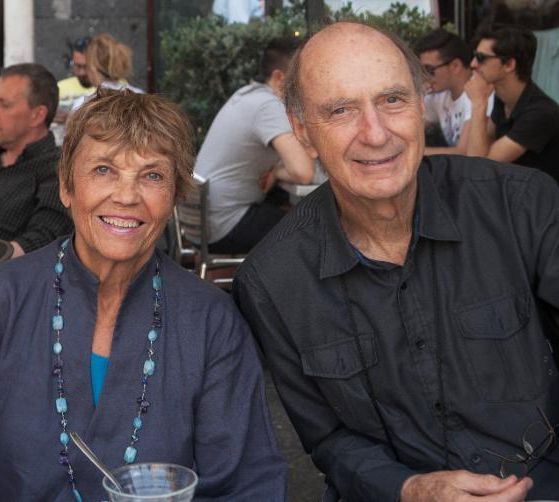
Join Sheila and Harlene in beautiful New England for an intimate workshop. Bringing their breadth of experiences together, the workshop will introduce social construction and relational practices for those new to it and will help those familiar with it deepen their understandings and practices. Additionally, focus will be on the practical application of constructionist ideas in organizations, therapy, education, and community development. We will focus on relational constructionist understandings of language and meaning making, polyvocality, transformative dialogue, and appreciative and future oriented perspectives. Participants will learn how social reality is constructed in language and the implications of this for our understandings, knowledge, and everyday practice. Participants with a background in social construction will have an opportunity to explore issues of special relevance to their projects and practices.
|
Nov. 4 - Dec. 16 (Online course)
Live group calls on Mondays at 10:00 AM US Eastern time.
Relational theory now provides cutting edge ideas relevant to practices across the professions. The major theoretical shift is from the traditional focus on individuals to the relational processes that are co-produced. This 6-week online course introduces common premises and orienting ideas central to relational theory. The course consists of six modules with online conference meetings, readings, videos and online dialogues.
|
Do you want to expand your professional potential, explore a vision, follow your curiosity, bring about an innovation for a more promising future? Would you like a mentor, coach and conversation partners who will support, inspire, and challenge you to reach your goals? Would you like to work from the comfort of your own office, home or work environment and be part of a global community of learners?
At the Taos Institute, we support and mentor creative practitioners to form the future through relationship, collaboration, and ethical action. The International Diploma in Social Construction and Professional Practices exposes you to expertise from multiple disciplines, all focused on collaborative and relational approaches to generating meaning, values, and practices of significance. Your advisor, mentor or coach works with you to design a learning plan that addresses your goals, with feedback and learning tailored to your situation and project. You will receive support and inspiration from a broad network of conversation partners.
- There are no grades.
- You create your own deadlines.
- You design your own learning goals.
- You work virtually with scholars and practitioners around the world.
- You join a cohort of learners that support each other.
- You participate in a learning relationship with an advisor, mentor, coach.
|
|
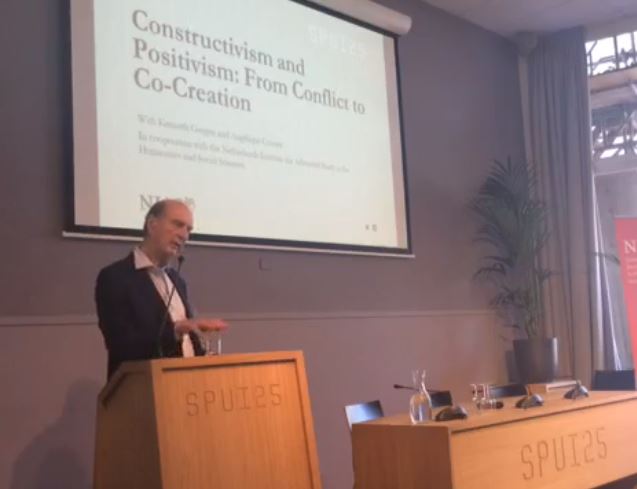
Video with Kenneth J. Gergen
|
|
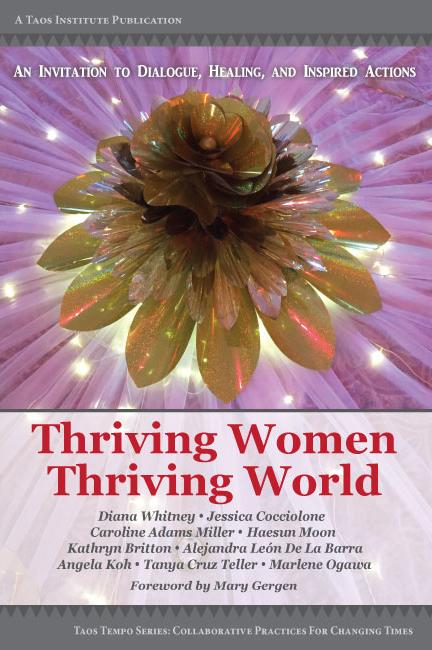
Thriving Women, Thriving World:
An Invitation to Dialogue, Healing and Inspired Actions
This book is a celebration of women. It is an invitation to journey from #MeToo to thriving women via Appreciative Inquiry, dialogue, and story telling. It addresses topics, through an appreciative lens, that may be difficult to talk about, yet must be talked about to heal social wounds and create conditions for women to thrive worldwide. If you are wondering what to do in response to the global cry of #MeToo, this book is for you.
Authors: Diana Whitney, Caroline Adams Miller, Tanya Cruz Teller, Marlene Ogawa, Jessica Cocciolone, Haesun Moon, Kathryn Britton, Angela Koh & Alejandra Leon de la Barra
|
|
More Ways to Get Involved
|
|
Join in with the Relational Research Network's new project:
The RRN Support Learning Community
|
Sept 23, 2019 (lunes)
11:00 – 12:00 PM New York time (revisa tu propia hora local)
Facilitadores: Rocio Chaveste and Monica Sesma
Investigador: Rita de Cássia de Sousa
Esta conversación será en español
Educación relacional
El proyecto que presentamos reúne un conjunto de investigaciones que usan la perspectiva Construccionista Social para fines de investigaciones en educación. Nuestro objetivo es profundizarnos en las propuestas traídas por este movimiento en sus distintos aspectos y relacionarlos con los desafíos enfrentados en espacios formales y no formales de educación. Nuestra hipótesis es que esta perspectiva puede ser muy útil para un cambio sustancial en los modelos educativos vigentes y que trae posibilidades creativas e innovadoras de pensar y hacer la educación.
The Relational Research Network is hosting conversations beginning in July, with researchers who want to to critically think about how inquiry and research processes connect and inspire us when we look at them through the lens of a relational practice. The questions we will explore:
- How can a research project have a relational focus or become a relational practice?
- How can we do relational research and have meaningful conversations about our work?
- Hear about a research project and be in conversation with others in the learning community, engaging through questions, challenges, or issues related to your research project.
- Having the opportunity to be in conversation with other researchers to network, co-learn and create opportunities for collaboration.
See the full schedule for these conversations - The RRN Support Learning Community - by visiting
our website.
You will need to register in order to participate or "sit in" and listen to these learning conversations.
|
|
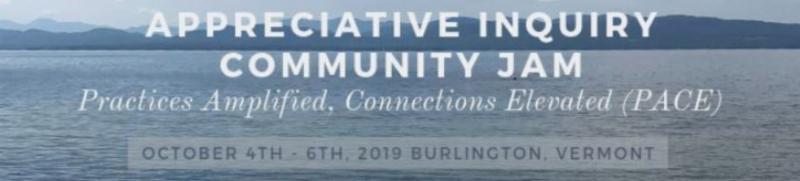
Appreciative Inquiry Community Jam!
Practices Amplified, Connections Elevated (PACE)
Fri, Oct. 4 - Sun, Oct. 6, 2019
Everyone is invited to join in the AI Community Jam! You won't want to miss it!
Join in a multi-generational gathering of students, practitioners, and the curious celebrating Appreciative Inquiry, strengths-based and positive approaches to change, work and life.
- Join us for conversations, reflections, and a variety of activities and discover endless opportunities to accelerate the PACE.
|
|
 |
International Journal of Collaborative-Dialogic Practices
This free journal brings together members of a growing international community of practitioners, scholars, educators, researchers, and consultants interested in postmodern collaborative practices. Issue 8 is now available.
.
|
|
|
|
WorldShare Books
FREE downloadable books in 12 different languages.
With over 28 books in English and many more from around the world, you will enjoy reading about education, spirituality, organizational life, community building, group dynamics, leadership and more.
Order your free book today!
|
|
|
|
|
Positive Aging Newsletter
FREE
newsletter in 9 languages sent right to your email.
By focusing on the positive aspects of aging, and the availability of resources, skills, and resiliencies, research not only brings useful insights into the realm of practice but creates hope and empowers action among older people. By moving beyond practices of repair and prevention, to emphasize growth-enhancing activities, practitioners also contribute more effectively to the societal reconstruction of aging.
|
|
|
|
Manuscripts for Downloading
Access hundreds of articles and papers on topics such as:
- Appreciative Inquiry
- Collaborative Practices
- Dialogue
- Appreciative Cultures
- Creativity and Improve
- Narrative Practices
- Relational Learning
- Relational Research
- Qualitative Research
- and so much more!
|
|
|
|
|
Donate to the Taos Institute
Given the current global context into which we are moving, the work in which we are engaged is more important than ever. We invite you support the work of institute.
Read more
|
|
|
|
John Shotter Memorial Fund
John Shotter's death on December 8, 2016, was a profound loss for the scholarly world, for the Taos Institute, and for many of us personally.
Read more
|
|
|
|
|
Jane Magruder Watkins Memorial Fund
We remember Jane as an avid educator. This fund will support students who apply for a need-based scholarship to attend the various Taos programs.
Read more
|
|
|
|
Peggy Penn WorldShare Fund
Supports the publication of new WorldShare Books on topics related to the work and interests of Peggy Penn, Ph.D.
Read more
|
|
|
|
|
|
|
|
|