IDEAS, NEWS AND RESOURCES
|
June 2020
The Taos Institute's mission is to bring together scholars and practitioners concerned with the social processes essential for the construction of reason, knowledge, and human value, and their application in relational, collaborative and appreciative practices around the world.
|
|
The Many Ways to Get Involved!
|
|
These are agonizing times that cry out for compassion, conscience, and compass. In the midst of the pandemic, economic distress, racial injustices, and unfettered violence so many of us wonder what the future holds. How can we make a difference? It seems that there is no better time to reach beyond our community and share the relational resources we have cultivated. How can we simultaneously acknowledge our disappointment, outrage, and fear while focusing on small but significant acts of support and re-connection? How can we stand in solidarity with those who are hurting the most? How can we talk with our neighbors, our relatives, our friends, and our colleagues in ways that inspire generative action? How can we collect these powerful sentiments that crowd our consciousness and channel them into creating new futures? More than ever, we must share our resources so as to coordinate our many diversities with the realization that we truly are all in this together.
~ The Taos Institute Board
|
|
Brief Encounter with The Taos Institute
|
|
"Change starts with us in our interactions [...] Through collective discussion, new meanings and possibilities emerge, we re-invent realities."
|
"Despite the fear and discomfort, the potential for change ignited by this global crisis is substantial."
|
|
More than ever the world needs a relational approach...
Social Construction and
the Recovery of the World
|
We are living in challenging times, surfacing many reactions, thoughts, visions and beliefs, in an attempt to understand and offer ways to cope with the COVID crisis. What might a constructionist response look like?
From a constructionist perspective, COVID-19 is not separate from us. It is happening through us, in us, between us and because of us. Social construction helps us see the world as an interconnected and complex system in which macro and micro levels, as well as human and non-human entities, are constantly creating and re-creating possible realities. Indeed, this highly contagious virus has implications for every aspect of society: economic, social, political, health and environmental; it forces us to balance the interruptions to our daily lives with the economic need to keep businesses flowing. The virus also makes it necessary to balance physical distance with social connection and collective support.
How can we reframe these dilemmas and embrace interconnectedness?
Dialogue and relationality are fundamental pillars in the construction, de-construction and re-construction of knowledge and society. Change starts with us in our interactions, one step at a time. SC invites us to come together and share the challenges we face, co-creating new possibilities to stay healthy and connected. The Taos Institute community is offering webinars and online dialogues that invite us to reflexively question the ways in which our habits and taken-for-granted services, economics, and health must change. Through collective discussion, new meanings and possibilities emerge, we re-invent realities. Central to Social Construction is the inclination to hold our ideas and our actions
with
uncertainty
: there is a willingness to suspend and critically examine our own beliefs, to question our assumptions and to entertain a wide diversity of perspectives. In many respects, this moment – the moment of the virus – positions us to live this constructionist stance of uncertainty.
In coming together in dialogue, we cannot be sure what the next step might be until interactions promote the emergence of new ideas that we can test. Through the stance of uncertainty, new ideas begin to make more sense. Despite the fear and discomfort, the potential for change ignited by this global crisis is substantial. By coming together with a diversity of voices, experiences, and perspectives, new performances can be enacted, new ways to respond and cope can be imagined, and new forms of living can be created – these are all changes that could possibly be sustained once the pandemic has past. The pandemic therefore is a perfect time for dialogue and innovation.
One way to promote collaboration is through the creation of learning communities. Learning communities are collaborative spaces where new knowledge, experiences, and diverse perspectives are shared. In the current situation, a learning community can advance a coordinated response to COVID-19 and potentially benefit not only the learning community’s participants but the broader community as well as society as a whole.
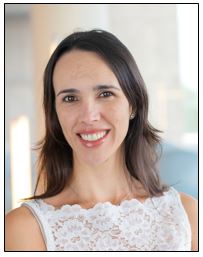
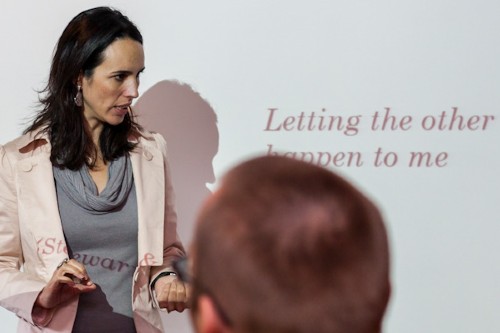
I am privileged to facilitate such a learning community. In the six-week online course:
Social Construction – Premises and Practices
, 13 participants from Brazil, Canada, Japan, USA, and Spain come together to examine their work, life and the current crisis through the lens of social construction. We invite each other to re-define relationships and practices. Together, we exemplify our interconnectedness and co-create a support system and forge new realities. There are innumerable ways to create learning communities that invite us to explore, learn and create collaborative spaces where new meanings and possibilities emerge. The power comes from creating the time and space for interactions and dialogue.
What are you doing to create these opportunities?
|
|
A beautiful collaboration between the Taos Institute and Positivity Strategist has emerged to create this podcast series
– a first for the Taos Institute!
We invite you to listen to authors of the forthcoming
Sage Handbook of Social Constructionist Practice
as
they share stories of innovation in their respective fields across the world: education, healthcare, therapy and more.
To receive notifications of these shows as they go live every two weeks and to listen to past episodes, please visit
Season 5 Podcast
.
|
|
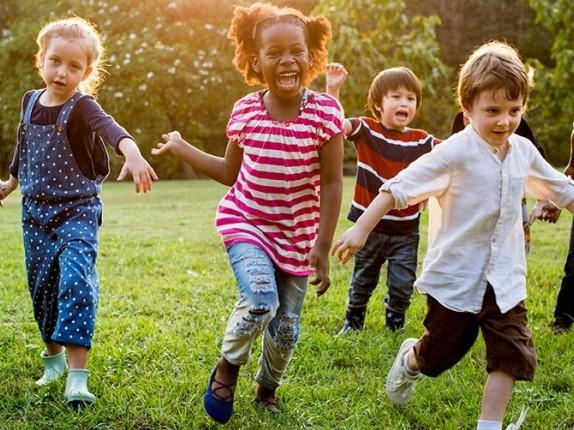
How we deal with conflict, bullying, rule violation etc. has crucial implications on how we live together in schools but also in society. Many traditional structures in educational systems clash with young people’s new ways of living in a global and digital world. Any resulting misbehaviors are usually addressed from the adults’ perspective, leaving out what is important to the children.
|
|
|
FREE WEBINAR
June 25, 2020 - 11:00 am - 12:30 pm, New York time
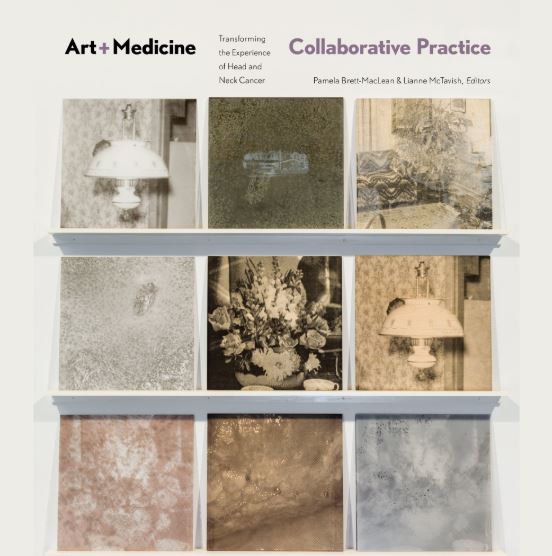
by Pam Brett-MacLean and Lianne McTavish
|
|
About the book
In its fusion of essays and artwork,
Art+Medicine Collaborative Practice helps readers understand the lived realities of individuals with head and neck cancer. Featuring compelling original art from Ingrid Bachmann, Sean Caulfield, Jude Griebel, Jill Ho-You, Heather Huston, and Brad Necyk, this collaborative interdisciplinary exploration draws together the voices of patients, health care practitioners, and researchers with artists' empathic visualizations to offer a more holistic-more human-understanding of cancer treatment and its aftermath.
Art+Medicine Collaborative Practice is an important book for scholars, practitioners, and students in health professions and medical humanities, as well as artists, arts-based researchers, and those interested in the areas of health and visual communication and knowledge translation.
About the Authors
Pamela Brett-MacLean is Associate Professor in Psychiatry and Director of the Arts and Humanities in Health and Medicine program in the Faculty of Medicine and Dentistry at the University of Alberta.
Lianne McTavish is Professor in the Department of Art and Design at the University of Alberta. She specializes in early modern visual culture, critical museum theory, and the history of the body.
|
|
Professional Development Opportunities
|
|
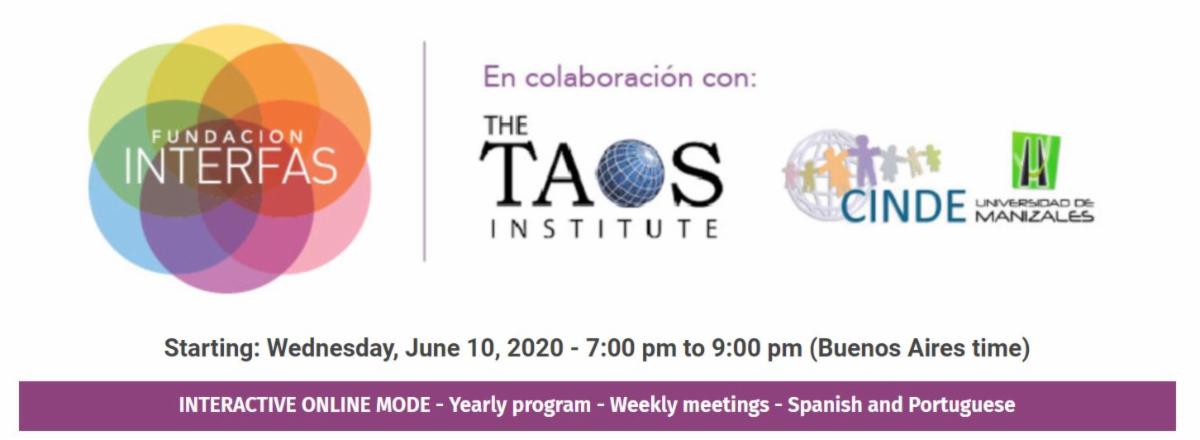
You are invited to participate in an exceptional space of learning, reflection and exercise with an international teaching faculty, to explore innovative practices in various areas of application: therapy, management of conflicts, communities and organizations, education, and coaching, among others. This diploma is a yearly program with weekly meetings available in
Spanish and Portuguese and provides you with the knowledge and tools needed to work with generative dialogues. For more information contact
interfas@fibertel.com.ar.
|
|
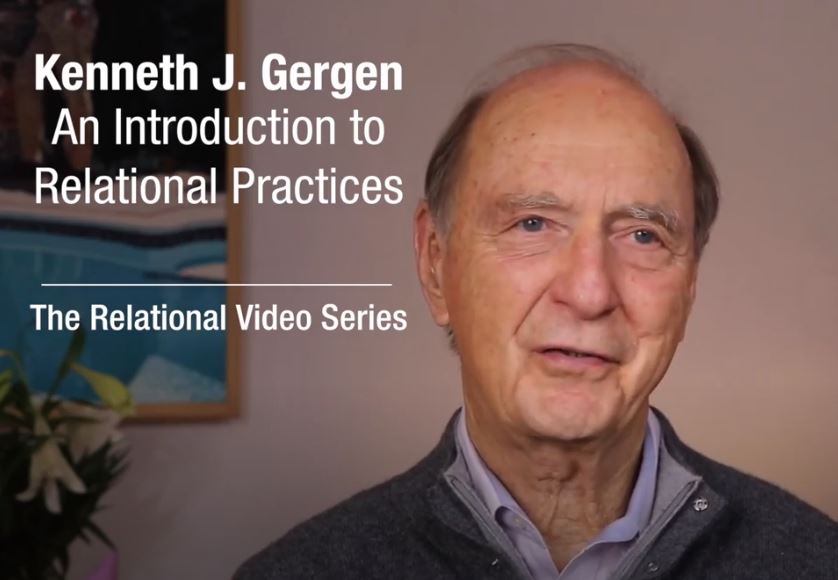
with Ken J. Gergen
This video with Ken J. Gergen is one of 14 interviews with relational theory thought leaders, researchers, and practitioners, now available for teaching and learning across the globe. Recordings are part of the
Relational Video Series, produced by
ThinkPlay Partners and supported in part by a
Taos Institute grant,
|
|
Featured Website
Critical times need new ways of responding. This writing project is such a response to this pandemic era. Our writings can re-create community and help us all make sense of how our worlds are changing. In Stage One of this project, we asked for contributions from systemic people and from across transdisciplinary communities to join different perspectives and create new connections. We needed writings from the heart, from the kitchen table, top of the moor or inside the care home. We all have tales to share about people, our work, our lives, our many different selves. How time has changed. How numbers are overwhelming and confusing. How we are looking after ourselves and others. What do we make of control epistemologies or unsafe uncertainty now?
Systemic flux is a term we are using to draw attention to emergent processes with many kinds of relational consequences. Different shape-changing systemic and relational processes are affecting – and being affected by – human and non-human lives/materials, ideas, narratives and values. These movements can unfold at a snail’s pace or in a lightning flash. As systemic or relationally attuned people, we are well-placed to capture our observations and use writing as a similar form of flux in shaping and reshaping our ideas and noticings for ourselves and others to learn from.
|
|
Featured Book - Free Download
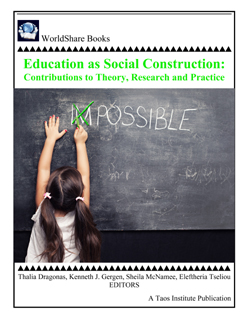
Editors: Thalia Dragonas, Kenneth J. Gergen,
Sheila McNamee & Eleftheria Tseliou
Drawing from the rich array of ideas and practices surrounding social constructionist theory, the present volume showcases work from a variety of different cultural settings in education. This demonstrates how constructionist initiatives in education can be successfully shared across national boundaries. More important, we come to see how ideas and practices can be re-formed as they shift from one cultural context to another. Social constructionist logics do not demand regimentation and restriction; rather, they invite continuous emergence. Thus, we include 20 contributions in this volume from 12 countries across four continents, with each contribution carrying its own special qualities and creativity.
|
|
 |
International Journal of Collaborative-Dialogic Practices
This free journal brings together members of a growing international community of practitioners, scholars, educators, researchers, and consultants interested in postmodern collaborative practices. Issue 8 is now available.
.
|
|
|
|
WorldShare Books
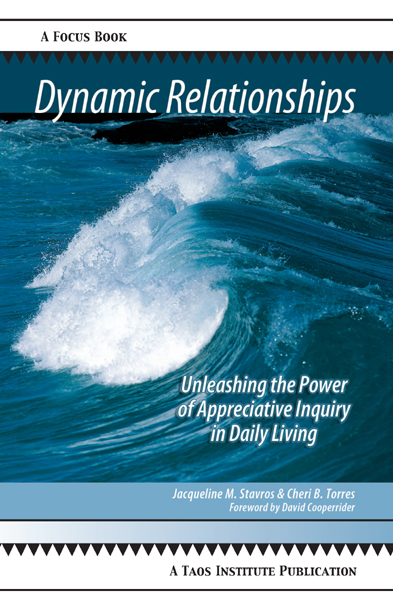
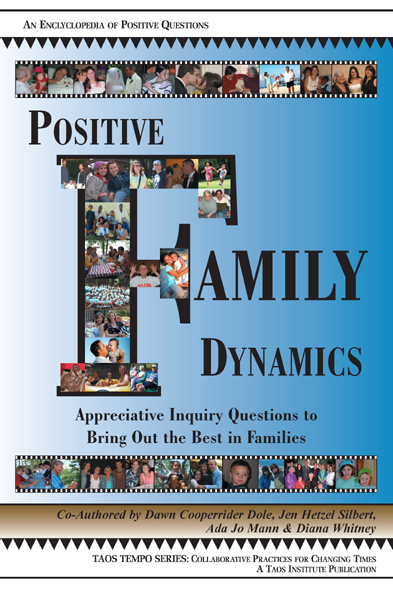
FREE downloadable books in 12 different languages.
With over 30 books in English and many more from around the world, you will enjoy reading about education, spirituality, organizational life, community building, group dynamics, leadership and more.
Order your free book today!
|
|
|
|
|
Positive Aging Newsletter
FREE
newsletter
in 9 languages sent right to your email.
By focusing on the positive aspects of aging, and the availability of resources, skills, and resiliencies, research not only brings useful insights into the realm of practice but creates hope and empowers action among older people. By moving beyond practices of repair and prevention, to emphasize growth-enhancing activities, practitioners also contribute more effectively to the societal reconstruction of aging.
|
|
|
|
Manuscripts for Downloading
Access hundreds of articles and papers on topics such as:
- Appreciative Inquiry
- Collaborative Practices
- Dialogue
- Appreciative Cultures
- Creativity and Improve
- Narrative Practices
- Relational Learning
- Relational Research
- Qualitative Research
- and so much more!
|
|
|
|
|
Donate to the Taos Institute
Given the current global context into which we are moving, the work in which we are engaged is more important than ever. We invite you support the work of institute.
Read more
|
|
|
|
John Shotter Memorial Fund
John Shotter's death on December 8, 2016, was a profound loss for the scholarly world, for the Taos Institute, and for many of us personally.
Read more
|
|
|
|
|
Jane Magruder Watkins Memorial Fund
We remember Jane as an avid educator. This fund will support students who apply for a need-based scholarship to attend the various Taos programs.
Read more
|
|
|
|
Peggy Penn WorldShare Fund
Supports the publication of new WorldShare Books on topics related to the work and interests of Peggy Penn, Ph.D.
Read more
|
|
|
|
|
|
|
|
|