IDEAS, NEWS AND RESOURCES
|
March 2020
The Taos Institute's mission is to bring together scholars and practitioners concerned with the social processes essential for the construction of reason, knowledge, and human value, and their application in relational, collaborative and appreciative practices around the world.
|
|
The Many Ways to Get Involved!
|
|
Brief Encounter with The Taos Institute
|
|
"Using social constructionist thinking, we are reminded that practices can be manifested in many ways, some societally preferred and others less so."
|
"...
don’t we all have learning channels that are continuously operative throughout our lives, oftentimes going unnoticed because they are not formalized, not named? This may be where curiosity lives and animates our impulses to stretch ourselves.
"
|
|
"I Got the Job! Now..."
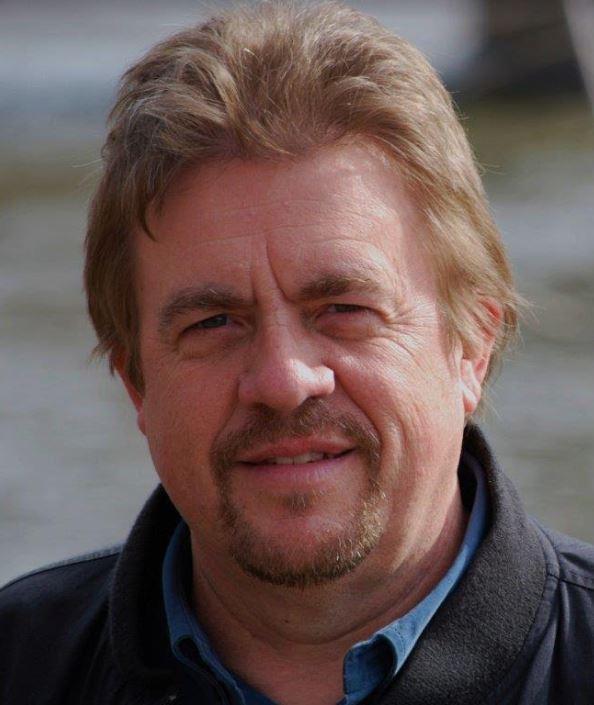
By Dan Wulff, Taos Institute Board member
Years ago, I earned a bachelor’s degree in sociology which helped me land an entry level job in corrections. Once in that job, I was quickly aware that I was lost. My degree was my qualification for that job but I felt quite inept in working with juveniles in the correctional institution. I knew that my degree was not specifically designed to give me everything I needed to do that kind of work, but I was surprised at how unprepared I felt. To deal with this I set out to learn from my work colleagues, organized my self-directed reading, went to workshops, and did a lot of “learning by doing” on the job—and that was what I needed. As I reflected on my qualifying degree, I came to see it as basic and foundational, but only the beginning of my learning journey. The degree was my “bus ticket” to go somewhere. The “ride” to somewhere would come after boarding the bus.
This experience was replicated when I got my master’s degree, and then with my doctorate. My lingering question was: How could I convert what I had learned in school into a practical performance in a job? Extrapolating academic knowledge into a worthy real-world performance was not a given, not obvious. Somehow I was just expected to know how to navigate that transition.
Since becoming a university professor in a practice arena (social work and family therapy), I have heard versions of my academic experience from many graduates. They did well in their courses and achieved their requisite degree, but struggled mightily in their jobs. Was their academic program deficient? Did they take the wrong courses in their program? Was their job ill-suited for their academic degree? They knew they needed to do something—but what?
Using social constructionist thinking, we are reminded that practices can be manifested in many ways, some societally preferred and others less so. Education/learning can be pursued in many ways, one of which is formal schooling. Perhaps we have made achieving a degree/certificate into a sort of proxy for knowledge or competence—the pièce de résistance. But if just for a moment I set aside some of the obvious social advantages that a degree can furnish (e.g., prestige, more voice, money, career advancement, job security), was my “schooling” where I learned the most? To be honest, I do not have many specific memories of my courses, my assignments, the readings I did, my grades. My best learning moments happened elsewhere—a few conversations here and there with significant people, relationships I formed, mistakes and failures, and unexpected opportunities and deviations.
For those of us in the field of education, how much have we been mesmerized by the formal structures of schooling, caught up in following the models we have participated in throughout our own schooling, or come to see the products of learning (degrees) as learning itself? As I zoom into retirement from the university, I am being drawn to ideas about what might be called “post-university learning,” that is, the significant learning that follows the formal degree conferral or occurs outside of it. Come to think of it, don’t we all have learning channels that are continuously operative throughout our lives, oftentimes going unnoticed because they are not formalized, not named? This may be where curiosity lives and animates our impulses to stretch ourselves. Now outside the pressures of performing to “climb the academic ladder,” I can focus on the ideas that I am passionate about. My learning curve is ready to jump. My journey on the bus of learning continues.
|
|
Professional Development Opportunities
|
|
Upcoming Events
With much of the world working "virtually" from home these days, this is a great time to take advantage of this online learning opportunity...
April 21 - June 8, 2020
A 6-week online course with Celiane Camargo-Borges
See what participants are saying about this online course:
"I would like to thank you all for the learning journey. I learned a great deal and it feels more as a beginning then an ending. A begin that is longing for more to explore and to process."
"I would like to say how unexpectedly powerful this course has been for me. In fact I took the course without knowing exactly what it was about, trusting my intuition as I bought Ken’s book 'The saturated self'."
|
|
April 21 - June 8, 2020
A 6-Week Online Course
with Celiane Camargo-Borges, Ph.D.
This 6-week online course introduces common premises and orienting ideas central to dialogues on social construction. The ways in which constructionist ideas differ from traditional, realist understandings of the world are explored. The course is facilitated by Taos Institute Board Member, Celiane Camargo Borges, Ph.D.
This course features videos and writings of Ken Gergen, Mary Gergen, Sheila McNamee, Harlene Anderson, Barnett Pearce, John Shotter, Saliha Bava and more.
The course consists of: Weekly live calls, assignments, readings, videos, activities, learning partner conversations, online commenting, and writing. There will be "live" conference calls on Mondays from 11:00 AM - 12:30 PM New York time/Eastern US tim
e. Orientation to the course is April 21. Everyone is welcome! Some people even take this course several times and get something new from each experience.
|
You are invited to participate in an exceptional space of learning, reflection and exercise. – International teaching faculty. – Innovative practices in various areas of application: therapy, management of conflicts, communities and organizations, education, coaching, among others. This diploma is available in
Spanish and Portuguese
and provides you with the knowledge and tools needed to work with generative dialogues.
|
Do you want to expand your professional potential, explore a vision, follow your curiosity, bring about an innovation for a more promising future? Would you like a mentor, coach and conversation partners who will support, inspire, and challenge you to reach your goals? Would you like to work from the comfort of your own office, home or work environment and be part of a global community of learners?
At the Taos Institute, we support and mentor creative practitioners to form the future through relationship, collaboration, and ethical action. The International Diploma in Social Construction and Professional Practices exposes you to expertise from multiple disciplines, all focused on collaborative and relational approaches to generating meaning, values, and practices of significance. Your advisor, mentor or coach works with you to design a learning plan that addresses your goals, with feedback and learning tailored to your situation and project. You will receive support and inspiration from a broad network of conversation partners.
- There are no grades.
- You create your own deadlines.
- You design your own learning goals.
- You work virtually with scholars/practitioners around the world.
- You join a cohort of learners that support each other.
- You participate in a learning relationship with an advisor, mentor, coach.
|
|
We want to acknowledge the global health situation and uncertainties caused by COVID-19. With disruptions and travel bans in place around the world, you may not be thinking about traveling in the near future. However, we hope that by November, our lives will have returned to a normal and safe state, and that building a sense of community by getting together will be needed more than ever. With this in mind, we strongly encourage you to "Save the Date" for the next Taos Institute conference.
We will continue to plan the conference so be looking for the exciting information and updates on the event you won't want to miss.
|
|
SAVE the DATE! November 11-15, 2020
|
From the local to the global, the challenges of relating are everywhere with us - increasingly complex and potentially volatile. Social constructionist ideas and practices have offered new insights and inspired wide ranging practices addressing these challenges.
Come share, explore, and co-create with practitioners, scholars and students from around the world as we generate conversations and actions for community collaborations through local and global resources.
Look for more information soon!
|
|
|
|
Free Webinar
March 18, 2020 - 10:00 AM New York time
The Art of Dialogue in Coaching: Towards Transformative Exchange by Reinhard Stelter
In
The Art of Dialogue in Coaching,
Reinhard Stelter invites readers to engage in transformative and fruitful dialogues in everyday working life, and provides the theory and tools for them to be able to do so. This book is an essential guide for coaches in practice and in training, coaching psychologists and professionals with a coaching role, including mentors, consultants and leaders. In particular, it will appeal to those looking to conduct dialogue as an art form, enhancing their work as a co-creative and collaborative guide. Pre-registration required.
|
|
Our Newest Book
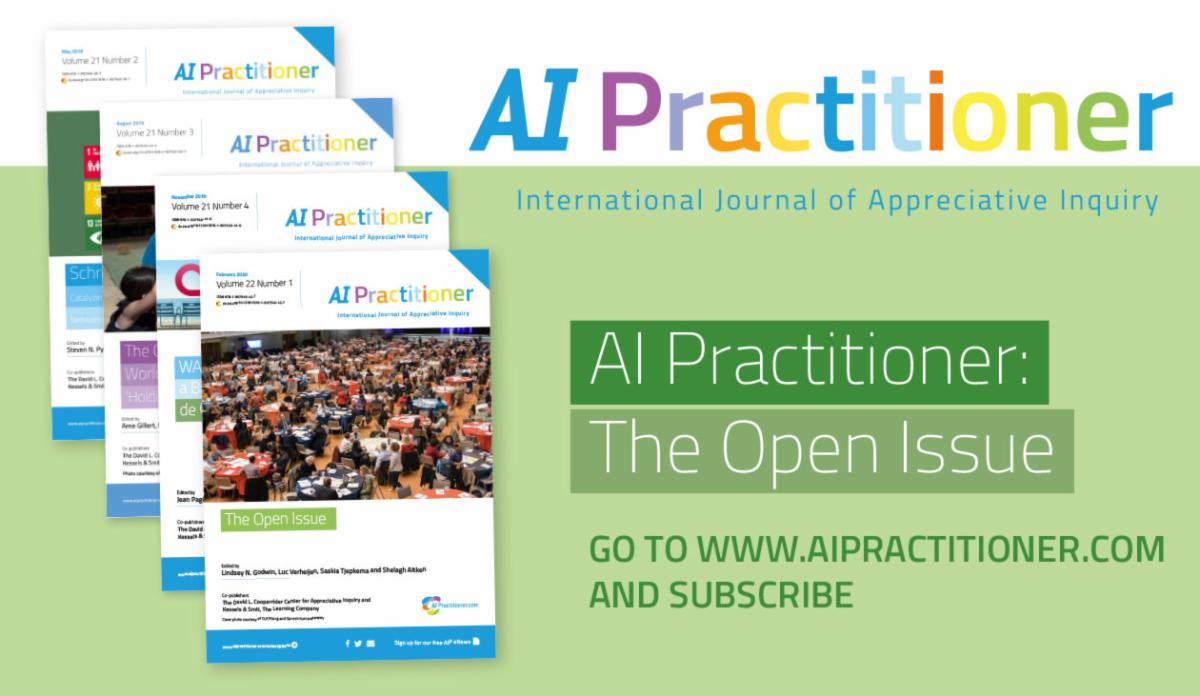
By Luc Verheijen, Saskia Tjepkema, Joeri Kabalt
Foreword by Ronald Fry
Organization and team development have increasingly become everyday components of a leader’s role. This book is written for informal and formal leaders who aspire to realize meaningful changes in their own context. These changes will lead to a better performance and at the same time contribute to a vitalizing and energizing work environment. Appreciative Inquiry enables you to work with committed employees and other stakeholders on larger and smaller issues in your organization and bring them forward. Every day, one conversation at a time.
This book specifically brings the theory of Appreciative Inquiry to the daily practice of leaders and managers. It contains many practical examples and suggestions that provide inspiration for your own leadership practice. You can read the book as an invitation to start using Appreciative Inquiry right away. You don’t have to read front-to-back. The structure in short chapters, dedicated to specific topics or tools, ensures that you can read criss-cross and find a new and relevant angle each time.
|
|
Featured Book - Free Download
This book is a compilation of contributions from participants and presenters who attended the Taos Institute’s 25th Anniversary Conference in Cancún, Mexico, November 7-10, 2018. With pre-conference and conference sessions taking place over four days, the conference was full of dialogue, conversation, sharing, exploring, relationship building, and celebration. As the Taos Institute celebrated 25 years since its founding, we remembered its beginnings, acknowledged the founders, met new participants, and welcomed all to share in the learning.
We invite you to enjoy the ongoing flourishing and abundance of practices described in the pages of this book. We are both delighted and humbled to bear witness to the emergent insights, expanding activity, and diverse relational collaborations that point to an unending stream of creative possibilities for social construction that we can imagine and work toward, together.
|
|
Editor:
Diego Tapia Figueroa
IRYSE, Relational and Socioconstructionist Consortium of Ecuador, has produced this video for the promotion and socialization of social constructionist ideas among professionals and the general public in Ecuador to generate processes of dialogue and reflection and new possibilities in local contexts. It is the selection, editing and subtitling of the interview (and the course) presented by Harlene Anderson during her visit to Ecuador in 2018.
|
|
 |
International Journal of Collaborative-Dialogic Practices
This free journal brings together members of a growing international community of practitioners, scholars, educators, researchers, and consultants interested in postmodern collaborative practices. Issue 8 is now available.
.
|
|
|
|
WorldShare Books
FREE downloadable books in 12 different languages.
With over 30 books in English and many more from around the world, you will enjoy reading about education, spirituality, organizational life, community building, group dynamics, leadership and more.
Order your free book today!
|
|
|
|
|
Positive Aging Newsletter
FREE
newsletter
in 9 languages sent right to your email.
By focusing on the positive aspects of aging, and the availability of resources, skills, and resiliencies, research not only brings useful insights into the realm of practice but creates hope and empowers action among older people. By moving beyond practices of repair and prevention, to emphasize growth-enhancing activities, practitioners also contribute more effectively to the societal reconstruction of aging.
|
|
|
|
Manuscripts for Downloading
Access hundreds of articles and papers on topics such as:
- Appreciative Inquiry
- Collaborative Practices
- Dialogue
- Appreciative Cultures
- Creativity and Improve
- Narrative Practices
- Relational Learning
- Relational Research
- Qualitative Research
- and so much more!
|
|
|
|
|
Donate to the Taos Institute
Given the current global context into which we are moving, the work in which we are engaged is more important than ever. We invite you support the work of institute.
Read more
|
|
|
|
John Shotter Memorial Fund
John Shotter's death on December 8, 2016, was a profound loss for the scholarly world, for the Taos Institute, and for many of us personally.
Read more
|
|
|
|
|
Jane Magruder Watkins Memorial Fund
We remember Jane as an avid educator. This fund will support students who apply for a need-based scholarship to attend the various Taos programs.
Read more
|
|
|
|
Peggy Penn WorldShare Fund
Supports the publication of new WorldShare Books on topics related to the work and interests of Peggy Penn, Ph.D.
Read more
|
|
|
|
|
|
|
|
|