State Representative
Nancy Nathanson
|
|
|
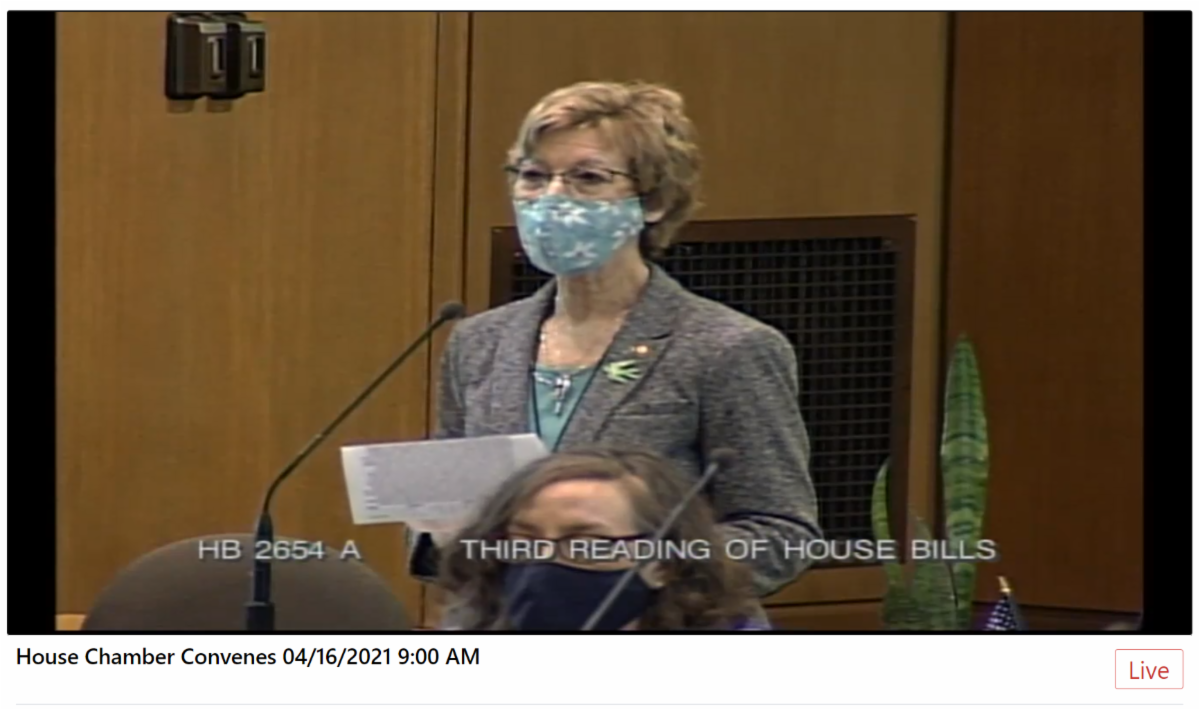
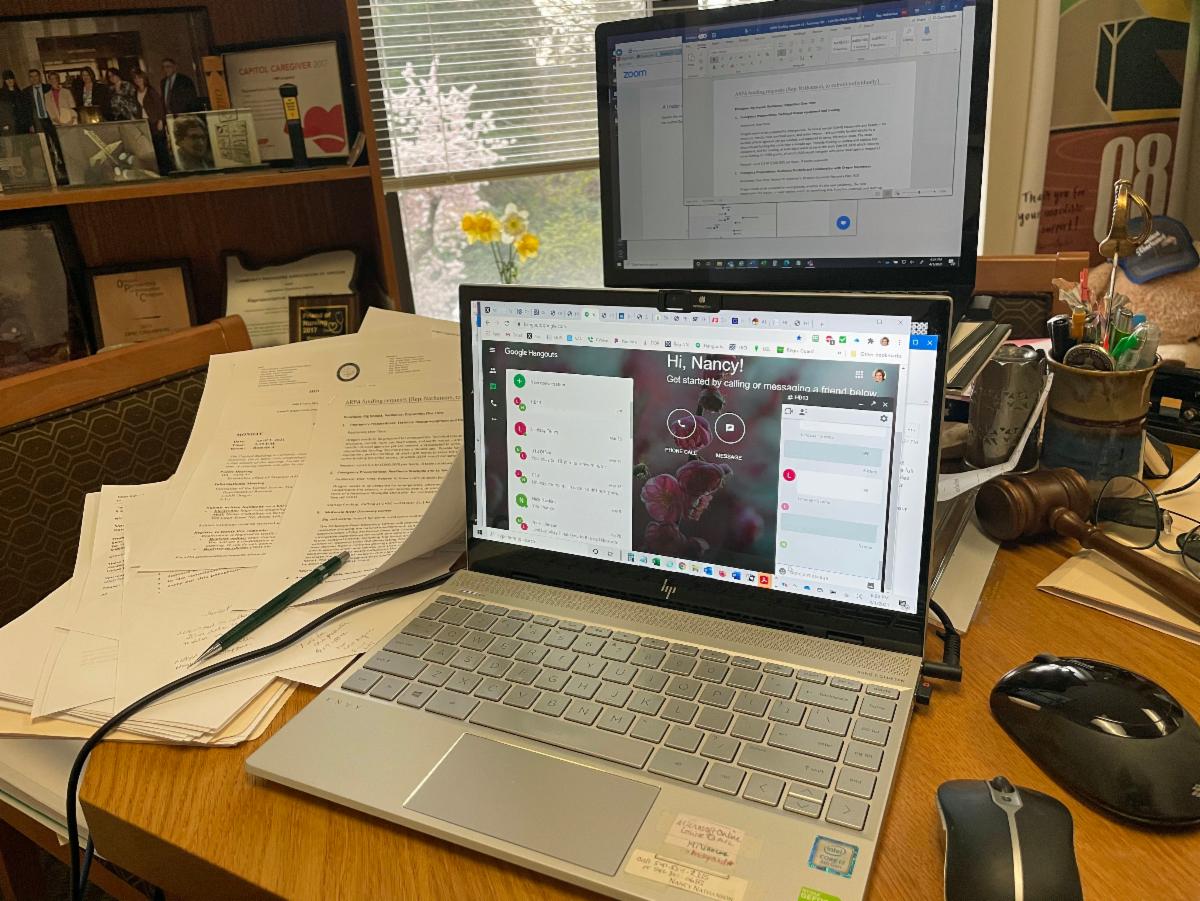
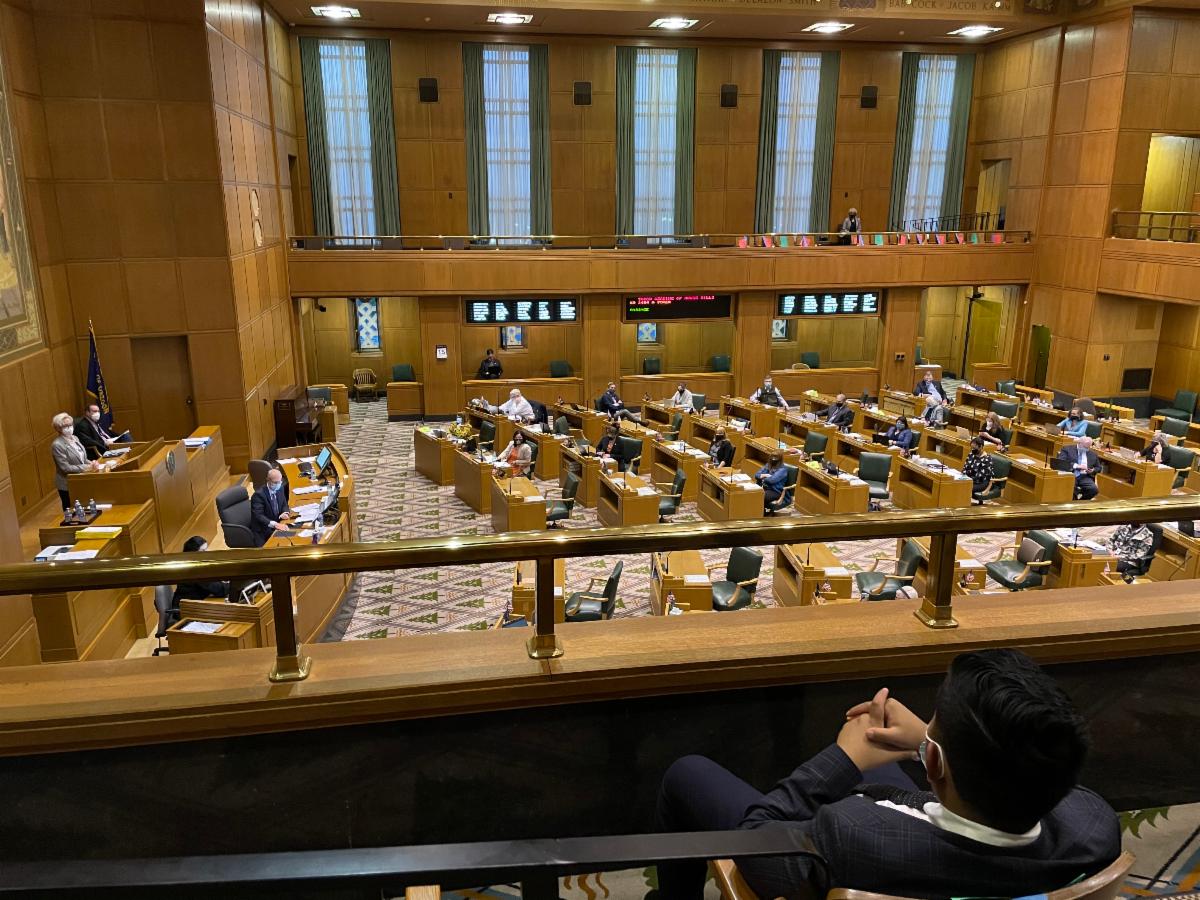
This enews covers a couple of months of work while the legislature has been in session, working sometimes in Salem and sometimes from home. The constitution requires voting in person, so the House and Senate have met on reduced schedules for "floor sessions" on some (but not all) weekdays. We work from our individual Capitol offices or from home attending virtual meetings and committee hearings. I often bring something from my garden at home to have in my office.
Everything is taking longer to accomplish. Legislators, advocates, lobbyists who've worked through previous legislative sessions recognize that some of the work is not just different, it's harder to "get it right." Still, the work gets done, and we're passing legislation to help people impacted by the pandemic economy and wildfires, address racial justice, and some of the more ordinary legislative work to keep up with a changing world and constituent needs.
Since I don't send daily or weekly updates, I won't repeat some of the high profile topics that are covered by major news media, and instead provide some background and detail not usually in those sources. Of special interest: more ARPA money coming to Oregon, and to our community. ARPA, or the American Rescue Plan Act, is the $1.9 trillion economic stimulus. In Oregon, each state legislator has a specific allotment to be used on local projects. ARPA funding will help us invest in programs and projects that are urgently needed to help our communities recover from the economic impact of the COVID pandemic. I've been working with other legislators in our area to develop a list of projects that we will fund together, and selected a few more to fund with my individual allocation. Our projects will address hunger, housing, homelessness, and several other health and human service needs. Once my projects are approved by the fiscal office I'll send an update to let you know about them!
|
|
My bills
I put a lot of energy this session into emergency response and preparing for disasters. Other legislative priorities of mine are privacy, child welfare, and getting rid of onerous regulation on small businesses. Here's the status of a few:
Protecting your privacy: the "zoom" bill
Passed by the House! Now in Senate Committee. I wrote about this bill in the Jan.-Feb. enews. When you have a face to face conversation with someone, your privacy is protected: that conversation can’t be recorded without your permission. But did you know that all those business and personal videoconference conversations you have are not protected? It’s time to modernize our laws, written decades ago. HB 2459 will clarify that the recording of private conversations that take place via video transmission will be treated the same way as recordings of private face-to-face conversations are under current law. |
|
Planning for future emergencies |
Supplies for future emergencies
Remember last year when the pandemic struck Oregon and there wasn’t enough PPE (personal protective equipment) for front line workers? Nurses, doctors, and other direct care providers didn’t even have masks and other necessary equipment. This bill is about building a stockpile of supplies to respond to a widespread emergency, whether it’s another health emergency, or massive fires (again, masks were needed to protect vulnerable people from hazardous air quality), or a 100-year weather event, or the imminent Cascadia subduction zone earthquake. It will also work to decrease Oregon’s dependence on outside sources for PPE and testing materials, some of which cannot reliably supply what we need, or supply it at a reasonable cost. It will create an environment for Oregon business to expand its capacity to produce and acquire the materials and supplies, through guaranteed purchase and a narrow time and circumstance limited immunity.
The bill is now waiting in JWM, Joint Committee on Ways and Means, since it includes a request for funds. You can also read about it in my Jan.-Feb. enews.
Teams for Technical Rescue: emergency response
This bill will recapitalize the SPIRE (State Preparedness and Incident Response Equipment) grant program with $5 million, and identify USAR (Urban Search and Rescue) equipment as a top priority. USAR includes rope, trench, confined space, and water rescue. This bill, too, includes a request for funding, and is waiting in JWM. Read about it in my Jan.-Feb. enews. |
|
The business of government |
Reducing red tape - another inch gone
Passed by the House! Now in Senate Committee on Labor and Business. This problem was brought to my attention by a small business owner of a craft distillery who felt dragged down by the busy-work task of weekly reporting to OLCC (Oregon Liquor Control Commission). When I dug into it I found there wasn't even any statute or administrative rule covering it. HB 3344 will reduce the frequency of reporting and payment for distilleries from weekly to monthly. It may seem like a small thing, but for small business owners every hour counts. In recent discussions with OLCC, it seems to me that this will not be a hardship on OLCC, and in fact may be a welcome change.
Contracting with business
Another bill passed by the House and now in Senate Committee on Labor and Business. When a local small business owner contacted me about being passed over when the state was issuing contracts, I found more than I anticipated. We're still working on ways to address that one business's situation, and meanwhile I'm working on a broader problem. The state cannot simply choose Oregon firms over out-of-state firms, because that violates the federal Interstate Commerce Clause. There are some things, however, that we can do.
The target of this bill is the approximately 500 contracts a year that are for products and services in a wide range of areas. Here are some examples: Bulk foods, like ketchup, beans, and cheese; various types of equipment; a pickup track canopy; uniforms; security cameras; software solutions such as crime scene mapping and skill testing; an elk survey; an energy audit; communications consulting, and a field burning coordinator.
Over the years, Oregon has developed rules and laws governing purchasing and contracting. When agency staff look at options for purchasing, agency rules and state law provide instructions, including when to give preference to vendors – or products.
State procurement policy has some mandatory and discretionary preferences defined by statute or rule. Discretionary preferences include Emerging Small Business or Service-Disabled Veteran Owned Business and Safer products through green chemistry. It appears that the majority of the discretionary preferences are seldom used. It’s time to evaluate and be sure we’re getting the results we expect.
HB 2374 directs DAS to collect data on how state contracting agencies use the laws and administrative rules prescribing preferences and to provide training to state agencies on how to better utilize procurement policy preferences.
|
|
Justice, reform, and police accountability bills:
an overview
|
|
Nine reform bills have passed the House with bipartisan support, and are now in the Senate awaiting committee hearings. Here's what the bills do:
Ban doxing. HB 3047 protects people’s safety, privacy, and dignity. Doxing is when someone deliberately releases a person’s private information online, such as work address or personal email, with the intent to incite harassment. Rep. Janelle Bynum said: “Some of that doxing came as a product of mugshots, other forms of it came from people who were trying to silence other voices. Doxing became a tool of oppression that forced people into shells of their former selves and even forced families to take monumental steps to protect themselves.”
During the floor debate, speaking in support of the bill, I said, “What has happened to civil discourse? What has happened to respectful debate? What has happened to appropriate methods for expressing disagreement? The stories we've heard from our colleagues today are just a small sample. While honoring freedom of expression, we still must not tolerate these extreme and dangerous actions that discourage participation in democracy.”
Prevent unjustifiable arrests. HB 3164 places limits on when someone can be charged with the crime of interfering with a Peace Officer. These limits require that to be charged with this crime, the suspect must be knowingly interfering with the lawful duties of an officer with regards to another person or a criminal investigation. “Knowingly” means a person is acting with “an awareness” that their behavior is of the kind that would prevent an officer from performing their duties. This does not include anyone simply failing to comply with an officer’s direction. The bill is especially important for BIPOC communities and people experiencing homelessness who are disproportionately impacted, and will also protect reporters who are simply trying to do their job.
|
|
Stop the release of mugshots. HB 3273 bans the release of mugshots in most circumstances, requires agencies to destroy mugshots upon request within a certain time period, and prohibits the charging of fees for destroying these images. Rep. Janelle Bynum said, “The day someone gets arrested can quite frankly be one of the worst days of their lives. Those mugshots are sometimes of people in a mental health crisis. Those photos that are published can ruin a person’s life who has not yet been found guilty of any crime. They can linger on and impact people’s lives for years to come.” The Pew publication Stateline provides an overview in the article Online, Mugshots are Forever. Some states want to change that.
Train police to investigate, identify and report crimes motivated by prejudice based on gender. HB 2986 requires the Board on Public Safety Standards and Training to ensure that police officers and certified reserve officers are trained to investigate, identify and report crimes motivated by prejudice based on perceived gender of the victim.
Train officers to save lives. HB 2513 requires police officers to be trained in airway and circulatory anatomy and physiology and certified in cardiopulmonary resuscitation.
Manage protests. HB 3059 provides clarity for when an officer can arrest an individual engaged in an unlawful assembly. It also allows flexibility for officers approaching a group of individuals to assess whether the group needs to be dispersed or arrested “for any unlawful activity constituting an offense.”
Include identification on police uniforms. HB 3355 requires a law enforcement officer's uniform and gear to have visible identification during crowd management situations, such as protests (required in a city with a population over 150,000).
Police misconduct reporting. HB 2929 establishes the reporting requirements for the “duty to report misconduct” and “duty to intervene” standard for police officers codified by the passage of HB 4205, passed during the First Special Session of 2020. The passage of HB 4205 in 2020 meant it is required that police officers intervene to prevent or stop the misconduct of other officers. This bill builds off of this accountability standard to establish the requirements for reporting this behavior.
Racism has no place in public safety. An officer’s membership or participation in hate groups, racial supremacist organizations, militant groups, or display of hate symbols erodes public trust in law enforcement. HB 2936 would require the Department of Public Safety Standards and Training (DPSST) to create a statewide uniform background check for law enforcement units to implement during hiring processes. Law enforcement officers hold a unique position in our community and must demonstrate principles of equity, transparency, honesty and trust with all members of society. Also requires law enforcement agencies to develop policies setting standards for speech and conduct by officers. Finally, this measure sets parameters on sharing non-law enforcement employment information as part of the background check process.
|
|
Environment and natural resources |
|
Pollinators, Healthy homes, and Clean energy
A few bills have passed the House and moved to the Senate or “down to Ways and Means” … meaning moved into the budget committee process to pass muster for funding before advancing to the other chamber.
One bill, HB 2531, requires Oregon State University and several state agencies to meet annually to discuss pollinator health outreach and education. Many agricultural crops worldwide depend on western honey bees for pollination; bee colony collapse disorder threatens food supply. Crops pollinated by honey bees include melon, coffee, squash, blueberry, apple, cherry, almond, and more. (I think we should go a lot further: follow the science, and ban the use of neonicotinoids, not just study and talk about it. Neonicotinoids is a class of pesticides that is a leading cause of bee hive loss. Retail consumer sale too often leads to over-application and unnecessary use.) US Environmental Protection Agency info on pollinator health. (Photo: bee on oregano in my garden)
Another bill, HB 2842, provides grants to make clean energy in homes more affordable. The Healthy Homes Repair Fund would improve health, reduce energy bills, and create jobs. Activities could include radon and lead abatement, smoke filtration and air purification systems, and the removal of asthma triggers. Environment Oregon explains the bill "helps Oregonians use less energy, reduce their energy bills, and be safer and healthier in their own homes."
Several bills are considered “dead” since they remain in a policy committee past the deadline for initial action: prohibiting polystyrene (“styrofoam”) containers for prepared food; prohibiting single use plastic food ware; prohibiting products that are misleading about being recyclable.
Nevertheless, some major legislation is still being developed including the 100% Clean bill, HB 2021. Major components include:
- a timeline for clean energy targets that will get the state to a 100% reduction in the baseline green house gas emissions, determined by the average emissions in 2010-2012, by 2040.
- the Community Renewables Investment Fund to provide grants for public entities and indigenous tribes to plan and build community renewable energy projects
- Community Benefits Advisory Panels, a study of small scale renewable energy projects, responsible labor provisions, and a prohibition on the siting of new fossil gas plants
|
|
This photo was taken on a "small business crawl" in downtown Eugene before the pandemic.
Oregon businesses have faced unprecedented levels of layoffs this past year due to the impact of necessary public health responses to the pandemic. Oregon was in the minority of states not having to borrow money for their Unemployment Insurance (UI) Trust Fund during the Great Recession. The UI Trust Fund is funded by a multi-tier system of rate charges to employers based on their business type, employment history, and state UI tax schedule. Normally, a jump in unemployment claims would trigger increases in UI tax rates, to keep the fund balanced. This year, however, that otherwise standard response – a rate increase – comes at a time when small businesses are struggling to get back on their feet. HB 3389 will remedy that by adjusting how UI rates are calculated and excluding 2020 and 2021 from businesses’ “experience ratings.” The bill provides nearly $100 million in relief this year and has the long-term goal of reducing taxes collected while maintaining the solvency of the unemployment insurance trust. The bill is now in the Senate.
|
|
Small business support
Restaurant Revitalization Fund
Authorized in the federal American Rescue Plan, this program through the federal Small Business Administration will provide restaurants with funding equal to their pandemic-related revenue loss up to $10 million per business and no more than $5 million per physical location. Recipients are not required to repay the funding as long as funds are used for eligible purposes.
The first three weeks of the program are set aside to process priority groups such as woman and veteran owned businesses. The program opened for priority applications on May 3. Starting May 25 until all the money is spent, all restaurant businesses will be eligible to apply.
Full details, eligibility, and tips for gathering needed documentation are available on the SBA Restaurant Revitalization Fund website. You can prepare your application by reviewing the sample application, program guide and cross-program eligibility chart.
Grants for Shuttered Venues
Live venue operators and promoters, theatrical producers, museums, movie theaters, and more are the target for a federal grant program. Full program information and a link to the application is available on the Small Business Administration website. |
|
Eligibility and Resources
Every Oregonian 16 years of age & older is now eligible for the COVID-19 vaccine. Everyone – whether you have health insurance or not – can get a vaccine at no cost. It’s 100% free!
Getting vaccinated is an important tool to help end the pandemic, and it’s your best protection from getting COVID-19. (I signed up and got mine as soon as my age group was called up, and I've answered the weekly CDC "after vaccination health checker" via their quick text message and link to Vsafe.cdc.gov.) Lane County residents can schedule a vaccine appointment directly by visiting the Lane County COVID-19 Vaccine Clinics webpage or at the website vaccinefinder.org.
Preregistration is no longer required, and there is no longer a need to wait for an email invitation from Lane County Public Health to schedule an appointment. You can also schedule an appointment at one of many local pharmacy providers. OHA advises to take the first appointment available to you whether from Lane County, your primary care provider or your pharmacy.
Lane County call center: Monday-Friday, 8 AM-4:45 PM. 541-682-1380
Fully Vaccinated: What does it mean to be "fully vaccinated?"
- 2 weeks after the second dose in a 2-dose series, like the Pfizer or Moderna vaccines, or
- 2 weeks after a single-dose vaccine, like Johnson & Johnson’s Janssen vaccine
|
|
Vaccinated? Share the news, don’t share your private info
Don’t Share Your COVID-19 Vaccination Card on Social Media. Attorney General Ellen Rosenblum is warning Oregonians to avoid posting a photo of their COVID-19 vaccine cards on social media. Your vaccination card has information on it including your full name, date of birth, where you got your vaccine, and the dates you got it. If you post it to Facebook, Instagram, or to some other social media platform, you may be handing valuable information over to someone who could use it for identity theft. For more information on how to avoid becoming a victim of a COVID-19 scam, visit http://www.oregonconsumer.gov/COVID19.
|
|
Resources
- Centers for Disease Control and Prevention (CDC) webpage Things to know about the COVID-19 Pandemic
- State of Oregon: Resources by topic
- Oregon Health Authority: COVID-19 updates
- Lane County Public Health: Vaccine information, pre-registration, scheduling
- Lane County Call Center: Monday - Friday 8 AM-4:45 PM, call 541-682-1380
- City of Eugene: Community resources, for physical and mental health, food, housing, businesses, employees, schools and children, as well as information in Spanish.
|
|
More statewide programs: Housing, Health insurance, DMV |
|
EITC: don't leave money on the table! |
|
Earned Income Tax Credit. You could receive up to $6,600 back (if you earned less than $56,844 in 2020). With only a few days before the tax filing deadline on May 17, now is a great time to spread awareness of the EITC to our communities. The EITC is a federal and state tax credit that working Oregonians who earned less than $56,884 last year may have access to. The average amount credited for 2020 was $2,461.
Around 25% of Oregonians who are eligible for the EITC do not claim it because they’re not aware they are eligible for this money, and they do not even file a tax return because they do not owe taxes. Eligible Oregonians must file a tax return to receive the EITC. This tax credit for workers either directly lowers taxes owed or adds to a refund. The good news is that everyone who qualifies for the EITC also qualifies for free tax preparation through AARP, CASH Oregon, and others.
|
|
Landlord compensation fund, round two - through May 17
The next application period of the Landlord Compensation Fund is open now through May 17. The program covers 80% of past-due rent (since April 2020) for tenants with a signed declaration of financial hardship if a landlord agrees to forgive the other 20%. Please note this program is not first-come, first serve, and applications will be open until May 17th. If you are interested in applying in the second round, please visit the Landlord Compensation Fund website for more information.
The Landlord Compensation Fund is not the only rental assistance program currently open. Renters can access assistance through regional community action agencies. Use this link to contact Lane County’s community action agency. Additionally, OHCS will open the new federal Emergency Rental Assistance program next month. |
|
DMV service improvements continue
Many Oregonians will now be able to renew their driver license and ID card online. For a complete list of what can be renewed online, as well as eligibility criteria, visit the DMV website. If you want to change from a regular driver license or ID card to a Real ID-compliant credential, you will need to make an appointment and go to an office. The same is true if you need to add a motorcycle or farm endorsement, add a veteran designation, renew a limited-term credential, or renew in other less common situations.
When you renew online, you will be able to print a receipt to carry with you until the new card arrives in the mail. You can track the status of your card by scrolling down to “Status Check Tools” and clicking “Where’s my new card?” Law enforcement can verify your driving privileges electronically in the event of a traffic stop. Oregon residents with a vehicle registration, permit or driver license that expired between Nov. 1, 2020, and April 30, 2021, have up to three months after their expiration date to renew. There is also no penalty or extra fee for renewing your driver license, permit or ID card up to 12 months after your expiration date.
The federal Real ID deadline has been delayed by the Department of Homeland Security from October 2021 to May 2023. This means you will have a longer period of time to get a Real ID before you need it to board a commercial flight or enter a federal building.
|
|
Night construction closure projects: Beltine and Willamette River Bridge
Beltine/Delta Hwy: Expect lane closures at night on Beltline Highway in both directions throughout May. Crews are working on the new bridge and paving to prepare for the new northbound Delta Highway ramp and traffic signal. By the end of the month, everyone exiting from eastbound Beltline Highway to Delta Highway will take the same exit. The eastbound Beltline Highway to Delta Highway ramp closes at night, 8 PM – 6 AM, May 16 to 20. Single lane closures can also be expected 8 AM – 5 PM, Monday through Friday. For more information, see the ODOT Beltline/Delta project page.
Willamette River Bridge on McKenzie Hwy (OR 126): Work has resumed on the westbound OR 126 Willamette River Bridge in Springfield. Expect single lane closures at night, Sunday to Thursday, 7 p.m. to 7 a.m. At times the entire bridge will close to move materials, but delays should be no longer than 20 minutes. For more information, see the ODOT project page.
Eugene artists and arts programs: Grants
Lane Arts Council will be offering two funding opportunities this year. The first, the Community Arts Program Grant, will provide general support for small and mid-sized Eugene arts organizations and arts programs. The second, the Artist Grant, will support individual artists for 2021-2022. Community Arts Program Grants and Artist Grants are funded by City of Eugene Cultural Services and administered by Lane Arts Council. Guidelines and applications will be posted mid-May, with submissions due in summer. |
|
At the Capitol: working with pandemic restrictions |
|
|
|
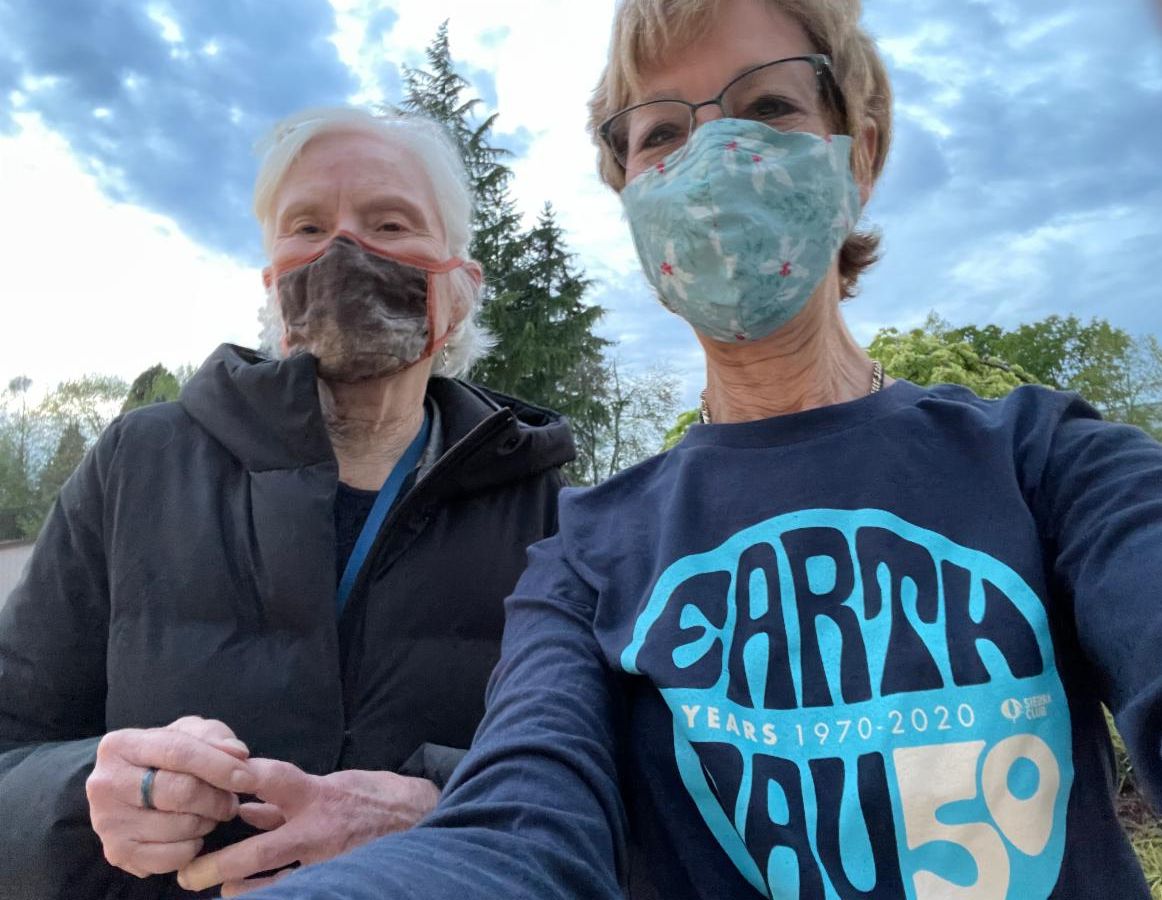
Earth Day evening with a colleague (I was at the first one 50 years ago) |
|
Two computers, one for camera raised to eye level for virtual meetings, the other at table height for keyboard use, using documents and real time "chat" with staff. |
|
Not everyone can be "on the floor" due to capacity restrictions. Some sit in the gallery, or stay in their office until called for a vote. |
|
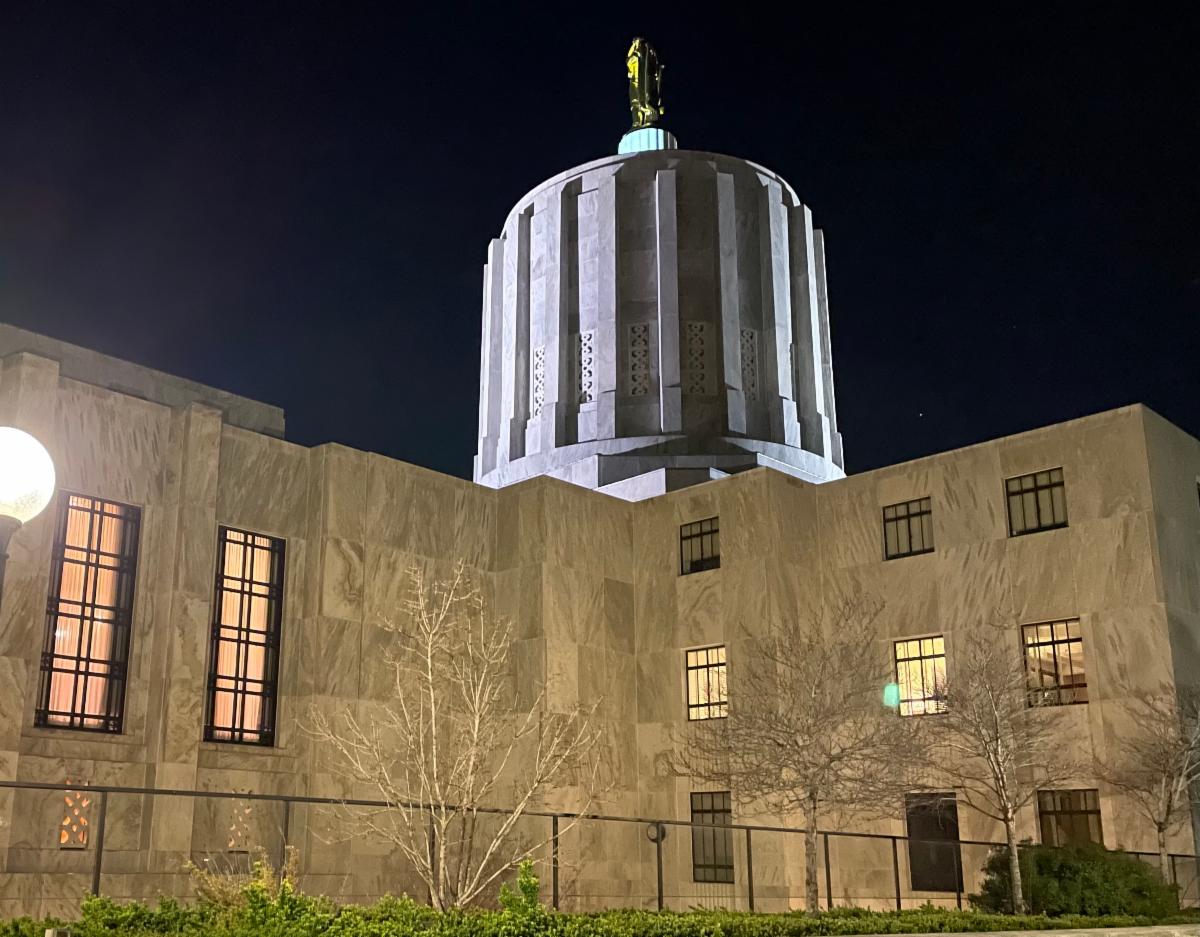
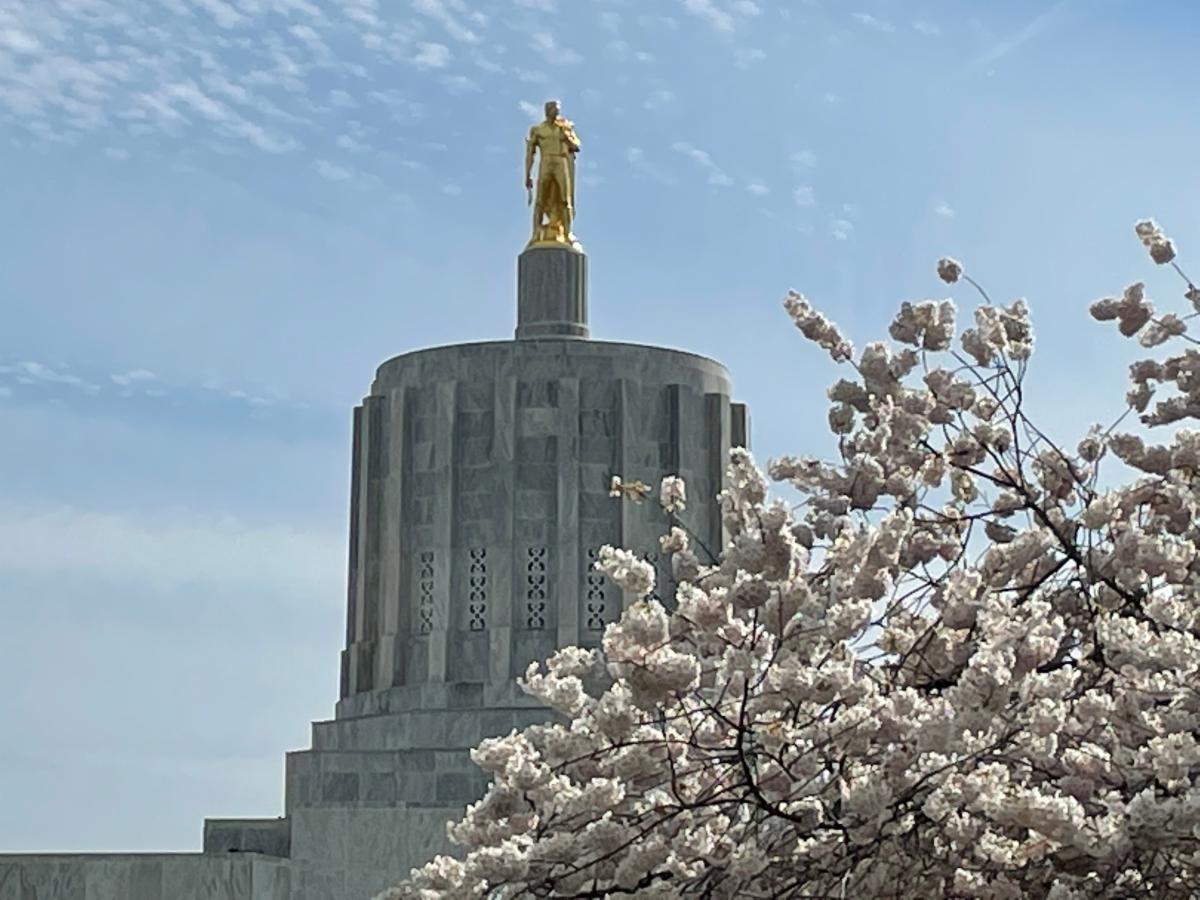
Springtime is beautiful around the Capitol: cherry blossoms, then rhododendrons. |
|
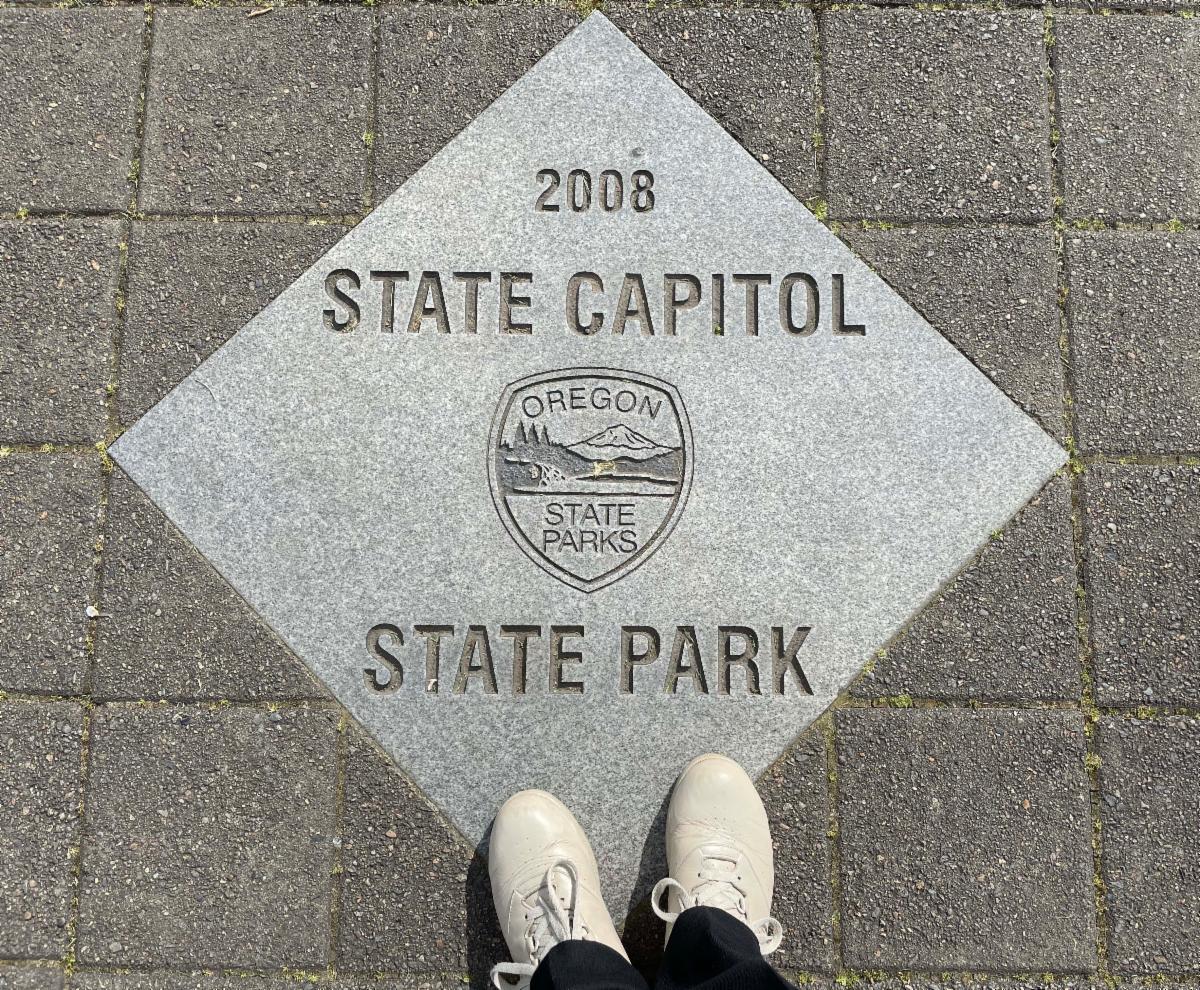
The capitol mall, downtown, and Mill Creek are within easy walking distance. |
|
|
|
|
|
|