1630 Thursday - June 23
We have all noticed it. The ocean is changing as we head further east, the sea is richer. The bird life has been increasing. Today we have seen many great shearwaters gliding with their wingtips a fraction of an inch above the waves in effortless flight. They swoop in beside us with their white faces capped with black down to their eyes; at the last moment they stall and swing their red-brown feet down and forward like landing gear to skid briefly on the surface before settling down. When the fog, which has been consistent yet patchy, retreats, more shearwaters spot us and come in, in some cases a couple dozen at a time. Today I have also seen a few sooty shearwaters, much darker and a bit smaller.
All this birdlife is a result of nutrient rich seas and long days bringing a bloom of phytoplankton. In turn, zooplankton feeds on the phytoplankton. Summer's bloom brings in small fish, and bigger fish feeding on them. From the bottom of the food chain to the top, the waters will get richer and livelier with marine life as we continue north.
I spotted a humpback whale far off the starboard quarter as I came on deck mid-morning. He was breaching, leaping clear of the sea, four times in succession, thundering back with a huge splash as his 30 or 40 tons hit the surface. Carl and I spotted a couple more ocean sunfish lazing across the water.
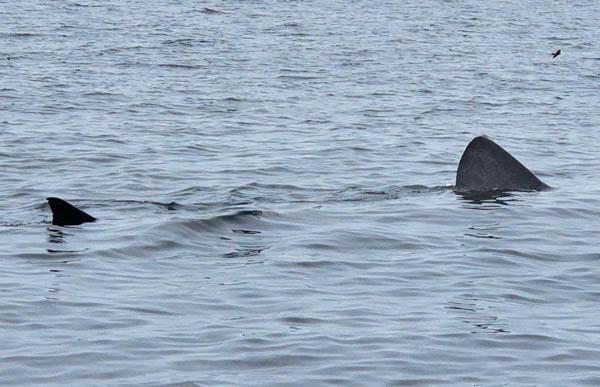
One visitor of note was a basking shark that appeared to be feeding in the same area where birds were gathered. The shark was fairly large; I estimated that the distance between his dorsal fin and the tip of his tail was probably close to ten feet. I am guessing the shark was 14 to 16 feet in length or more. Just another sign of increasing life in these seas. These more northern waters have been favored by some fishermen and whalers for centuries past.
Yesterday morning we were having a glorious sail out from off of Halifax. However; the breeze died away to flukey, shifty, light winds. We spent the next 24 hours motoring until a southeasterly breeze began to fill in. We are averaging between 4 and 5.5 knots headed right for the southeastern tip of Newfoundland, now 301 miles away across the Cabot Strait. We are hoping the breeze will hold, and build a bit through the night.
Bill