Gannets at Bird Rock
1930 Thursday, July 7

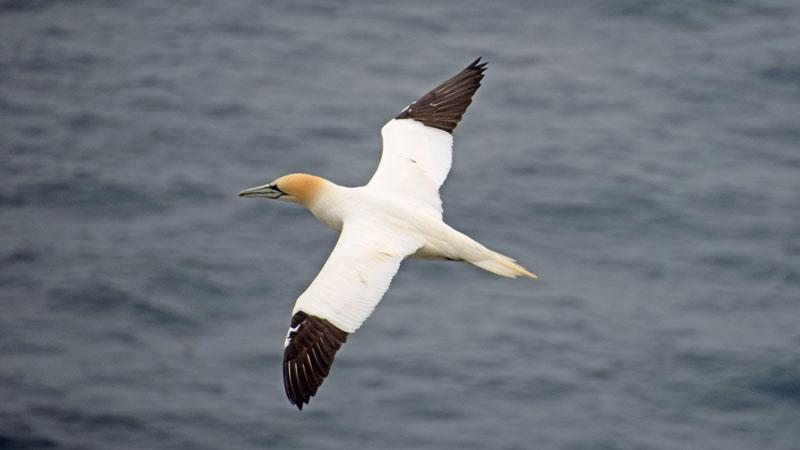
Northern Gannets have long been one of my favorite birds. I think it has something to do with their stark colors with a golden-yellow head, white body and jet black wing tips. I am sure it also has to do with their sleek, almost tubular, streamlined body that flies with grace. Surely it has something to do with their ability to drop instantly into a dive from a hundred feet up, accelerating to speeds 60 miles an hour as they plunge into the sea for a fish. These are big birds; wingspans approach six feet. Just offshore it almost looks to be raining gannets as they drop by dozens into the sea to feed.
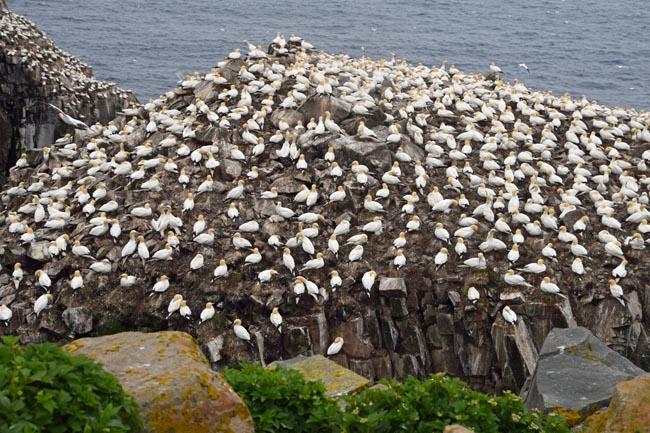
Then, there is their gregarious nature that leads them to live, en masse, in dense colonies with nest after nest after nest. There seems to be a perpetual chatter among them as one bird flies in with seaweed in its beak to add to the nest and another takes off to fish.
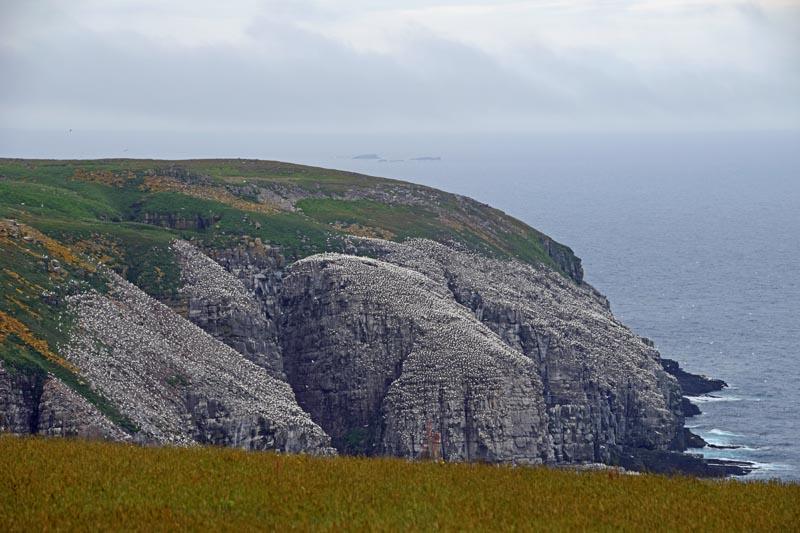
And, then it surely has something to do with their shear numbers in large colonies here in Newfoundland where they arrive each summer to feed in the rich waters, hungry for capelin or other small fish. It takes a rich ocean to support these numbers. Yesterday I went to Cape St. Mary's where there is a famed rock, "Bird Rock," with a vast and growing colony of these birds set against one of the most dramatic backdrops of rugged, aged cliffs rising from an endless sea. In the photo above, all those tiny white dots are Northern gannets; there are upwards of 70,000 birds here! It was a dreary day, spitting rain and windy. It was late in the day, around 1700 and I was entirely alone as I hiked 20 minutes through meadows of grasses, iris and wildflowers to that magnificent cliff that feels like it must be the ends of the earth. I am determined to go back and spend a little more time with the gannets.

Bill
Live Tracking
Click the mini map to see where Tazzarin is today!

To view more, visit www.tazzarin.com
To subscribe to these emails click here

Tazzarin's Whale & Iceberg logo design by Emily Dove