1915 Wednesday, July 13
Fishing outports have been the lifeblood and soul of Newfoundland for centuries. Their beginnings go all the way back to the 1500s when Europeans began making seasonal voyages to these waters to fish for cod. Fishing stages with small piers and "flakes" for drying fish would be erected. Cod were caught and laid on the flakes to dry and cure in the sun before being shipped back across the sea to Europe.
With time, the settlements became year round enterprises. For centuries Newfoundland was characterized by small fishing outports scattered along the island's coast. It was the core economy of the region. In time, as North America was settled, the fishing outports supplied fish to Canada.
This way of life to a hard hit following confederation when Newfoundland and Labrador became the most recent province of Canada. Newfoundland Premier Joey Smallwood implemented a plan of resettlement, moving people out of small fishing outports to larger, centralized, inland towns where delivery of services like education and health could be supplied at lower cost. It did not prove to be a successful program. It began a fragmenting of the outport life. The cod moratorium of 1992 was another tough hit for the outports, causing some to leave.
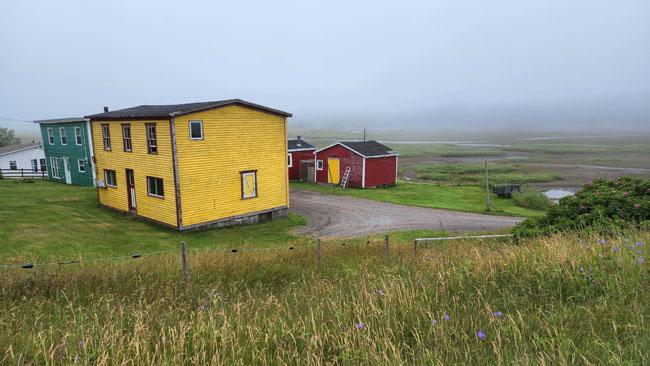
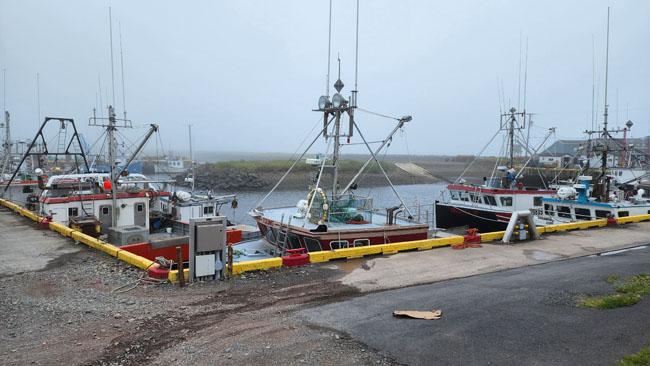
Nonetheless, outports do survive and are the heart and soul of Newfoundland. Population is declining in many. But, the resilient remain. The community of Branch on the southern portion of the Avalon Peninsula is shown in the two photographs, on a typical, foggy, Newfoundland day.