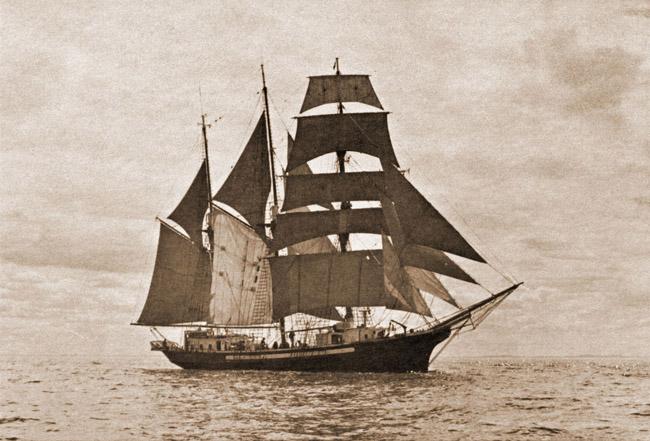
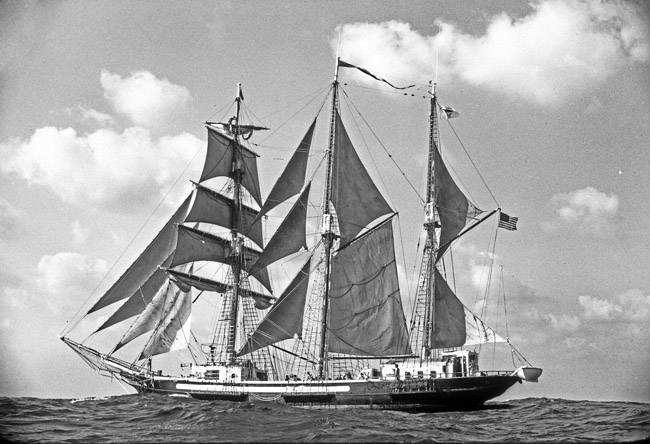
After leaving Silver Bank, we headed north, along with the migrating whales. We stopped in San Salvador, then Nassau. From Nassau we headed for Bermuda; along the way to were hit by a "perfect storm" of sorts that lasted a day and a half and was gusting to hurricane strength. Steel cables ran fore and aft on deck to clip on to with a harness as waves washed over us. I remember being roused from my bunk in the black of night to go aloft and work to pull in and stow our torn mizzen. The storm had taken its toll. A chain bobstay forward, linking the jibboom to the stem had parted. At about the same time the mizzen boom cracked in two. The sail was shredding with a fifteen foot piece of spar attached to it and flailing about in the winds; it was bashing apart the rail at the stern into splinters. The other section of the mizzen boom was attached at the gooseneck and swiping back and forth across the vessel. Two of us went up the ratlines and across to the mizzen mast to gather in the flapping, torn mizzen sail. A wild night! The photo above shows Regina Maris sailing for Boston from Bermuda with a jury rigged mizzen trysail and no mizzen boom.
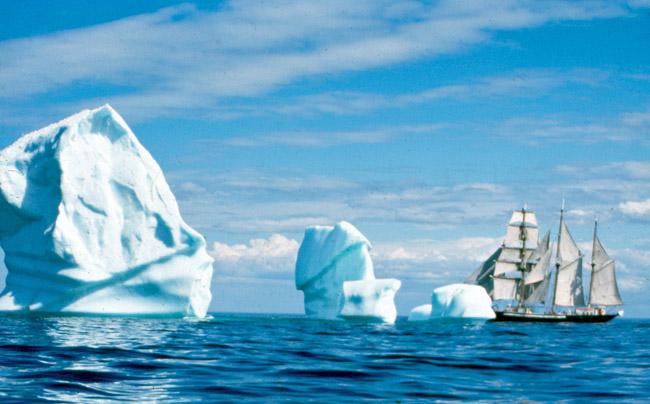
I ended up getting hired as part of the crew and stayed on Regina Maris for five or six months. From Boston we followed the humpbacks north on their migration. Our first stop was here in St. John's Newfoundland. From there we headed up the northeast coast of Newfoundland, across the Strait of Belle Isle to Labrador and on up that coast to Makkovik, Hopedale, Nain and a furthest north in uninhabited Port Manvers. I was dazzled by the dramatic landscapes and fascinated by the incredible wealth of marine and bird life in these regions during the short summer months. We saw northern gannets, puffins, murres, razorbills and dozens of other sea birds in numbers beyond anything I had known. We saw humpbacks, harp seals, fin whales, pilot whales, orcas and more. I also admired the combination of friendliness and resilience of the peoples.
I have returned a dew times in the intervening years to these northern lands. I have been drawn here once again this summer. My time on Regina Maris gave me an appreciation for this realm and also taught me about seamanship, teamwork and trust. I would go on to work for the Ocean Research & Education Society for two years between college and graduate school.
Bill