Scaffold Safety
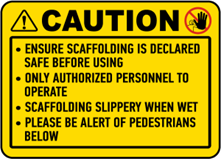
Scaffolding is widely used during construction and renovation activities. In its simplest form, a scaffold is any temporary elevated or suspended work surface used to support workers and/or materials. There are many types of scaffolds, both supported and suspended.
According to the United States Bureau of Labor Statistics (BLS), scaffold-related accidents result in roughly 60 deaths and 4,500 injuries every year. Falls from scaffolds account for roughly 25% of fatal falls from all working surfaces.
OSHA requires employers to have scaffolds and scaffold components inspected for visible defects by a competent person prior to each work shift and after any occurrence which could affect a scaffold's structural integrity.
There are four major types of scaffolding hazards that workers should be mindful of. These are falling, struck by, electrocution, and scaffold collapse.
One of the most common injuries that result from working on a scaffold is electrocution. If workers contact live wires while working, it can lead to electric shock, especially if that contact damages the wire or if the scaffold is made of metal.
Precautions when working on scaffolds.
Do Not:
Work on scaffolds during electrical storms or high winds.
Provide unsafe access to the scaffold due to inadequately installed ladders, stairs, or ramps.
Overload the scaffold.
Build scaffold on stacked brick, block, or other unstable objects.
For more information on scaffolds, questions or concerns, please contact PGM Safety Services, an affiliate company of Pro Group Management. We will be happy to assist when you visit us at www.pgmnv.com or call (800) 859-3177.