Logo for Frameline Youth in Motion
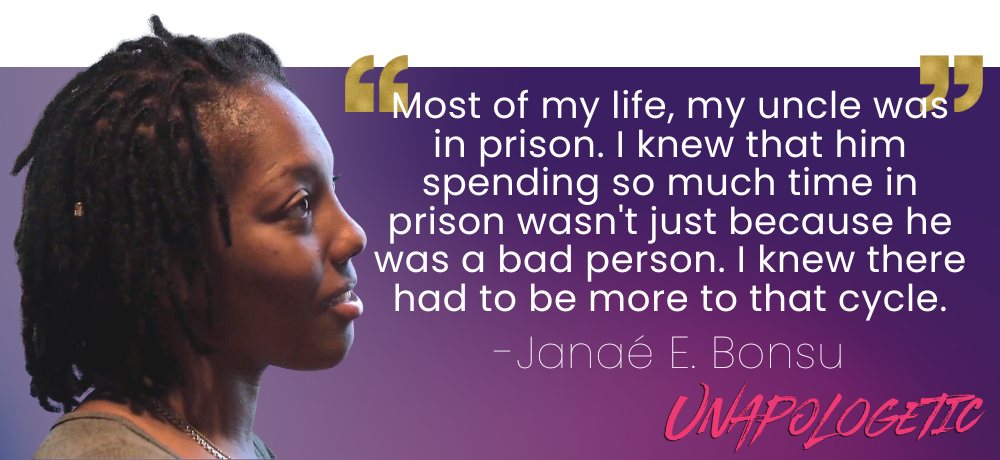
On a purple gradient background, a quote from Janaé E. Bonsu reads: Most of my life, my uncle was in prison. I knew that him spending so must time in prison wasn't just because he was a bad person. I knew there had to be more to that cycle. To the left of the quote is a photo of Janaé in profile.

A new year, a new approach to community safety

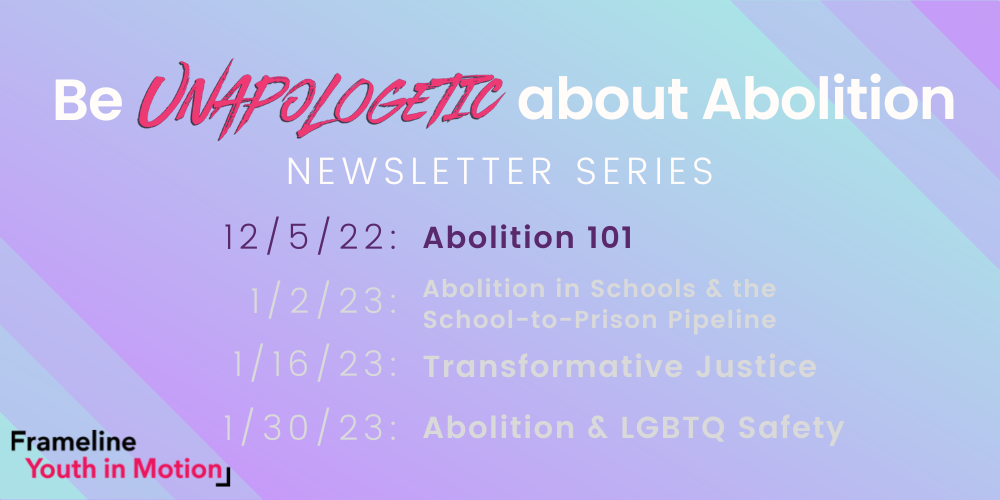
On a light blue and light purple gradient background, title reads: Be Unapologetic about Abolition Newsletter Series. There are four dates and titles for a 4-part newsletter series, which includes 1. December 5, 2022, Abolition one-oh-one; 2. January 2, 2023, Abolition in Schools and the School-to-Prison Pipeline; 3. January 16, 2023, Transformative Justice; 4. January 30, 2023, Abolition and LGBTQ Safety. Sign up at b i t dot l y slash y i m dash 22 dash 23

Unapologetic is a jumping off point to an imaginative discussion on abolition -- how do we end the carceral state (police, legal system, prison system), which uses harm to address harm, and create new systems of accountability that create real safety, liberation, and abundance for our communities?


Youth in Motion wants to help you learn the basics to exploring that question. This is the first in a 4-part newsletter series on abolition, transformative justice, and how it relates to safety in the LGBTQ community. Each newsletter will offer a discussion activity and additional resources.


A coming new year calls for new and optimistic approaches to personal and community life. Follow along with your GSA or classmates to dig deep into transformation. Happy learning!

What lives in your head rent free?

Let's start the abolition learning journey by examining some of the assumptions we've grown up with that inhibit our imagination and make systems like policing, prosecution, and prisons seem necessary:


  • Police, prosecution, and prisons are an inevitable part of society
  • Consider instead: These systems are the result of deliberate choices made by people and, therefore, can be changed and replaced (See page 21)
  • People who commit crime are simply bad people
  • Consider instead: Most crime happens when people cannot meet their basic needs, especially when communities have been deprived of resources and development (See page 8-9)
  • People need to be punished to stop their "bad" behavior and to discourage other people from engaging in "bad" behavior
  • Consider instead: Punishment does not address the underlying need that motivated the "bad" behavior. It risks creating resentment and trauma in the punished and a negative relationship between the punisher and the punished. (See page 27-31)
  • Justice is blind. A person is tried on facts and evidence, not their identity.
  • Consider instead: This is an ideal rather than a reality. Laws, policies, and biased decision-making have led to higher rates of arrest and incarceration in communities of color. (See "An Unjust Burden")
  • What other assumptions about punishment, police, the legal system, and/or prisons can you think of?


Ask these questions for each assumption to dig deeper:

  1. How much do you believe this assumption to be true? What have you experienced while growing up that made the assumption seem like fact? (Consider messages from family members, media, movies/TV, police presence in schools)
  2. What examples in society, history, or your own life challenge the truth of this assumption?
  3. What might need to change so that this assumption doesn't become so ingrained in us? (Consider: parenting, storylines in books/movies/TV, etc)

Project NIA is an amazing organization that seeks to end the arrest, detention, and incarceration of children and young adults by promoting restorative and transformative justice practices. They have a wealth of resources for all things abolition. We've selected a few resources to support your abolition learning journey:

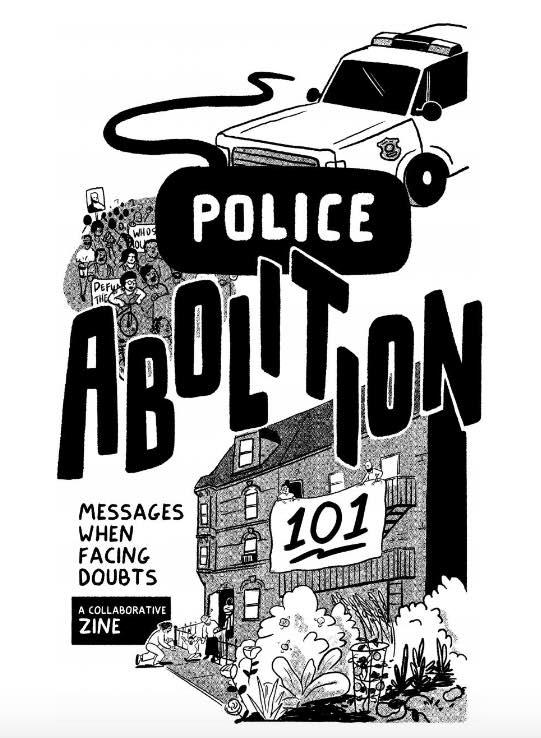
Cover for the zine Police Abolition 101: Messages when facing doubts

Police Abolition 101


The assumption that police are a necessary and inevitable part of society is so strong! This zine responds to the frequently-asked-questions sparked by that assumption. Form a book club to read and discuss the zine together.

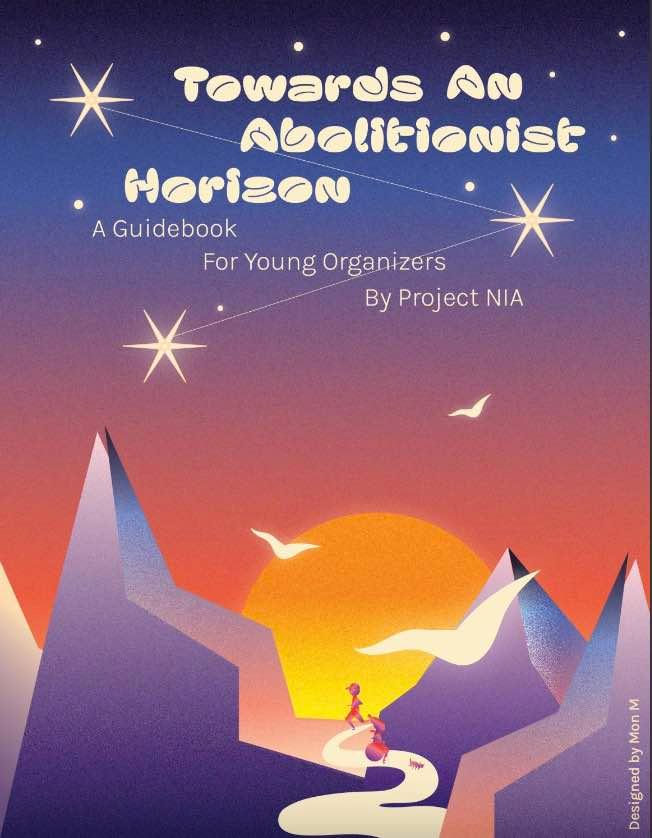
Towards an Abolitionist Horizon: A Guidebook for Young Organizers


For the teen and young adult activist, this guide outlines basic concepts; how to apply critical thinking to carceral state reforms; hope and inspiration to keep going; and activities for further reflection and learning.

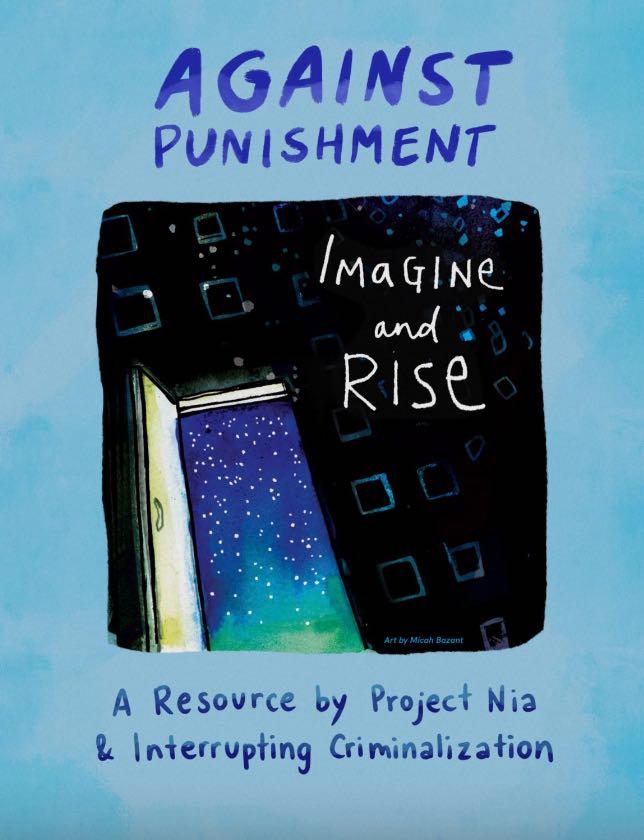
Against Punishment: A Resource


A wealth of activities for age groups Pre-K to 17+ exploring punishment and non-punitive forms of accountability.

Tweets and Reels and Posts, oh my!

Follow our Instagram and Twitter for more resources and inspiration:

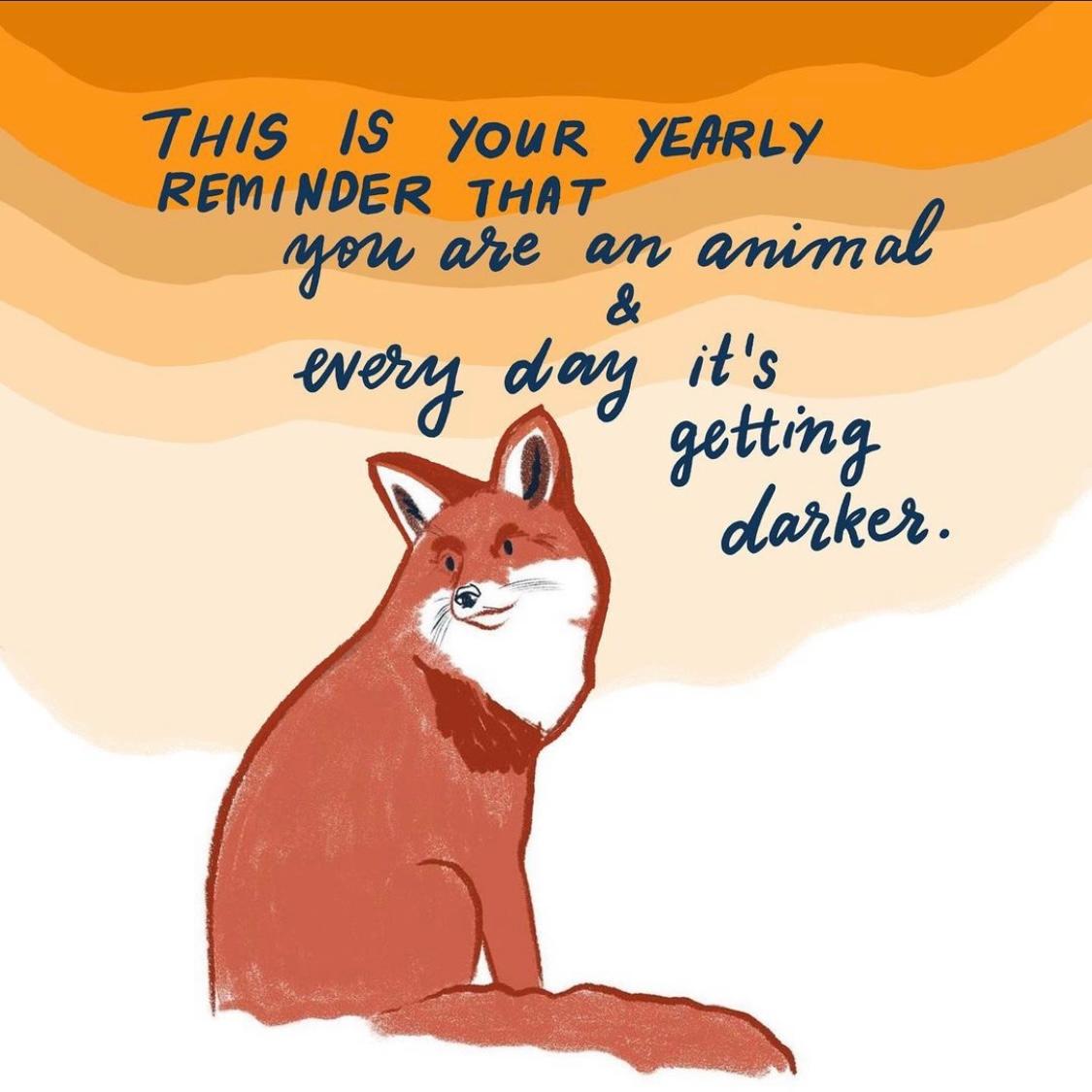
Thumbnail preview of an Instagram post. An illustration of a sitting fox on a blocked gradient background of warm tones. Text reads: This is your yearly reminder that you are an animal and every day it's getting darker.

During the winter, we have so many pressures to work against the pace our bodies' require. @sophielucidojohnson offers a poignant reminder to be gentle with yourself and each other right now. #ListenToYourBody

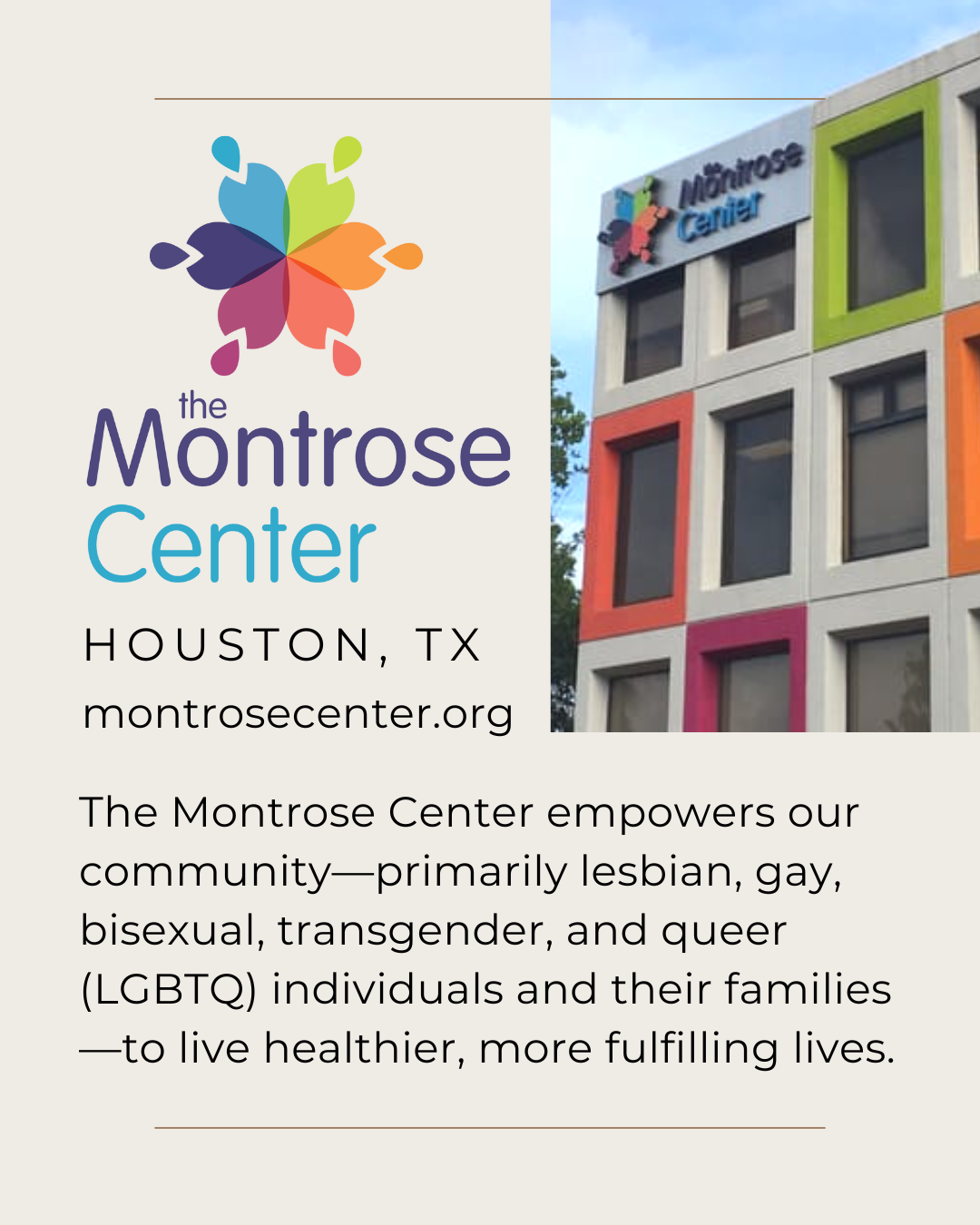
Thumbnail preview of an Instagram post. On an off-white background, a logo for the Montrose Center in Houston, Texas. The logo looks like a flower with 6 petals with raindrops pointing inward toward each petal. They are the colors of a muted rainbow. Next to the logo is a photo of the Montrose Center's white building with a sign and some window borders painted the colors of their logo. Below, text shows the Montrose Center's website: m o n t r o s e c e n t e r dot o r g. Text of the mission reads: The Montrose Center empowers our community--primarily lesbian, gay, bisexual, transgender, and queer individuals and their families--to live healthier, more fulfilling lives.

Thank you @montrosecenter for sharing Youth in Motion and @unapologeticdoc on your social media. @hatchyouth is just one of the many programs and services they offer. Thank you for all you do for Houston's LGBTQ community!

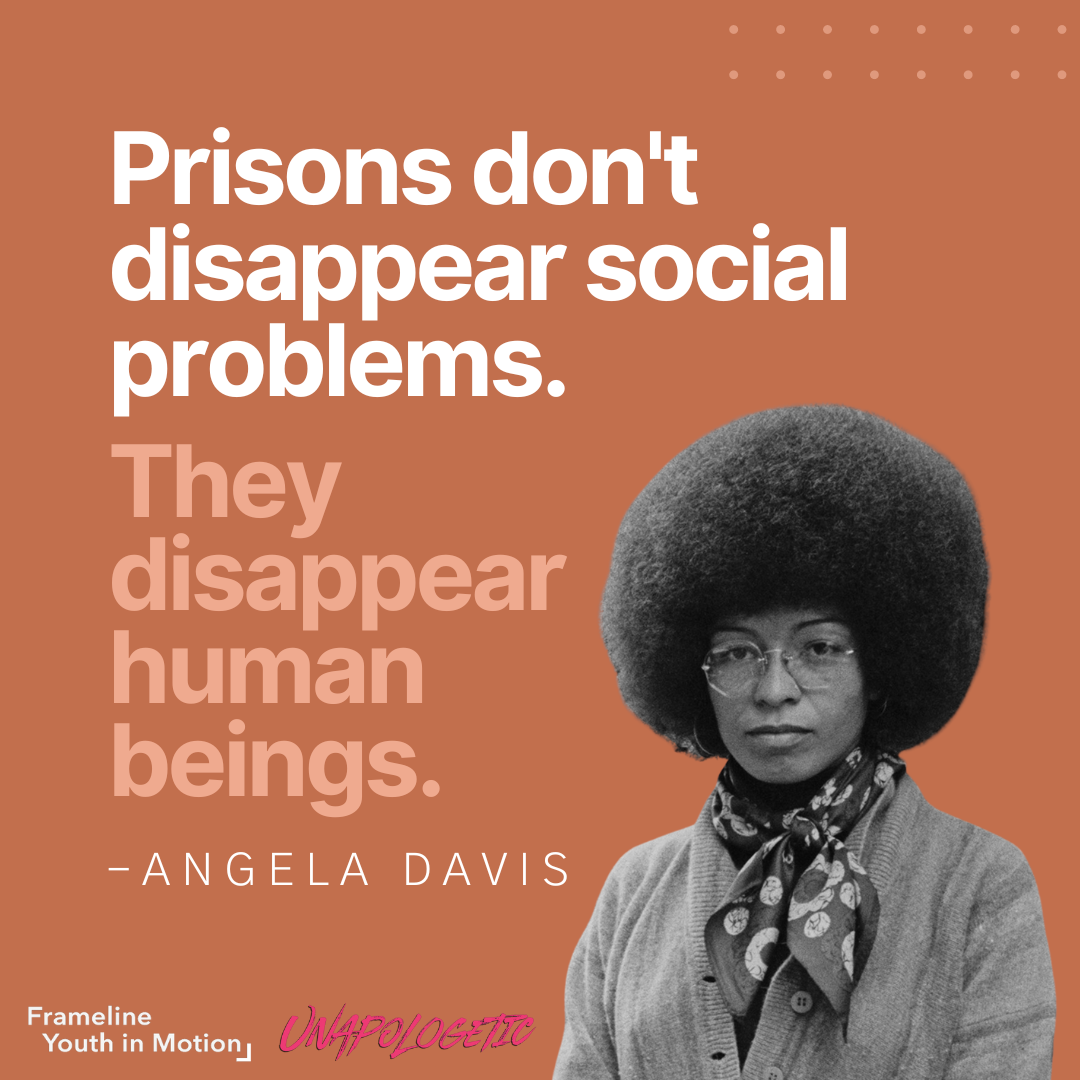
Thumbnail preview of an Instagram post. On a brown clay-colored background, a quote from Angela Davis reads: Prisons don't disappear social problems. They disappear human beings. Next to the quote is a black and white photo of Angela Davis. Her hair in an afro, she wears round wire-framed glasses, a tied handkerchief around her neck, and a cardigan. She looks stoically into the distance.

"Snaps" in the comments if you agree.

Instagram  Twitter

Got this email from a friend? Register to receive the Unapologetic documentary screener and to stay updated with us!