|
Aa
FROM THE RIVERKEEPER: A TRANSFORMATIVE MOMENT ON THE LOWER WILLAMETTE
Dear Friends,
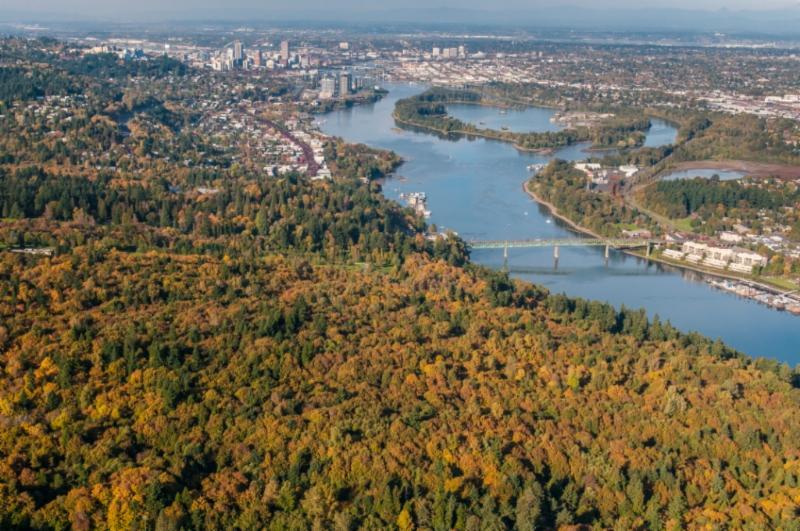
As the fall election cycle kicks into high gear and more than 100 people vie for a position on Portland’s restructured City Council, many people are coming to us asking what needs to happen on the Portland reaches of the Willamette. In fact, the next four years could be truly transformative for the Lower Willamette which remains the most degraded stretch of river in Oregon. Important opportunities lie immediately ahead which will set the trajectory for decades to come in terms of pollution levels, habitat quality and access. A quarter of a century ago, the City of Portland put forward a vision of “River Renaissance.” Two and a half decades later, some progress has been made but on the ground efforts have failed to match the concept’s aspiration. Perhaps it is time to dust off the concept and view the next four years as a moment of ecological, equitable and cultural rebirth on the Lower Willamette.
The following are some of the challenges and opportunities that lie ahead on the Lower Willamette:
Portland Harbor Superfund: a quarter century after Portland Harbor was designated a federal superfund site, responsible parties will be presenting their final remedial design (cleanup) plans. Once those are approved, the cleanup of contaminated sediments along the ten mile long superfund area will begin in earnest. It has been a long process, but this is a moment to pay close attention.
Habitat Protection and public access: Several sites on the Lower Willamette that have long been in a state of limbo or conflict present opportunities to advance forward creating new opportunities for ecological uplift and increased public recreation. These include Ross Island, Eastside Crescent (near the Hawthorne Bridge), McCormick and Baxter and Willamette Cove, and just above the confluence of the Willamette and Columbia, the 823 acre West Hayden Island.
Critical Energy Infrastructure Hub: A ticking time bomb sits on the west bank of the Willamette between the River and Forest Park. Built on an earthquake liquefaction zone, this vast area of tanks and gas pipelines presents the potential for a release event larger that the Deepwater Horizon. Over the next few years there are substantial opportunities to reduce the risk to communities and the environment through risk mitigation plans required by the state and risk bonding strategies being advanced by Multnomah County.
Floodplain Protections: Local jurisdictions must come into compliance with new floodplain protection requirements. There will be strong opposition from development interests, but better protection for high hazard flood areas is essential to recover endangered salmon and make our landscape and communities more climate resilient.
Green Infrastructure and River Friendly Development: The history of our development is one of turning our back on the river, walling it off with structures, industrial development, freeways and limiting public access. Several projects present the opportunity to reconnect with the river in ways that celebrate and enhance rather than block and degrade. These include the efforts of the Grand Ronde and Willamette Falls Trust at Willamette Falls, West Linn Waterfront Planning, The OMSI District, The Center for Tribal Nations, Albina Vision and more esoteric but also very important, the City of Portland Economic Opportunity Analysis process (EOA) which will redefine the balance between industrial development and natural resource protection along the Willamette and Columbia Corridor.
Reconnection and Protection of Tributaries: The opportunity to remove the Kellogg Creek Dam and restore water quality at Crystal Springs are examples of how we can restore salmon on our urban tributaries.
And there is much more…
Restoring rivers on built landscapes can be slow and frustrating work. The processes, policies and capital required to transform built landscapes can seem impenetrable. However, we are on the precipice of a truly transformative moment. It is important that we recognize it as such—many of these projects are monumental in their own right, but none alone will restore the Lower Willamette to health. We must also view them through the prism of how collectively they will result in a Lower Willamette that is healthy, equitable and accessible–perhaps through the prism of a River Renaissance.
I want to thank everybody who contributed to our 187 Miles of Wonder Summer Fundraising Campaign! It is your support that allows us to be here to advocate for the river. Thank you!
|