|
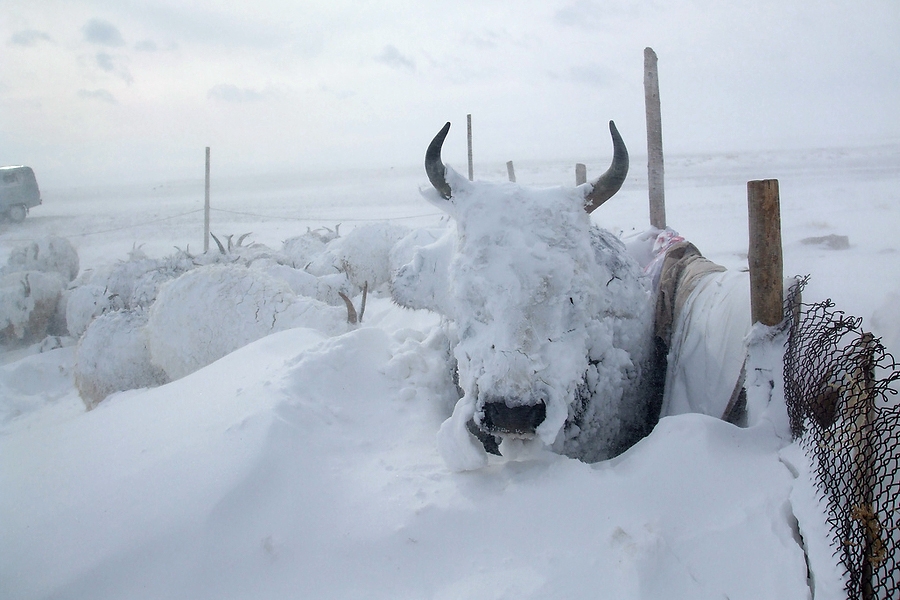
So far, 2024 has brought record-breaking weather called "dzuds" and devasting livestock loss across Mongolia. A dzud is "an extreme winter event with temperatures dropping to -30 °C or lower, strong winds, heavy snow, and ice."
In this country of 3.35 million people, more than 2 million livestock (3% of Mongolia's total) have died. According to the World Health Organization (WHO), this year's snowfall is the highest in 49 years, with 90% of the country currently covered in snow up to a meter thick.
Dzuds are a normal part of Mongolian life. However, climate change has increased their frequency and intensity. Drier summers that provide limited fodder to fatten up animals in preparation for a harsh winter, record-breaking snowfall, and rapid, dramatic temperature changes are exacerbating a dzud's impact on half the country's population living in rural Mongolia. Roads are inaccessible, trapping people in their isolated homes (usually a ger, or yurt), far from stores, health care, family, and everything else.
|