Prime Politics: Election Year Insights

Key U.S. Senate Races to Watch

With the narrowest of Senate margins, Democrats have managed to pass major infrastructure investment and climate policy packages, confirmed a Supreme Court nominee, and installed nearly 200 federal court judges largely on party line votes during Joe Biden’s presidency. Now, as we head into the 2024 elections, 23 Democratic seats are up for reelection and the GOP can secure control of the upper chamber with a net gain of two seats. Senator Joe Manchin’s (D) decision to end his Senate career means his West Virginia seat will likely flip to Republicans, creating a situation in which Democrats must hold all remaining Senate seats the party currently controls and retain the White House just to keep the slimmest possible Senate control. Analysis forecasts the majority in the Senate is “up for grabs,” as three Democratic-held seats are “toss-ups” and three consistent battleground states are within a 5-point margin.


The following races are being closely watched and considered key determinants of Senate control in the 119th Congress. 

Arizona Senate 

Incumbent Senator Kyrsten Sinema, an Independent, won her 2018 Senate race running as a Democrat by just 1.5 points. Sen. Sinema has staked out a maverick position on Capitol Hill, often bucking her own party. In December 2022, with her polling below 50% support among Arizona Democrats, she realigned as an Independent. Sinema has yet to announce whether she will seek reelection before the final April 8 Arizona filing deadline. Speculation is mixed on whether she will pursue another term, but she has held online fundraisers and pays a small campaign staff. However, her 2023 fundraising was far below the amount projected to run a successful Senate reelection campaign.  


Should Sinema declare a reelection bid, she will be challenged from both sides, as current U.S. Representative Ruben Gallego runs a more progressive Democratic campaign and former gubernatorial candidate Kari Lake holds a 30-point lead in most GOP primary polls. Rep. Gallego leads current fundraising, with over $3 million raised in Q4 of 2023, and is slightly ahead in current polls against Lake. (Our insiders also consider Lake a potential VP contender for former President Trump’s ticket.) Much depends on Sen. Sinema’s decision to run again; while she currently polling unfavorably among Democrats, she has the advantage of being the incumbent. Independents make up the majority of registered voters in the state, giving Sinema a potential edge in a three-way race, but the tight margins in 2018 and GOP strategists’ aim to split Democratic votes make the race a true toss-up.   


Michigan Senate 

In January 2023, longtime Democratic Senator Debbie Stabenow, who also chairs the Senate Committee on Agriculture and Finance Subcommittee on Health, announced her retirement. Sen. Stabenow’s first senatorial victory in 2001 reclaimed both Michigan seats to Democrats, a blue sweep they have held since. However, Michigan remains a close battleground, as Gary Peters (D) won reelection by only 1.5 points in 2020 and President Biden’s winning margin was within three points. With the seat open, Democrats lose their incumbent advantage, tightening the race.  


Current U.S. Representative Elissa Slotkin (D) has emerged as the clear primary leader to replace Stabenow. Rep. Slotkin raised a strong $2.8 million in Q4 2023 campaign funds and benefits from her experience in razor-thin Congressional races. Slotkin’s two previous wins in Michigan’s 8th District were within single-point margins.  

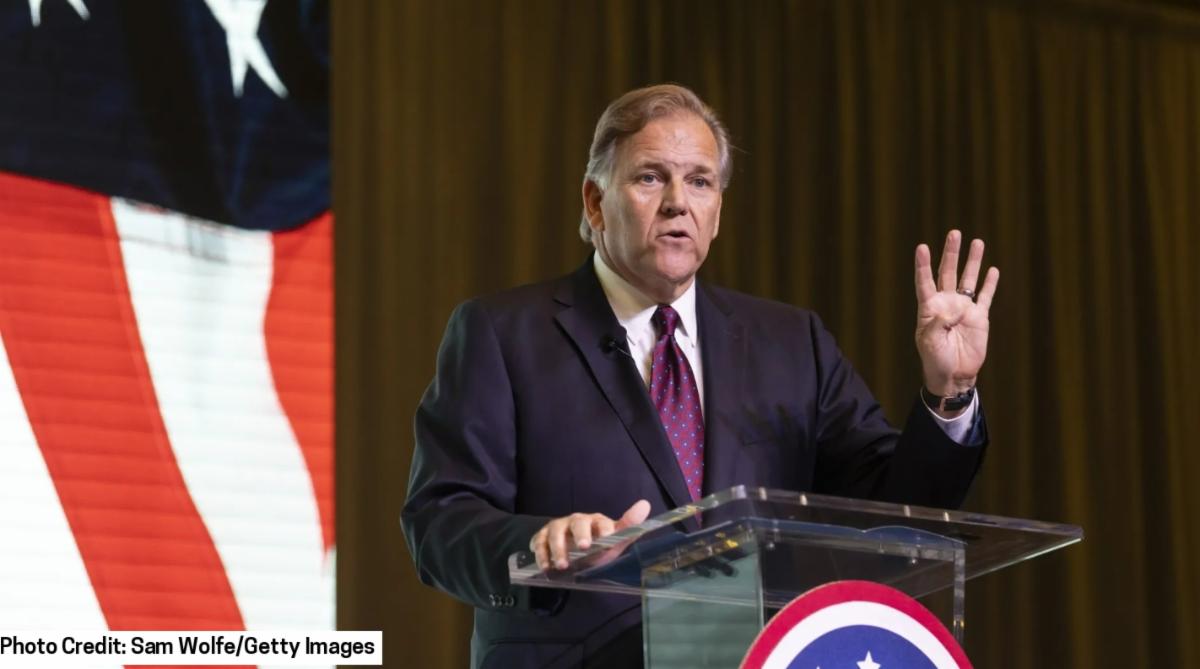
Michigan's GOP primary race remains quite competitive leading up to its August 6 primary. Three candidates stand as frontrunners: former U.S. Representative Peter Meijer, former U.S. Representative Mike Rogers (pictured above), and former Detroit Police Chief James Craig. In a January poll conducted by the Detroit Free Press, Craig appears the strongest candidate to run against Slotkin, but his Q4 fundraising numbers lagged behind these other GOP primary leaders. Former Rep. Rogers boasts a similar U.S. intelligence background as Rep. Slotkin and has earned endorsements from major GOP donors in the state. However, none of the current primary candidates stand out as clear picks to earn Donald Trump’s key endorsement, which may be the most important element in the race to nick a Democratic seat. 


Montana Senate 

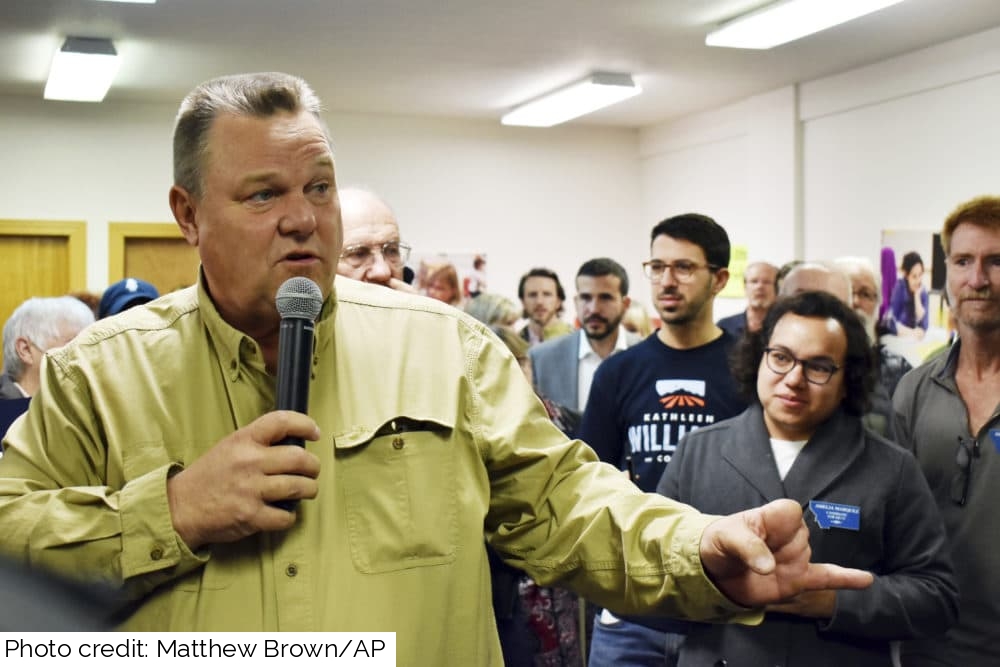
Montana is one of only five states with split-party Senate representation, and incumbent Senator Jon Tester (D) (pictured below) has twice before held off GOP challengers by single-point margins. Sen. Tester’s seat in Montana will again be a key GOP target in their effort to flip Senate control. Though 2020 statewide presidential and gubernatorial races both went to Republican candidates by over 15%, Tester retains 60% approval across the state. His roots in farming and leadership on defense issues through chairing the powerful Senate Appropriations Defense Subcommittee earn him further favor at home. He raised a massive $5.5 million in Q4 of 2023, a war chest that can be expected to be supplemented by Democratic Party funds. 


Tester’s leading GOP challenger is current aerospace CEO and former Navy SEAL Tim Sheehy, who recently secured the support of the National Republican Senatorial Committee, which is currently chaired by fellow Montana Senator Steve Daines. Sheehy, however, may face a tough primary challenge from current U.S. Representative Matt Rosendale – who Tester defeated by 3.5% in his 2018 Senate race.  

Ohio Senate 

Ohio, another split-party state, features a key 2024 Senate race. Ohio emerged as a GOP stronghold during the 2016 and 2020 presidential elections. With the victory of political newcomer JD Vance, Republicans were able to retain one of the state’s two Senate seats in 2022. Now, Republican campaigns will target third-term Senator Sherrod Brown (D) in an effort to secure both of Ohio’s seats and flip control of the Senate. Meanwhile, Brown is a relatively popular incumbent who has fundraised quite successfully before a general election showdown. 


Sen. Brown’s chairmanship of the Senate Banking Committee and his seats on Finance and Agriculture Committees, combined with his moderate policy stands, position him well to hold his Senate seat. He currently enjoys a three-to-five-point polling edge over all GOP challengers, though the GOP field is not yet settled. Three strong Republican candidates are vying for their Party's 2024 nomination in the race to challenge Brown, with businessman Bernie Moreno earning recent endorsements from U.S. Senators and a narrow polling lead among the Republican contenders.  

All these races are likely to be impacted by the low-polling candidates at the top of each Party’s ticket. While it is still early days in the election season, President Biden faces an uphill battle to win Montana and Ohio. However, these long-term Democrat incumbents show early signs of campaign strength and are polling ahead of the President in states that are known for split ticket voting. Control of the Senate could well rest with the dwindling number of split-ticket voters in these key battlegrounds, particularly in a year of unenthusiastic Party loyalists.  

Prime Policy Group | www.prime-policy.com

Twitter  Linkedin