NEWS FROM THE COMMAND CENTER
December 27 - January 3
| |
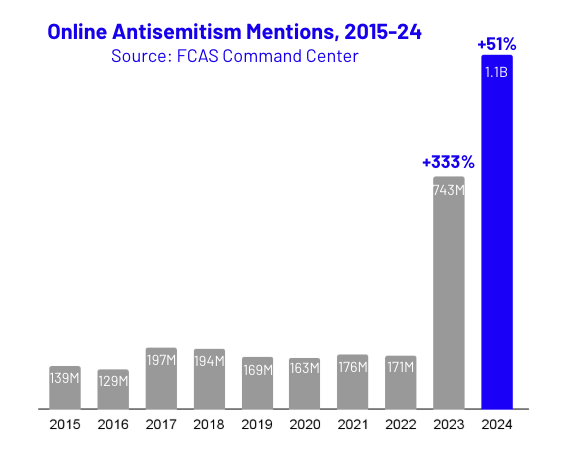
2024: 51% Increase In Online Posts Related to Antisemitism | |
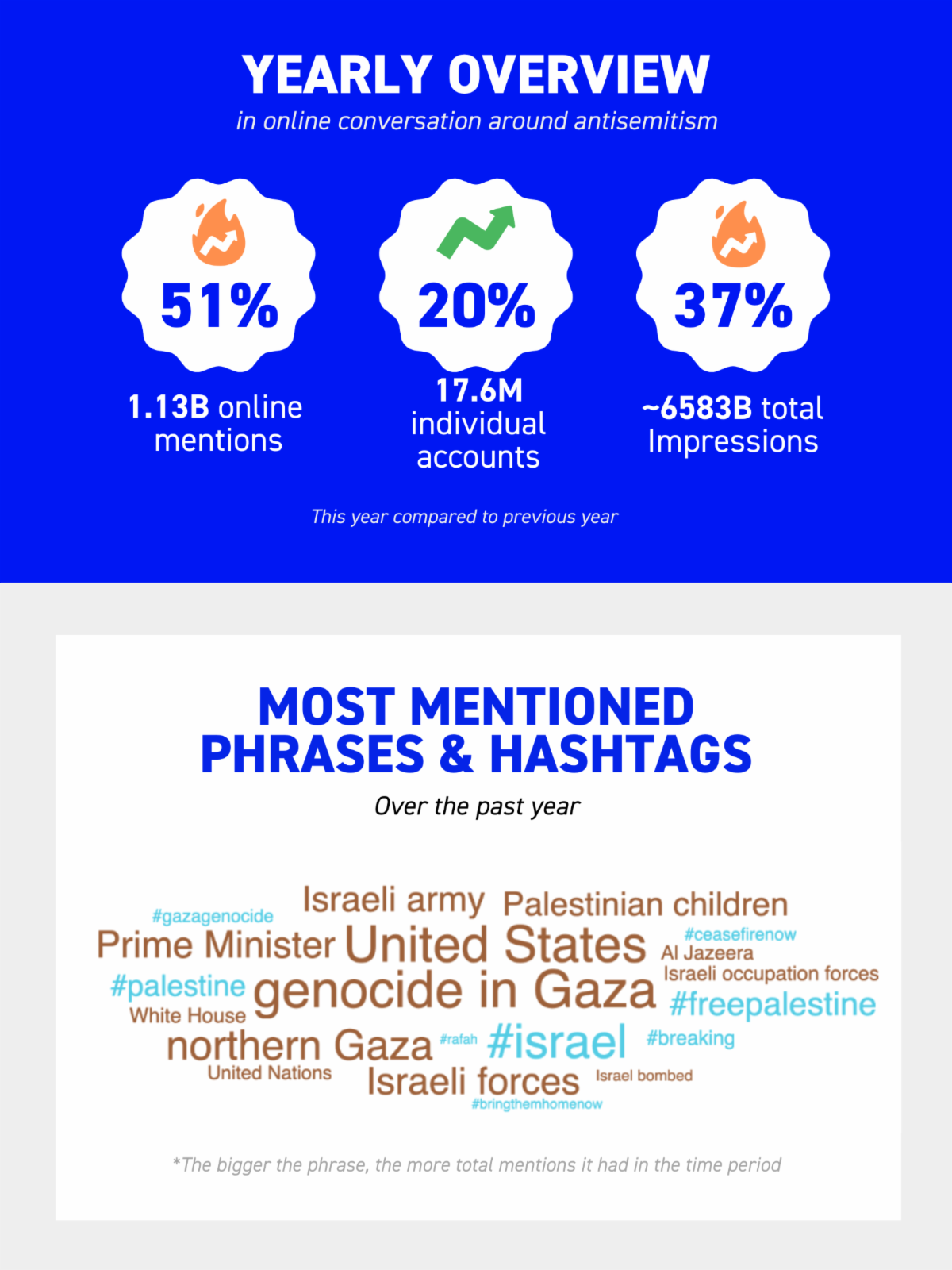
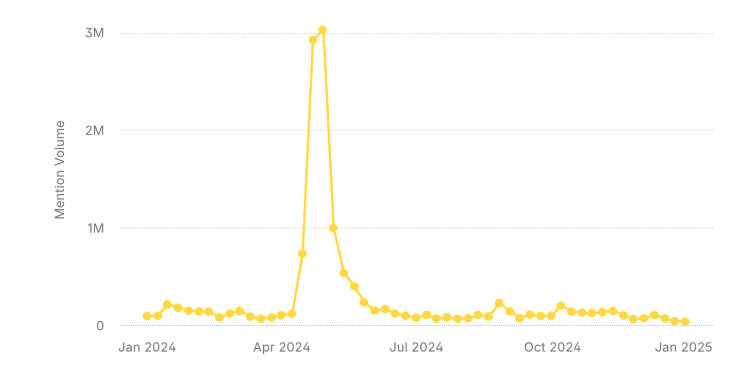
2024 was another record-breaking year for online conversations related to antisemitism, Israel, and the Jewish experience. The Command Center registered a 51% increase in online social media posts in 2024, equalling 1.13 billion posts in total, reaching over one billion mentions for the first time. Unlike in 2023, the majority of the conversation was not concentrated in the fall. 50% of the posts were made in April and May this year, connected to the protests on college campuses. However, October 1st was the day with the single most posts: over 7 million posts as people reacted to Iran’s ballistic missile attack on Israel. | |
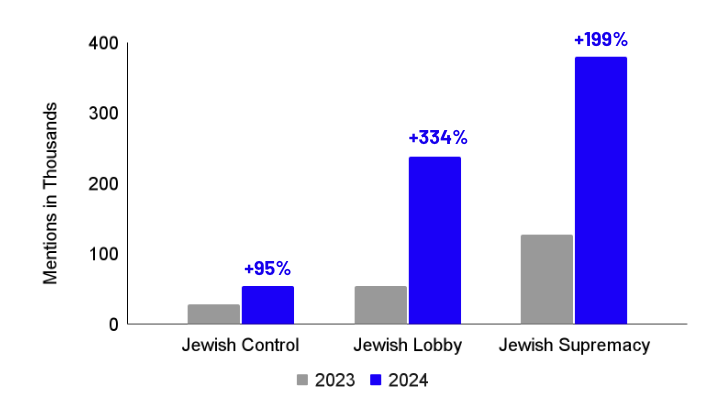
The majority of the discussions monitored by the Command Center centered on Israel and the Israel-Hamas war, with the next two leading topics of conversations being about the Holocaust and activities on college campuses as will be explored below. Conspiratorial content saw a notable rise, with mentions of phrases like “Jewish control” increasing by 95%, “Jewish lobby” by 334%, and “Jewish supremacy” by 199%. | |
|
Amid this activity, the Talmud, a collection of Rabbinical Jewish law writings, became a frequent target of antisemitic attacks online. The term “Talmud” appeared in over 1.25 million social media posts, many of which sought to portray it as “evil” or “satanic.” Fake quotes attributed to the Talmud circulated widely, including a graphic shared by prominent figures like Dan Bilzerian. Antisemitic influencer Lucas Gage posted a video on X of himself burning the Talmud, which led to his ban from the platform.
The following sections will delve deeper into the themes and trends the Command Center tracked throughout 2024.
| |
13 Million Posts About College Campus Antisemitism in 2024 | |
|
In 2024, conversations about antisemitism on college campuses surged by 137%, with over 13 million posts reflecting the growing concern about these issues. This surge in dialogue shaped the content of our 2024 newsletters, 24 of which featured articles on student protests, attacks on Jewish students, campus encampments, building takeovers, and vandalism.
In the first three months of 2024, much of the focus was on campus protests and demonstrations, including Columbia University’s president testifying before Congress about the rise in campus antisemitism. In April, campuses such as UCLA, Harvard, and Columbia were dominating online conversations related to these issues.
|
|
On-Campus Antisemitism-Related Conversations in 2024 |
|
|
In late March, on-campus protest encampments emerged, gaining national attention when Columbia University students set up tents on April 17. With about 7 million posts online about encampments, student protestors and the harassment faced by Jewish students, the spring was a pivotal point with respect to campus antisemitism. In response, the Foundation to Combat Antisemitism (FCAS) released the ad “Don’t Bring Hate to the Protest” in May.
Since then, universities and students prepared to return to campus, with discussions largely centered on the October 7 anniversary, campus life, and critiques of student protestors’ intentions behind their activism. Although online discussions have slowed, these issues remain unresolved as the year concludes.
| |
Holocaust-Related Discussions Driven by Neo-Nazi Rallies and Holocaust Denial | |
|
In 2024, the Command Center recorded 86 million Holocaust-related mentions on social media– a 25% increase compared to the previous year. The most significant sub-category involved comparisons of various events, groups, and individuals to the Holocaust and Nazi regimes. While the majority of these comparisons centered on the ongoing war in Israel, such as equating the Israeli government to the Nazi regime, the single event that sparked the largest surge in online conversation occurred in late October, following the MAGA rally at Madison Square Garden. On the day after the rally, the Command Center noted 2 million mentions, marking a 77% spike from the previous day. The ensuing debate centered on whether the Trump campaign resembled the German Nazi party’s campaigns, with others countering that claim, saying that such comparisons trivialize the Holocaust.
Holocaust denial and distortion were further propagated this past year by a few notable figures, including Candace Owens, Nick Fuentes, and Dan Bilzerian. Prominent conversations in 2024 questioned the legitimacy of The Diary of Anne Frank, the number of Jews murdered by the Nazis, and openly glorified Hitler.
Additionally, there was a significant rise in discourse surrounding neo-Nazi gatherings worldwide. The Command Center published 16 articles covering neo-Nazi rallies in 2024 and measured 1.3 million mentions of such events–a staggering 238% increase from 2023. This heightened attention underscores the growing visibility and impact of Neo-Nazi movements on social media platforms.
These trends highlight the persistent and evolving challenges in combatting Holocaust denial and neo-Nazi propaganda.
|
|
Holocaust-Related Mentions 2023-2024 | |
|
2024: United Against Hate | |
In 2024, communities across the country showed remarkable strength and unity in fighting antisemitism and other forms of hate. Our “Standup Spotlights” highlight the various ways individuals and groups have stood up against prejudice, promoting inclusion and respect through community events, education, personal actions, and creative efforts.
Community actions were essential this year. Public rallies denouncing the neo-Nazi groups, or a swift response to antisemitic graffiti found on elementary schools in Bethesda, showed how communities stood up to Jewish hate.
Education and awareness also played a major role. Organizations like the AEPi fraternity and the Coalition of Black and Jewish Unity in Michigan launched programs to increase Holocaust knowledge and build alliances between different communities. Students at American University and elsewhere implemented resolutions and courses to prevent antisemitism and promote understanding.
Individual efforts made a significant impact as well. Activists such as Noah Lederman and Amy Albertson used their platforms to educate others and support diversity within the Jewish community. Daryl Davis continued his work in engaging with extremists to help them abandon their hateful beliefs.
Creative initiatives helped spread messages of resilience. Projects such as the “We Are Brooklyn: Stories of Hope” comic book and The Comedy Brigade’s humorous responses to online hate used storytelling and creativity to fight prejudice.
It’s clear that the combined efforts of individuals, communities, and organizations in 2024 have made significant progress in standing up against hate.
|
| | |
NEWS STORIES WORTH READING | |
| Foundation to Combat AntisemitismP.O. Box 18 Foxborough, MA 02035 US | |
FCAS is a nonpartisan, registered 501c3 non-profit organization. We do not support any political party or candidate. We never endorse candidates for office. We do call on everyone, regardless of political affiliation, to support the fight against Jewish hate and all hate. | | | | |