2025 Drought Bulletin

Dec. 1, 2025 | Issue 10

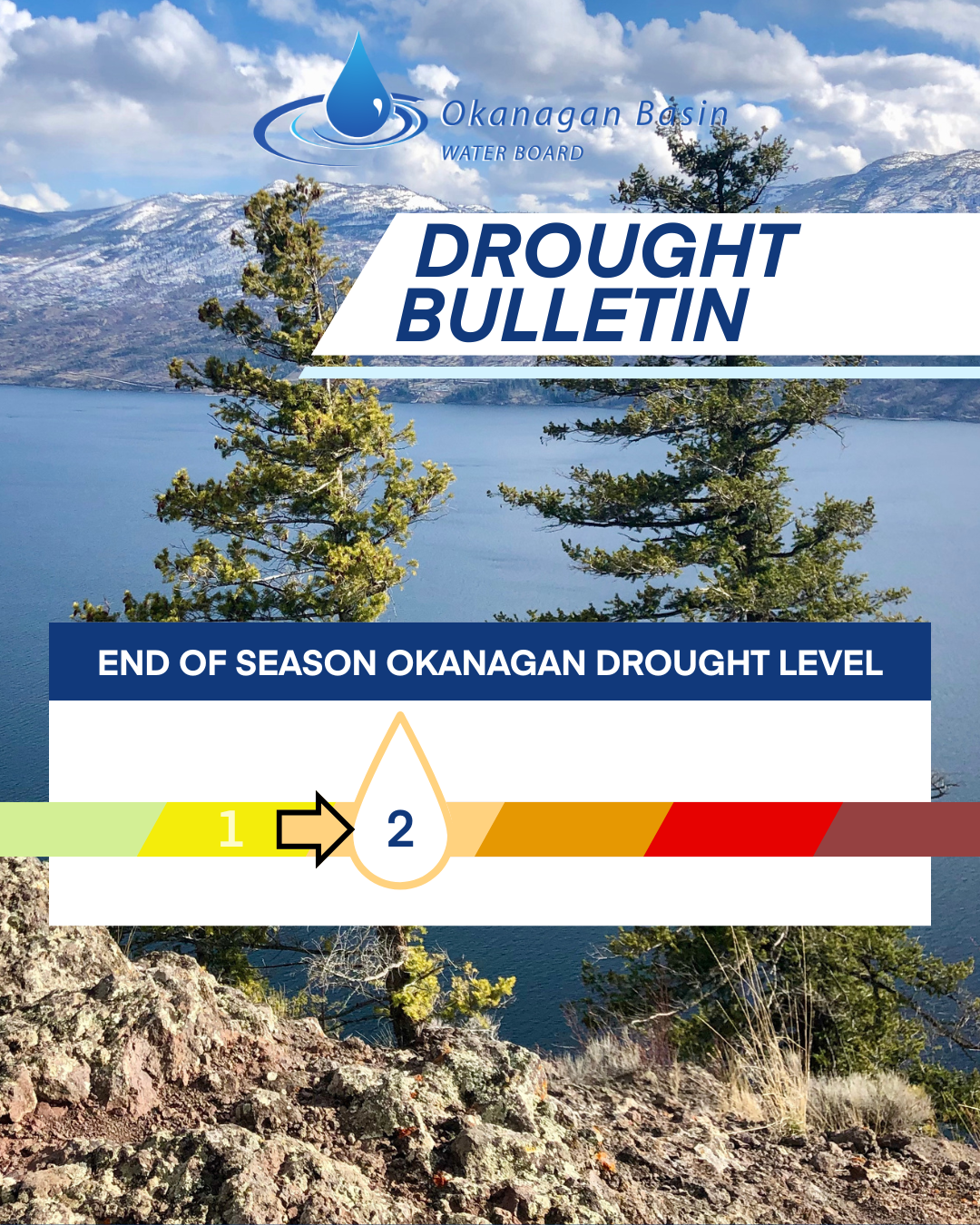
Okanagan Ends Another Season in Drought

As the first snowflakes touch the Okanagan Valley, we reflect on a concerning trend: dry conditions that have persisted every year since 2022.


The 2025 drought was caused by a perfect storm of factors: pre-existing dryness, a small snowpack that melted early and persistent below-average rainfall. While this summer wasn't as severe as 2023, many streams across the valley still experienced low water flows and high temperatures.


The impact of the dryness hit hardest where water supply and demand were out of sync. Although sporadic rainfalls helped top up many reservoirs, they were simply not enough to recharge the landscape itself.


After several years of persistent drought, it will take a long stretch of consistent rain and snow to finally recharge the watershed—the natural sponge that holds our water.


Provincial Drought levels are only updated during the core drought season which typically begins post-freshet and ends with the onset of winter conditions.


You can check out a wrap of the 2025 drought season here.

Local Conditions


Local municipalities are still managing water use. Many are keeping watering restrictions active this fall based on their specific reservoir conditions.


Find out what stage your community is in right now by clicking the links below. If your community isn't listed below, you can find a full list of water providers in the Okanagan at MakeWaterWork.ca.

Location

Current watering restrictions

Learn more

Greater Vernon Area

Normal — Up to three days a week as per your address, no watering on Sundays, no sprinklers between 10 a.m. and 7 p.m.

Visit the Greater Vernon Water Restrictions page here.

Kelowna

Normal — Up to three days a week as per your address, no watering on Mondays, no sprinklers between 10 a.m. and 7 p.m.

Visit the City of Kelowna Water Restrictions page here.

Lake Country

Stage 1 — Up to three days a week, no sprinklers between 6 a.m. and midnight.

Visit the District of Lake Country's Water Conservation Page here.

West Kelowna

Stage 2 — Even numbered addresses water Saturday and Tuesday, odd numbered addresses water Sunday and Wednesday, only water between 11 p.m. and 6 a.m.

Visit the City of West Kelowna's Watering Regulations and Conservation Page here.

Peachland

Stage 2 — Even numbered addresses water Saturday and Tuesday, odd numbered addresses water Sunday and Wednesday, no watering between 11 a.m. and 6 p.m.

Visit the District of Peachland's Conserving Water Page here.

Summerland

Stage 4 — Lawn watering at any time is prohibited. No exterior washing is permitted. You may not fill a swimming pool, hot tub or garden pond.

Visit the District of Summerland's Water Restrictions page here.

Penticton

Stage 1 — Up to three days a week as per your address, no watering on Mondays, no sprinklers between 10 a.m. and 6 p.m.

Visit the City of Penticton's Water Restrictions page here.

Osoyoos

Normal — Three days a week determined by your zone location.

Visit the City of Osoyoos Water Restrictions page here.

RDNO

Varied stages depending on the Water Utility, please visit the link to learn more.

Visit the RDNO's Water Restrictions page here.

RDCO

Stage 3 — Even numbered addresses water Saturdays only, odd numbered addresses water Sundays only, only water between 12 a.m. and 6 a.m.

Visit the RDCO's Water Systems Page here.

RDOS

Varied stages depending on the Electoral Area, please visit the link to learn more.

Visit the RDOS' Water Restrictions page here.

Check out Water Word Wednesday!

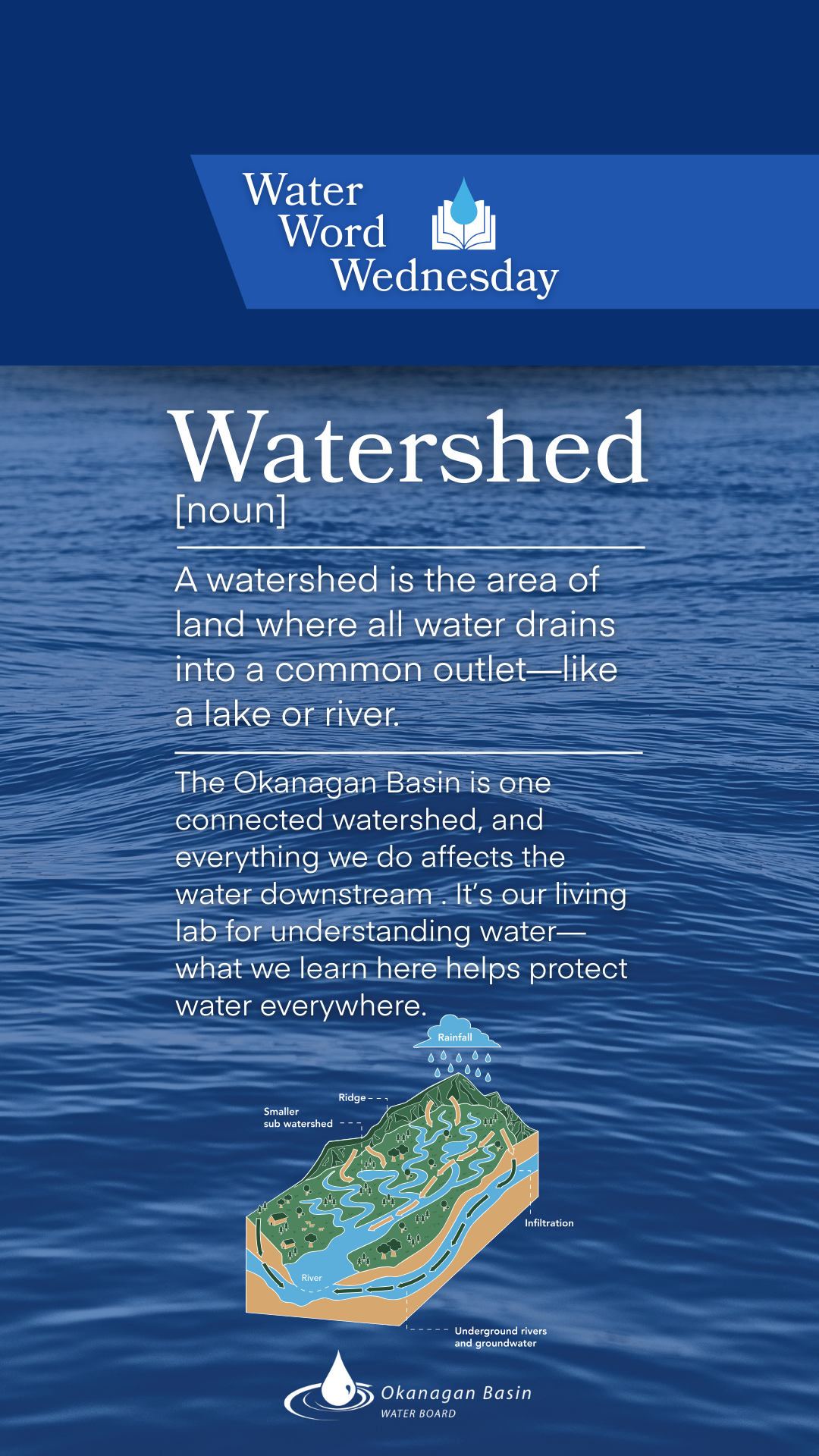
 A watershed is the area of land where all water drains into a common outlet—like a lake or river.


The Okanagan Basin is one connected watershed stretching from mountain snowmelt in the north to Osoyoos Lake at the U.S. border. Everything that happens on the land, farming, development, or even how we use water at home, affects the water that flows downstream.


Because the Okanagan is small, data-rich, and diverse, it’s an ideal living laboratory for water science.


Researchers can study the entire system in one place—exploring how nutrients, climate change, and cyanobacteria blooms impact our lakes and rivers. What we learn here helps improve water management not only in the Okanagan, but across Canada.


Follow our social media accounts below to learn more and check out more Water Word Wednesday posts.

Facebook  Instagram  LinkedIn  Web