Barna, CRC Research Reveal 12 Trends That Will Shape Faith and Culture in 2025 | |
Trump, Boomers, mental health, education, church trends and other shifts poised to influence the nation’s cultural and spiritual future in 2025 | |
|
Glendale, AZ (January 22, 2025) — With Donald Trump returning to the White House and Republicans holding majorities in both chambers of Congress, 2025 is poised to be a year of profound political shifts. But Dr. George Barna—veteran researcher and Director of the Cultural Research Center at Arizona Christian University—believes the most transformative changes may extend far beyond Washington, D.C.
In a newly released report, Barna identifies a dozen key trends set to redefine life in America this year, including five faith-related shifts and seven social transitions. Drawing on six years of research from the Cultural Research Center (CRC) and more than 40 years of tracking religious trends, Barna’s analysis is rooted in data from the CRC’s annual American Worldview Inventory—the nation’s only worldview tracking survey—and a series of other national surveys conducted in the recent past.
| |
|
2025 Faith Forecast & Trends
The five faith patterns Barna forecasts will shape 2025, based on CRC’s extensive vault of data and insights into America’s evolving spiritual landscape are:
-
Reshaping God to Our Liking - Americans are shifting from the biblical characterization of God toward a more accepting, less demanding deity. Over the past 30 years, belief in the God of the Bible—a loving, omnipotent, and morally unyielding being—has sharply declined. Currently, about half of U.S. adults believe in the biblical God, but fewer worship or follow Him. The fastest-growing faith segment, the "Don’ts," includes those who don’t know, believe, or care about God’s existence. Many Americans are reimagining a deity based on human traits, while Christian churches that assume a nationwide return to traditional belief risk losing influence.
| |
Dr. George Barna, Director of Research at Arizona Christian University's Cultural Research Center and author of Raising Spiritual Champions: Nurturing Your Child's Heart, Mind and Soul (Arizona Christian University Press, 2023) | |
-
The Syncretism Train Will Keep Rolling - Since Barna began measuring worldview in the 1990s, the incidence of a biblical worldview in America has steadily declined. The decline has accelerated in recent decades, with just 4% of adults, 2% of parents of preteens, 1% of teenagers, and only 37% of Christian-church pastors holding a biblical worldview. Each succeeding generation shows a sharper drop: 8% of Boomers, 5% of Gen X, 2% of Millennials, and 1% of Gen Z identify as Integrated Disciples—those who possess a biblical worldview. As Boomers shrink in number and younger generations take their place, national incidence is expected to drop to 2% or 3%. Meanwhile, Syncretism—a worldview blending multiple philosophies for personal satisfaction—dominates, with 92% of Americans adhering to it. This trend is likely to grow as biblical teaching loses cultural influence. However, signs of spiritual interest among Gen Z and increased Bible sales offer hope for reversing this decline. Still, as the impact of biblical teachings wanes, religious systems emphasizing life’s immediate benefits and reincarnation are expected to gain popularity. These systems stand in contrast to the biblical call to live for God, prepare for spiritual eternity, and embrace a relationship with Jesus Christ.
-
Discipleship Drops Off the Radar - Although churches and parachurch ministries use discipleship claims to attract attendees, raise funds, and adjust public perceptions of church focus, the act of biblical mentoring is uncommon these days. Existing research provides no basis for expecting an upturn in serious discipleship activity. CRC estimates that only about one out of every 10 born-again adults (who represent just one-third of U.S. adults) is an active disciple of Jesus Christ. And a surprisingly small proportion of them are discipling other people. Thousands of the nation’s Christian churches say they are committed to discipleship, but strikingly few do much beyond encouraging note-taking during sermons, independent Bible reading during the week, and attendance at church-initiated small groups, which research indicates are generally ineffective at making disciples. CRC is currently immersed in two large studies related to adult discipleship dynamics, and the preliminary findings suggest few churches or individual believers plan to engage in serious discipleship efforts. Without an immediate increase in deep discipleship efforts, along with appropriate assessments of growth and impact, the Christian body in America is unlikely to experience increases in spiritual maturity, either quantitatively or qualitatively.
-
Organized Christianity Takes a Hit - CRC projects a significant decline in the number of Christian churches and full-time pastors by the decade’s end, driven by shifts in faith commitments triggered by COVID-era changes. Since 2020, more people view the local church as a source of benefits rather than a center for faith-based community. Spiritual outreach efforts have decreased, replaced by marketing strategies. Popular indicators of church health—attendance, prayer, donations, program participation, and offerings—are expected to decline. Paradoxically, regular and intentional Bible exposure, largely driven by Gen Z, is expected to increase, reflecting new dynamics in religious engagement.
-
Signs of Backbone - The return of Donald Trump to the White House will initiate a period of greater political awareness among a small but noteworthy segment of conservative churches. Those churches will cautiously enter the political arena by teaching more frequently about biblical perspectives on current issues, distributing voter guides, and inviting candidates to the church grounds to speak to congregants. Most of these churches will make this shift without public fanfare and will seek to provide such teaching and programming apart from overt connections to upcoming election seasons.
|
CLICK HERE FOR THE FULL REPORT |
|
Likely Cultural Trends
While the religious landscape continues to evolve, American culture will also bloom in some new and unexpected ways. This societal evolution is neither novel nor inexplicable: every culture constantly recalibrates itself, altering its identity and conduct in ways large and small. Barna addressed seven realignments that he believes are coming and are especially noteworthy.
-
Rethinking College Education - The reshaping of the American economy and the enduring move toward a globally integrated economy will magnify the escalating disenchantment with the quality and cost of a college education. One ramification will be a steeper decline in college enrollment. The nation’s expected (temporary) movement toward a more centrist outlook will conflict with the widespread tendency of college educators to push progressive sociopolitical ideas. That conflict will further dampen the appeal of a college education in various population sectors. Expect several dozen colleges and universities to succumb to financial pressures to close their doors for good. Meantime, trade schools and technology training centers will experience a resurgence as the international economic war heats up and America reinvigorates its manufacturing base.
-
Mental Health Issues Escalate - Bombarded by news of institutional collapse, corruption, climate turbulence, financial chaos, crime, disunity, and social alienation, Americans face skyrocketing rates of anxiety, depression, fear, and addictions. The mental health crisis will escalate to unprecedented levels, normalizing unhealthy behaviors and leading to a relaxation of mental health standards. Loneliness will surge, driven by digital over face-to-face interactions, poor communication skills, and the erosion of biblical morality among young people. Americans will have smaller, less stable social circles than in years past. In response, many will turn to physical self-enhancement (e.g., beauty products, fitness regimens) and mental health solutions (e.g., counseling, self-help programs, medications), while governments invest heavily in addressing the crisis. Notably, recent CRC research identified a powerful antidote: guiding people away from Syncretism and toward Biblical Theism—a path that provides hope, stability, and purpose amidst a growing mental health epidemic.
-
Reinventing the Senior Life - Baby Boomers, the largest generation in history, have reshaped American life through innovations in music, religion, relationships, and health. As they age, Boomers will redefine senior living by turning hobbies into businesses, integrating technology into predictable lifestyles, advocating for affordable healthcare, and influencing political policies on Social Security and Medicare. They’ll also impact community engagement, assisted living models, and faith practices, such as streamed church services and online prayer groups. Their influence extends to sports like pickleball and cultural shifts, with significant contributions from Black Americans and first-generation immigrants in shaping elder life.
-
Altering the Political Conversation - A new slate of social issues will emerge as weary citizens retire issues that have caused fatigue and frustration by outliving their welcome. Abortion, having failed to ignite sufficient interest for Democrat candidates in 2024, and currently generating limited engagement among young adults, will slide to a second-tier issue. Climate change will be redefined (again) to produce a new focus while de-emphasizing aspects of the “movement” that never caught on with the public. Political party identification will be abandoned by millions of adults as citizen journalists (i.e. social media creators) harp on the flaws of both major parties. Gender issues will grow in interest, moving beyond “transgenderism” to new frontiers in the gender rights and sexual autonomy battles. Political leaders will need to confront declining life satisfaction levels— disappointment with a range of realities from relationships, careers, living conditions, financial burdens, lawfare, and institutional distrust. Personal frustrations will be aggravated by the intrusion of Artificial Intelligence (AI), the effects of government incompetence and aggression, and the absence of the Christian faith and churches as the basis of America’s moral conscience in public policy.
-
Public Schools Will Suffer - COVID-era school closures and online education sparked widespread concerns about public school quality and content. Extensive anecdotal evidence suggests some schools prioritize political, spiritual, and sexual ideologies over traditional academics, fueling a significant drop in public-school enrollment and a rise in private and homeschooling—a trend that shows no signs of slowing. Public school faces serious challenges in 2025, including teacher shortages and lowered qualification standards. For instance, states like New York and New Jersey have eliminated literacy test requirements for teacher certification, with others following suit. These shifts, coupled with parental concerns about classroom substance and safety, will continue driving students to alternative education options. Expect further declines in the international performance of American students and heightened safety concerns. These issues will likely bolster the incoming president’s agenda to reimagine the federal government’s role in public education and teachers’ unions.
-
Reimagining the Family - In 2025, the family will emerge as a contested and maligned social construct. Critics of the traditional family will advocate redefining “family” to include rights claimed by transgender and homosexual individuals. After decades of debate over biblical family standards, a confused population will likely settle for inclusive solutions over biblical definitions. Practically, families will be reshaped by shrinking household sizes, declining interest in parenting among young adults, disputes over parental rights, and increasing preference for serial cohabitation over traditional marriage. “Outsourced parenting”—delegating child-rearing responsibilities to external sources—will gain traction, despite evidence it fails to serve children’s best interests. This trend, identified in Barna’s recent book, Raising Spiritual Champions: Nurturing Your Child's Heart, Mind, and Soul, underscores the ongoing turbulence over family roles and socialization methods in an increasingly fragmented society.
-
Reconfiguring the media universe - As mainstream media's ideological bias became clear over the past decade, millions of Americans sought alternatives, prompting the rise of new media options and a realignment of preferences. Consumers now enjoy greater freedom to build customized media ecosystems tailored to their needs. Legacy media will continue losing market share, audience reach, and influence, spurring mergers, acquisitions, leadership changes, and rebranding efforts. Meanwhile, audiences will increasingly blend podcasts, streaming platforms, niche news sites, and social media to create personalized media worlds. However, this movement will foster fragmented information echo chambers, reinforcing isolation, diminishing shared news perspectives, and deepening national divisions.
Putting Trends in Perspective
Barna first garnered national attention in 1990 with his bestselling book, The Frog in the Kettle, which identified key trends shaping that decade. Since then, he has become a widely trusted voice for interpreting spiritual and cultural shifts, offering critical insights for the nation’s leaders.
As he looks to the future, Barna—bestselling author of over 60 books—emphasizes the pivotal role faith and worldview will play in shaping America’s trajectory. In turbulent times, the choices people make—and the worldviews driving those choices—are crucial, he says, for fostering a balanced and thriving society.
“Because a culture is a reflection of people’s choices, and those choices are a reflection of people's worldview, and that worldviews are founded on the faith perspectives held by the public, attending to the worldview of the citizenry must be a central focus of family, government, educators, and journalists,” Barna explained. “The fact that most of the leaders in those groups allow the nation’s worldview to develop rather randomly and without balance and comprehensiveness helps to explain why America has been stumbling the past couple of decades.”
At Arizona Christian University, Barna and the Cultural Research Center are committed to addressing these challenges through immersive worldview education. ACU’s emphasis on equipping students to think critically and biblically about culture, he claims, is central to its mission, and Barna views this intentionality as essential in the current climate.
“The American public has been adrift for more than a decade, trying to figure out who we are, why we’re here, what success looks like, and if there is a bigger source of authority to relate to than ourselves or the government,” he added. “These are all central worldview questions, again pointing us back to the importance of identifying what we believe, why we believe it, and how we will integrate those core perspectives into a complementary lifestyle. Parents, churches, and other cultural influencers would serve those they influence most effectively by returning to these basic questions of life, clarifying the worldview options we face, pointing people toward truth, and helping them to find peace and passion for life through that clarity. In the end, it’s all about worldview. And for those who seek a worldview based on truth, it’s all about pursuing the God of the Bible for the answers and connection we deeply desire.”
# # #
| |
About the Cultural Research Center | |
|
The Cultural Research Center at Arizona Christian University in Glendale, Arizona, conducts the annual American Worldview Inventory as well as other nationwide surveys regarding worldview and cultural transformation. National studies completed by the Cultural Research Center (CRC) have investigated topics related to family, values, lifestyle, spiritual practices, and recent election-related activity and political views.
One of the groundbreaking efforts by CRC has been the worldview-related surveys conducted among the ACU student population. The first-of-its-kind ACU Student Worldview Inventory is administered to every ACU student at the start of each academic year, and a final time just prior to graduation. The results of that student census enable the University to track and address the worldview development of its students from a longitudinal perspective.
Research studies conducted by CRC are led by Dr. George Barna. Barna is a veteran of more than 40 years of national public opinion research, having previously guided the Barna group (which he sold in 2009), and the American Culture and Faith Institute. His research findings have been the subject of more than 60 books he has authored or co-authored, many of which have become national bestsellers. His most recent bestseller is Raising Spiritual Champions: Nurturing the Heart.
Like ACU, CRC embraces biblical Christianity. The Center works in cooperation with a variety of Bible-centric, theologically conservative Christian ministries and remains politically non-partisan. Results from past surveys conducted by CRC and information about the Cultural Research Center are available at www.CulturalResearchCenter.com.
Further information about Arizona Christian University is available at www.ArizonaChristian.edu.
What is a 'biblical worldview' and how does CRC measure worldview?
| |
|
|
About Dr. Barna's latest book
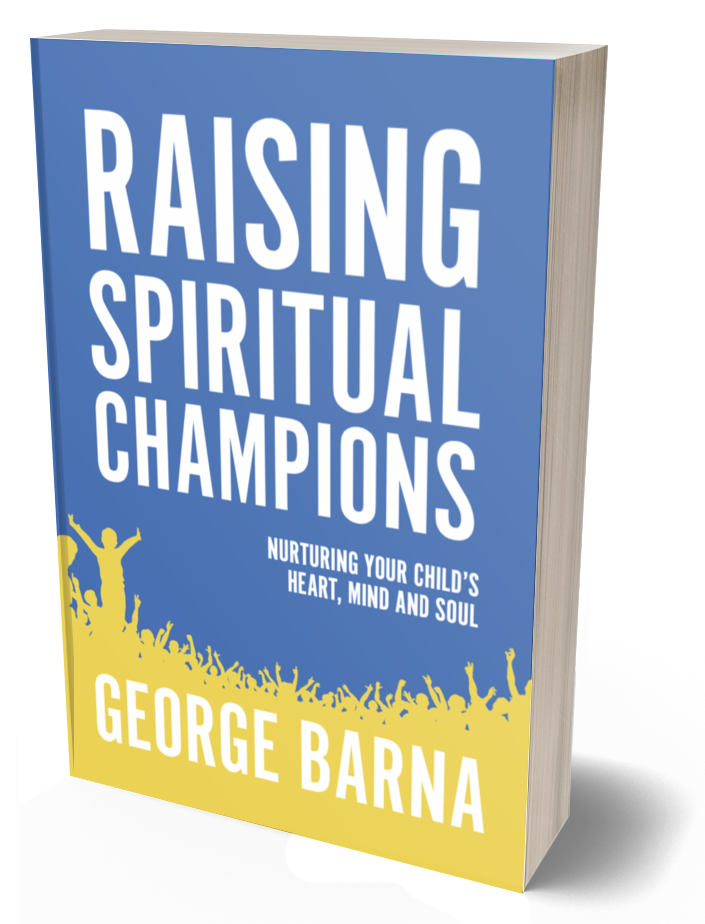
A bestseller on Amazon upon its release, Raising Spiritual Champions: Nurturing Your Child’s Heart, Mind and Soul is the product of a collaborative effort between the Cultural Research Center at Arizona Christian University and the Family Research Council to assist organizations committed to addressing the spiritual development of children in America. It presents two years of research from seven original research studies related to the ability to intentionally and strategically raise spiritual champions among the nation’s children.
The book is organized into three sections. The first details the importance of children and the opportunity to disciple them, how well ministry to children is faring and exclusive research insights from Dr. Barna regarding the efforts. The second section unpacks what it takes to make a disciple, digging into four specific strategies for discipling children and presenting the “Seven Cornerstones of a Biblical Worldview” as the starting point for discipleship. The third and final section focuses on how media and church-based ministries impact the lives of children, including a discussion of how parents and other influencers can interact most effectively in the campaign to disciple children.
Raising Spiritual Champions: Nurturing Your Child’s Heart, Mind and Soul was published by Arizona Christian University Press in partnership with Fedd Books, an Austin-based literary agency and is available for purchase at Amazon.com, other major book retailers and online in both paperback and digital formats. For more information about discounts on quantity orders, email: info@culturalresearchcenter.com.
| |
| | | |