| |
Gratitude for the Land and Community
We are deeply grateful to our partners for walking alongside us in this shared mission. Together, we restore and nurture ecosystems, protect biodiversity, and build landscapes resilient to the challenges of today and tomorrow. By bridging the needs of our communities and natural resources, and empowering people through reliable expertise and action, your dedication and collaboration help strengthen the resilience of Sonoma County—for the land, the wildlife, and the generations to come.
In this season of gratitude, may you be filled with appreciation and find a deeper connection to the land, to one another, and to the meaningful work we do together.
| |
- Showcasing Forest Resilience with Red Sky Summit
- Adaptive Grazing for Climate-Ready Public Lands
- Cultivating Connection
- Support for New Water Board Grazing Regulatory Program
- Hope Flows in the Gualala
- Rainwater Harvesting Community Event in Mill Creek
- Launch of Well Aware Toolkit, and more!
| | | | |
Showcasing Forest Resilience during Red Sky Summit
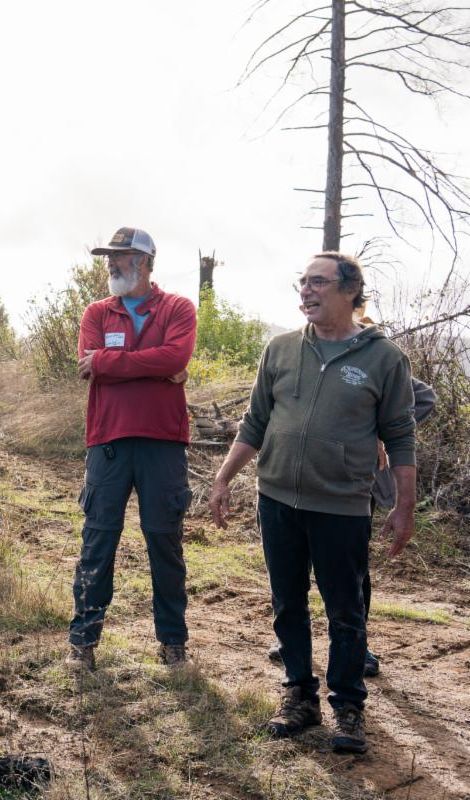
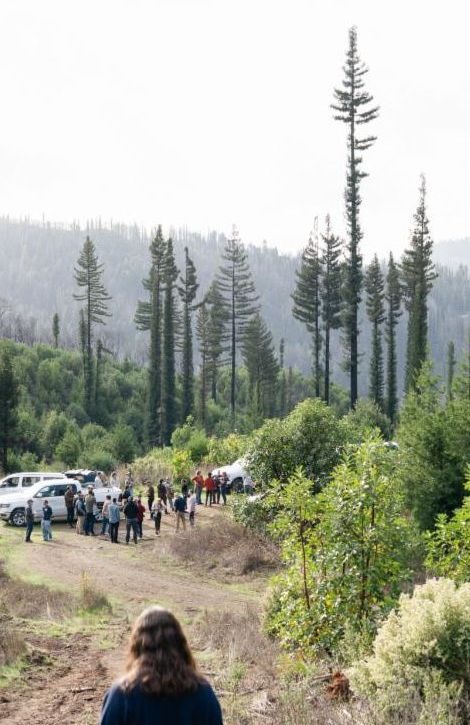
On November 6th, Forestry Project Manager Genevieve Tarino and Board Director Fred Euphrat presented at a site tour organized by Conservation Works and Blue Forest for participants in the Red Sky Summit. The group visited two properties that received funding through the North Bay Forest Improvement Project (NBFIP), giving attendees the chance to see firsthand how the program supports effective forest management and wildfire resilience.
The first site, which partially burned during the 2020 Walbridge Fire, highlighted the value of proactive stewardship. Attendees were able to see pockets of trees that survived the fire due to trimming and fuel-reduction work completed years prior. They also saw the impact of NBFIP funds on post-fire management, where 70 acres had been treated, costing roughly $120,000, to reduce the risk of future fire burning in the area. The second site showcased the progress of intentional thinning and strategic fuel reduction. Attendees were able to see how thoughtful management can improve safety, forest structure, and ecological health over time.
The event wrapped up with a wine tasting at DaVero Winery in Healdsburg. Around 30 attendees joined the tour, including policy experts, natural resource professionals, entrepreneurs, and innovators—making for an engaging and inspiring day in the field.
The next round of NBFIP funding begins on January 16th and closes on January 30th, 2026. Click here to learn more!
Photos thanks to Blue Forest
| | | | |
Adaptive Grazing for Climate-Ready Public Lands
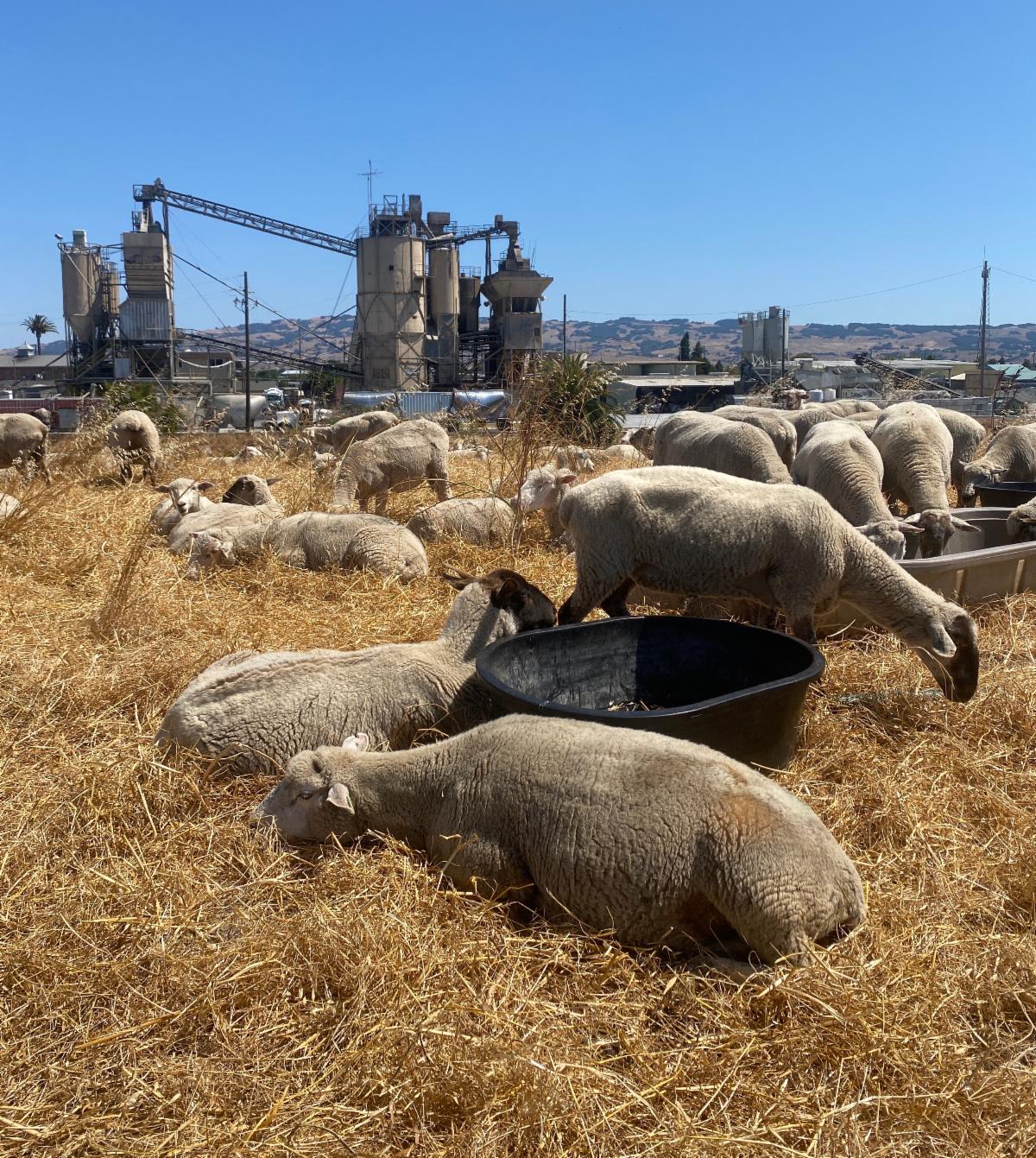
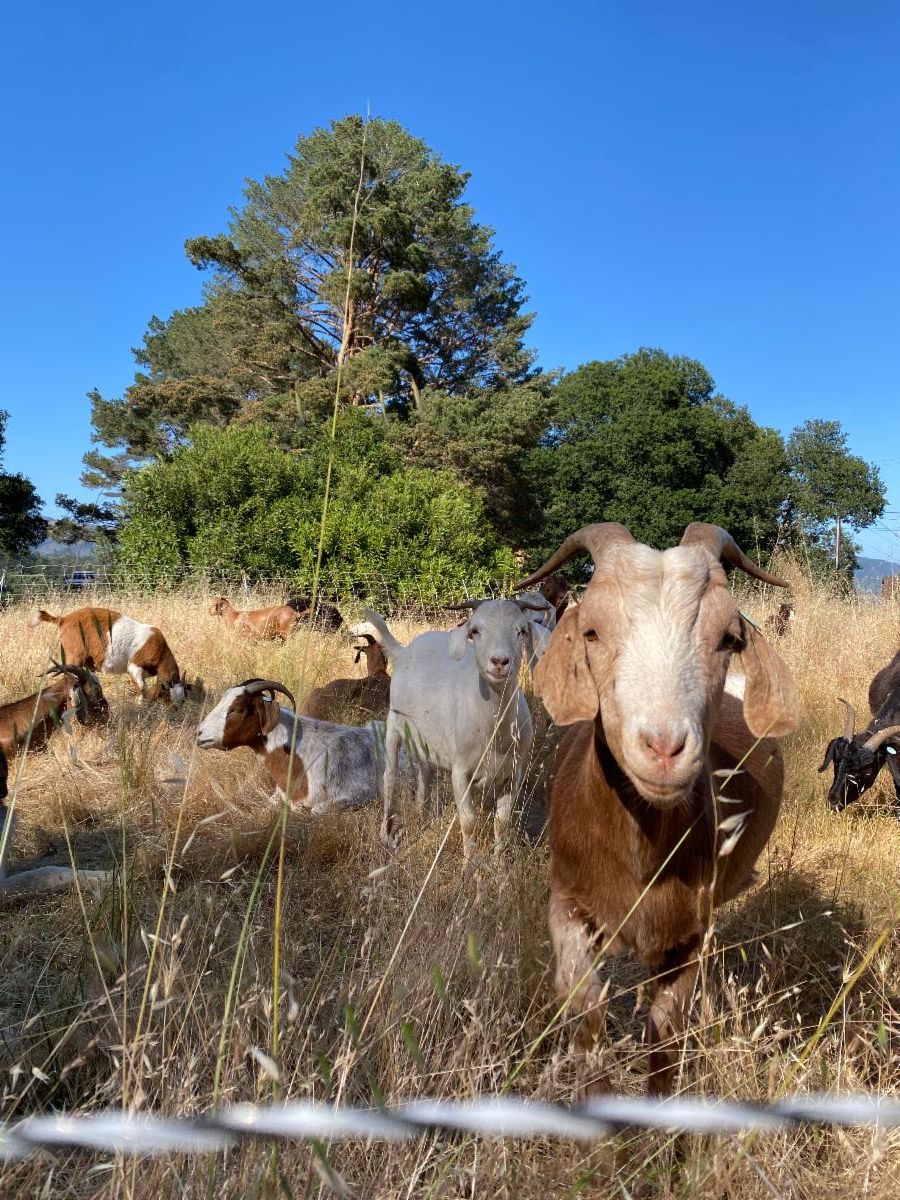
Now in its eighth year as a joint Sonoma RCD and Gold Ridge RCD program, the LandSmart Grazing Program saw a season of purposeful action across Sonoma County’s public lands. Through thoughtful infrastructure investments and strong partnerships with contract graziers, livestock once again became a tool for renewal—carefully reducing fuel loads, strengthening ecosystem health, and helping communities build resilience in the face of growing wildfire risk.
This summer, livestock grazed across a remarkable array of public and private lands, including newly acquired City of Petaluma properties, Ragle Ranch and North Sonoma Mountain Regional Park, Modini Preserve, Laguna Foundation lands, Monte Rio Parks and Rec, and the Fairfield Osborn Preserve. Together, these efforts brought grazing to 288.5 acres of public land, supporting healthier landscapes, reducing wildfire risk, and demonstrating the power of collaboration between land stewards and contract graziers.
This summer, we also focused on strengthening the foundation for future grazing by upgrading key infrastructure—like perimeter fencing and water troughs—and offering educational opportunities for our local communities to learn why grazing is such a powerful land management tool.
This work is supported by funding from the State Coastal Conservancy and the Vegetation Management Project Grant through the County of Sonoma.
| | | | |
Cultivating Connection
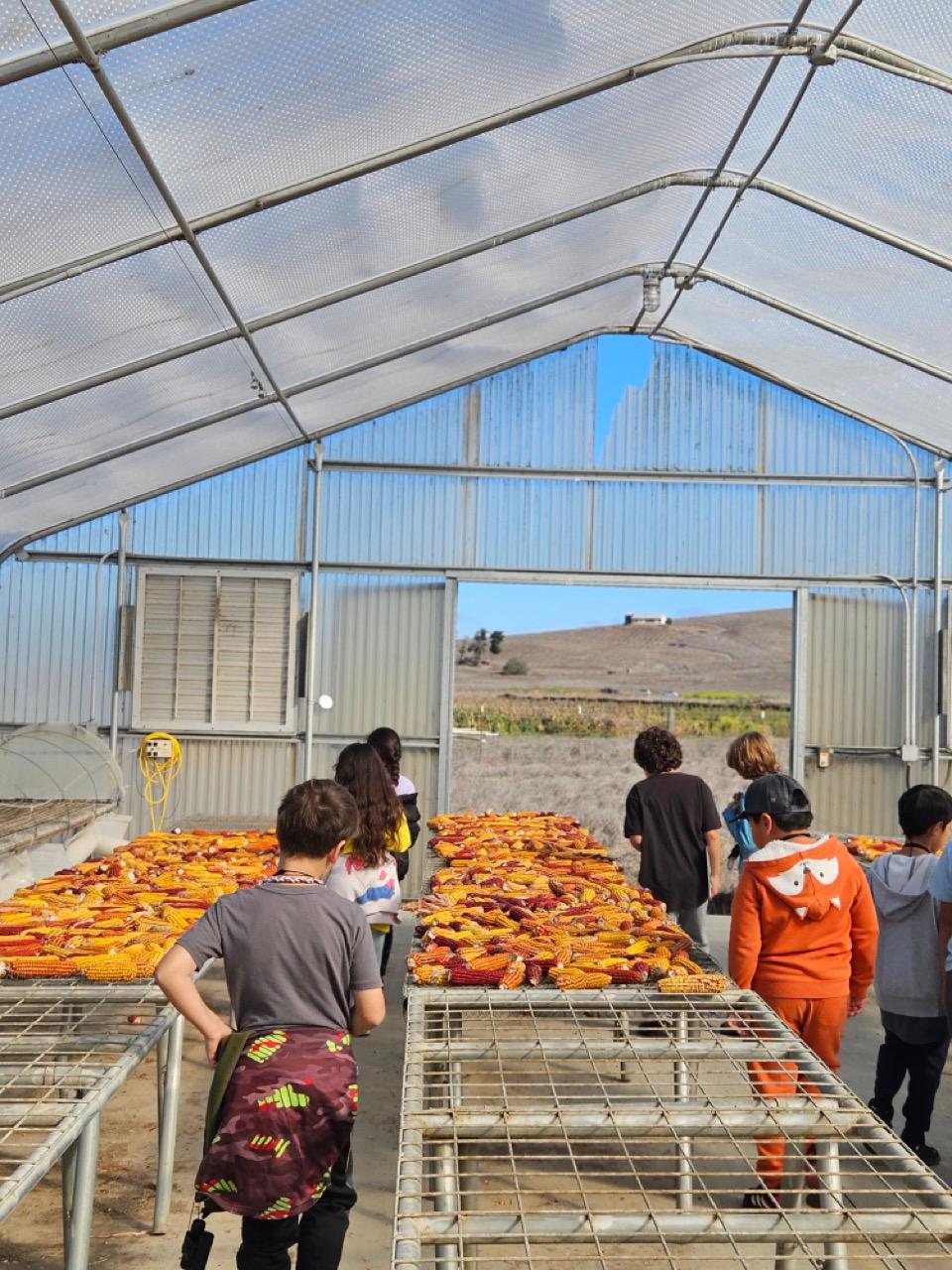
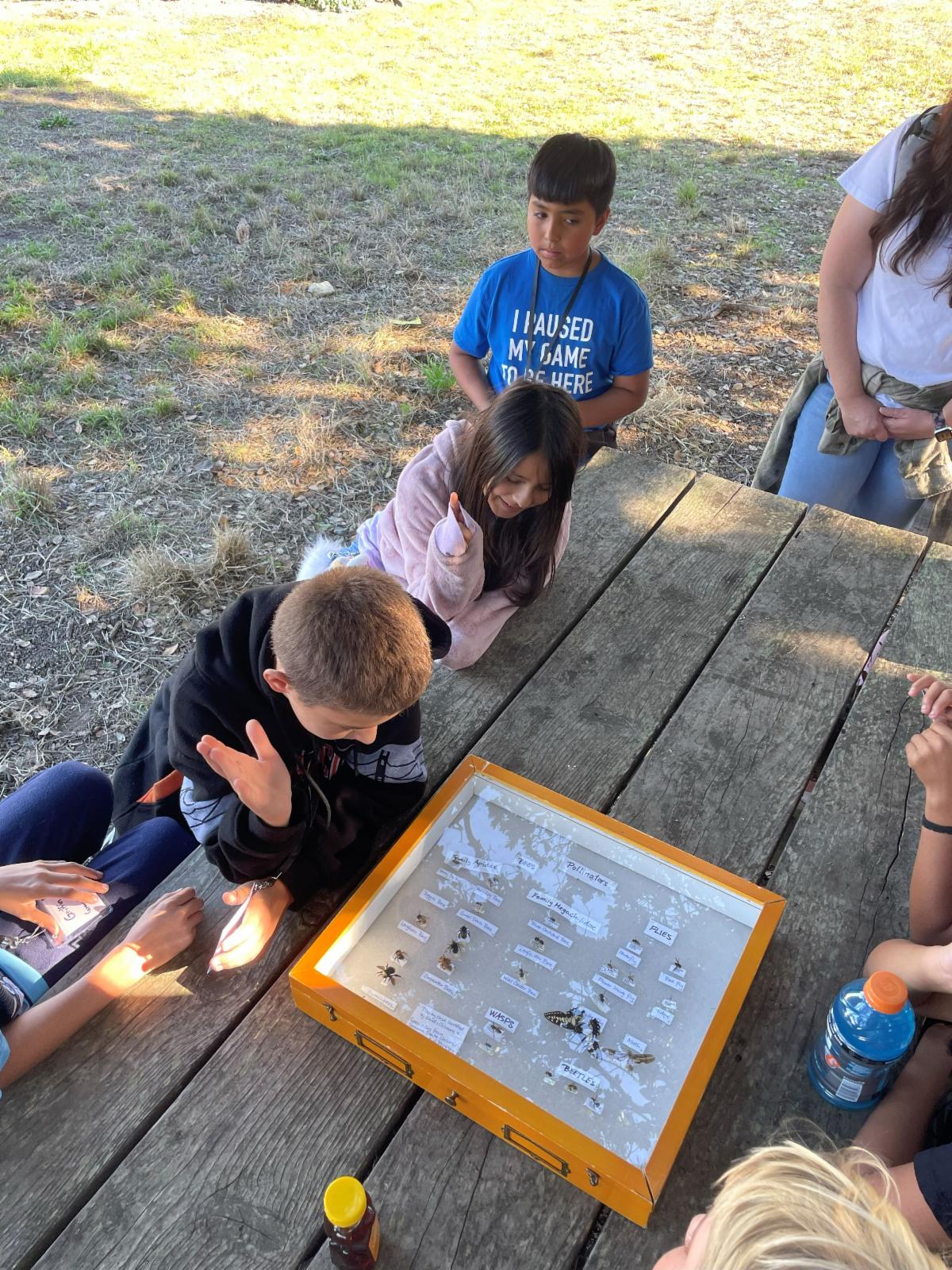
What better way to inspire the next generation than to bring them onto the land itself? In October, we welcomed over 345 students to Open Field Farm through our Teaching Environmental and Agricultural Memories (TEAM) Program. Students observed native pollinators in action and learned why they matter to farmers, discovered what a CSA truly means, tasted the vibrant flavors of farm-fresh food, and experienced the interconnected web of life on a diversified farm—from dedicated farmers and grazing animals to the wildlife that shares this ecosystem.
We are proud to share that 3rd, 4th, and 5th-grade students from Petaluma, Sebastopol, Santa Rosa, and Healdsburg attended our fall field trips. Together, with the partnership of Stephanie Lennox at Envirichment and the amazing Climate Corps Fellows at Conservation Works, we invited 15 classes onto the farm. Connecting with these students reminds us of the importance of hands-on, outdoor education – for all ages. We are grateful for Open Field Farm and the many producers we collaborate with to offer such fundamentally important experiences. If you are a teacher interested in joining us for a TEAM field trip outing, reach out to our Maria Wnorowski, Community Engagement Program Manager, at mwnorowski@sonomarcd.org to stay looped in for our spring dates.
These free field trips are made possible by Sonoma County taxpayers, who fund the work of Ag+ Open Space with a quarter-cent sales tax. This program, among others its supports, furthers Ag + Open Space’s mission by directly connecting Sonoma County communities with the working and natural lands they have invested in conserving. Thank you for your continued support!
| | | | |
Support for New Water Board Grazing Regulatory Program
The SF Bay Regional Water Board adopted a Grazing Permit this summer. The permit applies to grazing operations located in Sonoma Creek and Petaluma River watersheds that meet the criteria below. This new permit replaces older permits and requires grazing operations to develop a Ranch Water Quality Plan (RWQP) and implement plan recommendations to help protect and improve water quality.
If your ranch is located within Sonoma Creek or Petaluma River watersheds and meets the following criteria, you are required to enroll by February 15, 2026:
- The grazing operation covers 100 acres or more
- Livestock are kept on rangeland for a total of 45 days or more in any 12-month period
- The property is NOT currently part of the Confined Animal Facilities Program (primarily covering dairy and equine operations)
- The property is NOT currently enrolled in the Sonoma Creek and Napa River grazing permit (if you are enrolled, you will be automatically migrated to the new permit and do not need to re-enroll)
Grazing operations in the Petaluma River watershed, which is newly added to permit coverage, should be receiving notices in the mail soon. An information session will be held for new and prospective enrollees at 1:30 PM on January 9, 2026, at the Petaluma NRCS Field Office, 5401 Old Redwood Highway, Suite 100. You can also learn more or contact Water Board staff here.
Sonoma RCD is developing a Ranch Water Quality Plan template and can provide technical assistance to guide you through the planning process. Please reach out to Brett LeDuc, Agricultural Project Manager, at bleduc@sonomarcd.org for questions and support.
| | | | |
Hope Flows in the Gualala
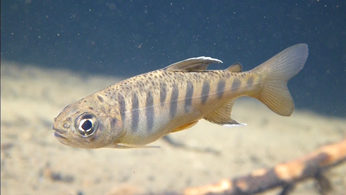
There is big news coming out of the Gualala Watershed! For the first time in over 20 years, coho salmon have been observed in the Gualala River. Beginning in September, members of the Gualala River Watershed Council (GRWC) started documenting the arrival of juvenile Coho in Dry Creek, a tributary to the North Fork of the Gualala River.
Despite extensive snorkeling surveys, no coho had been seen in the Gualala River since 2004, and it was believed the species may have been extirpated from the river. That’s what makes this fall’s discovery especially remarkable.
In October, GRWC members Elise Allen and Sean Case returned with snorkel masks and cameras and successfully identified and photographed six to eight individuals in three separate pools on lower Dry Creek. California Department of Fish and Wildlife staff later collected genetic samples from three individuals. While the results may take some time, understanding where these fish originated – and potentially where they hatched – will be critical for ongoing watershed restoration efforts. The adult Coho that produced these juveniles were likely from another river on the North Coast, though it is possible that a remnant population survived undetected for 21 years. Further surveys will need to be undertaken to determine if there are Coho in other areas of the Gualala.
| | | | |
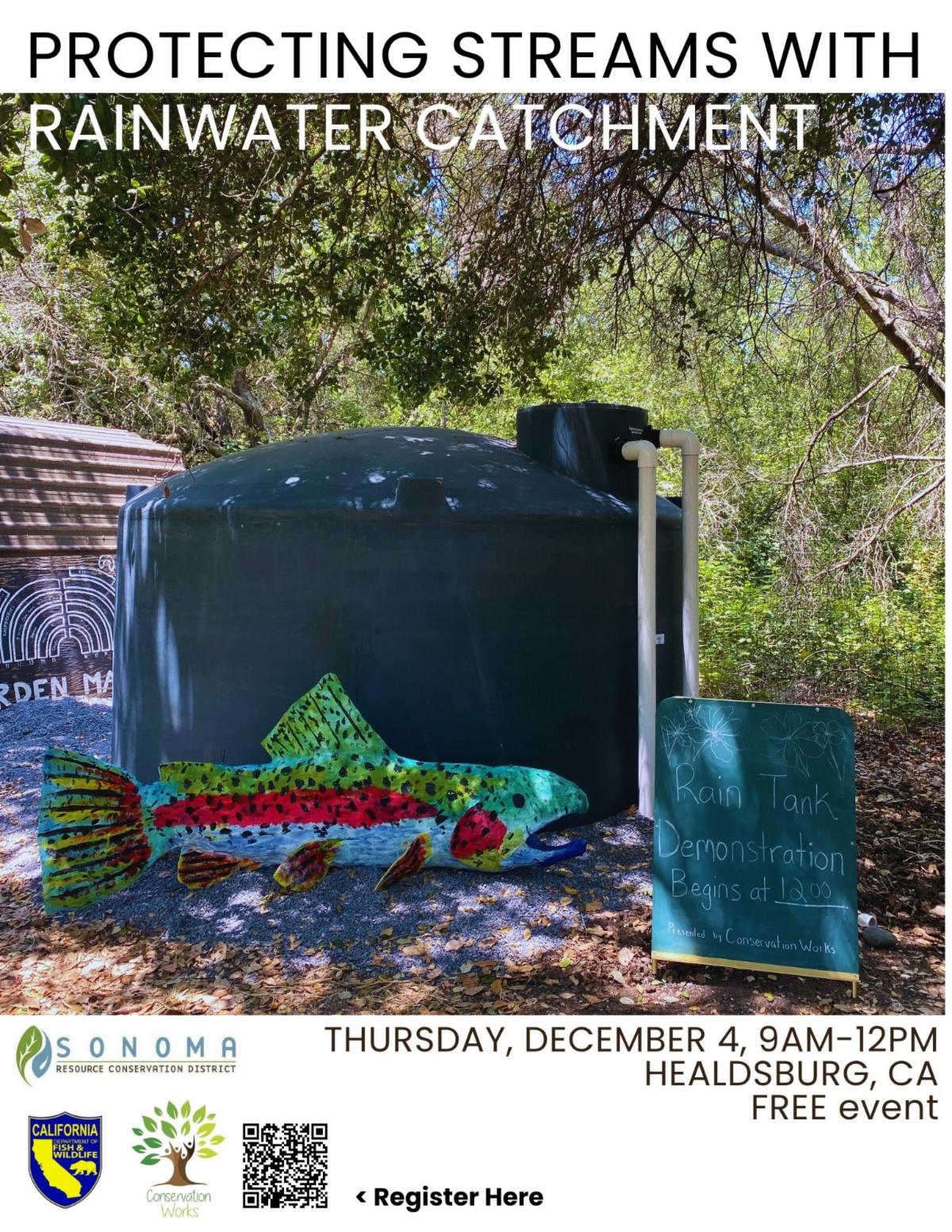
Rainwater Harvesting Community Event in Mill Creek
We are excited to be partnering with Conservation Works to cohost a workshop on rainwater catchment in Mill Creek. This will be a great opportunity to learn about capturing and reusing rainwater in our homes and gardens to benefit our local streams.
The workshop will be on Thursday December 4th from 9 am to 12 pm in Mill Creek. The full address will be shared upon registration.
| | | | |
Official Launch: Well Aware Toolkit
We are excited to share the official launch of the Sonoma County Groundwater Sustainability Agencies' Well Aware Toolkit! This new interactive resource provides personalized water savings tips, programs, and rebates for groundwater users. Our team provided their expertise and provided feedback through the development of this toolkit. The resource has guidance for all property types, including residential, commercial, vineyards, golf courses, specialty crops, and pasture.
Users can input their own address, and find specific solutions for their property, such as:
- Customized water-saving strategies for your property
- Financial assistance programs to support water conservation
- Guidance from trusted local experts who understand our region’s needs
| | | | |
FREE Soil or Water Test Analysis Help
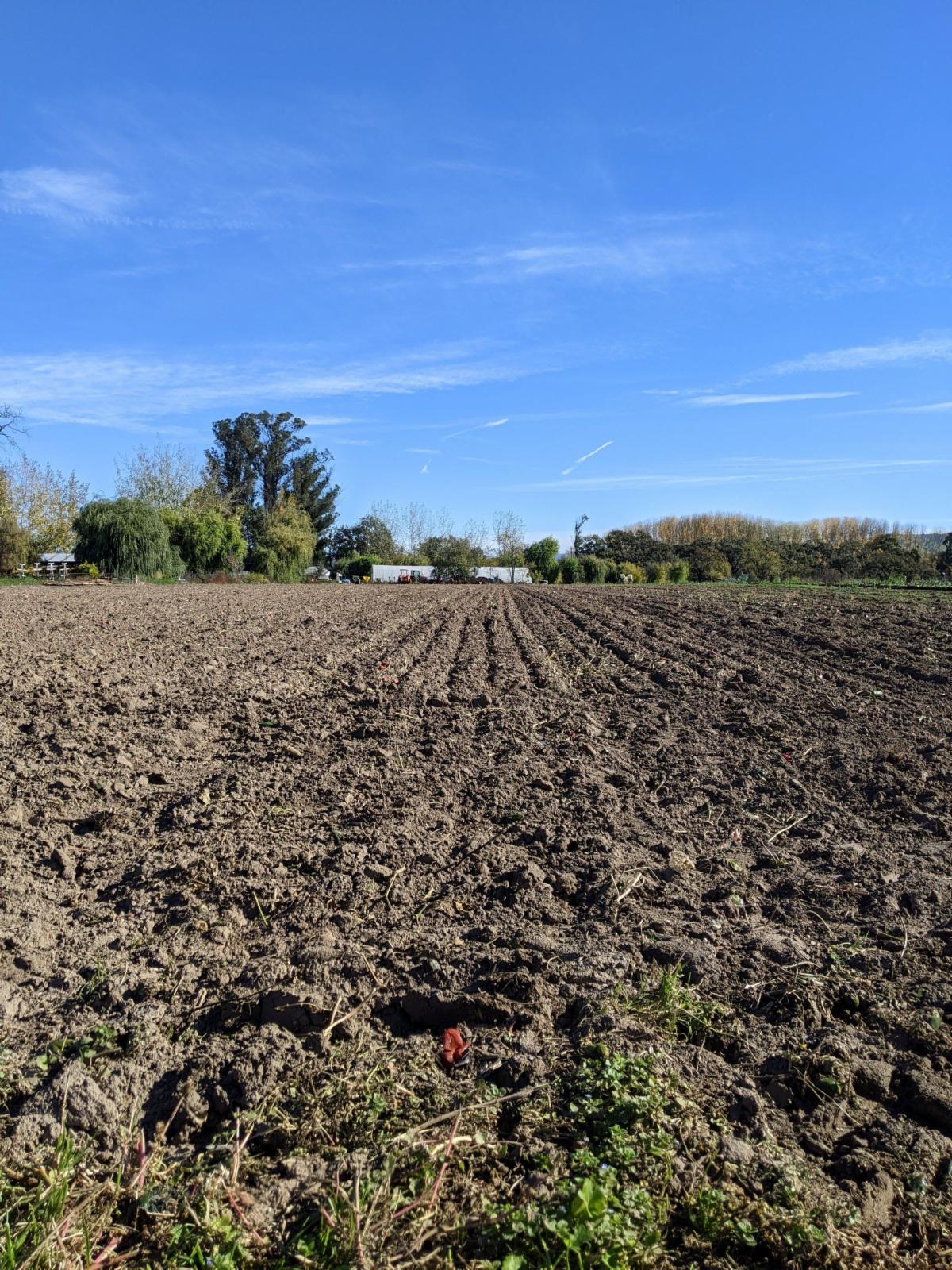
Do you need help interpreting results from a soil or irrigation water test?
For a limited time, Sonoma RCD is offering free analysis of your agricultural water and/or soil tests. Lab test results from January 2024 through January 2026 are eligible. The RCD will provide producers with a short summary of test result analysis and recommendations
If interested, please contact Brett at bleduc@sonomarcd.org.
| | |
| |
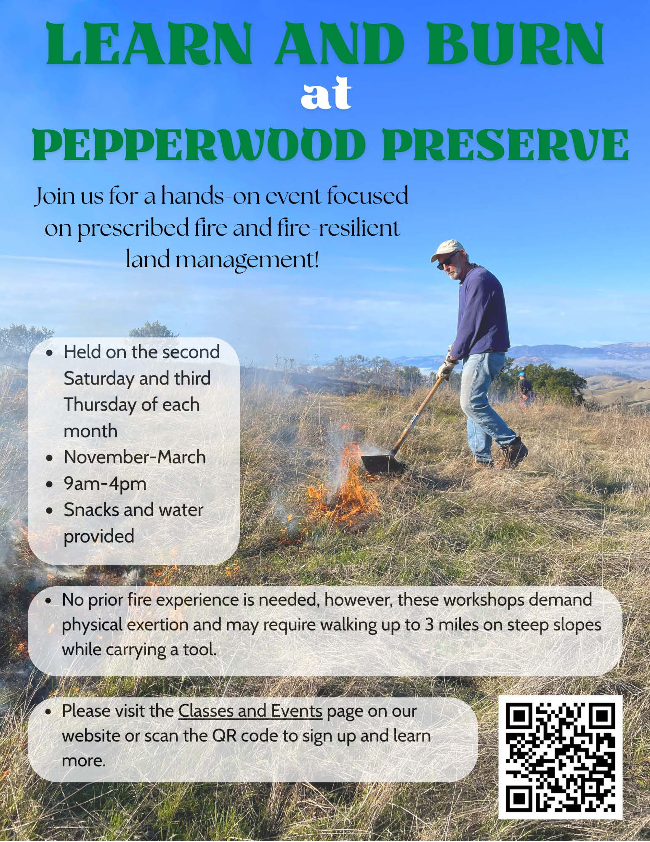
Learn and Burn
2nd Saturday & 3rd Thursday
November - March
9 am to 4 pm
FREE
Pepperwood Preserve
Join Pepperwood’s Learn and Burn (LAB) Days — hands-on training events focused on prescribed fire and fire-resilient land management. LAB Days provide regularly scheduled opportunities for community members to learn how fire can be used as a safe and effective stewardship tool. These sessions build participants’ comfort with fire, provide hands-on practice, and foster shared learning with experienced fire practitioners. Register using the form linked below.
PLEASE NOTE: While anyone is welcome, these workshops demand physical exertion and may require walking up to 3 miles on steep slopes while carrying a tool. Please be honest with yourself about your ability.
| | | | |
Free Site Assessment and Concept Design for Water Conservation
Are you in the Santa Rosa Plain Groundwater Basin and interested in learning more about how you can conserve and reuse water in your landscape? If you are a residential or non-agricultural well-water user, then you are eligible to apply for a free Catalog of Projects, which will provide you with actionable ideas for groundwater recharge! Learn more and apply today: https://dailyacts.org/well-designed-landscape-program/
Funding is limited and time sensitive, so if interested, please apply today to be considered for a site visit. Future funding may also support installations for sites that apply. Visit the website to learn more, or reach out to moreinfo@dailyacts.org if you have any questions.
| | | | |
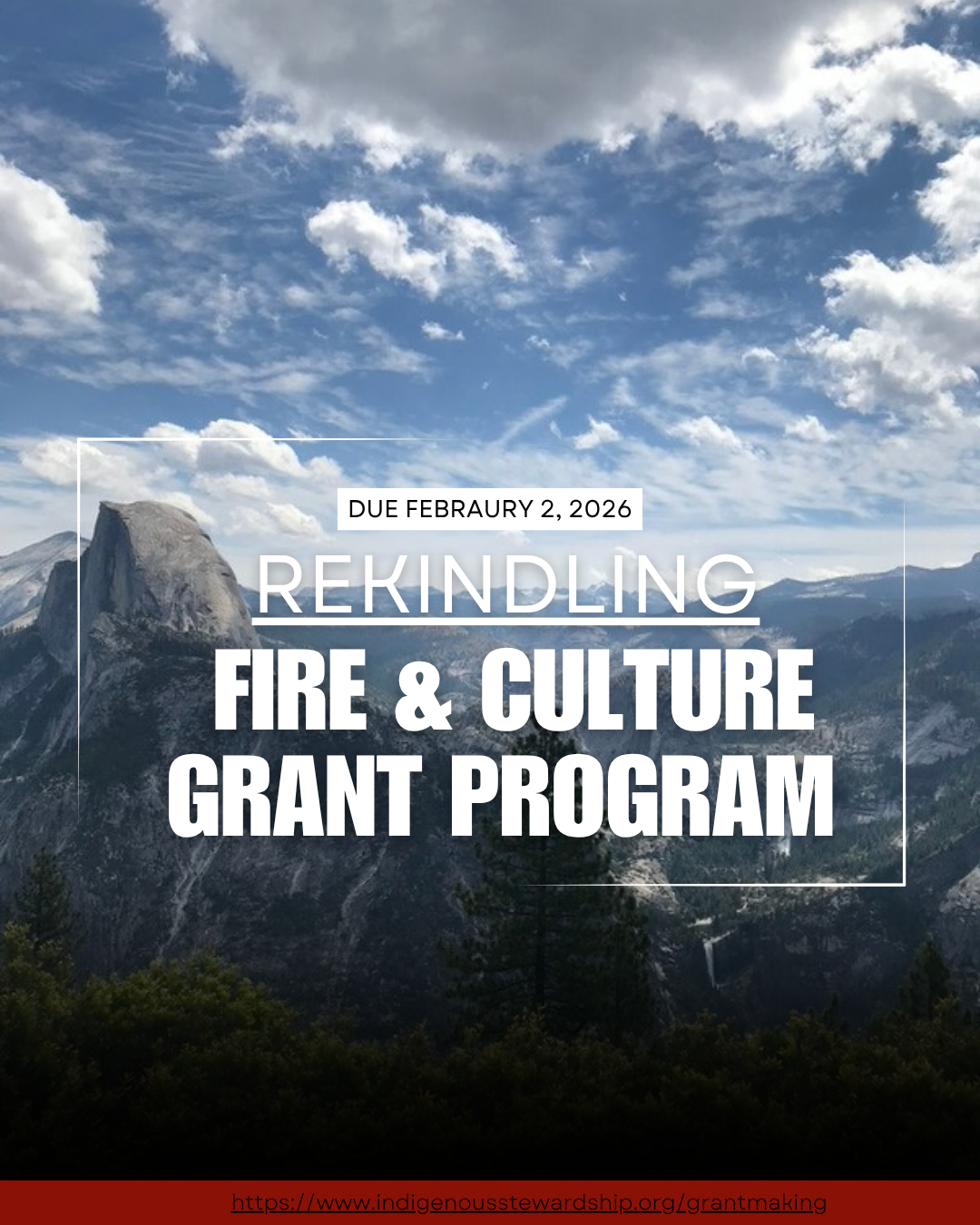
Apply for the Rekindling Fire Culture Program
With generous support from the Department of Conservation’s Regional Forest and Fire Capacity program, the Indigenous Stewardship Network is releasing a Request for Applications for the Rekindling Fire and Culture Grant Program. This funding opportunity is intended to support capacity-building for cultural fire or Indigenous-led fire in California. Collaboratively developed proposals are encouraged. Applications are due on February 2, 2026
| | |
| |
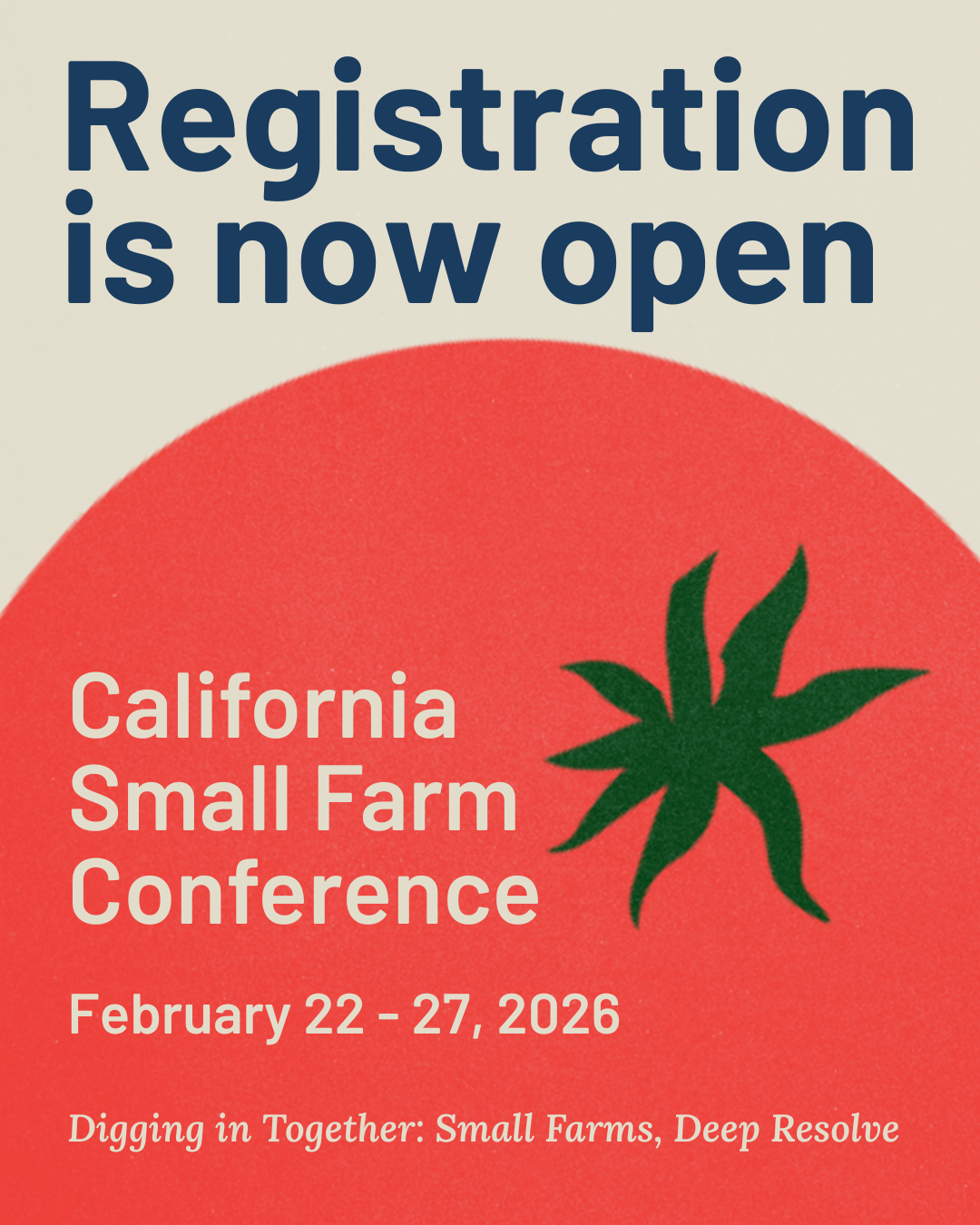
California Small Farm Conference
February 22-27th
Online with One In-Person Day
Sliding Scale
Registration is officially LIVE for the 38th annual California Small Farm Conference — a week of learning, connection, and inspiration for everyone helping to build a stronger local food system and empower thriving family farms.
| |
Conservation at Work with LandSmart®
| | | | |