MoIP Vision: Missouri is committed to reducing the impact of invasive plants through early detection and control.
MoIP Mission: To benefit Missouri, MoIP advances efforts to reduce the impact of invasive plants.
| | Winter 2026 • State of Invasives | | |
Yes, despite the record high temperatures that Missouri has experienced lately, it is still winter. However, the Spring Equinox will be here before we know it, so treat ye invasives best treated in winter while ye still can.
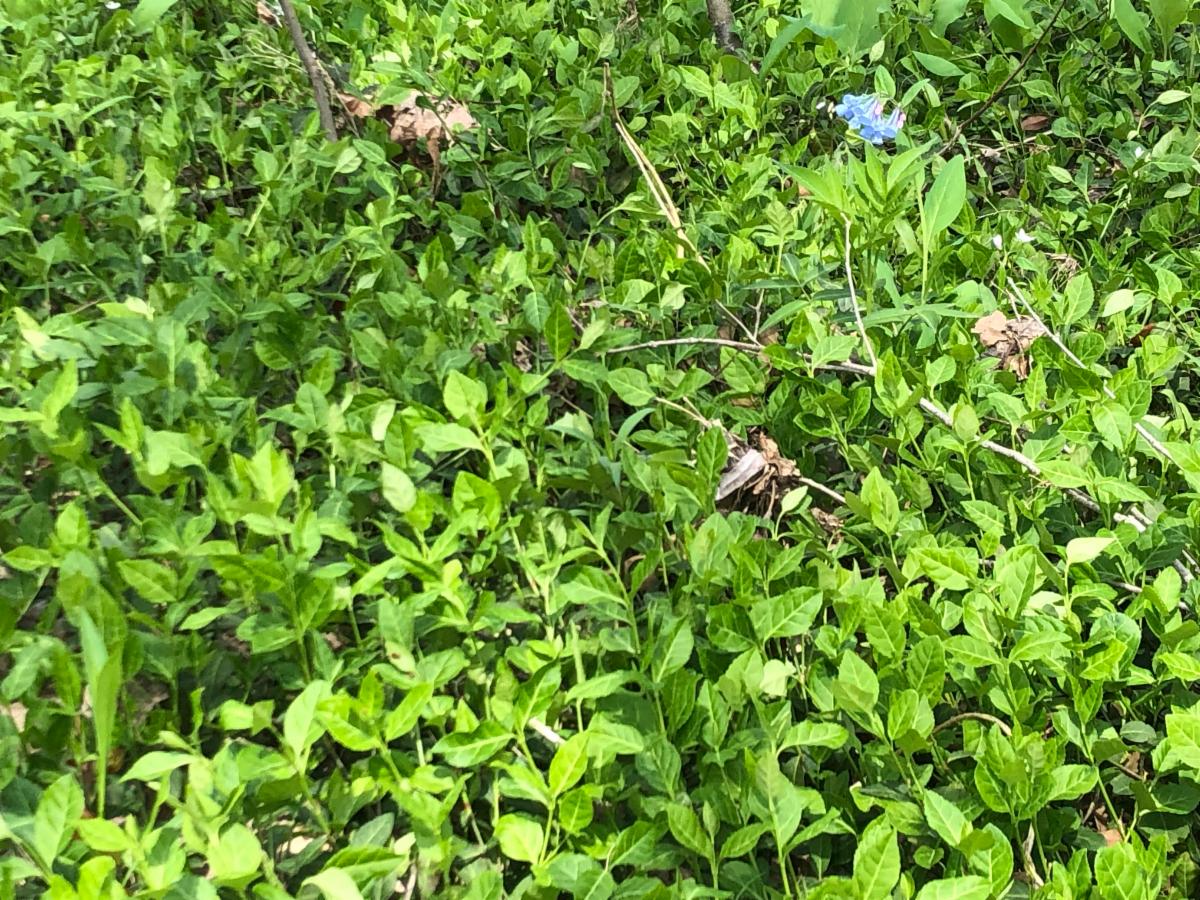
This time of year is ideal for focusing on invasive vines, which may be growing over native, but still dormant, plants. As an example, see that blue speck in the photo at left? That is a lone, native Virginia bluebell, blooming in April, and about to be swallowed alive by wintercreeper (Euonymous fortunei). Scroll for information on treating invasive vines.
Please read and share this issue of State of Invasives, and, as always, let us know if you have questions and ideas about invasive plant early detection and control.
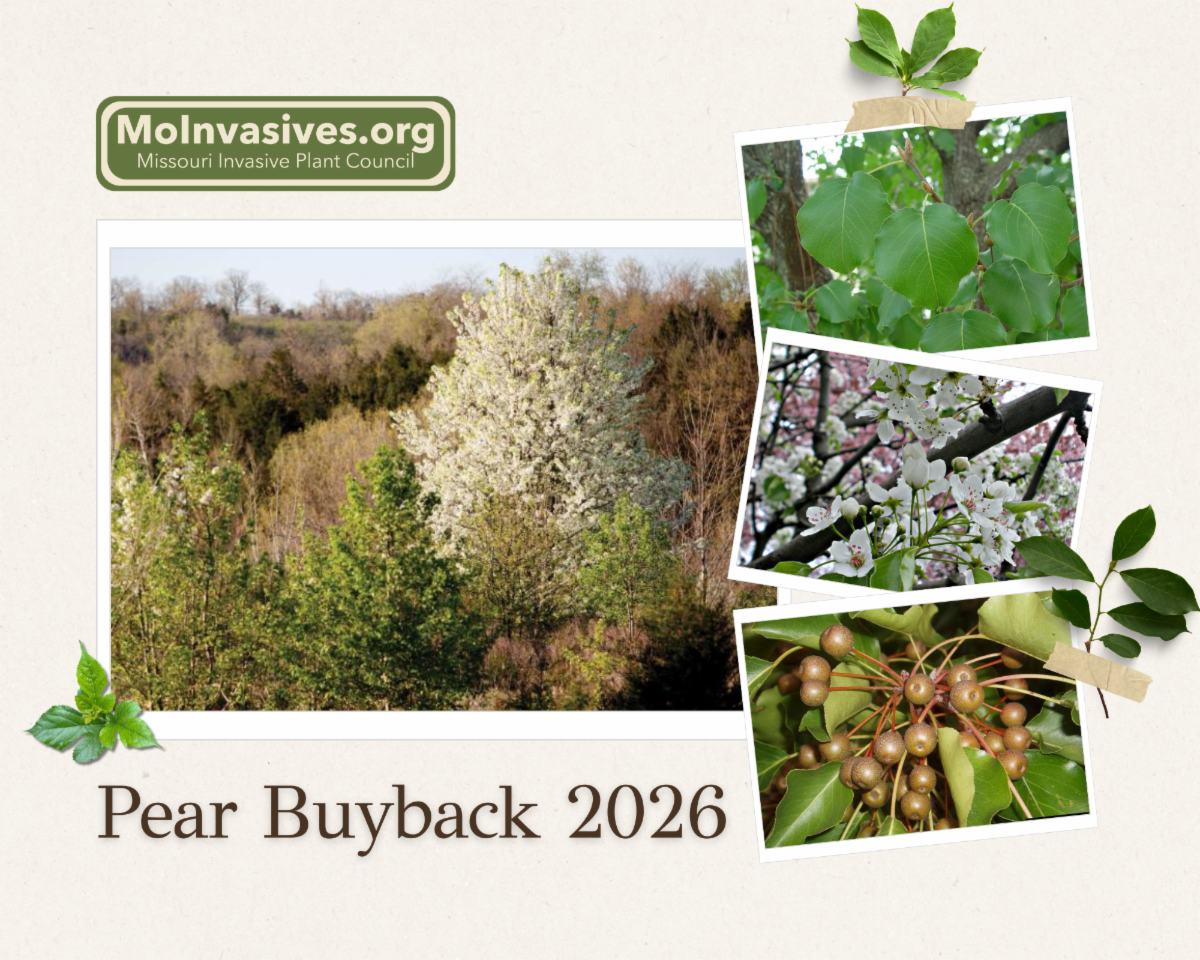
–Save the Date: April 21, 2026 - MoIP Callery Pear Buyback Event
–Invasive Plant Success Story: City of Warrensburg
–Invasive Plant Control Job Openings with SRISP and MPF
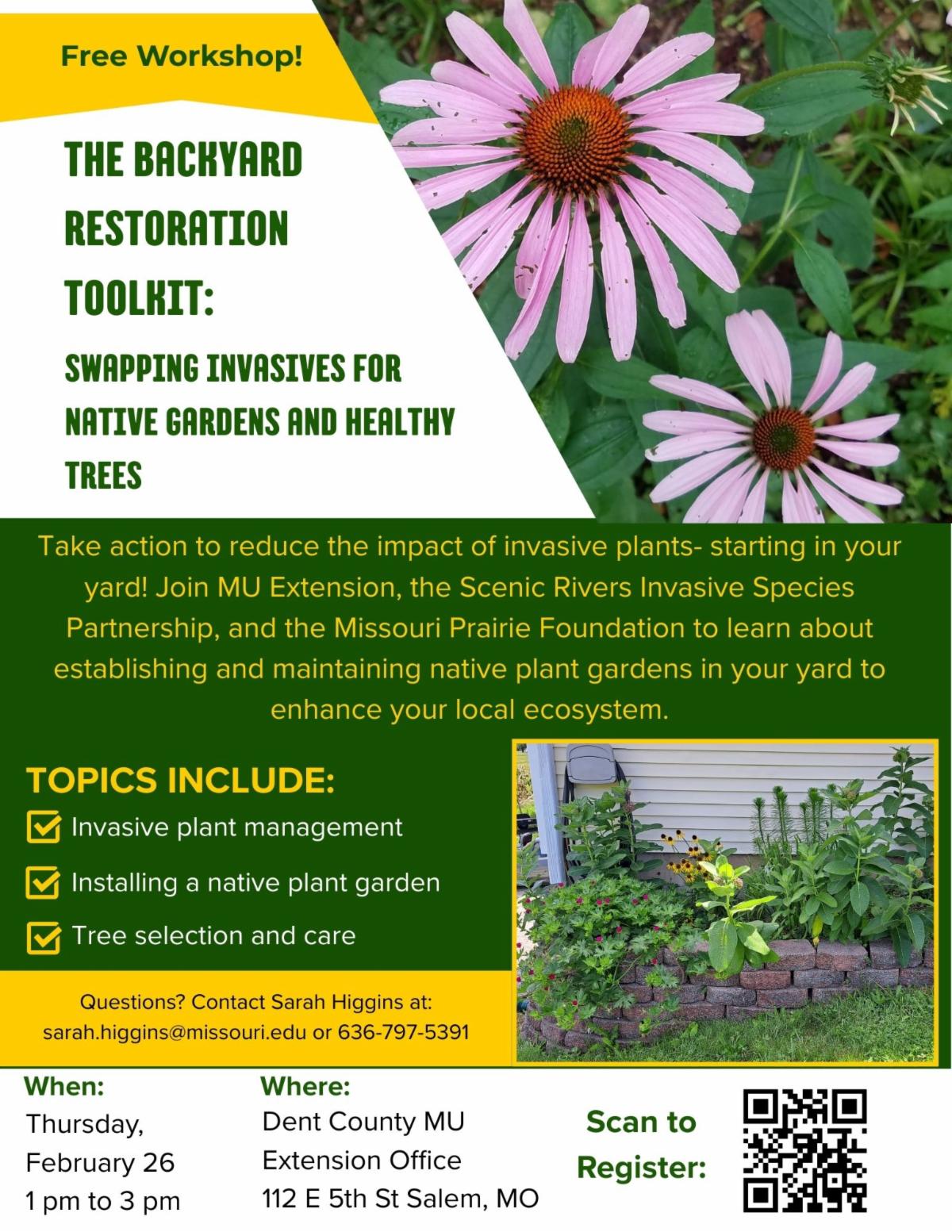
–February 26: Free In-Person Workshop in Salem
–Missourians Making a Difference: Interview with Bonnie Harper of Open Space STL
–Upcoming Invasive Plant Workdays
–New Resource: Common Weeds (Including Seedlings of Invasives) in Gardens
–Invasives to Treat in Winter: Invasive Vines
Thank you for taking action to identify and control invasive plants! And, Happy National Invasive Species Awareness Week!
On behalf of the Missouri Invasive Plant Council,
Carol Davit, MoIP Chair
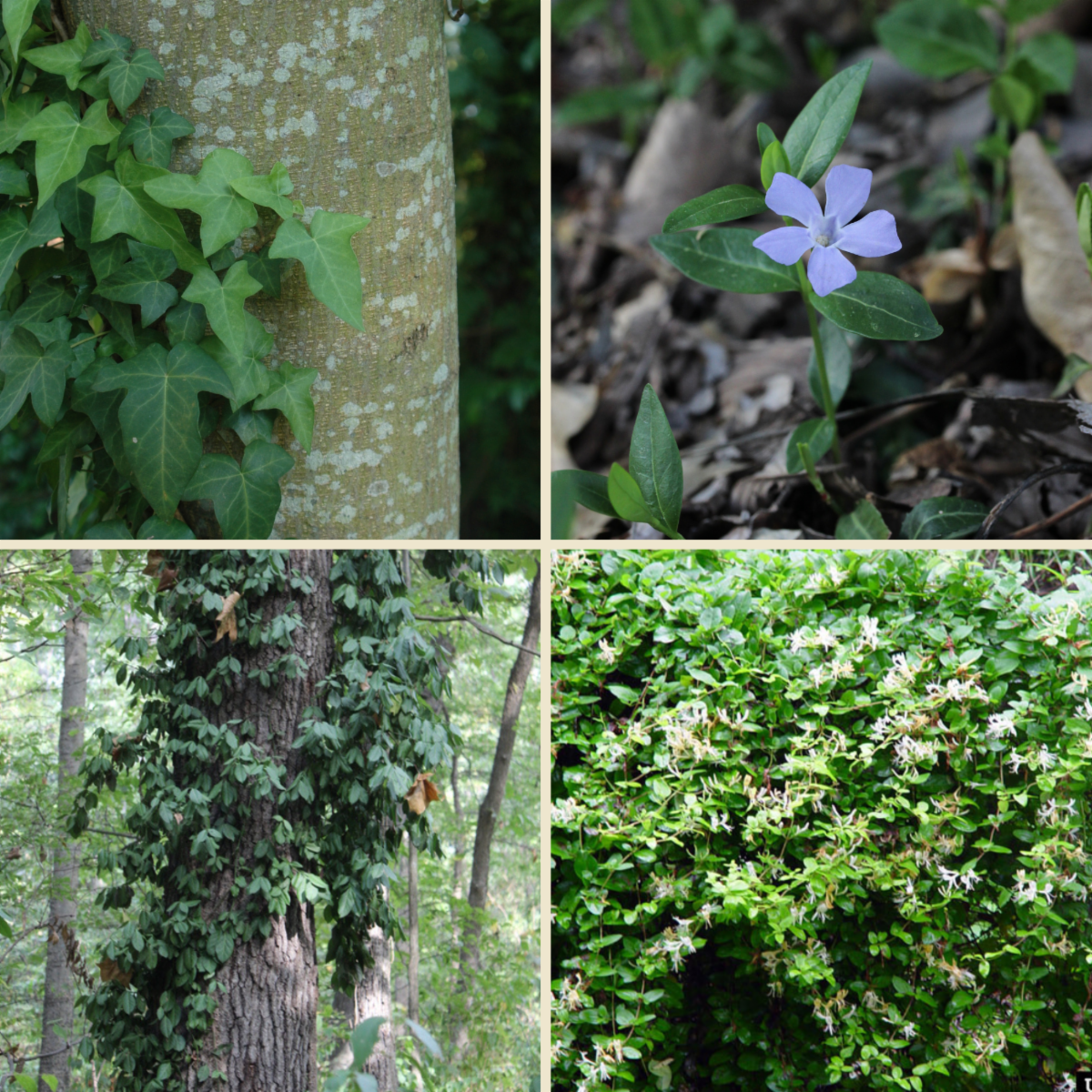
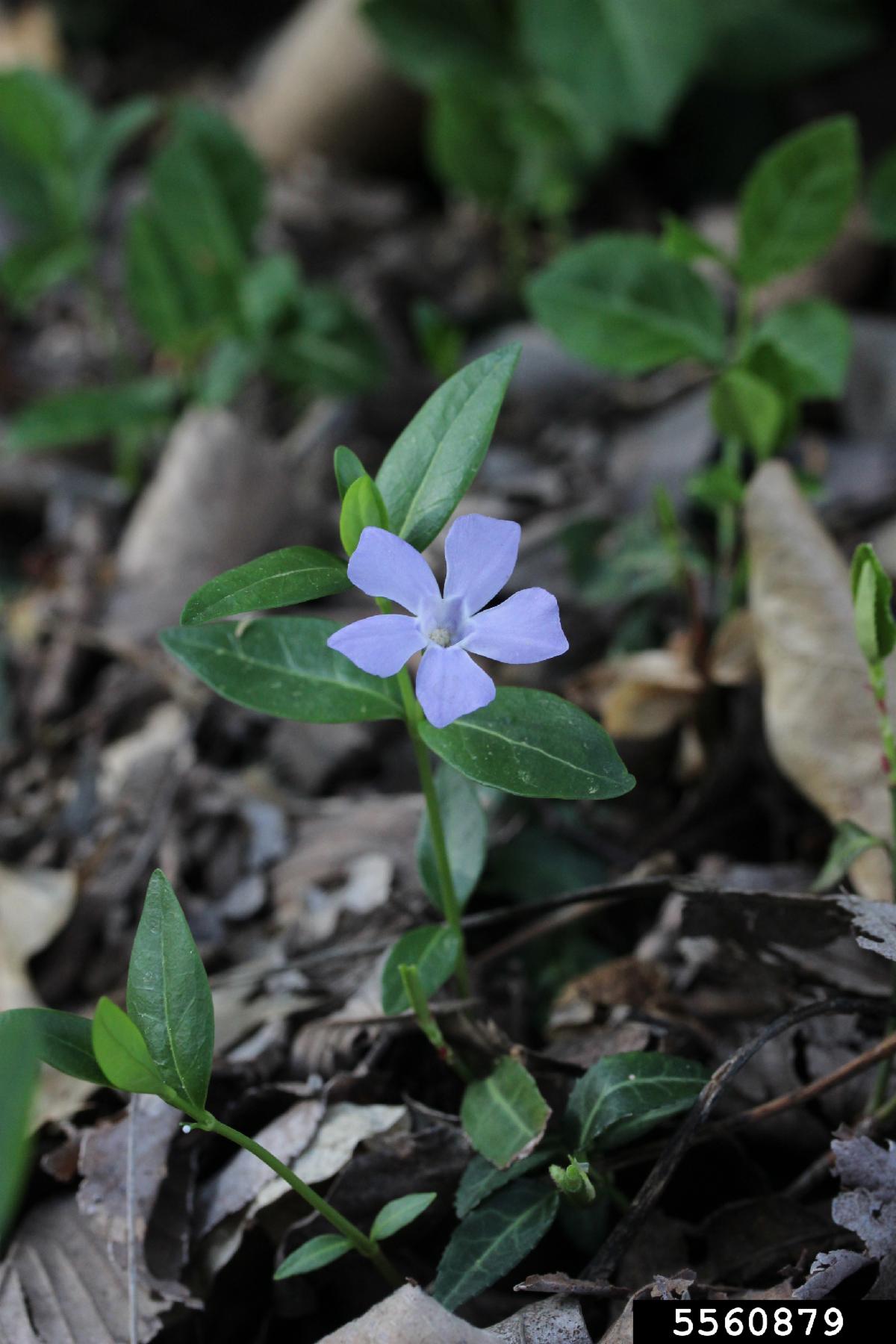
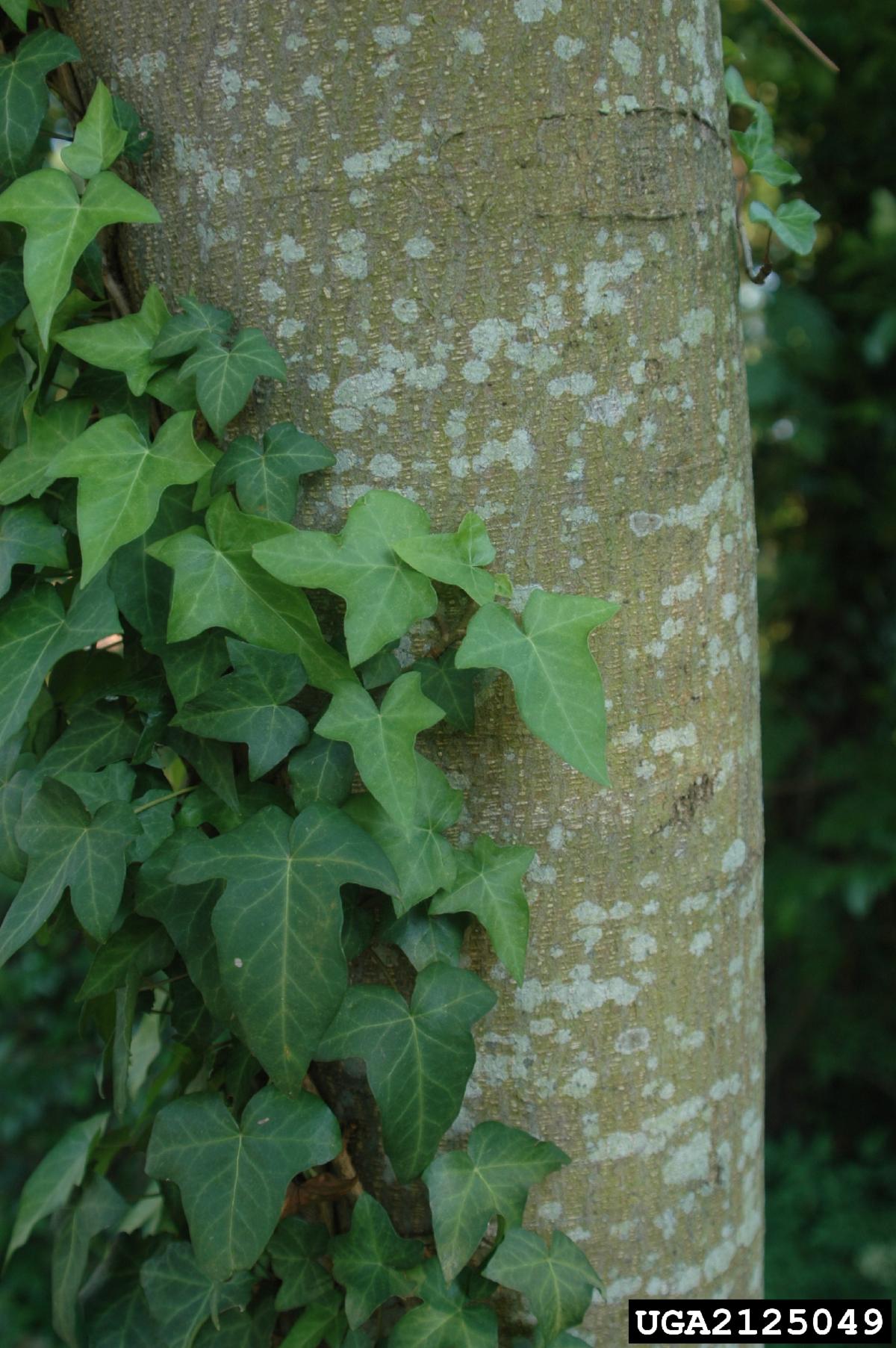
Photo collage includes photos by Chris Evans, Bugwood.org, of, clockwise from top left, English ivy (Hedera helix), periwinkle (Vinca minor), Japanese honeysuckle (Lonicera japonica), and wintercreeper (Euonymous fortunei) by Carol Davit
| | Save the Date: April 21, 2026 MoIP Callery Pear Buyback Event | | |
The Missouri Invasive Plant Council (MoIP) has set the date for its 2026 Callery Pear Buyback event as April 21, 2026, from 3:00 to 6:00 p.m. Registration will be open March 16 through April 16, 2026.
During the registration period, Missouri residents can take a photo of their cut-down callery pear tree(s) and sign up to receive a free native replacement tree.
The 2026 MoIP Callery Pear Buyback event will be held in 23 locations: Cape Girardeau, Columbia, Doniphan, Hannibal, Jefferson City, Joplin, Kansas City, Kirksville, Lebanon, Liberty, Moberly, Park Hills, Parkville, Pineville, Riverside, Rolla, Sikeston, Springfield, St. Charles, St. Joseph, St. Louis, Warrensburg, and West Plains. MoIP thanks Forest ReLeaf of Missouri, Forrest Keeling Nursery, Missouri Community Forestry Council, Magnificent Missouri, the Missouri Department of Conservation, and the Missouri Prairie Foundation for financial support for this invasive plant awareness and action event.
| | Invasive Plant Success Story | | |
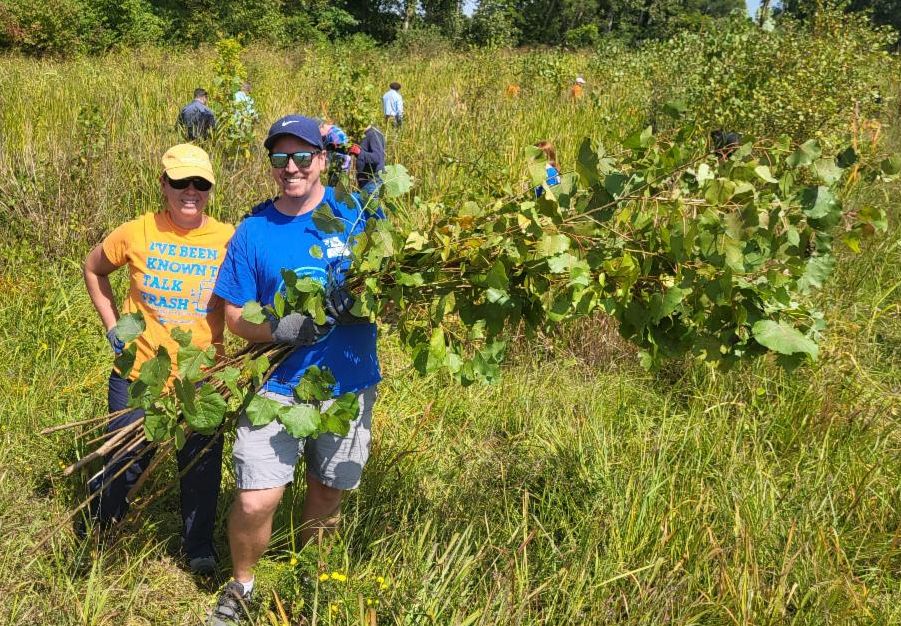
Most positive outcomes begin with one person taking action. In the case of the City of Warrensburg, Missouri, city resident Vernon Elsberry, on behalf of the local environmental group Citizens for Environmental Action, presented the idea of controlling invasive plants on city properties to city officials. That action led to community involvement in invasive plant work days twice a year.
“Two years ago, I engaged the local private land conservationist from the Missouri Department of Conservation to deliver a presentation on invasive plants to the Warrensburg City Council,” said Elsberry. “And the council liked it.”
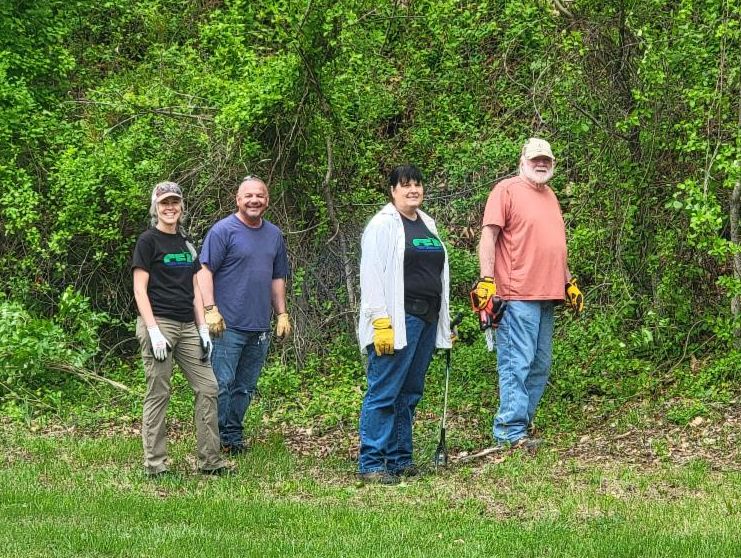
As a result of that presentation, the City of Warrensburg now organizes invasive plant removal events each spring and fall, to which the public is invited to participate. Volunteers include city employees, Citizens for Environmental Action (CEA) members, the city’s Energy and Sustainability Task Force, the Mayor, Central Missouri University personnel, and several other community members. Read more here.
Vernon Elsberry, far right, and other volunteers controlling invasives at a City of Warrensburg work event. Photo by Suzy Latare
| | Invasive Plant Control Job Openings | | |
SRISP Seasonal Field Technicians
The Scenic Rivers Invasive Species Partnership (SRISP) is pleased to announce two seasonal field technician positions, beginning May 4 and ending September 4. Preference will be given to applicants who apply by February 27. Read more about this job position and find application instructions here.
MPF Prairie Stewardship Technician
The Missouri Prairie Foundation (MPF) seeks a motivated, hard-working self-starter to help steward some of the rarest and most beautiful habitat on the planet, right here in Missouri. MPF's Prairie Stewardship Technician position is seasonal and full-time, from approximately May 15 through August (position will accommodate academic schedules). The duties of this field position include scouting for and treating invasive plants on MPF prairies, primarily in southwestern Missouri. Application deadline is April 1. Read more about this job position and find application instructions here.
| | Free In-Person Workshop February 26: Swapping Invasives for Natives | | |
Learn invasive plant control, how to establish a native plant garden, and native tree selection and care.
This free workshop will be held in the conference room of the Dent County Extension Office.
Register using the QR at left or click here.
| |
Missourians Making a Difference: Bonnie Harper
| | |
Throughout Missouri, many individuals are making significant progress in the early detection and control of invasive plants. MoIP is pleased to highlight their efforts.
In this interview with Open Space STL Executive Director Bonnie Harper, she shares her background and her organization’s conservation work.
How long have you been with Open Space STL, and what are your primary responsibilities?
I’ve been with Open Space STL since September 2019. I’m responsible for steering the organization’s strategic vision, managing day-to-day operations, and ensuring financial health. My key responsibilities include implementing board-approved policies, fundraising, hiring staff, maintaining stakeholder relationships, and serving as the primary public spokesperson.
What is Open Space's mission?
Founded in 1965, Open Space STL works independently and collaboratively to conserve and sustain land, water, and other natural resources for the health and well-being of people throughout the St. Louis region.
What is your professional background?
I have a B.A. in Environmental Studies and a Master’s of Environmental Legal Studies. I started my professional career as a natural resource planner for a regional governmental agency— similar to Missouri’s Department of Natural Resources—on the South Island of New Zealand, where I helped local communities develop biodiversity conservation plans. I then became a senior policy advisor for a similar government agency on the North Island of New Zealand, focused on reviewing biodiversity and biosecurity rules, regulations, and voluntary approaches to wetland protection and land conservation. I then moved back to my hometown of St. Louis, where I was a sustainability planner for the East-West Gateway Council of Governments, focused on watershed plans, before transitioning to my current role at Open Space STL.
What are some of the invasive plant control projects you/Open Space STL have led over the years? Why are they important? What has been the impact?
We have two primary programs that recruit and train volunteers to manage invasive species on public lands—Operation Wild Lands (OWLs) and the Community Stewardship Alliance (CSA). Read more here.
| | Invasive Plant Control Work Days: Register Now | | |
Columbia, Missouri:
• Flat Branch Creek Cleanup, Sunday, March 8, Noon to 3:00 p.m.
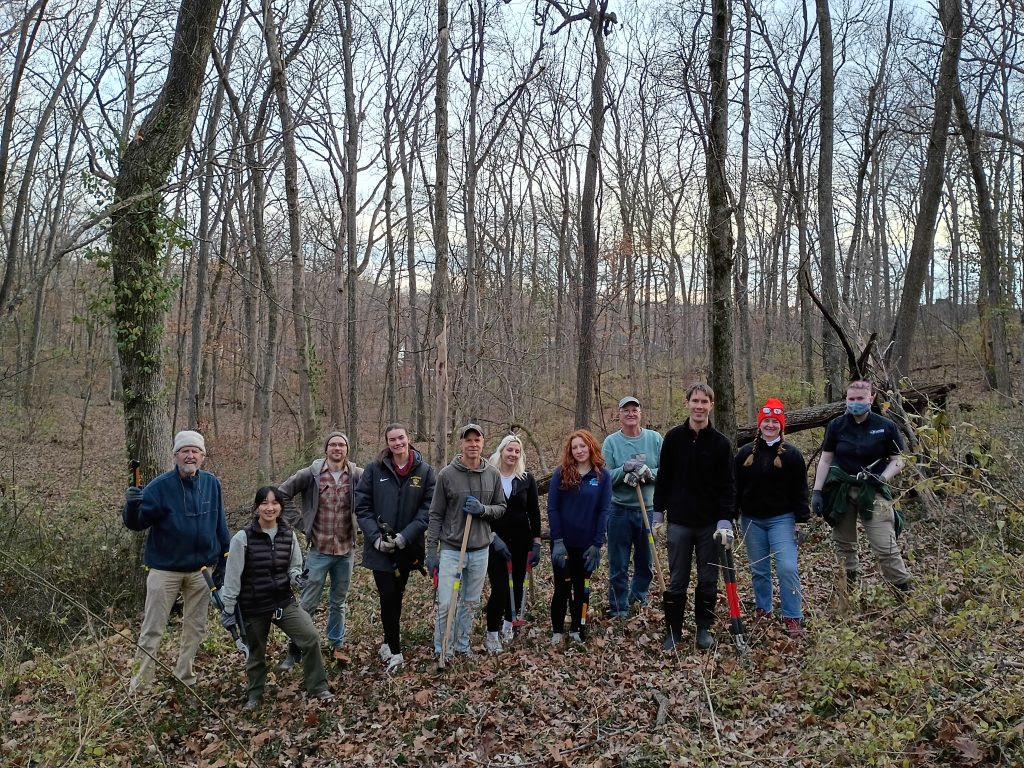
Missouri Conservation Corps (MCC), in collaboration with Missouri Stream Team, is hosting an urban creek cleanup on Columbia’s Flat Branch Creek on Sunday, March 8, 2026. Volunteers will meet at Columbia’s Grasslands Park and will walk to the MKT Trail from there. The cleanup will take place between Bridge #1 and Bridge #3 on the MKT Trail. MCC will provide gloves, tools, and training for this event, and if the weather cooperates, the group will grill hot dogs in Grasslands Park after the cleanup.
• Garth Nature Area, 2799 North Garth, Thursday, March 19, 1:00 to 3:00 p.m.
MCC honeysuckle removal event. Tools and training provided. Dress for the weather and for working outdoors.
• Columbia Audubon Nature Sanctuary, 3607 Bray Avenue, Saturday, March 21, 9:00 a.m. to noon. Joint honeysuckle removal work day with Columbia Audubon Society and MCC. Tools and training provided. Dress for the weather and for working outdoors.
For more information, or to sign up for any of the events listed above, contact MCC Project Director Stephen Bybee at stephen@missouriconservationcorps.org or visit missouriconservationcorps.org. MCC is currently planning more work days, so check out its website for additional opportunities.
Chesterfield, Missouri:
• Honeysuckle Removal Volunteer Service Day organized by the U.S Fish and Wildlife Service, Boone's Crossing Unit, Big Muddy National Fish & Wildlife Refuge, Chesterfield. Coordinates: 38.6770, -90.6469. Saturdays, March 7 and March 14, 9:00 a.m. to 12:00 p.m.
Volunteers will remove invasive bush honeysuckle with hand saws and hand-pulling. Event hosts (and volunteers comfortable doing so) will apply herbicide to cut stumps to prevent re-growth. Gloves, tools, quick training, ID booklets, herbicide, sunscreen/bug spray, water bottles, and a water jug for refills will be provided. Dress for the weather. Closed-toed shoes or boots are required. Please bring snacks for yourselves, if desired. Register by contacting Andrew Dreas - Biological Science Technician
U.S Fish and Wildlife Service, office: 660-537-6842/cell: 618-316-4293
St. Louis area:
• Find many invasive plant work days throughout the year organized by Open Space STL and partners here.
In the photo above, Missouri Conservation Corps volunteers take a break.
| | New Resource: Garden Weed ID Guide | | |
Weeds are an inevitable part of any kind of gardening. The Missouri Prairie Foundation's Grow Native! program has developed a new common weeds resource to help gardeners identify plants—especially very young plants—that may or may not be desired in native gardens or plantings.
But first, what is a weed? A simple definition is that a weed is a plant that is growing where it is not desired. Some weeds are highly invasive, including Callery pear (Pyrus calleryana) and bush honeysuckle (Lonicera maackii and other non-native, shrub honeysuckles), which may be readily identifiable as mature plants, but may not be as seedlings.
Controlling invasives when they are small prevents them from spreading, flowering, setting seed, and thus spreading and becoming more of a problem.
Visit the resource here.
Photo of garlic mustard seedlings (Alliaria petiolata) by Susan Farrington
| | Invasive Vines to Treat in Winter | | |
Not all invasive plants are most effectively treated at the same time of year, and treatment methods can differ according to the seasons. Here, we highlight several species of vines to treat in winter. You can find treatment guidelines for many invasive plants other than those highlighted below at moinvasives.org.
Note: Treatment methods may differ considerably if invasives are found in otherwise intact, highly biologically diverse areas, in disturbed areas/altered landscapes, or if invasives are found in or near water. When using chemicals to treat invasives, always read label instructions.
| |
| |  | Periwinkle (Vinca minor) is commonly planted in landscape settings, but, if not contained, can escape cultivation and form dense mats. Common settings to find periwinkle include forested habitats bordering old homestead sites or cemeteries. It is a low-growing vine-like perennial plant with opposite, evergreen, egg-shaped leaves ½-1 ½ inches long, and light purple-blue flowers. It rarely climbs. Fortunately, this plant rarely develops fruits in North America, and spread is primarily vegetative. Given its waxy, evergreen foliage, several herbicide treatments may be needed to effectively treat it. It may grow among desirable native plants, like spring ephemeral wildflowers, so treating it in winter while other plants are still dormant will safeguard native plant communities. For heavy infestations, a 1% to 3% solution of glyphosate or triclopyr, mixed with a non-ionic surfactant along with methylated seed oil or similar crop oil to help the herbicide stay on the foliage for better uptake by the plant, may be sprayed on the leaves. Or, vines can be cut with a 20% solution of glyphosate or triclopyr daubed or sprayed on the cut stems. Winter herbicide treatments should occur on days when the high temperature exceeds 50°F.
|
| | | Similar to periwinkle, English ivy (Hedera helix) is a popular evergreen landscape vine with the potential for escape into adjacent wooded and open areas, growing both along the ground and into tree canopies. This fast-growing, woody vine has dark green leaves up to 4 inches long with three to five lobes. The adult stage of this plant has entire, elliptic-ovate leaves on stems that produce clusters of green-white flowers followed by blue-black berries. Mechanical control methods include mowing (like a lawn) to “starve-out” the plants and pulling, which is labor-intensive, but if done systematically, can be effective. If the vine grows up trees, cut the stems and treat the cuts with a 25% solution of glyphosate or triclopyr. New growth will have less waxy leaves, thereby increasing the effectiveness of herbicide sprayed on the vines, but spraying them on warm days in winter (before native plants emerge) will avoid negative impacts on desirable plants. For foliar applications, use a 2% to 5% solution of glyphosate or triclopyr mixed with a non-ionic surfactant along with methylated seed oil or similar crop oil to help the herbicide stay on the foliage for better uptake by the plant.
| | |
Japanese honeysuckle (Lonicera japonica) is a woody, perennial, evergreen to semi-evergreen vine that trails along the ground and can climb to more than 80 ft. in length.
Leaves are opposite, oval, and 1 to 2.5 in. long. Flowering occurs from April to July, when showy, fragrant, tubular, whitish pink flowers develop in the axils of the leaves. The flowers turn cream-yellow as they age. The small, shiny globular fruits turn from green to black as they ripen. Each fruit contains 2 to 3 small brown to black seeds.
This pernicious vine can be treated during the dormant season by spraying the foliage with a 3% solution of glyphosate with surfactant and AMS (ammonium sulfate) or 3% triclopyr with surfactant. Often, Japanese honeysuckle grows over native vegetation, so spraying it in the dormant season will not affect desirable plants. Prescribed burning, especially on low-humidity days, can also set back Japanese honeysuckle, but may not kill it.
| |
Wintercreeper (Euonymous fortunei) can be easily spotted in winter because its leaves are green or reddish. When the ground is wet, small vines can be pulled. Large stems climbing up trees can be carefully cut, with the cut stem treated with herbicide (40% triclopyr solution when above freezing). Foliage can be treated with a 3% triclopyr solution, mixed with water and a non-ionic surfactant, or mixed with methylated seed oil or similar crop oil to help the herbicide stay on the foliage for better uptake by the plant.
Also: Invasive, non-native, cool-season grasses like tall fescue (Festuca arundinacea) can be controlled with glyphosate in later winter and early spring on warm days before natives re-emerge, for instance, in prairie plantings.
Photo collage includes photos by Chris Evans, Bugwood.org, of, clockwise from top left, English ivy (Hedera helix), periwinkle (Vinca minor), Japanese honeysuckle (Lonicera japonica), and wintercreeper (Euonymous fortunei) by Carol Davit
| | |
State of Invasives aims to:
• Provide useful information to you/the leaders of your organization, agency, or business to help you recognize and control invasive plants and reduce their negative impacts, introduce you to our work, explain the challenges of invasive plants, and make the case for bold action and how this will benefit Missouri and Missourians.
• Share talking points that you can use when communicating about invasive plant detection and control within your agency, business, or organization, and to your customers or stakeholders.
• Empower you and your audiences to recognize invasive plants and take action—around your office building, behind your parking lot, on your back 40, right of way, back yard, around your crop field, or on any other land you or your group owns or manages. Our MoIP Video: A Landowner Tour is one of MoIP's many useful resources at moinvasives.org.
We hope the information in this enewsletter is helpful, and we’d like to hear from you. What questions or ideas do you have? Would you like to share with us the invasive plant action you or your organization or business are taking? If so, contact us at info@moinvasives.org.
| | |
In 2015, Grow Native!, the native plant education and marketing program of the Missouri Prairie Foundation, spearheaded the formation of MoIP—a multi-agency, multi-industry networking and advocacy group to bolster statewide efforts to identify and control the invasive plant species that severely impact several sectors of the Missouri economy and native biodiversity. The purpose of MoIP—working as a united, supportive front—is to review, discuss, and recommend educational and regulatory action related to managing known and potential non-native invasive plants. Representatives from the fields of conservation, agriculture, botanical science, ecological restoration, transportation, horticulture, landscape services and design, and forestry make up the council membership, volunteering their time at quarterly meetings and small work groups. MoIP associates help disseminate MoIP information to various groups. Emily Render works on contract to coordinate MoIP activities.
In 2022, MoIP completed a framework for our work for the next five years—the MoIP Strategic Plan for 2022-2026 guides MoIP's current work.
Learn more about MoIP and find many invasive plant ID and control resources at moinvasives.org.
| | | |
Newsletter content ownership: Missouri Prairie Foundation.
You are receiving this message because you a subscriber to this enewsletter, which provides news and information about invasives in Missouri and the actions the Missouri Invasive Plant Council and our partners around the state are taking to control and reduce the impact of invasive plants. You can play an important role in statewide efforts to control invasive plants by reading, learning, and sharing the information within this enewsletter with others who deal with vegetation management.
E-mail us at info@moinvasives.org, call us at 1-888-843-6739, or visit us at www.moinvasives.org. If you do not wish to receive these periodic messages, please unsubscribe below.
Carol Davit
MoIP Chair & Missouri Prairie Foundation Executive Director
| | | |
Missouri Prairie Foundation
PO Box 200
Columbia, MO 65205
(888) 843-6739
| |
| | | |