|
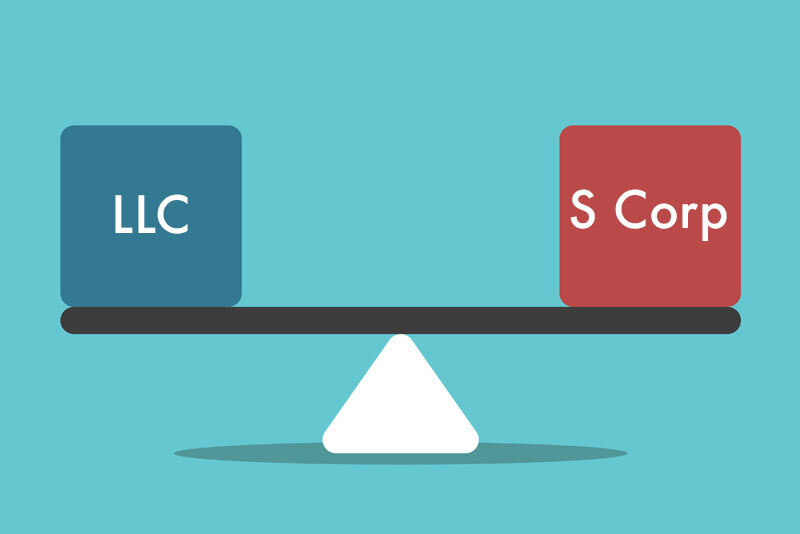
When it is time to choose a structure for your business, there are a number of important factors to consider. For small businesses, a limited liability company (LLC) or S Corporation (S Corp) may be the optimal structure for several reasons. In an LLC and S Corp, all losses and profits “pass through” to the members or shareholders, which allows these businesses to avoid the burden of double taxation. Moreover, in both these structures, the owners are not liable for the debts incurred by the business entity. However, there are important distinctions between LLCs and S Corps that may be instrumental in helping you select the ideal form for your business needs.
Corporate formalities. An S Corp, like a C Corp, must comply with various formalities for organizing and maintaining its business. These requirements include making filings, maintaining records, appointing a board of directors, conducting meetings, and complying with regulatory requirements. While the S Corp structure mandates a significant degree of corporate compliance and oversight, an LLC is devoid of similar regulations. An LLC merely requires an operating agreement to be executed by its members. For a small business or a solo venture, the degree of governance required in an S Corp structure may be prohibitive.
Flexibility in distributing income. An LLC is governed by an operating agreement, which is an informal document that allows for considerable discretion in managing the business. One of the areas in which LLC members are granted significant flexibility is profit allocation. Thus, income and losses can be distributed in any way that the members agree upon regardless of the proportionality of the members’ interest in the LLC. In contrast, income and loss is allocated in an S Corp based on the shareholder’s ownership interest. An S Corp does not allow an alternative method for income allocation.
Restrictions on shareholders. While an LLC does not restrict who can become a member, an S Corp has certain prohibitions regarding shareholder identity. The shareholders of an S Corp must be U.S. citizens or permanent residents. In addition, there can be no more than 100 shareholders of the corporation.
|