|
Global Shark Strandings
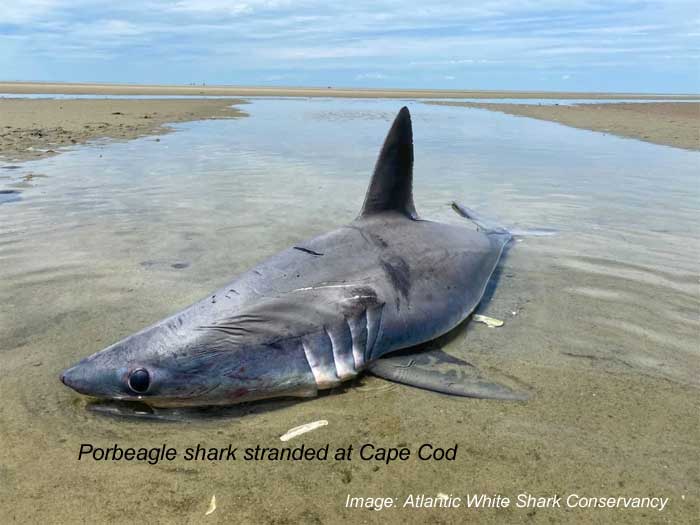
Shark strandings or beaching events are something of a mystery. A total of 3150 reports of events were recovered, with strandings dating back to 1880 including 89 species of sharks from 22 families including both single/small-scale and mass stranding events and involved small, medium and large sharks from coastal to oceanic species. Strandings have been reported in 47 countries with most occurring in California and Oregon. Leopard (Triakis semifasciata), brown smooth-hound (Mustelus henlei) and salmon sharks (Lamna ditropis) were the species with most records. In the past 50 years, there have been several mass mortality events of leopard sharks in San Francisco Bay, California, some of which involved the ciliated protozoan pathogen (Miamiensis avidus) that was found in the central nervous system of leopard sharks and other shark species in the area. However, the pathogen was absent in leopard sharks caught elsewhere. Each spring a small number of salmon sharks also beach themselves in southern California. Aside from the expected low survival rates of beached sharks, overly ambitious sharks that sometime pursue their prey onto the shore, there are some interesting findings such as that a significant number of strandings involved female sharks.
Read more
| |
|
Catch-and-Release Programs
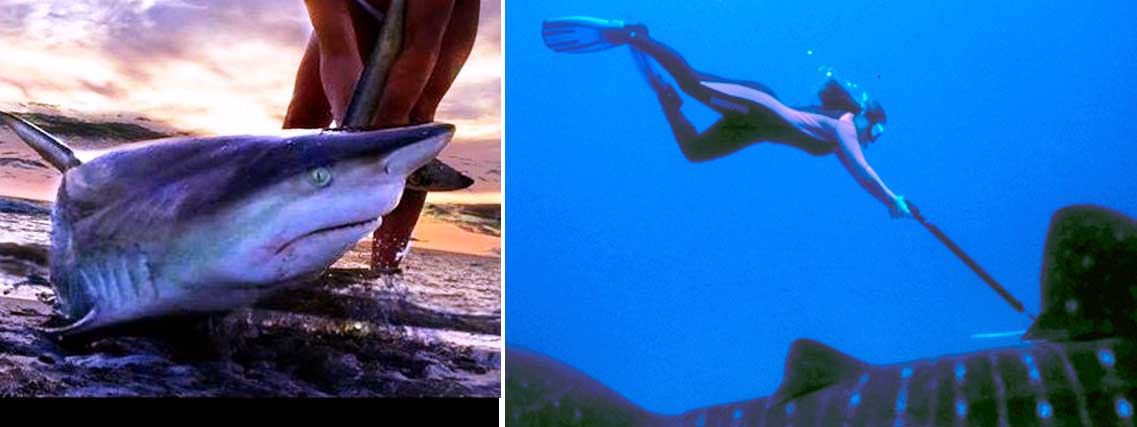
A new study from Trinity College Dublin finds catch-and-release programs may do tremendous harm to sharks. The researchers found that taking cold-bodied sharks out of the water for even a short time sends their body temperature soaring. Specifically, the team looked at blue sharks (Prionace glauca) and tiger sharks (Galeocerdo cuvier) caught using rod-and-reel and drum lines in the Bahamas, off the coast of Cape Cod, and in Irish waters around County Cork. The team inserted thermometers into muscles of every shark to monitor changes in its body temperature and also attached biologging devices to their fins to record both body temperature and water temperature after the anglers released the animals. The body temperature of both species typically matched the ambient temperature of water they’re swimming in. But the sharks' body temperature measurements revealed rapid spikes in their body temperature after capture, with one blue shark showing an increase of 2.7°C in just a few minutes – which, in physiological terms, is a huge elevation. It is not yet known if the rapid heating has a lasting damaging effect on shark physiology but the study reveals that it took up to 40 minutes for a shark’s body temperature to cool back down. The elevation of body temperature is a potential disruption to physiology and behavior of a shark and it is why, for more than 30 years, SRI has only used divers to implant tags on free-swimming sharks underwater using modified spearguns with stop-rings to limit penetration, and does not participate in hook-and-release programs.
Learn more
| |
|
Staggering Damage to Marine Life from Lost Fishing Gear
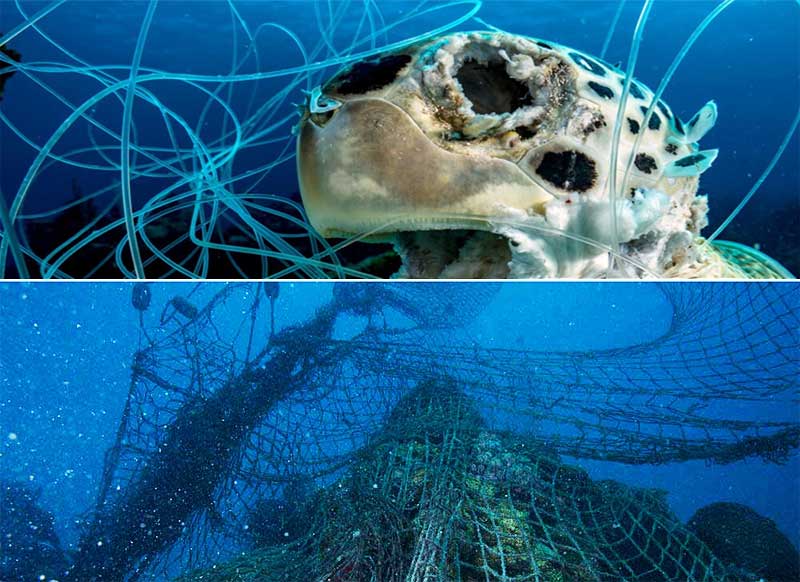
Known as “ghost gear”, drifting nets, abandoned traps, and other lost fishing equipment can haunt the ocean for years, ensnaring and killing whales, turtles, and other marine creatures.
The amount of lost gear includes 25 million pots and traps, 14 billion hooks, and 30,000 sq miles of purse seine nets and gillnets. Nets are particularly lethal; designed to catch and kill marine life, when lost from a fishing vessel, they don’t stop fishing. Instead, they continue to entangle animals as they float throughout the ocean, sink to the seabed, or wash ashore.
The magnitude of the problem has been hard to quantify, but a new study provides the first solid global estimate of the amount of equipment lost each year. A global treaty is currently being negotiated through the United Nations to address the problem; the objective is transparent reporting to ensure countries are held accountable.
| |
|
Indonesia's Effort to Reduce Plastic Pollution
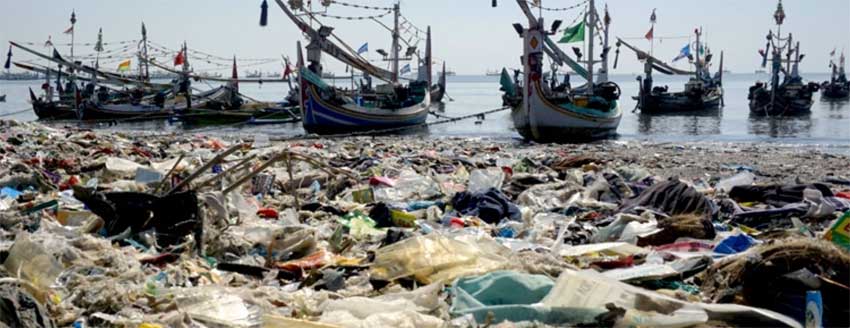
Indonesia, surrounded by some of the most biodiverse shallow seas on our planet, is among the largest contributors of plastic trash in the ocean. On October 4, Indonesia's Ministry of Fisheries launched a four-week program to pay small-time fishermen to collect plastic trash from the sea as part of wider efforts to reduce the country’s marine plastic pollution by 70% by 2025. Each of the 1,721 participating fishers will receive the equivalent of $10 a week for collecting up to 4 kg (9 lbs) of plastic waste from the sea daily, slightly more than they would earn if they spent their day catching fish to sell at market prices. Sakti Wahyu Trenggono, the fisheries minister, said in a press conference in in Jakarta. “...This will raise awareness among the stakeholders at sea and the people around the world.” “The most important thing is prevention,” Sakti said. “If we can properly conduct prevention, then there shouldn’t be any waste in the sea."
| |
|
Flying Into the Eye of a Storm
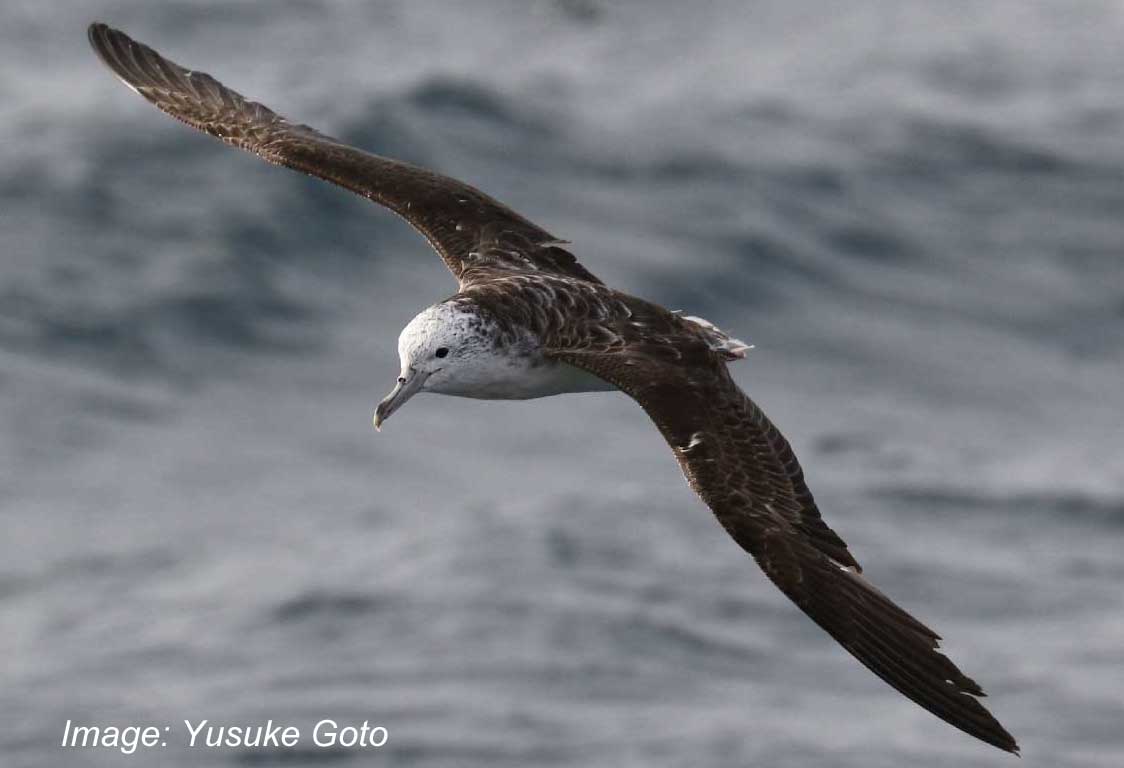
Many ocean-dwelling birds take detours to avoid hurricanes and cyclones. Researchers monitoring 75 shearwaters in Japan found they were more likely to head for the eye during stronger storms. This suggests that the birds may be following the eye of the storm to avoid being blown inland where they risk crashing onto land or being hit by flying debris. “It might seem counterintuitive,” says Andrew Farnsworth, an ornithologist at Cornell University, “but from the perspective of bird behavior, it makes a lot of sense.”
Learn more
| |
|
Do Flying Fish Actually Fly?
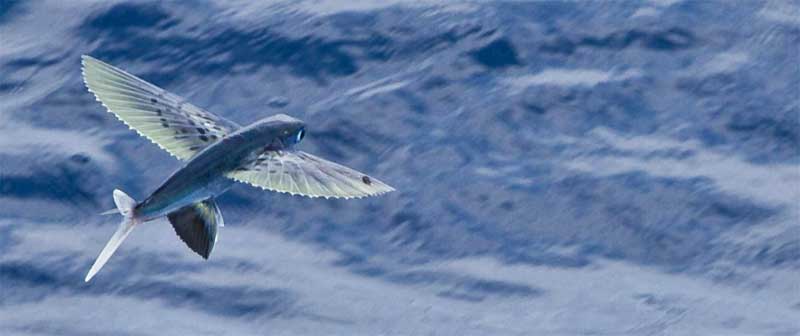
Unlike many species of birds, flying fish lack the equipment for powered flight, but how these small fish become airborne is very cool. They are able to glide above the surface of the ocean and travel large distances, transported by just wind and ocean currents. There are around 64 species of “flying fish” in the family Exocoetidae in the Atlantic, Pacific, and Indian Oceans. How they do it? A strong spinal column, strengthened by neural arches in the skull, stabilizes the fish in flight, allows for increases in speed and permits the fish to change directions mid-air. The fish's extendable fins form its "wings" in flight, but when swimming they lay flat against the its body to make it more hydrodynamic in the water.
These athletes are able to spring above the surface at high speed. Their average altitude is four feet and they usually glide for about 160 feet, but their effective use of water currents and updrafts may allow them to travel as much as 1,300 feet. The longest flight time of flying fish was recorded by a film crew off the coast of Japan in 2008 and lasted an impressive 45 seconds, with the fish gliding at about 19 miles per hour.
| |
|
Snow Crab Season Closed
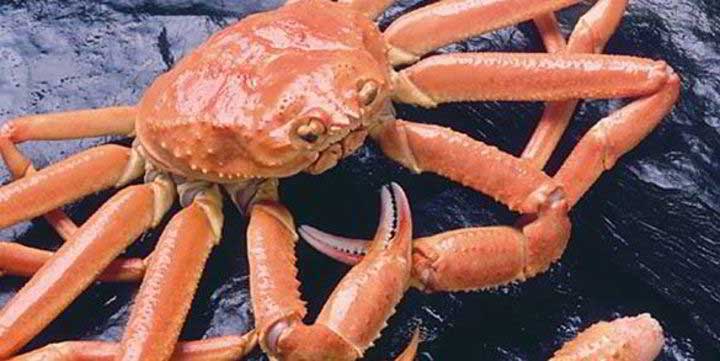
For the first time in history, Alaska’s Department of Fish and Game has canceled the state’s winter snow crab season due to a 90% decline in the crab’s numbers. Between 2018 and the present nearly 1 billion snow crabs disappeared from the Bering Sea. Experts believe that the population collapse is due to climate change in the Arctic; it is thought that the melting ice caps, warmer water temperatures, and changes in the ocean’s chemistry resulted in the dramatic decline of the crab population.
| |
|
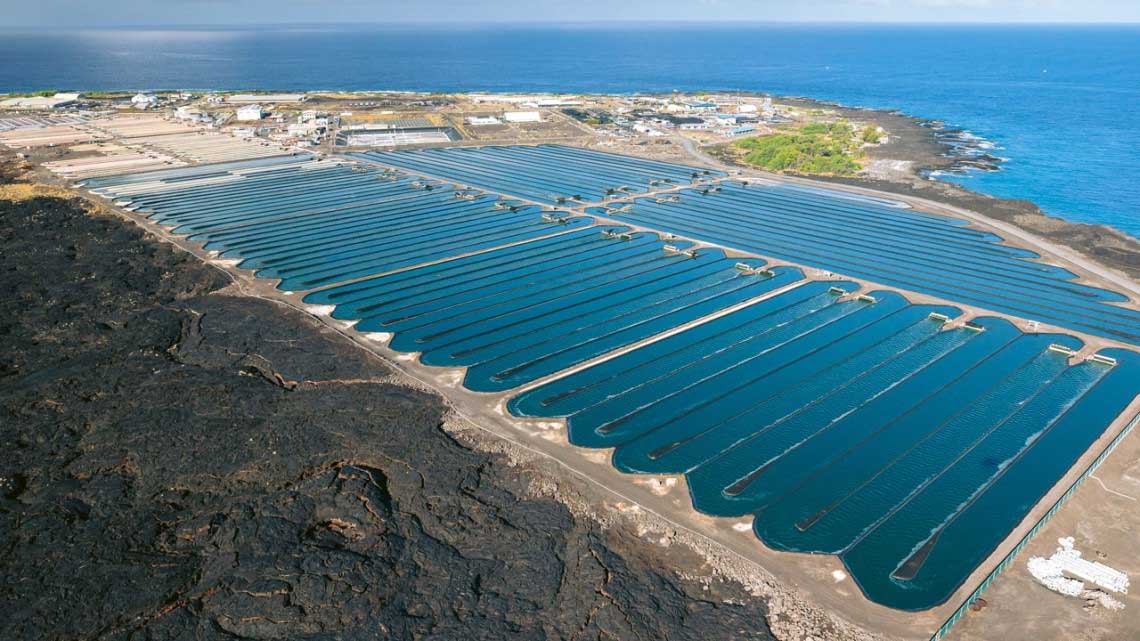
Land-based Algae Farms Could Provide Food for Millions of People by 2050
The naturally 'carbon-eating' microorganisms could mean the farms will be carbon negative too. Cultivating marine algae on land-based seawater-fed farms could meet future nutritional demands from society, enhance environmental sustainability and feed the world sustainably. The development of marine algae aquaculture may exceed the 56% increase in food production needed to feed the 10 billion humans projected to be on the planet by 2050.
Learn more
| |
|
FathomNet
FathomNet is a new collaborative effort between MBARI and other research institutions that leverages artificial intelligence and machine learning to accelerate efforts to study the ocean. This open-source image database uses state-of-the-art data processing algorithms to analyze underwater imagery and accelerate important research of ocean health. With significant community engagement—including high-quality contributions across a wide range of groups and individuals, FathomNet hopes to manage impacts from climate change and other threats, and enable researchers to learn more about the ocean’s inhabitants, ecosystems, and processes. To join the FathomNet community, visit fathomnet.org and follow @FathomNet on Twitter.
| |
|
Friday Harbor Film Festival
DATES: October 21 to 23, 2022
LOCATION: Friday Harbor, Washington, USA.
Join film lovers in scenic Friday Harbor, WA for three days of documentaries, filmmaker Q&As, Opening Night Gala Honoring Filmmakers, Filmmakers Forum, and special awards.
There will also be a showing of Leslie Chilcott's film Watson, an action-adventure film that paints a portrait of Captain Paul Watson, co-founder of Sea Shepherd and the recipient of FHFF’s 2018 Lifetime Achievement Award. He has spent over 40 years fighting to end the destruction of the ocean's wildlife and its habitat. The film blends contemporary interviews with Captain Paul Watson, archival clips of dramatic encounters, and spectacular underwater nature footage.
Learn more
| |
|
Sea Stories
DATE: Saturday November 12, 2022
TIME: 9:00 am - 7 pm. The event includes continental breakfast, lunch and cocktails in the evening.
LOCATION: The Explorers Club, 46 East 70th Street, New York
Book well in advance for Sea Stories!
It is an entire day focused on ocean exploration, conservation, scuba diving, shipwrecks, and marine life. This event also offers opportunities for those interested in ocean exploration to interact with leading field professionals and like-minded explorers.
Featured Speakers
Joe Fiorentino: During Queen Anne’s war, the 32-gun British HMS Feversham sailed from New York in 1711 to escort three transports to join the British fleet in Cape Breton, Nova Scotia, to attack French-controlled Quebec but the ship wrecked in bad weather on Scatarie Island, Cape Breton with the three transports and her payroll of coins. According to coin experts, her treasure represents great diversity spanning from Spanish pieces of eight to early American, pre-Revolutionary War colonial coins.
Alexandra Rose: Topic - "From Pole to Pole: Exploration with a Purpose"
Victor Vescovo: In 2020 Vescovo piloted history’s deepest ever submarine dive in the Pacific’s Mariana Trench. He did it twelve times and in August 2019 became the first person to visit “The Five Deeps,” the deepest point in all five of the world’s oceans. He also made three dives to the Titanic including the only solo dive ever made there, and in 2022 completed the deepest wreck dive in history at the site of the USS Samuel B. Roberts in 22,600 feet (4.3 miles) of water.
Jennifer Idol: Topic - "Close up and Comfortable with Sharks"
Marti Broen: Discovery Journey of the Underwater Cave Systems of Yucatan. This award-winning photographer captures the beauty and secrets of the underworld.
In-person tickets are $80 for Members and the General Public, $40 for children (16 years of age or younger).
After November 4th, the cost of all tickets will increase by $10
Tickets will NOT be sold at door.
CLICK HERE TO PURCHASE TICKETS
| |
|
Notes
SRI Headquarters will be closed November 14-25/26. SRI staff and scientists will be attending the Convention on International Trade in Endangered Species in Panama, supporting international protection of more sharks, rays and other species threatened with extinction.
Amazon.com is offering an opportunity to generate donations to the Shark Research Institute at no extra cost to you. Simply start your holiday shopping at smile.amazon.com/ch/22-3110087, confirm "Shark Research Institute, Inc." as your charity of choice, and Amazon will make a donation to our organization.
You may join or renew your membership in the Shark Research Institute, or make a donation of any size at https://www.sharks.org/donate
Note: All donations are tax-deductible from U.S. federal income taxes as
charitable donations and help fund our field research, advocacy and education programs.
| |
Please share this free weekly newsletter with your friends and family to help grow our audience. All they need to do to receive the newsletter is simply sign up on our website’s home page (https:www.sharks.org)
We all have a lot of work ahead to protect sharks and the ocean,
and combat climate change while there is still time.
| | | | | |