September 3, 2026 | Volume 33, No. 36 | Published Weekly Since 1994 | | Unite For Good on the 25th Anniversary of 9/11 | | |
For the 25th anniversary of 9/11, millions of Americans will join together in a powerful expression of unity — putting aside differences to do good. Are you in?
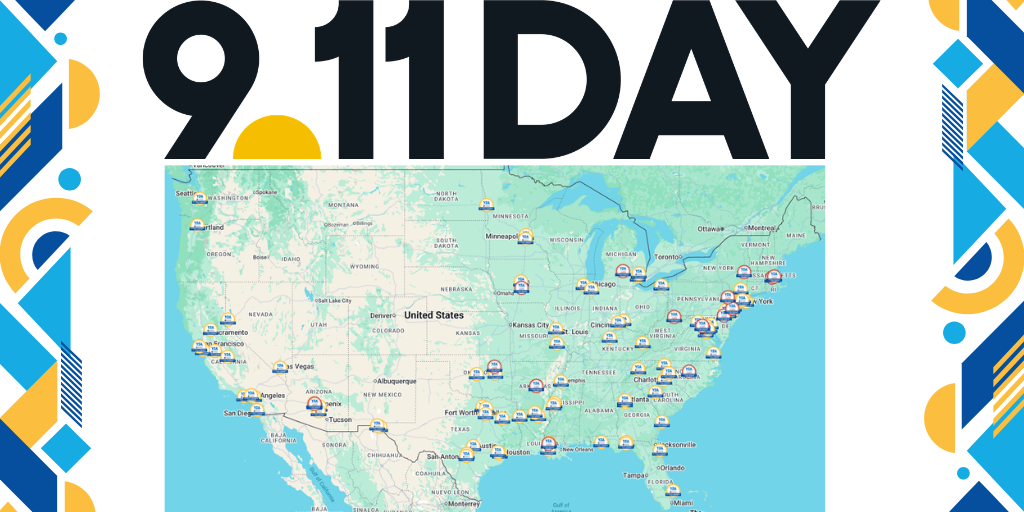
YSA is supporting over 100 local projects and events for 9/11 Day of Service, including our We Serve to Remember grantees and our New Era of Youth Service in America Partner Forum grantees. Browse the map and project ideas & resources at YSA.org/911Day.
You can also search for more projects & events in your area at volunteer.911Day.org
| | |
25 years ago, the September 11 attacks forever changed our nation. Today, we honor the sacrifices made that day by the heroes and those who stepped up in the aftermath by becoming a hero to those in need.
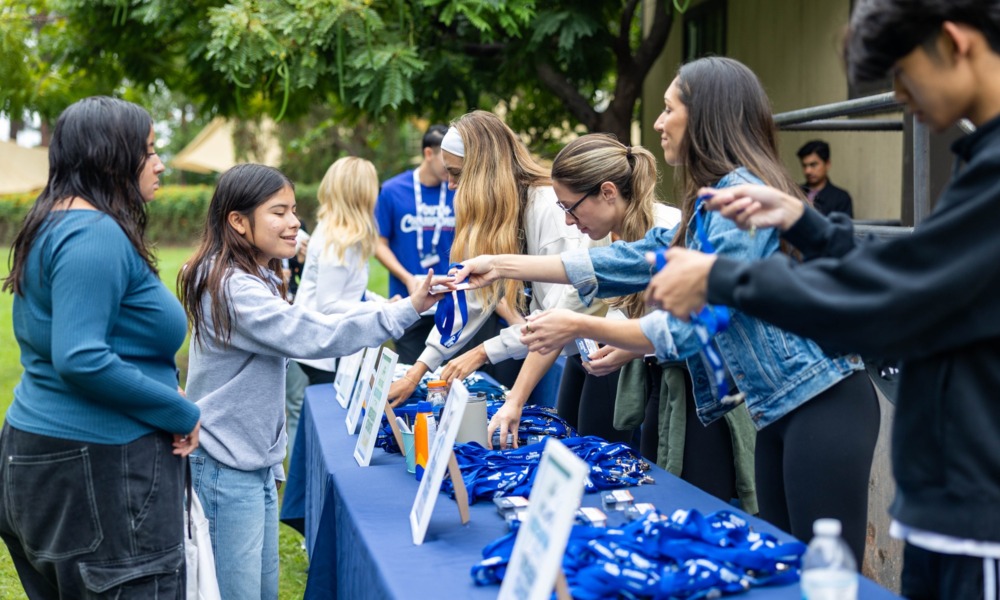
On Friday, September 11, 2026, we are called once more to stand together, set aside our differences, and transform our individual efforts into a shared mission. As we commemorate the 25th anniversary, you are invited to join and lead community service projects, engage with your neighbors, and create lasting impact.
This is how we remember: through action, through service, through unity. Learn more: AmeriCorps.gov/911day.
| |
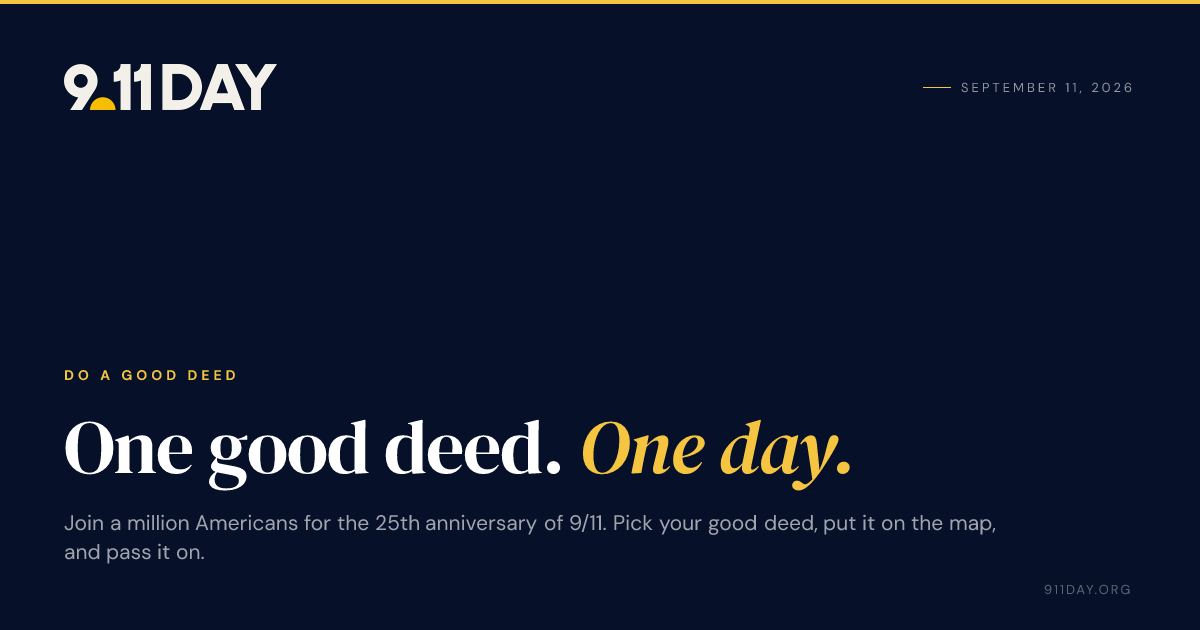
Do a Good Deed - 9/11 Day, 25 Years | For the 25th anniversary of 9/11, join a million Americans in doing one good deed. Pick yours, put it on the map, and ask someone to unite with you. A new application at 911Day.org makes participating simple. You can discover ideas for good deeds, choose something meaningful to them, pledge to do it, and add your commitment to a growing map of people across the nation and beyond who are choosing to “UNIITE For Good.” | | | |
Youth as Solutions Film Festival: Stories That Spark Change | |
Friday, September 11 at 7:00pm Eastern
The Youth as Solutions® Film Festival (virtual) features a curated collection of short films created by youth leaders documenting how they are addressing real challenges in their communities through service-learning and civic engagement. Leave inspired by the creativity, resilience, and leadership of a generation that is already making a lasting difference.
| | | |
Young People Aren't the Leaders of Tomorrow. They're Leading Right Now. | The Network Effect | What does it actually take to develop authentic youth leadership? "What we’ve learned is this: leadership is not a trait you’re born with. It is a skill built through doing, through service-learning, civic engagement, and genuine responsibility. The young people who grow the most are not the ones who sat through a leadership workshop. They’re the ones who were trusted to design a program, lead a team, evaluate an outcome, and then reflect honestly on what went wrong." | | | |
Addressing the Opportunity Cost of Youth Programs | Youth Today | |
"For many young people, the most immediate afterschool commitment is not enrichment, it’s earning money to help their families stay afloat.
This is the tension youth-serving organizations and funders must confront: We say we want to expand opportunity, but many programs are still designed around the assumption that young people can participate if the program is free. That assumption leaves many teens behind. It is not a motivation gap. It is an income gap."
| | | |
A Capstone Essay on 50 Years of Promoting Positive Youth Development | Youth Today | "Positive youth development researchers/practitioners must remain steadfast in providing every young person with developmental assets and relationships. ... All young people are able to realize both their individual purposes and positive contributions to their families, communities and societies. Thriving is this combination of individual purpose plus social contribution." | | | |
When the Plan Fails, Change the Plan | Youth Today | "Adults often develop plans to support youth. But what happens when the plan doesn’t work? We too often default to asking what’s wrong with the young person rather than interrogating the plan and its implementation. What if we changed the default? What if we engaged youth from the beginning to understand their needs and develop the plan itself? And when the plan doesn’t work, what if we asked them why?" | | | |
Youth as Solutions: Transportation Safety Grants - Deadline: Sept. 9 | Teams focused on transportation safety can explore these issues, learn from their communities, and develop youth-led solutions as part of the 2026–27 program. These teams have the opportunity to connect their work with resources and learning from MAD Courses and RMIT University, receiving mentorship and credentials, while creating a documentary to showcase their projects. | | | |
"What's Next, America?" Community Grant Fund - Deadlines: September 17, Rolling | The “What’s Next, America?” Community Grant Fund will provide $250,000 in support to help communities, campuses, and K-12 classrooms organize local conversations, identify shared priorities, and move ideas into nonpartisan civic action. Spark Grants are $1,000 grants designed to help communities begin organizing “What’s Next, America?” efforts locally. Civic Action Grants are grants of $2,500 to $5,000 designed to support local, nonpartisan project ideas and nonpartisan civic actions that emerge from “What’s Next, America?” community discussions. | | | |
Service Learning and Meaningful Student Involvement | When students are seen as partners instead of recipients in service learning, this method can foster Meaningful Student Involvement when it is focused on transforming education. Service learning as a powerful and authentic avenue for achieving Meaningful Student Involvement. It’s not enough for students to simply perform community service; the experience must be structured to genuinely empower them and integrate their learning with tangible impact. | | | |
In nonprofit organizations, government agencies, K-12 schools and communities worldwide, there are a lot of young people and adults who want to meaningfully involve young people today. Often following the same models that have dominated the conversation for more than 25 years, innovation and responsiveness to the challenges of our times hasn’t been at the forefront. Adam F.C. Fletcher’s model of Deep Youth Engagement pushes the conversation further. Strategic engagement is essential for organizations because it drives systemic change and fosters inclusive collaboration across complex structures. It empowers stakeholders, optimizes interconnected processes, and bridges gaps between diverse sectors to achieve measurable social impact. | | | |
On Integrating Research and Practice: A New Resource Bridges the Gap | Youth Today | This volume aims to provide a bridge between practitioners and the scholars who have dedicated their careers to understanding how children and adolescents learn and develop and to identifying the critical factors and opportunities that youth need to thrive. | | | |
Breakthroughs in brain science show that young people need stable relationships, meaningful opportunities and strong support to thrive — yet too many grow up without them. In Thrive, Lisa M. Lawson reveals how families, communities and public systems can rise to the challenge, offering clear, practical steps to ensure every young person has a fair chance to flourish. | | | | Everyday Young Hero: Nithil Balamurugan | | |
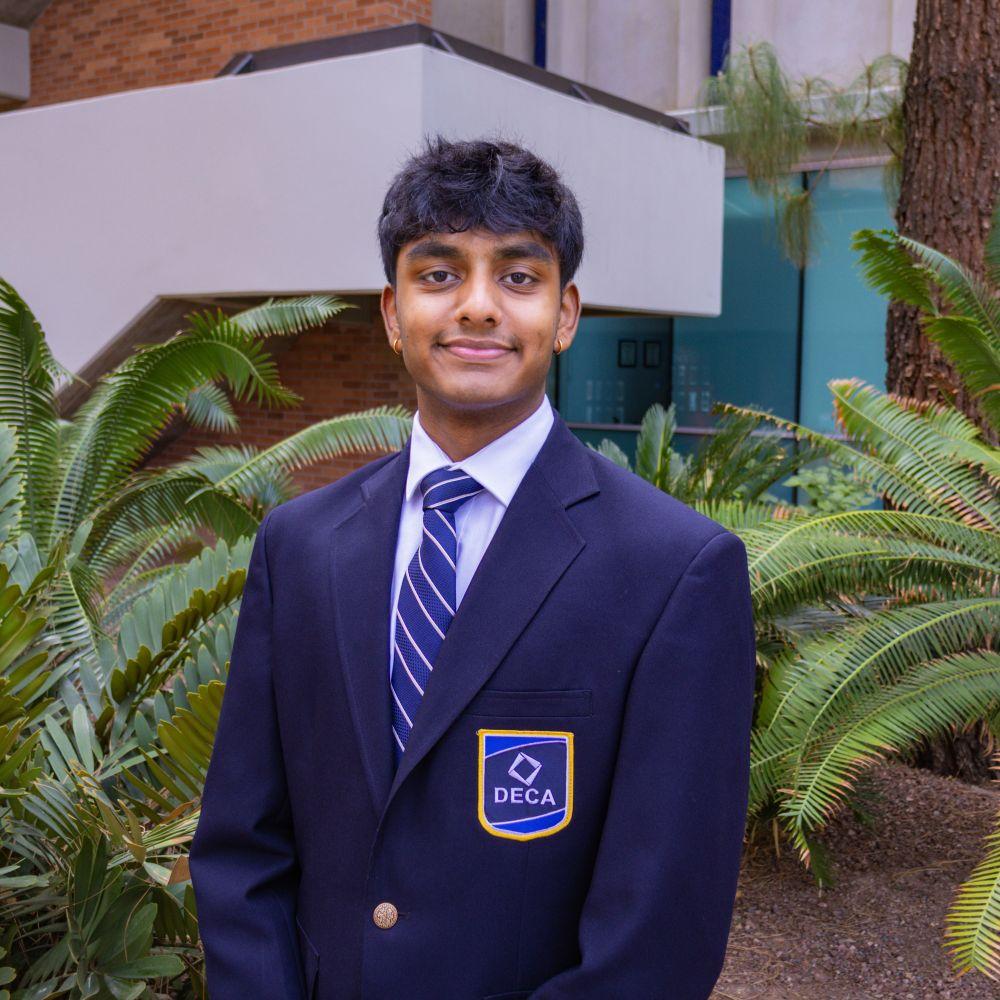
Arizona has the worst student to school counselor ratio in the country: 570 students per counselor. Most kids never get crucial guidance before they make significant life choices, so they fall back on rumor, guesswork, or whatever a stranger online happens to say. The students impacted the hardest are the ones with no family connections and no money for private help, the exact kids who can least afford a wrong turn, and the ones who carry the debt longest when it goes wrong. Nithil Balamurugan (17 | Avondale, Arizona) couldn't accept that. He built Career Clarity so that no student, whatever their background, has to bet their future on a guess.
Nithil founded, hosts, and produces Career Clarity, a free platform that gives students career guidance that many people only learn the hard way. In every episode he sits down with someone who's built a career. He asks them how much they earn, what they got wrong along their journey, and the exact steps that got them there - the specifics students can't find in a brochure or a search bar. He also writes a full transcript of each episode, so students who read better than they listen, or who are differently abled, have access too. He books the guests, runs the interviews, edits, writes, and publishes, all of it himself, all of it free. He's giving away the honest career counseling that privately costs $150 to $300 an hour, to the students who need it most and could never pay for it.
Nithil’s work has been featured on ABC15 and 12News and took 1st place at Arizona DECA State. The part that means the most, though, is his listeners. 56 students have written in to say Career Clarity changed a decision they were about to get wrong, and plenty of them pass it straight to a friend facing the same crossroads. What began as one student's project is now a community of professionals and students who refuse to let anyone decide their future alone. Nithil is working to get episodes straight into the schools that need them most, to widen the range of careers and guests so every student can find a path that fits, and to keep building accessibility so no one who reads, listens, or learns differently gets left behind.
| | | | The Everyday Young Hero Award is sponsored by | | SERVICE SONGS OF THE WEEK | | Week #44 / 64 of the Service Songs Bracket First Round | | "There Is an Answer" - A Great Big World | | "Bright Idea" - Mother Mother | |
| Which song is your favorite? | | | | | | "Here I Am" - Dolly Parton | | Michael Minks, Editor-in-Chief, #917 | | | | |