|
The DSR's 25th Anniversary!
Ryan and I started the Donor Sibling Registry on September 4, 2000, via Yahoo Groups, one of the earliest social media platforms. We posted this very first message: "I am the mother of an awesome 10-year-old donor child. I know that he has at least 3 donor siblings and would love to contact them. We are looking for Donor #1058 from the California Cryobank. I hope that this board will serve others looking for their children's (or their own) siblings."
We had no idea if there were other parents, donors, or donor-conceived people out there who also wanted to know about their biological relatives, or if anyone would ever join.
Our group was based on the idea that all donors had no choice but to be anonymous; however, Ryan was curious to know if the donor might be willing to be known. Also, he wondered if he had any half-siblings out there. The concept of mutual consent contact was very important to us both, as we didn’t want to “out” anyone; we only wanted to create a platform where mutually desired contact could take place. Ryan had been thinking about half-siblings and the donor in this way: “What if they want to know me, and I want to know them? How will we ever have the opportunity to find each other?”
In 2003, following significant media exposure (including appearances on Good Morning America and Oprah), and with rapidly growing numbers, it became increasingly challenging to continue manually matching people on the Yahoo group. We incorporated as a 501(c)(3) charity organization and built a website to automate the connecting process and to better define our organization. The rest is history.
For our 25th anniversary, we asked DSR members to
share their connection stories. Here are a few.
| | |
I was a 6-time donor, and my last donation was open. My family and I know the surrogate and her family and we’ve known the dad since before his little girl was born. I was also able to meet and hold his daughter about a week after she was born. We all live in different parts of the world, but we send Christmas cards and birthday updates and have kept in touch over the years. It’s truly an amazing experience and I look forward to the opportunity to connect with more of our donor family one day. Our door is always open!
— Sandy
| |
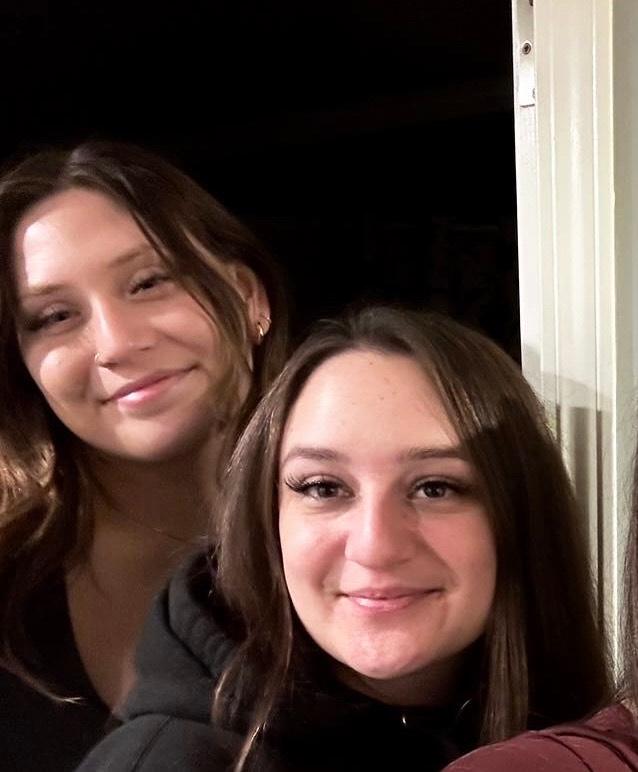
This is a story about Sol and Aurora. Sol is on the left, and Aurora on the right. When Aurora was 12-13, I contacted the Donor Sibling Registry to see if there were any siblings to match with her. I had already contacted the bank and been informed that the donor wanted no contact. There was one other girl with the same number on the registry. We flew within our state to meet her moms, and then later, Sol and Aurora met.
They stayed friends on social media and then years later both of them did genetic testing and found 18 other siblings! They have a chat group now, some have spent a long weekend together, and a few of them have had their donor number tattooed on their forearms!
Their stories as donor-conceived kids are all very different. Some of them have always known, some didn’t find out till they did genetic testing as adults.
They like knowing they look like their siblings, they discuss similarities and differences. For Aurora it has helped her feel less like her family is “other”.
— Terri
| |
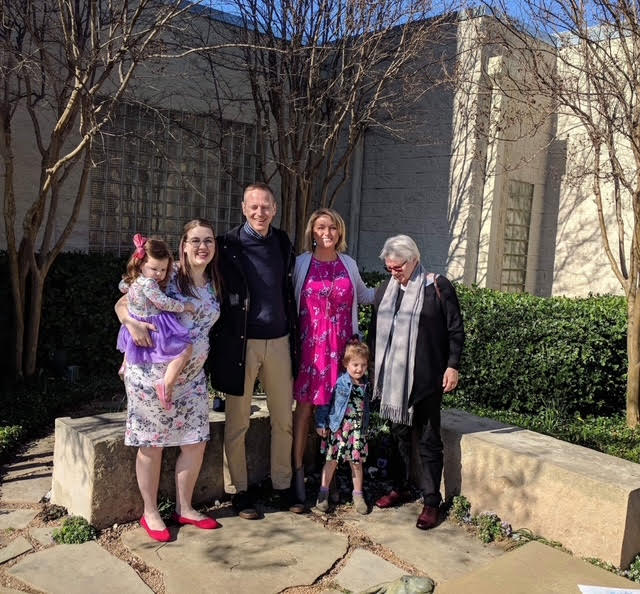
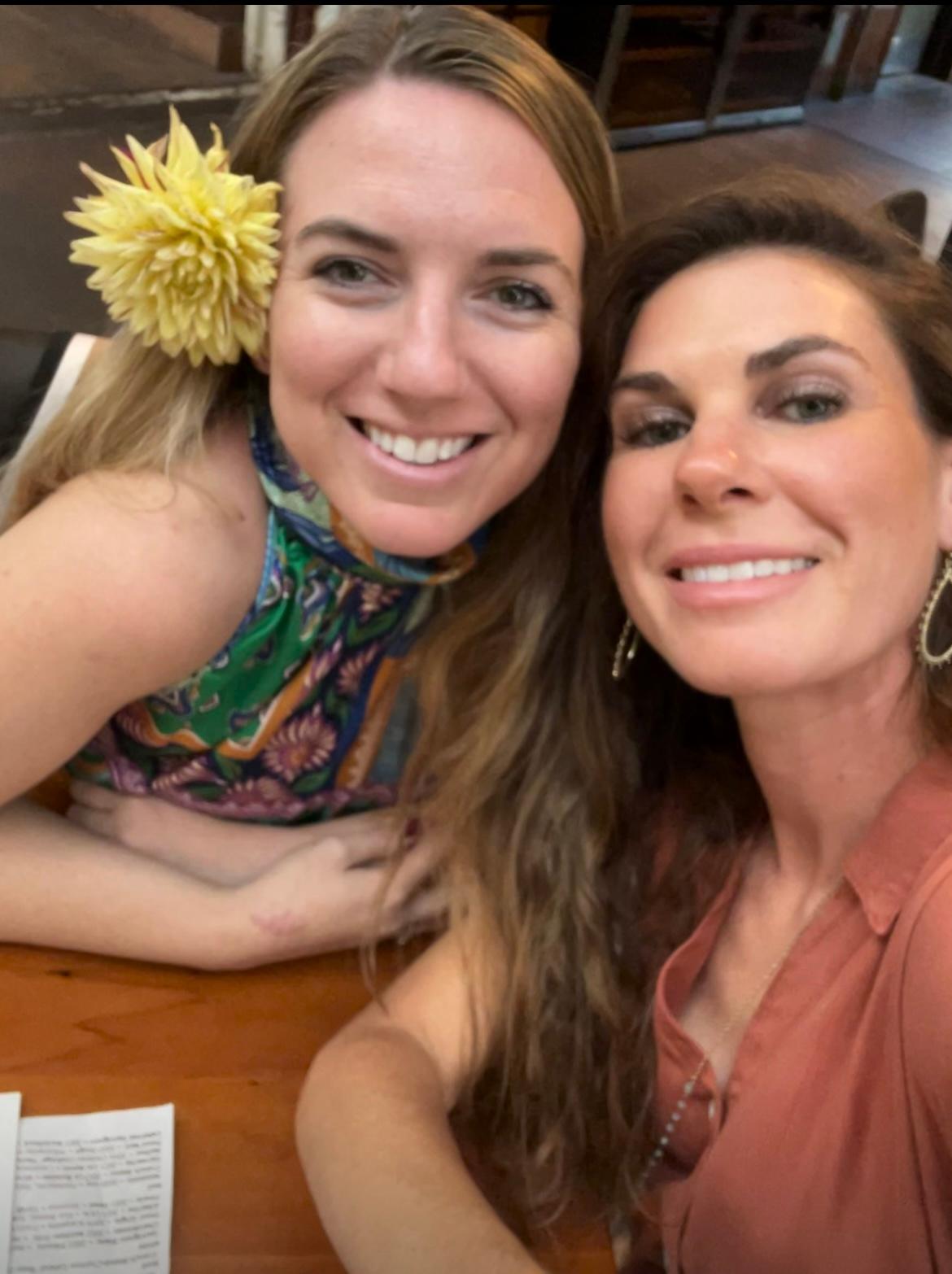
Sophia (flower in hair) and I first connected via DSR in 2016. We first met in 2018 at Sophia’s wedding. We were both born in Long Beach, CA. She stayed, and I moved to NC when I was a toddler. I feel so lucky to have this connection. Over the years, we’ve learned that there are other matches, including two sons from the donor and two other women.
— Caitie
| | |
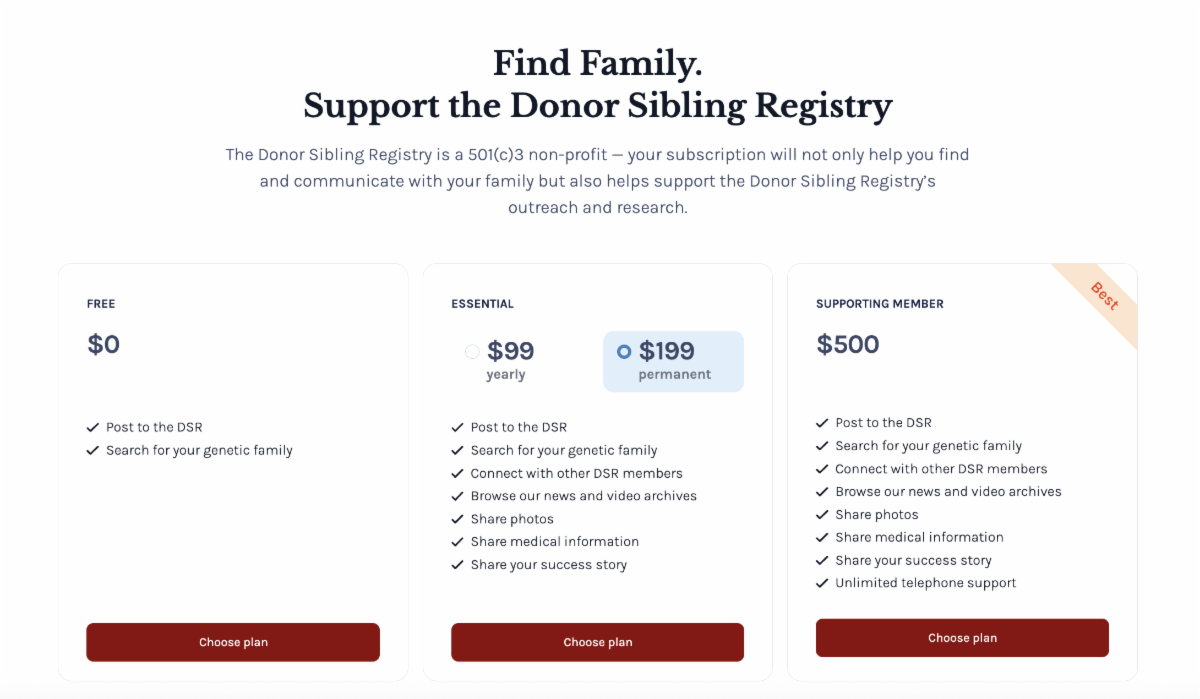
The Donor Sibling Registry has not raised its membership rates for eight years.
Between 2017 and 2025, the cumulative cost-of-living increase in the US, as measured by the Consumer Price Index (CPI), is approximately 31.15%, and the DSR's expenses have risen accordingly. What do you think? Should we raise our membership fees?
| | |
Author: Teneil MacNeil, Lawyer/Founder of Inspire Law (www.inspirelaw.org)
The Donor Sibling Registry: Connecting Families, Expanding Love
In today’s world of assisted reproduction, the concept of donor-conceived families is more prevalent than ever. Many children are born through sperm, egg, or embryo donation, creating unique family structures that go beyond traditional definitions. One incredible resource facilitating connection and community among these families is the Donor Sibling Registry (DSR).
What Is the Donor Sibling Registry?
The Donor Sibling Registry is an online platform that helps donor-conceived individuals, donors, and families connect. Founded in 2000 by Wendy Kramer and her donor-conceived son Ryan, the DSR was created to provide a safe space for people seeking genetic relatives. Whether you’re a donor-conceived person curious about potential half-siblings or a donor looking to offer information to offspring, the registry serves as a bridge.
The Benefits of the Donor Sibling Registry
1. Building Connections & Expanding Family Bonds
Many donor-conceived individuals grow up unaware of their genetic relatives. The DSR allows them to find and connect with their half-siblings and, in some cases, their biological parent. These newfound connections can lead to lifelong relationships, providing emotional support and a deeper sense of belonging.
2. Access to Important Medical Information
One significant challenge of donor conception is the limited access to genetic health history. Many donors provide basic medical details at the time of donation, but these records may not be updated over time. Through the DSR, donor-conceived individuals can learn about hereditary conditions, genetic predispositions, and medical histories that could impact their health.
3. Ethical Transparency in Donor Conception
The registry promotes ethical practices by fostering open communication and honesty. It advocates for transparency in the fertility industry, encouraging clinics and banks to maintain accurate records and support the right of donor-conceived individuals to access their genetic history.
4. Emotional & Psychological Support
Discovering genetic relatives can be a deeply emotional journey. The DSR community offers a network of individuals who understand the complexities of donor conception. Many members share their experiences, provide emotional support, and navigate relationships in a way that acknowledges the unique dynamics of donor-conceived families.
5. Strengthening Identity & Self-Discovery
For donor-conceived individuals, questions surrounding identity and heritage can be profound. The DSR allows them to explore their biological origins, reinforcing a sense of identity and personal history. Knowing more about genetic background can be fulfilling and empowering.
Final Thoughts
The Donor Sibling Registry is more than just an online database—it’s a community of connection, support, and discovery. As more families turn to assisted reproduction, the importance of transparency, openness, and access to genetic information grows. Whether seeking biological siblings, medical history, or emotional connection, the DSR continues to serve as a beacon for donor-conceived individuals and their families.
| |
Donor Sibling Registry Website Tips
DSR Tip #1: If you're posted on the DSR and receive email notification of a new match, please message that person to welcome them. People need to know that the DSR is a safe landing space and that they'll be welcomed into any group of parents/half-siblings/donors that already exists. Thank you!
DSR Tip #2: If you have checked the DSR for matches but don’t see any, it’s crucial to add your posting anyway. Many people are out there, watching the site, waiting for the first person to post their donor number. So be the first! Too many people have missed out on years of connecting because they and their matches were sitting back and waiting to see a match post first. If this has happened to you, please share your experience.
DSR Tip #3: Because sperm banks ship to many clinics worldwide, it’s important to post under the originating sperm bank, not your local clinic or doctor.
DSR Tip #4: When adding your posting to the DSR, please fill in as much information as possible about the donor, such as birthdate, height, weight, hair and eye color, education, and hobbies. This can help those who might not have a donor number recognize themselves (donors) or the descriptions from the donor profile (parents and DCP).
DSR Tip #5: If you are new to the DSR and match immediately after adding your posting, it’s a good idea to message your matches promptly. That way, they’ll know you’re interested in connecting and/or sharing information. If our automatic emails notifying them of the new match/new message get bounced back to us as undeliverable, don’t worry; I’ll mail them a letter via the USPS!
DSR Tip #6: Ensure that you enter the full and correct donor number/ID on the DSR, as consistency is crucial. If you’re unsure how to enter your facility’s donor number, please look at the postings already on the DSR to see how others have done it. Here are a few examples:
- If the sperm originated at Xytex, when there are 3 letters before the 4 numbers, make sure to include them with a space in the middle, like this: ABC 1234.
- If the sperm originated at Seattle Sperm Bank/European Sperm Bank/Nordic Sperm Bank, Cryos, (even Xytex), etc., and the donor ID has both a number and an alias name, please enter it like this: 10009 “Wendy”.
- If you used Follas Labs and have an “F” before the donor number, please enter the “F” in front of the donor number without a space, as shown here: F999.
- If you used Cryobiology and your donor ID starts with “CB” (or other letters) followed by numbers, please enter with a space between, like this: CB 999.
- If you used the Fertility Center of CA-Orange/San Diego/Santa Anna and have letters and numbers, please enter the letters first, then the numbers, with no space, like this: SL123.
- If you used Egg Donor Solutions, please enter EDS followed by the number without a space, like this: EDS999.
- If you used International Cryogenics and have letters before the number, please don’t leave a space, like this: AA999.
- If the sperm originated at the New England Cryogenic Center, please enter donor numbers with a dash after the “D”, like this: D-9990.
DSR Tip #7: If you are a parent who joined and posted on the DSR when your child was under 18, and they are now 18+ and wish to connect independently, please hand over your DSR login information (username and password) to them. We don’t want them joining and posting separately, as this would result in duplicate postings and they would match themselves. (Not good.)
Tip #8: If you messaged a match via the DSR and haven’t received a reply, you can email me, and I'll try to reach out as well. Please make sure that your last attempt was recent. All people posted on the DSR are notified about new matches, new messages, or new medical information posted for their donor. If the email notifications are kicked back to us as undeliverable, people are then sent a letter via the USPS. If that letter is returned as undeliverable, or if they still don’t reply, we can only hope they return to the DSR someday. Please ensure that your email address is up to date on the DSR.
| | |
Consult/Advice/Support Video Chat | |
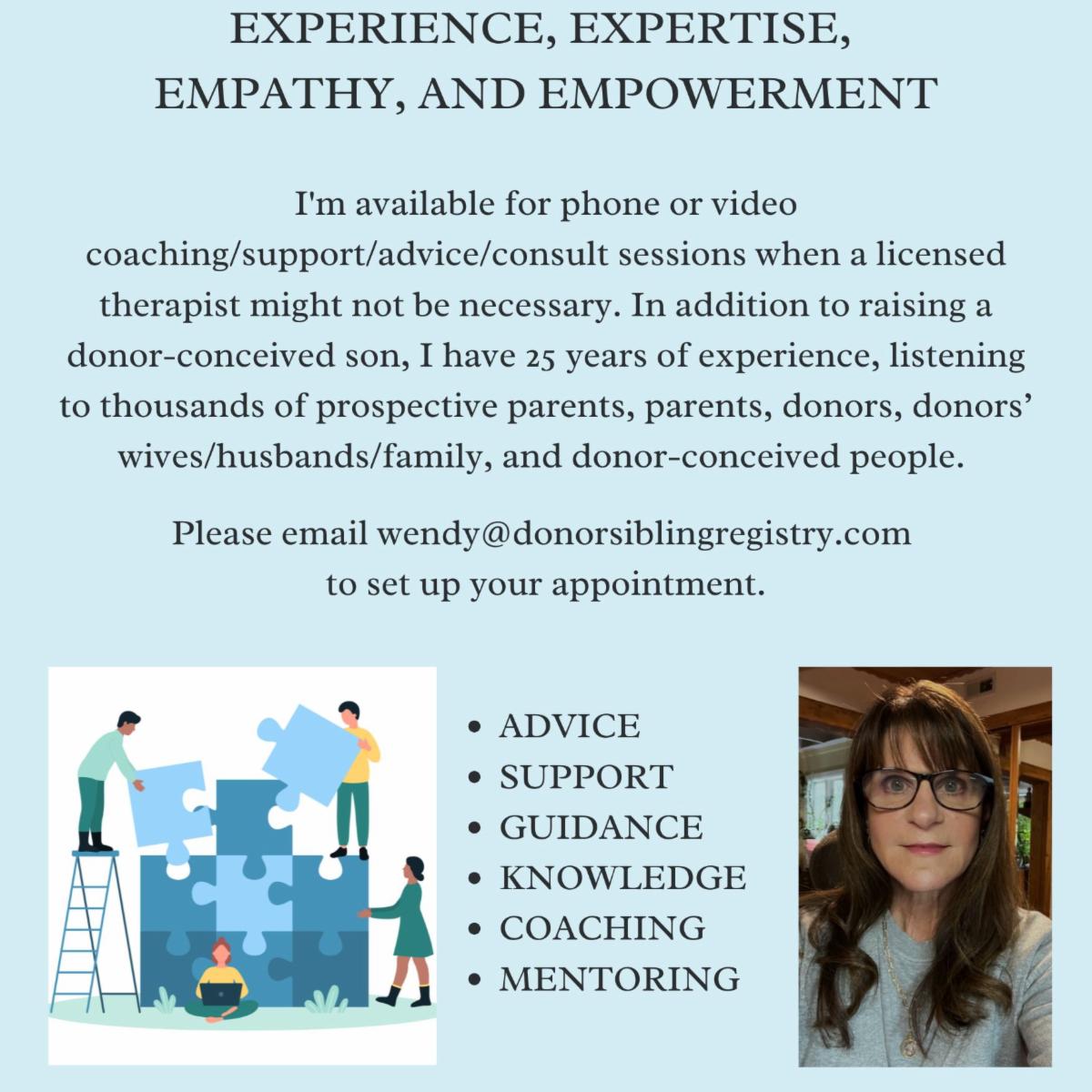
I want to let you know how thankful I am that we spoke with you. Your insights and thoughts were so comforting and helpful. I’d been holding in information and feelings for so long and it was incredible to be able to finally talk with someone who understands and could be so helpful!
|
|
2025 Donor-Conceived People Research Studies
Volitional Attachment Change in DC Adults: Moving Towards Implementation Science, a collaboration with Elizabeth B. Lozano, PhD, California Northstate University
The proposed research employs an implementation science approach to improve attachment style among donor-conceived people (DCP). Specifically, the objectives are two-fold: (1) To conceptually replicate previous research by Hudson and colleagues (2020) which showed that people can willingly change their attachment style with the implementation of “change goals”; (2) To examine whether volitional change in attachment can be extended to DCP. This study will launch in early October.
Donor-conceived people and terminology. This data was presented at the Annual Association of Family and Conciliation Courts (AFCC) meeting in New Orleans, LA, in May 2025, as a workshop: Dibling-Dumpling Donuts: Mind your Language when Talking about Donor Conception, and will be presented at the 33rd World Congress on Controversies in Obstetrics, Gynecology and Infertility (COGI) in Rome, Italy, in November 2025.
Donor-Conceived Adults Study: Relationships, Origins, Outcomes, and Self-Identity among Donor-Conceived People. The purpose of this study, conducted in collaboration with Dr. Shelby Scott, Assistant Professor at the University of Texas at San Antonio and the Donor Sibling Registry, is to understand the experiences of donor-conceived people and to identify unique factors related to their relationships, origins, outcomes, and self-identity.
Results from this study will inform research and clinical guidelines, providing support to donor-conceived people and their families.
August 2025: More than 800 surveys were collected!
|
Recent & Upcoming Speaking Engagements
| |
November 2025: The 33rd World Congress on Controversies in Obstetrics, Gynecology and Infertility (COGI). Counseling Donor Family Members (poster presentation) and Words Have Power in Sperm and Egg Donor Families: A Study of 555 Donor-Conceived People (oral presentation), Rome, Italy.
August 2025: Speaker: RESOLVE-affiliated support group specifically for intended parents pursuing egg donation.
July 2025: ESHRE Annual Conference "A mixed-methods examination of the experiences and emotional responses of oocyte donors about disclosing their donation to their family, friends, and children " was presented, and the abstract was also pre-selected for the Nurse Award. July 2025: Surrogacy Made Simple Podcast. Why Biology Matters: How to Find Donor Siblings and Families for Your Child — Wendy Kramer and When to Tell Your Child They're Donor-Conceived, and How to Do It Well — Wendy Kramer
May 2025: Annual Association of Family and Conciliation Courts (AFCC) meeting. Workshop: Dibling-Dumpling Donuts: Mind Your Language when Talking about Donor Conception. New Orleans
| |
BOOK: Counseling Donor Family Members
| |
Published by Ethics Press, this guide will be of interest to therapists, counselors, psychologists, sociologists, physicians, and other mental health professionals who may encounter this topic in their specific settings with patients who have a variety of presenting problems, as well as professionals in the reproductive medicine industry.
And yes, this guide is also helpful for donors, parents, and donor-conceived people. Understanding the layers of emotional depth and the specific challenges that all stakeholders might face is very helpful when maneuvering through your own personal journey.
| | | |
2025 Published Articles
1/28/25
Donor Conception Disclosure: Telling Others
Making the decision to disclose donor conception to family, friends, and others.
2/18/25
The Hidden Ties That Bind
Donor sibling meetups sometimes mask a deeper truth.
3/24/25
From Fate to Destiny: Finding Donor Relatives
Donor-conceived people can be empowered to search for and find answers.
4/9/25
Breaking the Zero-Sum Myth: Expanding Donor Families
Love often grows when families do—as many donor families find out.
5/19/25
A Paradox in Donor Conception
The desire for genetic connection in donor families is bilateral.
2024 Published Articles
1/4/24
DNA Matters: Psychological Differences in Donor Families
Accurate and updated mental health information is vital for families and donors
1/25/24
The Ethical Sperm Bank: An All-Open Sperm Bank
An idea whose time has come.
2/26/24
The Problems With Donor-Sibling Groups of 50, 250, or More
Important medical, psychological, and social implications for donor offspring.
3/29/24
What Rights Are Important to Donor-Conceived People? Personal Perspective: A bill of rights for the infertility field.
4/30/24
Accurate Terminology in Egg Donation Families: T The person who contributes the egg is the biological or genetic mother.
5/30/24
Gamete Donors Connecting With Offspring and Their Families
Barriers: the perception of rejection, worry, fear, and other concerns.
6/19/24
Donor Families: Mutual Consent Contact
Personal Perspective: Mutually agreed-upon contact can be quite different.
8/5/24
Enhancing Family Connections in Donor Conception
A call for simplicity and transparency in donor-family relations.
8/19/24
Donor-Conceived People: The Search for Ancestry and Identity
Discovering family history enhances self-understanding and connection.
9/18/24
Bypassing Trauma in Donor-Conceived People
The power of early disclosure and donor family connections to reduce trauma.
10/15/24
Widening the Family Circle: Sperm and Egg Donors' Families
A donor's partner, parents, and children can support broadening the family.
11/5/24
Parents of Young Donor Children: Modeling Conversations Empowering donor-conceived children to be confident and proud of their origin story.
12/11/24
Donor Families: Navigating Disenfranchised Grief
When donor family members have feelings of unacknowledged loss and or rejection.
2023 Published Articles
1/6/23
Why are Sperm and Eggs Still Sold Anonymously?
Personal Perspective: The consequences of donor anonymity.
1/27/23
Cornerstones of the Donor Family: Kindness and Empathy:
From choosing a donor to expanding one's family to include donor relatives.
3/2/23
Tips for Donor-Conceived Adults Who Just Found Out the Truth:
The road might be bumpy for a while, with a multitude of difficult emotions.
4/3/23
Donor-Conceived People Who Have Always Known the Truth:
Being donor-conceived can have inherent challenges, even if told early on.
4/24/23
Egg and Sperm Donors: It's Complicated:
Some common thoughts and feelings surrounding selling one's gametes.
5/8/23
Donor-Conceived People: Curiously not Curious:
Some insist that they are not at all curious about their donor origins.
6/12/23
Parents of Donor-Conceived People: Researching the thoughts and feelings of biological and non-biological parents.
7/10/23
Reaching Out to Sperm and Egg Donors: Weighing the risks and rewards when deciding whether to attempt contact.
7/27/2023
Why Is There a Shortage of Black Egg and Sperm Donors?
Creating a more diverse donor landscape.
8/7/23
Donor-Conceived Children Meeting Their Half-Siblings
Widening one's family circle with enriching, lifelong relationships.
9/5/23
Gamete Sellers: It's More Than Just a Financial Transaction
Common themes, topics, and issues that arise with former egg and sperm donors.
10/2/23
Sperm Banks, Egg Facilities, and the Backfire Effect
Why have gamete sellers been resistant to evolving ideas about donor families?
11/1/23
Contacting a Gamete Donor for the First Time: The Letter.
You might not get a second chance to make a first impression.
12/4/23
Donor Offspring: Curiosity, Connecting, & Attachment Theory
Securely attached individuals are more likely to have a positive experience.
2022 Published Articles
3/6/22
Supporting Donor Family Members:
Adequate counseling and education are vital.
3/25/22
A Brief History of Donor Conception:
Looking at eight centuries of manipulating sperm.
4/19/22
Words Have Power in Sperm and Egg Donor Families:
The language of reproductive medicine can be tricky.
5/5/22
Happy Mother's Day to Solo Moms (of Donor Kids):
Personal Perspective: A special shout-out to single mother (only) parents.
5/27/22
Donor Conception: Questions for Prospective Parents:
Issues and themes to ponder when considering using donor gametes.
6/23/22
Truth and Honesty in Families of Donor-Conceived Children:
Early disclosure is crucial for building a happy and healthy family.
7/21/22
A Dearth of Adequate Gamete Donor and Recipient Counseling:
Education and counseling before selling or buying sperm and eggs is crucial.
8/25/22
Are You Thinking About Donating Your Sperm or Eggs?
A few practical, ethical, emotional, and medical issues to consider.
9/26/22
Nature and Nurture in Donor Families:
Biological and non-biological parents matter.
10/26/22
Tips for Parents of Adult Donor-Conceived People:
Are you about to disclose, or do you have a child who just found out the truth?
11/28/22
DNA: Donors Not Anonymous:
Sperm and egg donor anonymity has not been possible since 2005.
12/13/22
Secrecy v. Privacy in Donor Families: Walking the fine line between privacy and secrecy is inherent in donor families.
| | | | |
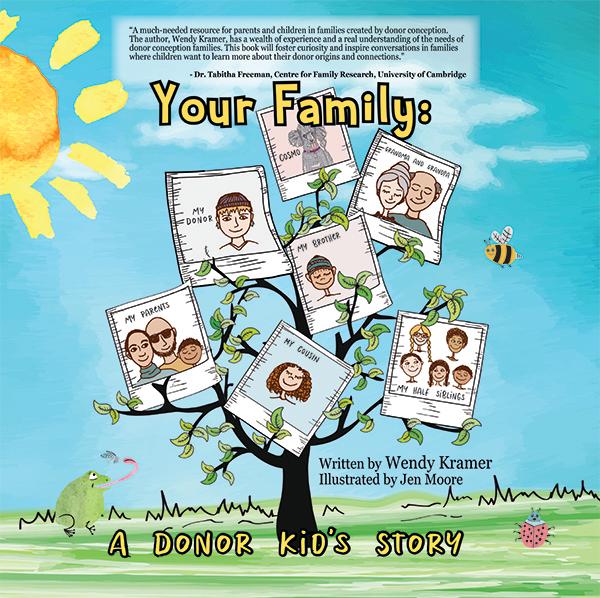
Your Family: A Donor Kid’s Story is a sweet and light-hearted picture book that answers the question "Where did I come from?” and then gently introduces the concepts of half-siblings and donors openly and honestly. The book starts with the parents’ desire to have a baby and the use of a donor, and then broaches the topic of half-siblings and biological parents/donors. A perfect book for donor-conceived children and their parents in all family types to learn about how they were conceived and to understand that being curious about their unknown genetic origins and relatives is natural.
Just as there are many family types, there are also many ways to define a child’s family and their donor relatives. Reading this book with your young donor-conceived child can initiate or supplement important and ongoing dialogue about these genetic connections. These early conversations are integral for creating a happy and healthy donor child and family.
"A lovely book for children who were conceived with donor sperm or egg. Parents in all kinds of families will find it very helpful in explaining their child’s conception story in a gentle, simple, and positive way."
—Jane Mattes, L.C.S.W., psychotherapist and Founder/Director of Single Mothers by Choice
"Having worked with Wendy Kramer for many years, I know her organization, the Donor Sibling Registry, is valuable to the LGBTQ parenting community. We’ve published family stories that talk about how DSR has brought joy to not just the half-siblings discovering each other but to their gay parents as well. Kramer’s children’s book, Your Family: A Donor Kid’s Story, is an important contribution to the LGBTQ community and a great addition to the homes of all parents with donor-conceived children." —Angeline Acain, publisher and editor, Gay Parent Magazine
| | | |
| |
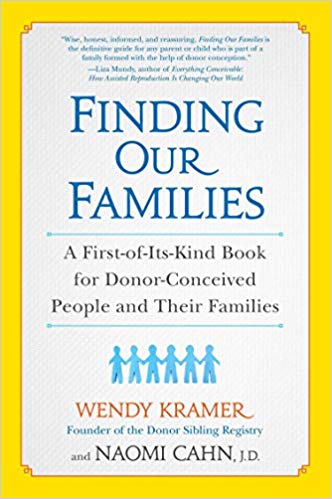
Finding Our Families: A First-of-Its-Kind Book for Donor-Conceived People and their Families
Millions of people have been born with the help of donor sperm or eggs, including Wendy Kramer’s son. Realizing the unique concerns of being or parenting a donor-conceived child, Kramer launched what would become the world’s largest database for connecting donor-conceived people, the Donor Sibling Registry (DSR).
Finding Our Families provides additional support for this growing community. With compassion and insight, the authors draw on extensive research to address situations families face throughout a donor-conceived child’s development, including the search for a biological parent or half-sibling and how to forge a healthy self-image.
"The book successfully honors its promise to deliver the tools necessary to help donor-conceived children discover and explore their genetic legacies.” —Publishers Weekly
| | | | | |
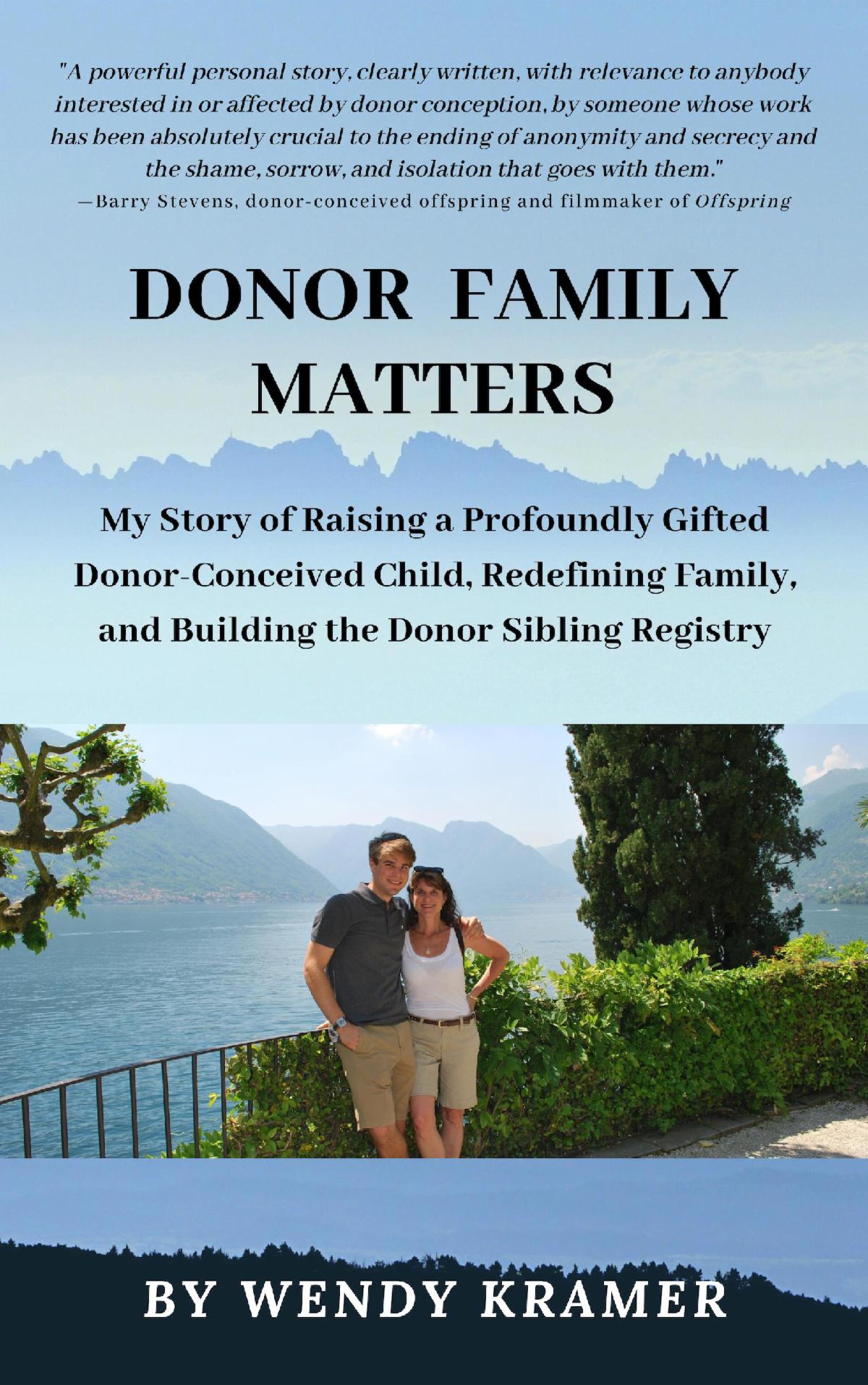
Donor Family Matters
The story of Wendy Kramer and her donor-conceived child, Ryan, who eventually found his biological father and [now 30] half-siblings. Wendy and Ryan created the Donor Sibling Registry, the world’s largest platform for mutual-consent contact of sperm, egg, and embryo donors, donor-conceived children and adults, and their parents.
Educate the child. Raise him or her without biases of any kind. Teach him or her to trust in others but to rely on self. Instill in him or her a sense of humor and the ability to enjoy life.”
Penned on a sperm bank intake form, these words of advice from Donor 1058 to the future recipients of his donations became a parental motto for one particular recipient, Wendy Kramer, who would go on to found the Donor Sibling Registry (DSR). With more than [97,300] members in 100+ countries, the DSR is the world’s largest platform for sperm, egg, and embryo donors, donor-conceived children and adults, and their parents to connect and share information through mutual consent contact. In her role with the DSR, Wendy has become a leading advocate for donor families and for reformation of the modern profit-driven donor conception industry.
| | | | | |