|
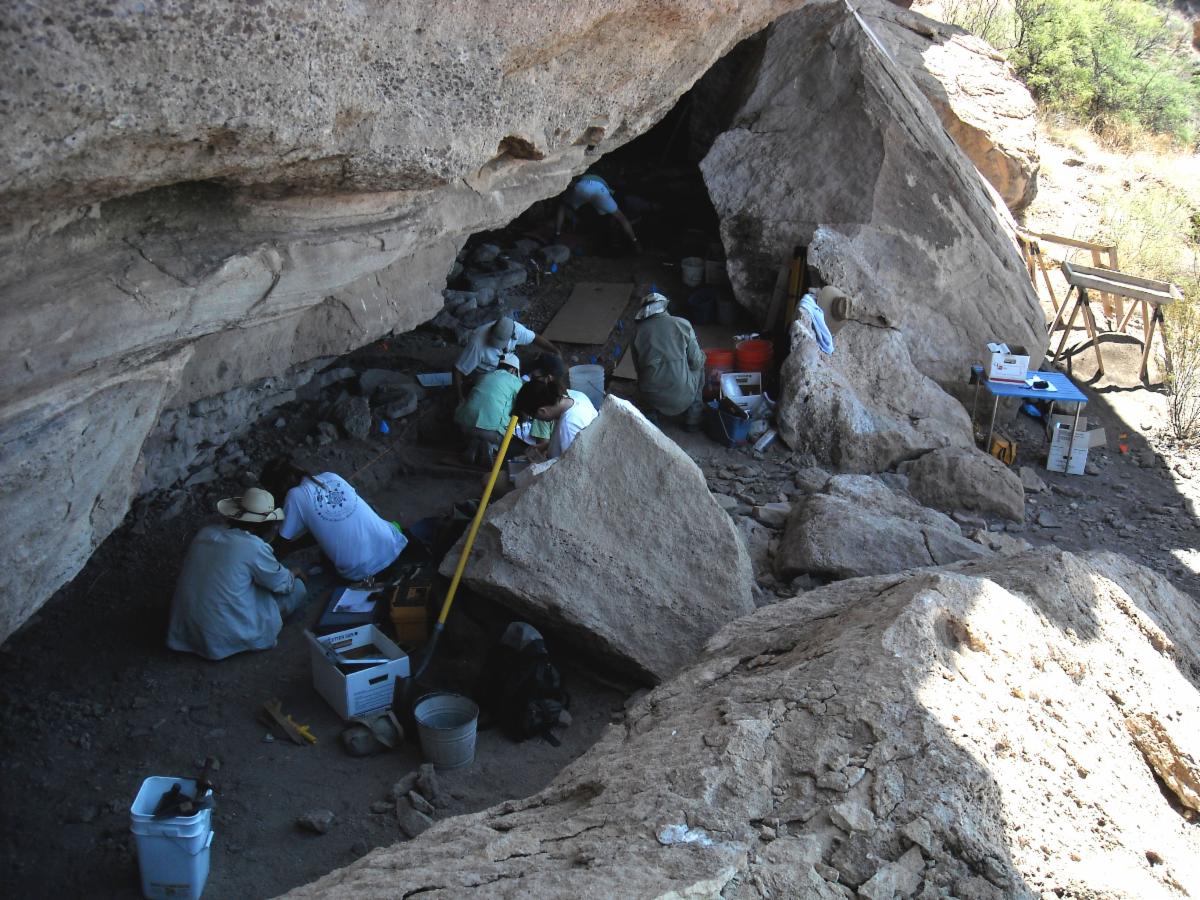
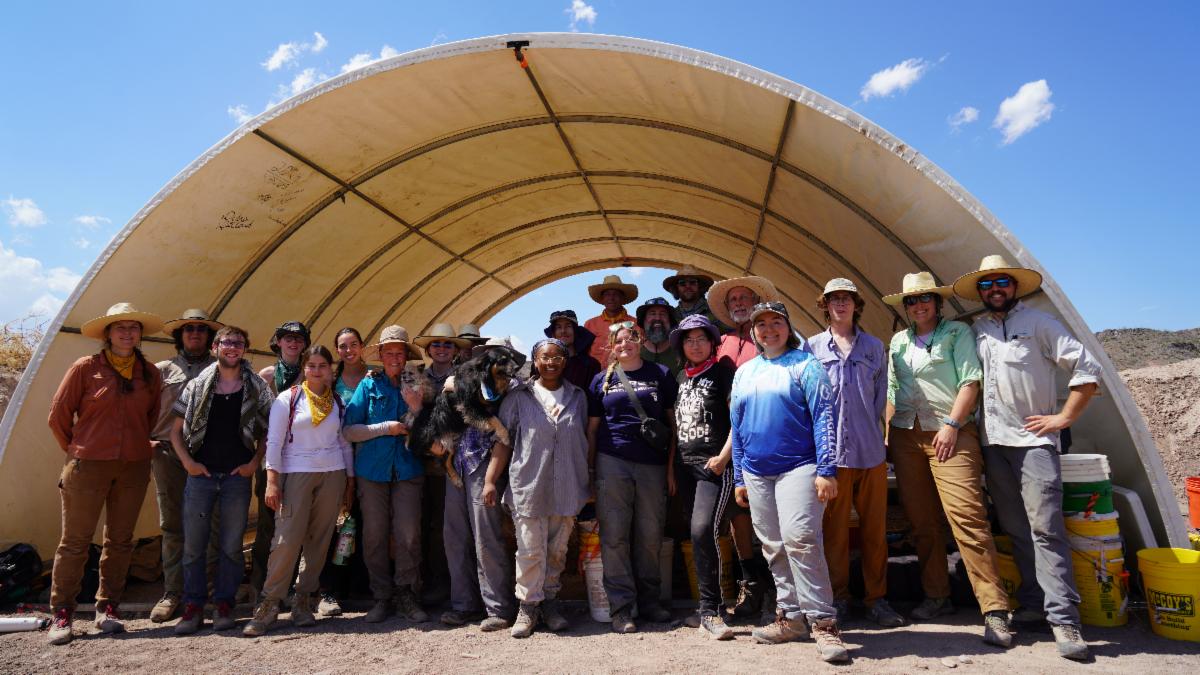
Many hands working hard together made some impactful progress at CBBS sites this summer. While the Odyssey/University of Kansas collaboration dug deeper into the Genevieve Lykes Duncan (GLD) site and explored the San Esteban Rockshelter, our summer field school students were busy learning the lessons of Spirit Eye Cave while helping move along the excavation at GLD.
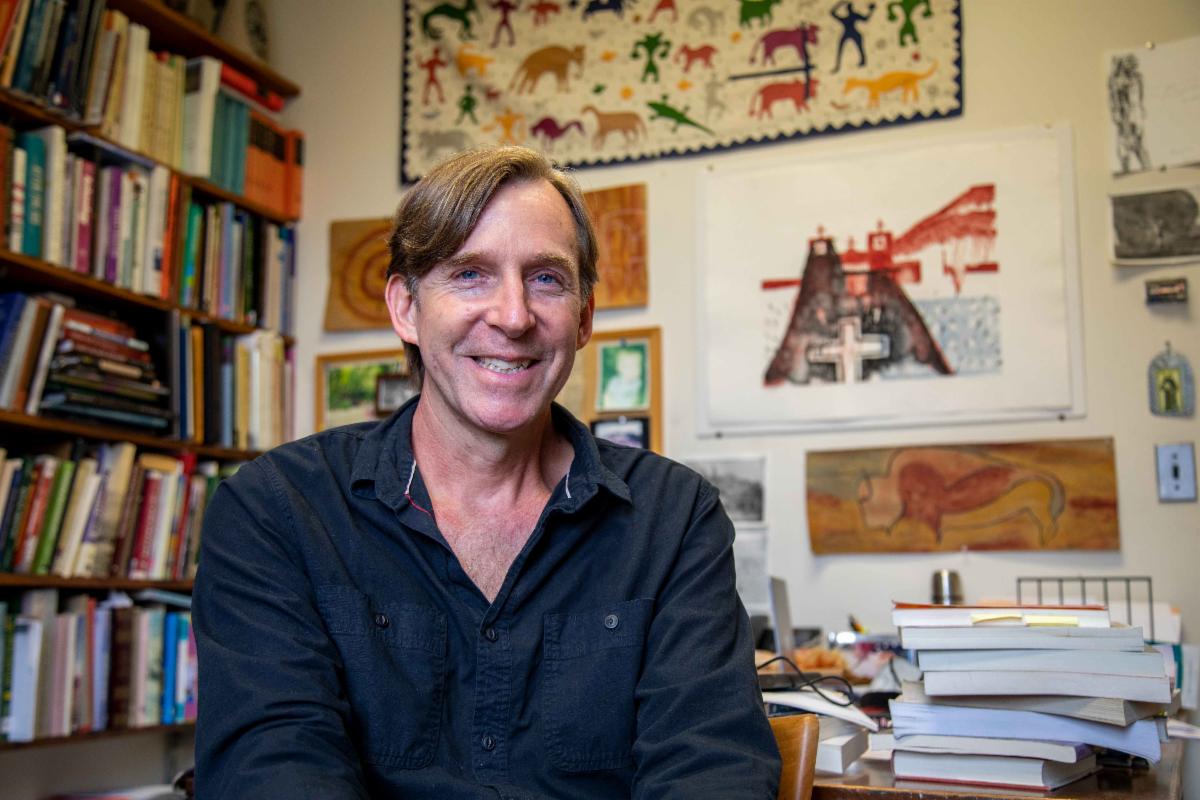
“We all work at the same sites but we’re doing different things,” CBBS Director Bryon Schroeder says. “Field school students learn the basics of archaeology at Spirit Eye — how to dig, take notes, take photographs, survey, record rock art, read maps, use equipment and how methods change at different types of sites.”
The work at San Esteban found wonderfully preserved occupational surfaces with the promise of more findings to come. At GLD, what seems to be a giant “game” of Battleship seeks out the parameters of a possible living structure eight feet underground. Even when you hit part of it — which they did — the future direction of the dig must be determined. Is this a west wall of buried structure? Only digging to the east can provide the answer. Strike out, try again. There are no shortcuts, as other occupations occurred above the Clovis occupation leaving their own artifacts.
The CBBS and KU/Odyssey crew puts in 20 days every summer, digging one-by-one-meter cubes, usually finishing six blocks.
“They doubled their output this year: six of the blocks were a bust and six of them were phenomenal,” Schroeder says. “It took us basically 20 days to learn that we went the wrong way. By the last day we got exactly where we wanted to be and sealed up the site, but we didn't feel great about leaving such an old site preserved under 2 inches of sediment. With the support of KU and the blessing of the ranch, we did another week to take it through the final level.”
Schroeder says they’ll spend the interim time to figure out how to go about discovering what’s under 8 feet of dirt to the north and east.
“These kinds of sites take forever,” Schroeder says. He recalls a site in Wyoming where it took researchers years to find a single mammoth rib bone.
“So many students out there digging in holes with nothing in them,” he says. “Spirits were low. At least we know roughly where the artifacts are now. We didn’t find a dead critter, but we might not, if it’s a camp. That would be even cooler because those sites are rare.”
It's quite worth the Herculean effort and the agonizingly slow pace. What was already officially the oldest site in the Big Bend at 11,000 years has now been pushed back by almost 2,000 years, verified by work this summer and last. That places it right at the end of the Clovis period.
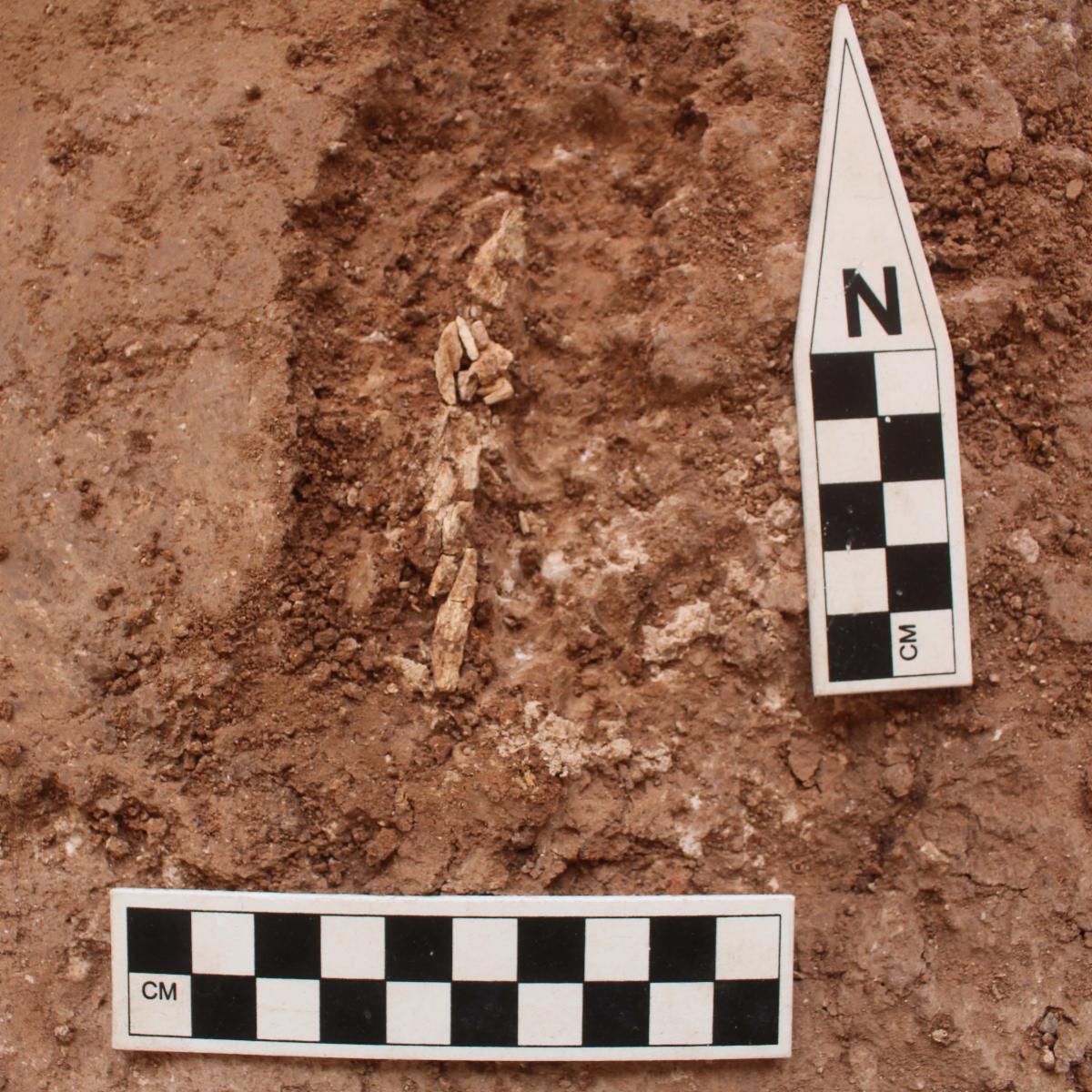
“At GLD, we found exactly what we were looking for — a 12,800-year-old camp — and it’s beyond expectations,” Schroeder says. “Last year we had some very tantalizing stuff but this year we found it, and it’s covered in red ochre.”
Red ochre was commonly used by the Clovis people, so it connects populations across the country. The researchers found extremely degraded bones that were still red from ochre.
“It’s really greasy, and it streaks well,” Schroeder says. “They crushed it and turned it into a pigment, then used it everywhere, on their artifacts, on tool caches, in glues. What’s very clear is that they loved it.”
The next step is to figure out if this is a camp or a kill site — is there a big dead animal somewhere to be found here?
The answers will remain buried for now, but they are too important to be ignored.
“It literally proves that the earliest populations of North America were in West Texas, and that’s never been done,” Schroeder says.
Want to be a part of this historic work? The late Homer Mills (O2 Ranch manager and CBBS board member) thought he’d found a possible Clovis site and lived long enough to learn he might be right. In a lovely moment of timing, his endowment fund match was met right at the time of this summer’s dig, which proved Homer’s theory was correct. The Homer Mills Research Fund ensures the continuation of his dream and the uncovering of our rich history. Donations can be directed to the Friends of the Center for Big Bend Studies—Homer Mills Research Fund via check or online donations through our store.
|