Weekly highlights for the Manufacturing community.
Subscribe to get this newsletter in your inbox each Tuesday.
|
|
Thermoelectric Material Discovery Sets Stage for New Forms of Electric Power in the Future
Thermoelectrics directly convert heat into electricity and power a wide array of items — from NASA’s Perseverance rover currently exploring Mars to travel coolers that chill beverages. A Clemson University physicist has joined forces with collaborators from China and Denmark to create a new and potentially paradigm-shifting high-performance thermoelectric compound. A material’s atomic structure, which is how atoms arrange themselves in space and time, determines its properties. Typically, solids are crystalline or amorphous. In crystals, atoms are in an orderly and symmetrical pattern. Amorphous materials have randomly distributed atoms. Clemson researcher Jian He and the international team created a new hybrid compound in which the crystalline and amorphous sublattices are intertwined into a one-of-a-kind crystal-amorphic duality. Read more at SemiConductor Digest
|
Robotic Solution Makes Nuclear Waste Decommissioning Safer Around the World
Createc is behind some of the world’s most advanced technologies in robotics and computer imaging and is well-known for finding solutions to some of the world’s most complex industrial challenges. Createc’s Automated Nuclear Detection Cell (AND-C) innovation responds to the challenge of removing nuclear workers from hazardous environments by providing a system that can remotely scan items for radioactive contamination and then automatically remove the contamination. Read more at New Equipment
|
How Intelligence is Powering Supply Chain’s Next Wave
Like most everything in 2020, global supply chains were thrown into disarray during the pandemic. Demand plans and equipment maintenance schedules went out the window with U.S. e-commerce volume growing 44% as consumers stayed home to buy everything they needed to sustain life. In response, many supply chain managers increased safety stocks to hedge against increased volatility. Now, as we begin to emerge from lockdown, everyone is looking for ways to boost supply chain velocity and efficiency. Artificial intelligence (AI) and machine learning (ML) technologies seem a natural fit for helping wring out greater efficiency and better decision-making in this area. Steve Banker, vice president of supply chain services at ARC Advisory Group, wrote recently about a host of AI-driven supply chain use cases, ranging from those that are still hype-stage to those with established return on investment. Banker cites, in order from most hypothetical to most mature: blockchain, autonomous trucking, ML for warehouse management, robotic shuttle optimization, ML for transportation, ML for demand planning, real-time location services, and IoT for transportation. Read More at Automation World
|
|
AMI Project Team Receives Award to Create Solutions to Accelerate the Adoption of Smart Manufacturing Practices Read the Press Release
|
Pre-register today for membership and receive your first year free.
|
|
|
Why the “As-a-Service” Model is Changing Automation Technology Purchases
If you're not familiar yet with the as-a-service business model, what it essentially means is that rather than purchasing a particular product outright, and maintaining and upgrading it yourself, instead you pay a monthly or annual fee for access to that technology. And in that case, the provider handles all the maintenance and upgrades to ensure you're running the most up-to-date version of that technology. Now, you're probably well aware of the software-as-a-service model, which is often referred to as SaaS. You may very well already be using it in your plant for one or more of the software applications used to run your production operations. I say this because nearly every provider of production software, from SCADA to MES to ERP, offer a cloud-based as-a-service version of their software. Read more at Automation World
|
|
Leveraging the 5G Network to Wirelessly Power IoT Devices
Researchers at the Georgia Institute of Technology have uncovered an innovative way to tap into the over-capacity of 5G networks, turning them into “a wireless power grid” for powering Internet of Things (IoT) devices that today need batteries to operate. The Georgia Tech inventors have developed a flexible Rotman lens-based rectifying antenna (rectenna) system capable, for the first time, of millimeter-wave harvesting in the 28-GHz band. (The Rotman lens is key for beamforming networks and is frequently used in radar surveillance systems to see targets in multiple directions without physically moving the antenna system.) Read more at SemiConductor Digest
|
|
Report: European manufacturing stifled by over-engineered robots
Although European manufacturers were keen to increase operational efficiency and to return production closer to home markets even before Covid, the actual adoption of automation and robotisation technologies has been harrowing. According to the latest report by the International Federation of Robotics, the European operational stock of industrial robots reached 580,000 units in 2019: although this was an increase of 7% since the previous year, it was far below China's 21%, Japan's 12%, and just on par with the US. Read more at Smart Industry
|
|
Even Failed IIoT Pilots Have Much to Give
The common perception of the success or failure of an IIoT project is tightly linked to a relatively narrow set of business metrics that include scalability and long-term adoption. However, many of the softer and less-obvious benefits of a “best practice” IIoT pilot project can be missed in this analysis. The accepted route to achieving a successful IIoT deployment is to run a series of pilot deployments, testing technologies, data flows and process optimization, before scaling up in earnest. In many cases, the pilot projects that do not go on to scale are left behind or discarded, but there is substantial value hidden within even these ‘failed’ pilots. Read more at Industry Week
|
|
New EV Battery to Provide 300 Miles with a 5-minute Charge
A new lithium-ion battery that uses semiconductor nanoparticles in the place of graphite means charging EVs on the go could soon be as fast as filling up with gasoline. For 60% of drivers, range anxiety remains one of the biggest barriers to the large-scale adoption of all-electric vehicles even though some models already exceed 300 miles on a single charge. The good news is that range anxiety is being addressed on two fronts: massive investment in battery research and development has led to ever-increasing power and charge, and extensive charging networks are rolling out across the U.S. and many other parts of the world. Tesla, for example, has already built a network of more than 20,000 Superchargers. China is reportedly installing EV stations at a rate of more than 1,000 per day. Read more at Thomas Net
|
|
13 most difficult-to-fill IT jobs
The lineup of toughest IT jobs to fill hasn’t changed much since last year, but one new factor might ease the situation in the months to come. Thanks to the work-from-home phenomenon, more people are now available for jobs that were once restricted to a candidates from a specific geographic area. “The talent war has changed dramatically,” says Alex Kraus, vice president of consultancy Metis Strategy. “The talent pool is much larger, and sometimes global, where it was previously constrained to wherever the company headquarters is.” Read more at CIO
|
|
Driving Remote Innovation Through Conflict and Collaboration
To stimulate and refine ideas for innovation, organizations have traditionally relied on the energy of face-to-face, copresent teams collaborating both formally and informally in meetings, cubicles, and corridors, and at watercoolers. The dynamic energy created by copresence is considered critical for embedding innovation into an organization’s workplace culture. But after the pandemic-driven mass exodus from the office and the transition to remote work, leaders need to understand how they can embed innovation in remote teams. Early in the pandemic, of necessity, organizations emphasized business continuity and scaled up their existing capabilities to manage teams remotely. The seemingly insurmountable challenge — delivering results without copresent office-based teams — was met with surprising success. Productivity increased in many organizations; for example, Oracle improved productivity by 20% to close its monthly books within 24 hours for the first time. Read more at Sloan Review
|
|
7 business skills every IT leader needs to succeed
The days when CIOs could glide into a long-term career based solely on their technical abilities are rapidly fading. “It’s no longer enough for IT leaders to be tech experts,” warns Bob Hersch, a principal at Deloitte Consulting. The best-in-class CIOs of today are also business savvy, using their knowledge to embed IT as a service capability. “This business-centric approach integrates IT into an overall business strategy,” he adds. The best way any IT leader can augment his or her current technical knowledge — and strengthen their long-term career prospects — is by committing to acquiring the following seven essential business skills. Read More at CIO
|
|
The Price Leaders Pay for Cutting Ethical Corners
Unfortunately, it is not uncommon for leaders to ask their employees to cross ethical lines. Consider the following examples from a pilot study we recently conducted: A sales representative at a retail company was asked to grant credit approval to unqualified customers who were friends of her supervisor; a field technician at a communications company was asked by management to close telephone repair tickets for elderly customers whose phones were not fixed; and an engineer in the transportation industry was asked to approve projects that he felt were at risk for structural failure. Examples like these exist in myriad settings. In a global survey of over 13,000 employees, a median of 22% of respondents across sectors reported feeling pressure to compromise standards at work.1 In our recent research, which includes several survey-based studies as well as laboratory experiments, we found that such pressure often comes from being specifically asked to engage in behavior that is unethical or morally questionable — what we refer to as receiving an unethical request. Read more at Sloan Review
|
|
Ernst & Young partner with Nokia on 5G initiative
Ernst & Young Oy and Nokia have formed a strategic alliance that is being rolled-out to other EY member firms across the globe to help enterprises and communication service providers (CSPs) accelerate their digital and business transformation journey and unleash the business potential of private wireless and 5G network capabilities. The alliance will also support enterprises in maintaining resiliency beyond the COVID-19 pandemic. The EY organization will collaborate to address the management and security challenges relating to these emerging technologies, and the expansive data they generate. Read more at Smart Industry
|
|
VMware, Dell split to form independent firms
After many months of wrangling, Dell Technologies says it is spinning off its ownership of VMware to create two standalone companies. While it gives both companies more financial freedom, the new relationship should have no immediate effect on enterprise customers, but that could come down the road. Dell has had an 81% equity ownership of VMware since its 2016, $67 billion purchase of EMC, which owned VMware. Under terms of the planned spin-off, VMware will distribute a cash dividend of $11.5 - $12 billion to all VMware shareholders, which includes about $9.7 billion to Dell Technologies, the companies stated. Read more at Network World
|
|
Mobility Digital Twins for Dynamic Multimodal Simulation Extended for Bentley Systems with Acquisition of INRO
Bentley Systems, Incorporated announced the acquisition of INRO Software, a leader in multimodal transportation planning, traffic simulation, and mobility visualization software. The acquisition expands Bentley’s capabilities in the growth area of mobility digital twins, just as countries, including the U.S., are poised to make a generational investment in infrastructure, and as transportation systems must evolve faster to accommodate both urbanization and carbon reduction goals, and the transition to electric and autonomous vehicles. INRO, based in Montreal, Quebec, Canada, has for more than 40 years contributed to the advancement of mobility simulation and modeling for metropolitan, regional, and national transport and transit operators and planning agencies. Users of its multimodal simulation offerings include some of the world’s busiest transit systems and metros, such as Transport for London, Transport for New South Wales, the Washington State Department of Transportation, the Swedish Transport Administration Trafikverket, and the public transport system of São Paulo SPTrans. Read more at Arcweb
|
|
-
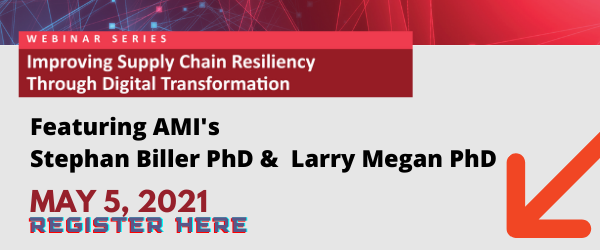
SME Virtual Event May 5, 2021 1-2:30PM EST Virtual: Improving Supply Chain Resiliency Through Digital Transformation - Digital Transformation is key to survive and thrive in the hyper-competitive market. Digital capability integration will provide a disruptive differentiation for those manufacturers who adopt and leverage digital technologies. Join us for a discussion and presentation on how the manufacturing supply chain can improve resiliency through digital transformation. This free webinar is open to anyone interested in accelerating improvement through digital transformation
-
Eastec May 11-13, 2021 Springfield, MA: A powerful face-to-face event series, where technology and advanced manufacturing unite.
-
Aerodef September 20-23 Long Beach, CA: Gain access to the smart technologies and intelligent people propelling aerospace and defense manufacturing.
|
|
Share The Manufacturing News Consolidator with your network |
|
Synopsys AI-Driven Design System Enables Renesas to Achieve Breakthrough in Productivity
Synopsys, Inc. (Nasdaq: SNPS) today announced the adoption of DSO.ai™ (Design Space Optimization AI), Synopsys’ award-winning autonomous artificial intelligence (AI) design system, by Renesas into its advanced automotive chip design environment. With DSO.ai’s reinforcement learning technology, Renesas can augment its ability to search vast design spaces for better performance-power-area (PPA) solutions, pushing the envelope on energy efficiency for advanced automotive ICs without forgoing operating frequency. This enables Renesas to explore a larger scale of choices in existing chip design workflows, paving an accelerated path to meeting PPA targets. “Our collaboration with Synopsys on DSO.ai exemplifies how AI can lead to disruptive design solutions, revolutionizing the way we design automotive products,” said Satoshi Shibatani, director, Digital Design Technology Department, shared R&D EDA division at Renesas. “We expect that DSO.ai will identify better PPA solutions, and going forward, we are excited to expand our collaboration with Synopsys to unlock higher productivity for our design teams.” Read more at SemiConductor Digest
|
|
FBI Removing Web Shells From Infected Exchange Servers
A federal court in Texas gave the FBI the go-ahead to remove malware from on-premises Microsoft Exchange servers at organizations infected in a wave of voluminous zero-day attacks earlier this year, the Department of Justice said on Tuesday. Since Friday, the FBI has been removing web shells, or scripts that allow remote access, from Exchange servers belonging to organizations in at least eight states, according to an unsealed application for a search warrant released by the DOJ. The operation is authorized to run through April 23. Read more at Gov Info Security
|
|
Pandemic Reaction: What Supply Chains Did Right and Where They Can Improve
Contingency plans and risk assessments are an integral part of supply chain management; however, a global pandemic is beyond the scope of most plans. The complications that arose from companies facing supply chain disturbances at the same time that consumers' expectations increased became overwhelming. “Prior to the pandemic, most consumers were not aware of supply chain issues,” explains Abe Eshkenazi, CEO of the Association for Supply Chain Management (ASCM). “Before the pandemic, we had a very efficient supply chain, as just-in-time was the hallmark of every industry. Consumers were provided with high-quality goods in a variety of choices at a reasonable cost. But no one really understood how this happened.” Read more at MLH News
|
|
How to Make Your Procurement Processes More Sustainable
The supply chain industry is deeply integrated in the vast majority of business services, creating an interconnected network of people and products. Companies can utilize this network to develop more sustainable business practices. Procurement — the process of acquiring goods from suppliers — presents a great opportunity to make many links in the supply chain more sustainable. While 58% of supply chain companies are confident in their ability to mitigate risk through sustainable procurement processes, many businesses are deterred from adopting more sustainable practices in fear of high costs and a lack of resources to manage such changes to their operations. Read more at Thomas Net
|
|
IoT Enterprise Deployments Continue Apace, Despite COVID-19
Despite the economic impact of COVID-19 on the economy as a whole, IoT projects continue to show value and gather forward momentum in various industries, according to a recent Omdia survey. The survey, titled “IoT Enterprise Survey, 2021,” explored IoT adoption trends in various industries and the prospects for adoption in the near term. According to the IoT Enterprise 2021 survey, some 90% of enterprises said that Internet of Things (IoT) technology was core to digital transformation and was being deployed in multiple areas of their organizations. Read more at IOT World
|
|
Wearable Sensors that Detect Gas Leaks
Gas accidents such as toxic gas leakage in factories, carbon monoxide leakage of boilers, or toxic gas suffocation during manhole cleaning continue to claim lives and cause injuries. Developing a sensor that can quickly detect toxic gases or biochemicals is still an important issue in public health, environmental monitoring, and military sectors. Recently, a research team at POSTECH has developed an inexpensive, ultra-compact wearable hologram sensor that immediately notifies the user of volatile gas detection. A joint research team led by Professor Junsuk Rho of departments of mechanical and chemical engineering and Dr. Inki Kim of Department of Mechanical Engineering with Professor Young-Ki Kim and Ph.D. candidate Won-Sik Kim of Department of Chemical Engineering at POSTECH has integrated metasurface with gas-reactive liquid crystal optical modulator to develop a sensor that provides an immediate visual holographic alarm when harmful gases are detected. The findings from this study were published in Science Advances on April 7, 2021. Read more at SemiConductor Digest
|
|
Legal Insights for the Metals Industry
Imagine for 10 years, you have sold your metal goods to a customer with nothing more than calls and handshakes. Your customer, in turn, sells your goods to his buyer. For as long as you can remember, your customer and the end-users have been very happy with your service and the quality of your metal. However, the end-user now claims the metal in your most recent shipment is defective and is demanding their money back, and taking their business elsewhere. Now, your customer is suing you, and the relationship that had been so profitable for so long is on the rocks. Although long-lasting relationships with your customers are the goal, problems can arise. Therefore, sellers must protect themselves in all relationships with a strong, well-written sales contract. Read more at SME
|
|
SKF bearings help Mars Rover collect samples on the planet’s surface
Each time the Perseverance Mars Rover collects or handles rock and regolith samples in Jezero Crater during its multiple-year mission on the surface of the red planet, key components from SKF will facilitate that those activities successfully take place. Enabling the Mars Rover’s core operations in the harsh environment on Mars are Kaydon RealiSlim thin-section ball bearings, designed and manufactured by SKF. These highly engineered components contribute to the survival of the rover’s main robotic arm, sample collecting turret, tool-bit carousel and sample-handling assembly during a months-long trip through space, and its function as intended on the Mars surface. SKF also supplied critical bearings for the mission’s launch vehicle, which carried the rover and its lander into space. Read more at Smart Industry
|
|
Amid Semiconductor Shortage, Auto Industry Seeks Aid from White House's $37 Million Proposal to Bolster Production
In early 2020, as the COVID-19 pandemic began to shut down wide swaths of the global economy, automakers braced for the worst — a downturn far steeper than even the Great Recession. Sales did tumble initially, but the latter half of the year saw a strong recovery. Circumstances, however, nonetheless conspired to once again force the U.S. auto sector to ask Washington for help. Industry group the Alliance for Auto Innovation (AAI), according to Reuters, called for part of billions in proposed aid for semiconductor manufacturing to be reserved for its members. As the pandemic closed vehicle plants and sent demand for electronics soaring last spring, the world’s semiconductor makers diverted their chips to the latter segment — resulting in the ongoing shortage of chips for vehicles. The AAI, responding to a government review, said the shortage could disrupt production for another six months and lead to nearly 1.3 fewer vehicles being produced this year. Read more at Thomas Net
|
|
The benefits—yes benefits!—of creating a sustainability-first culture
How do manufacturers create a “sustainability-first culture”? The IoT can help, says Corey Glickman, global head of sustainability and design consulting services with Infosys, who dives deeper into the topic in the Q&A below. Take a look… Smart Industry: How do IoT tools enable a "sustainability first culture"? The Internet of Things, and how it enables and drives a sustainability culture, is one of the big challenges for any organization. A first question to consider is How do I choose my metrics? Then that data needs to be collected and connected, which begs the next question What is the best way of collecting and verifying the data?’ Read More at Smart Industry
|
|
US Pulls Back Curtain on Russian Cyber Operations
While the Biden administration is betting that the latest round of sanctions against Russia will help deter the country's cyber operations, several U.S. agencies, including the National Security Agency, used the sanctions announcement as an opportunity to pull back the curtain on the tactics of Russia's Foreign Intelligence Service. Russia's Ministry of Foreign Affairs on Thursday denied that the country was involved in the SolarWinds supply chain attack as well as election disinformation campaigns, as the U.S. alleged in announcing the sanctions. And on Friday, Russia responded to the sanctions by expelling 10 U.S. diplomats and blacklisting eight officials, according to The Washington Post. Read more at Gov Info Security
|
|
Delivering the Cure to Steady Automation
Achieving high-integrity, high-gloss automotive finishing depends heavily on adequate curing of coatings between multiple layers. Curing time is necessary for drying and for chemical reactions to complete before application of the next coating layer. Gas catalytic infrared radiation (IR) is emerging as a preferred heat source for curing, but maximum curing is limited to those areas that are directly in the line of sight of the IR beam. U.S. Autocure, an Arizona-based coating and automation specialist developed an automated system that delivers IR beams evenly across contoured automotive surfaces but had to overcome a major challenge: moving heavy metal booms and shutters smoothly, quietly, and in compliance with stringent safety regulations for spray booths. Read more at New Equipment
|
|
New Spindle Technology Converts Machine Tools into High-Speed Machining Centers
IWTO USA, Charlotte, N.C. is offering what it calls a new and affordable solution for micromachining applications, an area where many manufacturing companies and machine shops are striving to increase productivity. CoolSpeed mini is a patented, ultra-high-speed spindle that can reach rotation speeds of up to 75,000 rpm. The spindle turbine is driven by coolant, cutting oil, or air mist. According to WTO, it is affordable, fits in standard tool holders for cylindrical tools, and is compatible with milling centers, turning centers, and Swiss-style lathes. By design, the cutting tool shank serves as the spindle shaft. As a result, dynamic runout is 4 microns or better and bearings can be replaced by the user with each cutting tool change, according to WTO. The CoolSpeed spindle does not require any service. Read more at SME
|
|
Cisco DevNet certifications: 10k awarded in first year
The requirement for software skills in the networking environment is being driven by a number of factors including the tremendous increase in the use of automation, the need to have an intelligent pipeline to remote users, and the growing necessity to efficiently network and secure multicloud resources. Many of these changes were already underway of course, but tons more are being driven by the COVID-19 pandemic’s impact on many enterprise data-center, campus and wide area network operations. Read more at Network World
|
|
With China Policy in Tatters, OEMs Best Expect More Shortages
To say the recent America-China summit in Alaska didn’t go well would be a monumental understatement. It was no surprise to the Chinese contingent that the Americans’ opening gambit was to roll out the same litany of accusations about China’s human rights abuses and aggressive behavior that the U.S. has been touting for decades. It was China’s response that was significant here. In a stark departure from its normal diplomatic and conciliatory language, China fired back, pointing out that America was in no position to criticize anybody for human rights and aggression. It was an acknowledgment that they had enough. It was a watershed moment. Read more at Industry Week
|
|
This newsletter is brought to you by Advanced Manufacturing International, Inc.
Please contact us if you would like to add your news to "The Consolidator." |
|
|
|
Advanced Manufacturing International is an SMM-first non-profit organization striving to accelerate the digital transformation of small to medium-sized manufacturers with simple, secure, and ultra-low-cost solutions. If you are interested in accelerating the digital transformation of small-to-medium-sized manufacturers please contact us and subscribe to our newsletter. Learn more about AMI.
|
|
|
|
|
|
|