blacklogo _1_.png

SASE is on the Rise

Screenshot 2022-01-05 135039.png

More and more IT leaders are realizing that SD-WAN doesn’t address the complete needs of the digital business. Gartner agrees with this and predicts a rapid shift to Secure Access Service Edge (SASE).


By 2024, more than 60% of software-defined, wide-area network (SD-WAN) customers will have implemented a secure access service edge (SASE) architecture, compared with about 35% in 2020.”

SASE Takes Up Where SD-WAN Left Off

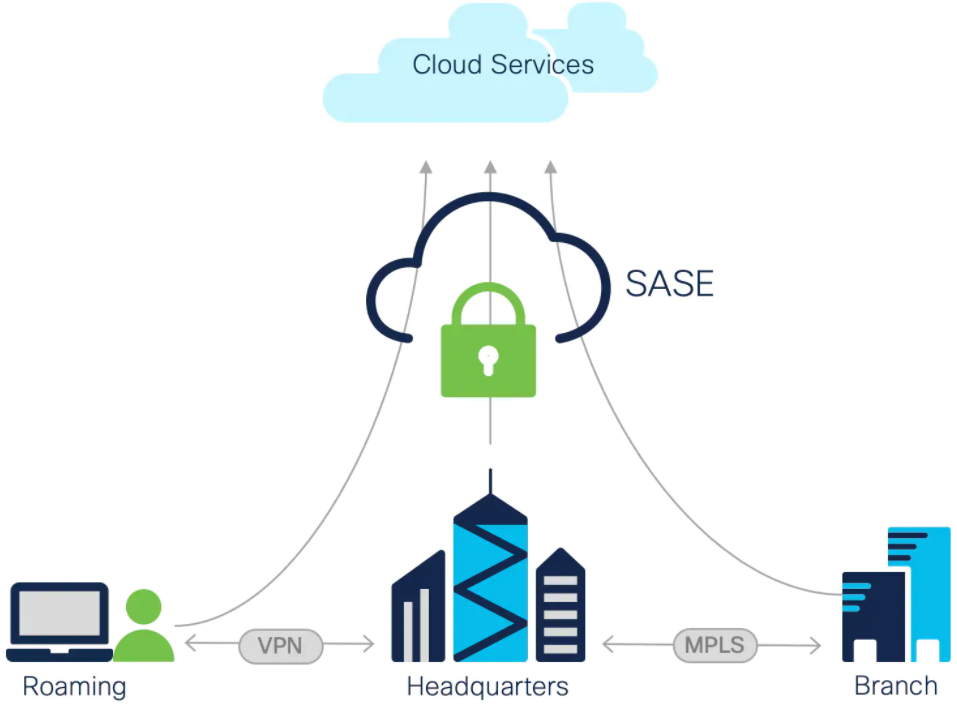
SASE, pronounced "sassy", stands for Secure Access Service Edge, and is a cloud-based security model for your network. SASE uses a technology called software-defined networking that makes it possible to manage your networking with software and combines it with network security functions. SASE is delivered to your organization from a single service provider, simplifying your network infrastructure and security management.


This cloud-based security model was coined by the leading IT research and advisory company, Gartner, in their August 2019 report "The Future of Network Security in the Cloud". This approach to network security allows organizations to enforce secure access policies regardless of physical location. The SASE architecture identifies users and devices requesting access, applies policy-based security and compliance, and delivers secure access to the user. 


SASE creates a holistic platform that connects all edges to the network and security capabilities an enterprise requires. This lowers the cost, complexity, and risk of supporting the business in a dynamic environment. True SASE is the only architecture that allows you to move beyond the network complexity of today and prepare you for the opportunities of tomorrow.

The Role of SD-WAN

SD-WAN emerged close to a decade ago, showing the potential to be a viable and cost-effective alternative to MPLS – thus making it the logical next step in WAN technology. SD-WAN was considered by many enterprises as the go-to-technology for preparing their network for the digital transformation.


At the time it made sense, because SD-WAN addresses the high cost, rigidity, and capacity constraints of MPLS. But, is this enough to deliver the level of network and security your enterprise demands?


To answer this, let’s see what SD-WAN covers, and more importantly, understand what SD-WAN does NOT cover. Download the eBook: 5 Things SASE Covers that SD-WAN Doesn't here.

Cisco SASE? VMware SASE? Fortinet SASE?

How about a 1:1 demo with one of our SASE experts? Schedule Today!

blacklogo _1_.png